A lawn can look fine on Friday and chewed up by Sunday. That is how fall armyworm damage (Spodoptera frugiperda) often shows up in Southwest Florida, as it appears fast, patchy, and maddening.
If you care for St. Augustine, bahia, bermuda, or zoysia, timing matters. These caterpillars feed hard, mostly out of sight, and many people do not notice them until brown patches start spreading.
I see the same pattern after warm rain, humid nights, and a flush of tender growth. Once I know what to look for, the lawn usually tells me the rest.
Key Takeaways
- Speed is the Primary Indicator: Fall armyworm damage appears rapidly, often turning a healthy-looking lawn into ragged, chewed-up turf over a single weekend.
- Strategic Scouting: Early detection is vital; look for irregular brown patches, clipped blade tips, increased bird activity, and the presence of small caterpillar droppings (frass).
- Confirm Before Treating: Use a soap-and-water flush test to confirm the presence of larvae before applying insecticides to ensure you are targeting the right pest.
- Focus on Recovery: Because armyworms typically consume the leaf blades rather than the crown, most healthy warm-season grasses can recover with proper care rather than requiring immediate replacement.
- Manage Growth Cycles: Avoid excessive nitrogen fertilization during high-risk periods, as rapid, tender growth makes your lawn more attractive to egg-laying moths.
Why Southwest Florida lawns get hit so fast
Fall armyworms are the larval stage of a moth, and understanding their life cycle is key to protecting your grass. It begins when adult moths migrate into the region, landing on turf to deposit egg masses. Once these eggs hatch, the tiny caterpillars begin feeding almost immediately.
The reason they catch people off guard is simple. Early feeding is easy to miss, but the later stages are not. As the insects progress through various larvae instars, their appetite increases significantly. That is when a healthy lawn can start looking shaved, thinned, and tired in a matter of days.
Southwest Florida provides a long runway for this migratory behavior. Heat persists, humidity stays high, and frequent rain pushes soft new growth. In places like Naples, Bonita Springs, and Fort Myers, that environment stretches the risk window well past what homeowners in cooler parts of the country expect.
I do not treat fall armyworms as a sign of a dirty lawn, because they are not. Moths can fly in from elsewhere, lay eggs overnight, and start a problem on a well kept property just as easily as on a neglected one.
Lush grass can even be more appealing. In forage settings, UF/IFAS notes that armyworms prefer well fertilized grasses as host plants. That same basic feeding habit matters in home lawns, too. A thick, tender stand of turf is a buffet when caterpillars are active.
Most outbreaks in Southwest Florida show up in late summer and fall, but I stay alert earlier if the weather lines up. A wet stretch followed by warm nights is enough to put me on guard. If the lawn has been growing fast and then starts looking ragged almost overnight, I do not assume drought or fungus first. I think caterpillars.
How I spot fall armyworm damage before it spreads
The first clue is usually the speed of the damage. Drought does not usually rough up a lawn in one weekend, but armyworms can cause rapid defoliation.
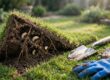
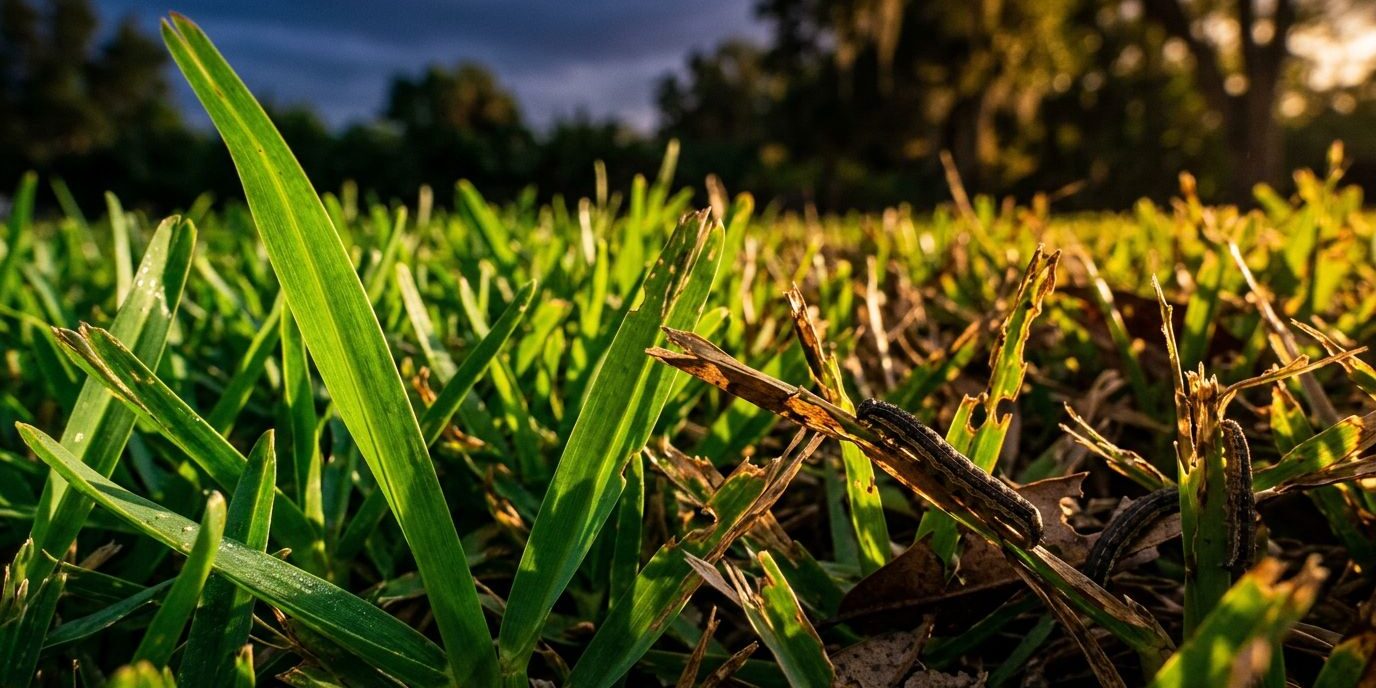
I look for irregular brown patches, clipped blade tips, and grass that looks chewed rather than dried out. Sometimes the blades show window pane feeding, with thin scraped areas before full chewing appears. Other times the turf looks scalped, often showing signs of whorl feeding where the centers of the grass shoots are eaten away.
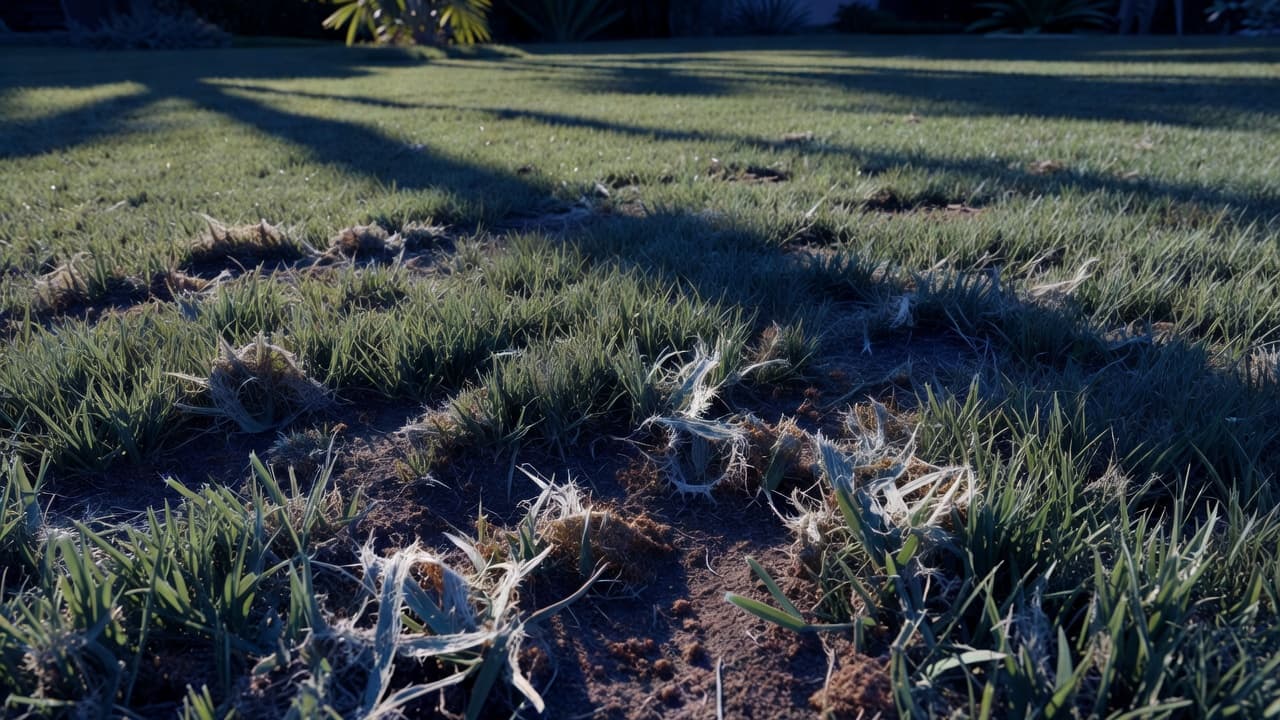
Increased bird activity is a major red flag. If I see birds pecking persistently at a specific section of the lawn, I investigate immediately. I also look for tiny pellets of frass, which are caterpillar droppings, near the base of the grass as a clear sign of turfgrass damage.
If a lawn looks fine on Friday and ragged on Sunday, I think caterpillars before I think disease.
When I want proof, I rely on specific scouting methods. Checking at dawn or dusk is best because of their nocturnal behavior. A simple soap flush is my go-to test. I mix about a tablespoon of liquid dish soap into a gallon of water and pour it over a small square yard of suspect turf. If armyworms are present, they often wriggle to the surface within a few minutes.
Identifying the pest in its larval stage is key to confirmation. Larger larvae are green, brown, or striped, and the head consistently displays a pale, inverted Y-shaped mark. Near the rear, each abdominal segment has four dark spots arranged in a square. That inverted Y-shaped mark is a primary identifier for this species. If you want a visual comparison, this Florida lawn discussion with close-up photos shows the markings many homeowners look for.
I also rule out the usual suspects. Chinch bug damage often starts in hot, sunny areas and moves more slowly. Drought stress follows irrigation problems or dry patterns. Disease usually does not leave that same chewed, frayed look on the blades. Two-lined spittlebug damage also causes brown patches in St. Augustine grass, but it leaves a foamy mass at the base of the blades. Armyworm damage has a rough edge to it, and once I see that texture, the situation becomes much clearer.
What I do when feeding is active
When I find live caterpillars, I move quickly. Waiting a few days can mean the difference between a small treatment and a lawn that needs repair work.
I keep the response simple.
- I confirm active feeding with a dusk check or a soap flush.
- I look at how much of the lawn is affected, because spot treatment may be enough.
- I perform an insecticide application using a product labeled for armyworms on my specific turf type, and I follow the label exactly to practice proper resistance management.
- I recheck the area within the next two to three days.
That last step matters. Because the fall armyworm life cycle happens quickly, the larvae instars can consume a shocking amount of grass before they pupate. Understanding the larval stage is key because small caterpillars are easier to knock back than large ones, so early action pays off.
I do not throw fertilizer at the problem. Fresh nitrogen will not stop foliage consumption, and it can push more tender growth at the wrong moment. I also do not scalp the lawn, because stressed turf needs leaf area to recover.
Watering takes a little judgment. A drought-stressed lawn may need normal irrigation to reduce stress, but I do not overwater in a panic. The goal is stable growing conditions, not a swamp.
Brown does not always mean dead. If the crown is still alive, warm-season turf often grows back.
That is the part many people miss. Fall armyworms mostly chew the blades. If they have not destroyed the crown, St. Augustine and other warm-season grasses can recover. The lawn may look ugly for a while, but not every damaged patch needs new sod.
If the affected area is large, the turf type is sensitive, or the diagnosis feels shaky, I evaluate the economic threshold to determine if I should bring in a lawn professional. Misreading insect damage as disease can waste time. So can spraying the wrong product after the peak feeding has already passed.
How I lower the odds of the next outbreak
I cannot stop adult moths from flying in, so I do not chase the fantasy of a lawn that is somehow off-limits to armyworms. Instead, I focus on a comprehensive integrated pest management strategy to make outbreaks smaller, shorter, and easier to catch.
Scouting methods are the most critical tool in my toolkit. From late summer into fall, I check vulnerable areas every week for signs of egg masses or early whorl feeding. On larger properties, I start with sunny sections, broad open turf, and spots where host plants like bermudagrass grow fast after rain. I also utilize pheromone traps to monitor population spikes, as these provide a heads-up before a full-blown infestation occurs. If birds are working one area hard, I do not ignore it, as natural predators often reveal where larvae are active.
Mowing helps more than people think. I keep the grass at the right height because turf with decent density handles stress better. I do not scalp St. Augustine, and I avoid letting bahia get wildly overgrown. This balance is similar to how farmers manage Bt corn to maintain crop health. When prevention fails, I consider biological control agents to keep populations in check before resorting to a broad insecticide application.
Fertilizer also matters. I want steady growth, not a huge flush followed by soft, tender blades. Too much nitrogen at the wrong time can make a lawn more attractive to chewing pests. I watch irrigation for the same reason. A lawn that is already stressed shows injury faster, while a lawn that is constantly soggy creates its own health problems. Even moisture, good mowing, and regular monitoring put me in a better position than guessing after the turf turns brown.
Property managers have one extra challenge: scale. A small outbreak can hide in a corner lot, along a fence, or near an entry drive until guests start noticing the color change. On bigger sites, I perform short, routine walk-throughs during the peak risk season. Five minutes of scouting beats weeks of recovery.
The main thing I remind people is that prevention is not perfection. Armyworms may still show up. The win is spotting them early, confirming the cause, and acting before the lawn gets stripped.
Frequently Asked Questions
Can I tell the difference between armyworms and lawn disease?
Yes, the appearance of the damage is distinct. Armyworm damage typically shows visible chewing, frayed edges on grass blades, and a rapid, patch-like progression, whereas diseases often show spots, lesions, or more gradual thinning that does not involve physical removal of the blade tissue.
Why does my lawn look like it is dying if the grass isn’t dead?
Fall armyworms primarily feed on the green leaf tissue, which leaves the crown of the grass intact. While the lawn may look brown and ugly for a period, it is essentially in a state of stress and should push out new, healthy growth as long as the base of the plant remains alive.
Is it necessary to use heavy chemicals for armyworms?
Not always, especially if you catch the infestation early. Scouting and spot-treating smaller affected areas can prevent the need for blanket insecticide applications across your entire property.
Do I need to fertilize my lawn to help it recover faster?
It is generally better to avoid heavy fertilization immediately after an attack. Applying nitrogen can trigger a flush of tender, new growth that is highly attractive to remaining or returning caterpillars, and stressed grass often needs to focus on root stability rather than rapid top-growth.
Final thoughts
Fall armyworm damage is intimidating primarily because it happens so quickly. That is why I treat sudden chewing, overnight thinning, and increased bird activity as early warnings rather than random lawn issues.
The best move is a calm one. Check the grass blades, look for active larvae, and confirm the problem before you apply treatment.
Once I know what I am dealing with, speed matters more than panic. By keeping a close eye on the life cycle of these pests, you can catch them early. If you act quickly, your Southwest Florida lawn will have a much better chance of bouncing back from fall armyworm damage.