Brown patches can show up in a Southwest Florida lawn almost overnight. One week the turfgrass looks full, the next it looks like something took a tiny pair of scissors to the grass.
When I see that pattern, I do not assume drought or fungus first. Tropical sod webworm damage (Herpetogramma phaeopteralis) has a look of its own, and the faster you catch it, the less turf you lose. Here is how I sort it out, what I watch for, and what usually helps.
Key Takeaways
- Recognize the Signs: Tropical sod webworm damage is characterized by ragged, chewed-up leaf tips and thinning, translucent grass blades, rather than the root failure associated with other pests or diseases.
- Inspect at the Right Time: Since larvae feed at night, look for small, light-colored moths fluttering in a jerky pattern at dusk and perform inspections by parting the grass or using a soapy water flush during the day.
- Avoid Misdiagnosis: Do not mistake webworm patches for drought or fungus; check the health of the grass blades and look for caterpillars in the thatch to ensure you are treating the correct issue.
- Early Intervention Matters: Catching infestations while they are localized prevents significant lawn thinning and reduces the need for heavy chemical applications later on.
- Implement Cultural Controls: Maintain proper mowing heights, manage thatch buildup, and practice deep, consistent irrigation to keep turf resilient and less attractive to surface-feeding pests.
Why this pest loves Southwest Florida lawns
Southwest Florida provides exactly what tropical sod webworms need: warmth, humidity, and a long growing season. This is significant because these insects rarely need to pause their life cycle in this climate. Lawns remain active for most of the year, and the pests that feed on them follow that same rhythm.
I see this problem most frequently in warm-season turfgrasses. While St. Augustinegrass gets plenty of attention, other common varieties like zoysiagrass, bermudagrass, centipedegrass, and bahiagrass can be hit just as hard. If a property features thick top growth, a layer of thatch, and regular moisture, larvae can easily hide during the day and feed once the sun goes down.
That is part of what makes this pest so frustrating. You likely will not see the caterpillars at noon. Instead, you see the aftermath the next morning.
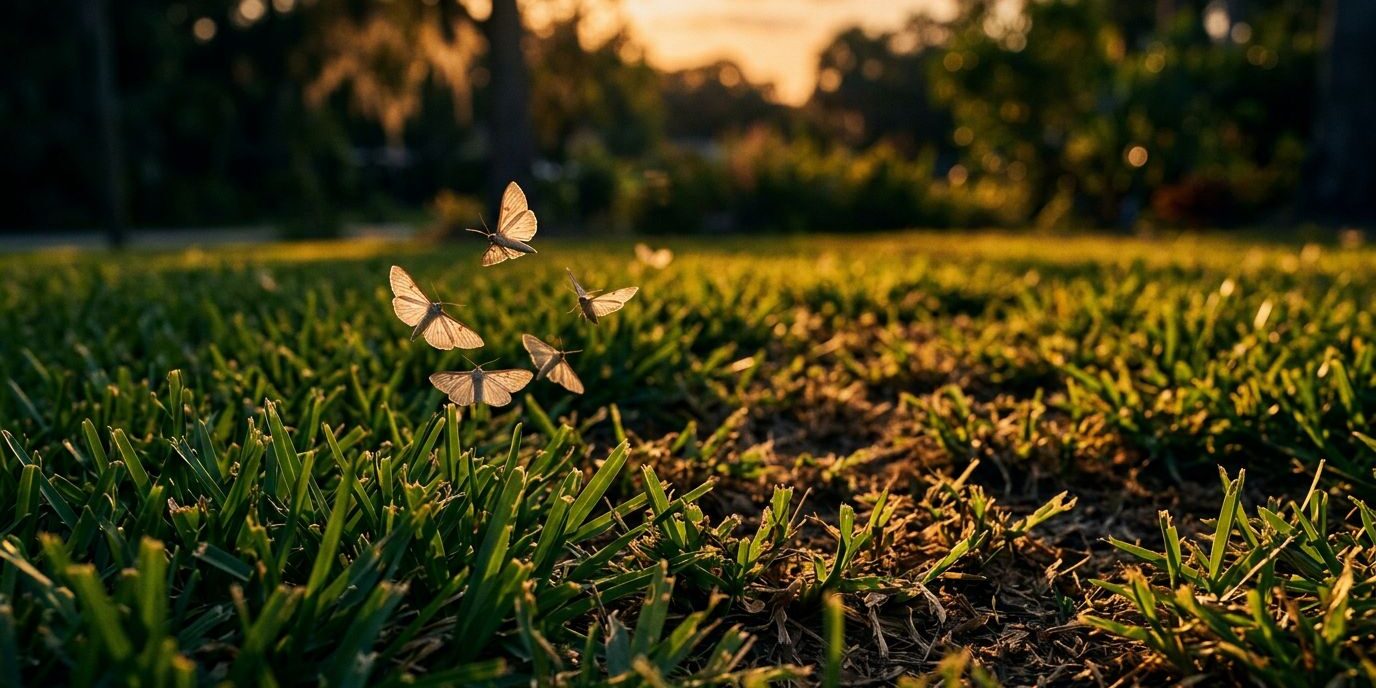
The adult moths are small and light-colored. When you walk across the lawn at dusk, they may flutter up in a quick, jerky pattern. That does not mean the lawn is doomed, but it serves as a major clue. If I notice adult moths and ragged grass tips at the same time, I start looking closer.
Warm weather also accelerates the process. A light feeding issue can turn into visible turf thinning fast, especially on stressed areas near sidewalks, driveways, or spots prone to reflective heat. HOA common areas and large commercial properties often miss the early stage because no one inspects every square foot every day. By the time the brown patches draw attention, the larvae may have been feeding for a long time.
A lawn can look “dry” and still be dealing with webworms. Brown does not always mean it needs more water.
What tropical sod webworm damage looks like up close
The earliest sign is easy to miss. Grass blades start showing window feeding, where surface tissue is scraped away and the blade looks thin or translucent. After that, the leaf blades look ragged, chewed, and uneven. The lawn stops looking crisp.
UF/IFAS has a strong visual guide to tropical sod webworms if you want to compare what you are seeing in your yard to confirmed examples.
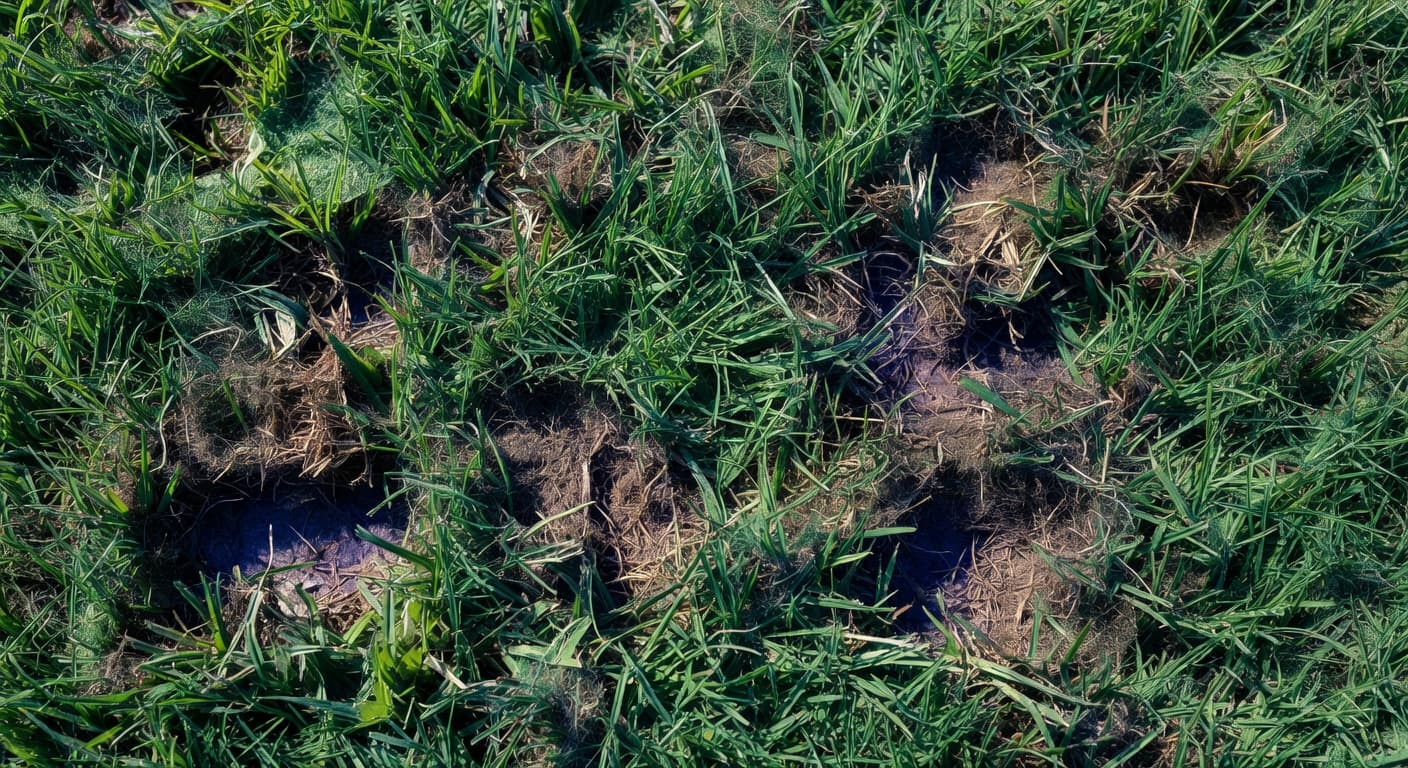
As feeding gets heavier, the lawn starts to look singed in spots. Patches turn tan or brown. The turf thins from the top down because webworms feed on the leaves, not the roots. That is a big clue. If the grass pulls up easily with no roots, I start thinking about other issues too.
Another sign is timing. Damage tends to stand out after nighttime feeding. You might mow and think the lawn looks rough again much faster than it should. You might also see birds pecking one area more than usual. Birds are not a perfect diagnostic tool, but they notice larvae before most people do.
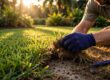
When I inspect a suspected area, I part the grass and look into the thatch. Small green to brown caterpillars may be tucked low in the canopy. While inspecting, professionals also look for tiny egg clusters on the foliage. If I do not see the pests in daylight, I still do not clear the lawn. These insects are better at hiding than many homeowners expect.
On larger properties, pattern matters. Webworm damage is usually patchy at first. It rarely paints the whole lawn evenly. Instead, I see irregular sections where the blades look shredded and the turf color drops off. That chewed, then browned sequence is what keeps pointing me back to tropical sod webworms.
Don’t confuse webworms with fungus, chinch bugs, or drought
A lot of lawn problems start with the same symptom, which is brown turf. That is why people misread this pest all the time. I like to compare what part of the plant is failing, how the patch expands, and what I see at ground level.
This quick comparison helps:
| Problem | What I usually see | Where the damage starts |
|---|---|---|
| Tropical sod webworms | Ragged blade tips, chewing damage, patchy browning | On the grass blades |
| Drought stress | Folded blades, dry soil, wider wilted areas | Whole plant reacts to low moisture |
| Chinch bugs | Yellowing that turns brown, damage in hot sunny spots | At the base of the plant |
| Lawn disease | Distinct lesions, rings, or fuzzy growth in some cases | Depends on the disease |
The biggest takeaway is simple. Webworms leave a chewed look on your turfgrass. Disease does not clip grass blades into frayed edges, and drought does not create that scratched up appearance. Whether you have St. Augustinegrass or seashore paspalum, it is important to accurately identify the culprit to avoid unnecessary or improper pesticide applications.
I also watch how the lawn responds to irrigation. If the area gets water and still looks shredded, adding more water will not fix the cause. In fact, overwatering can stack a second problem on top of the first.
The Aggie Turf fact sheet is useful here because it shows how heavy feeding changes turf height and texture. Even though it is from Texas A&M, the feeding pattern translates well to Florida lawns.
If you want another simple field clue, go out around dusk. When small moths pop out ahead of your steps, pay attention. This short Florida lawn identification video shows the kind of activity many homeowners miss during the day.
What I do when I spot the damage
I do not throw product at a brown patch and hope for the best. First, I confirm exactly what I am dealing with. That is the whole game.
My first move is a close inspection of the damaged edge, not the dead center. The margin between healthy and injured turf usually tells the clearest story, as that is where fresh feeding shows up.
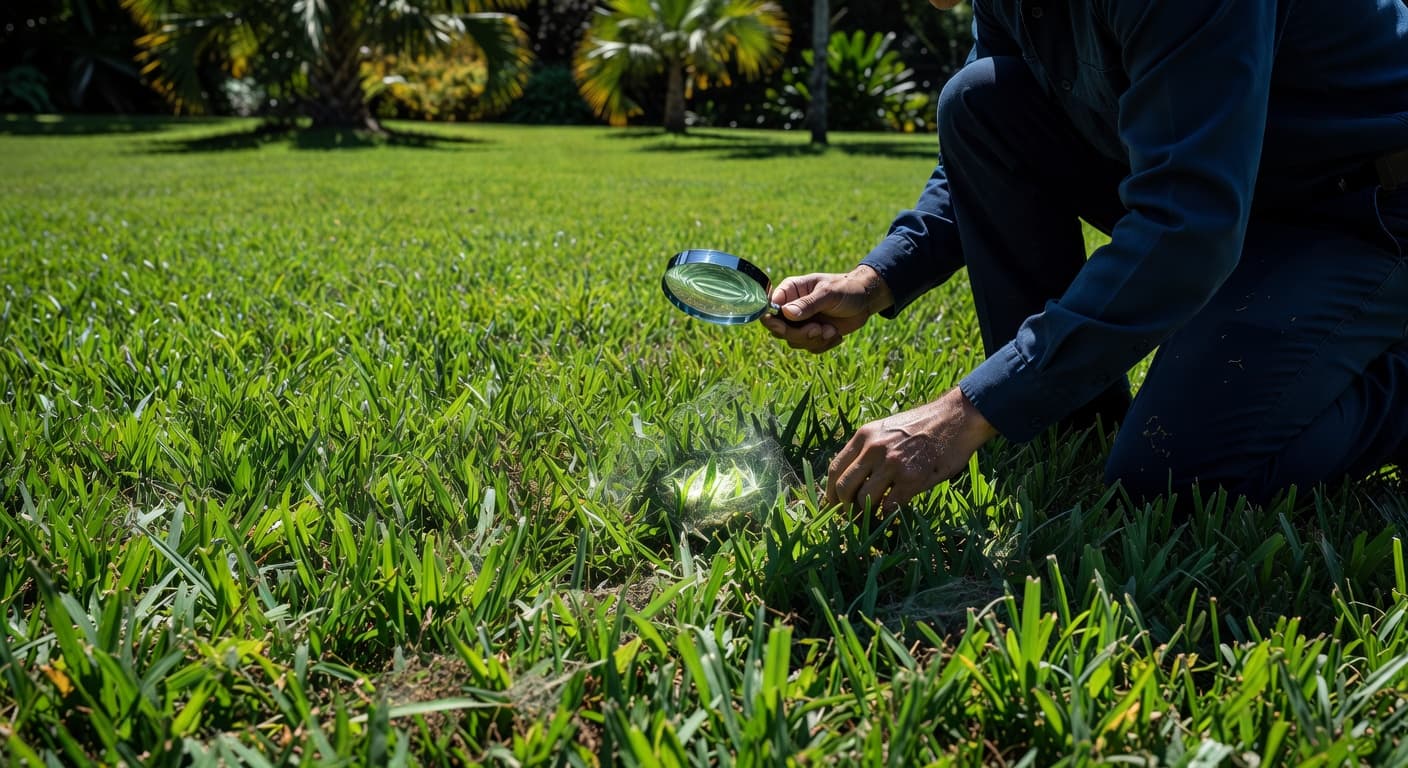
Then, I apply the principles of integrated pest management by working through a methodical checklist:
- I look for ragged blades and thin windowed tissue.
- I check the thatch and lower canopy for small caterpillars in their active larval stage, while also looking for hidden pupae in the debris.
- I watch the lawn at dusk for adult moth activity.
- If needed, I use a soapy water flush to bring hidden larvae to the surface.
If I confirm webworms, I act while the infestation is still localized. This approach is better for the lawn and better for the budget. On HOA and multi-property sites, early detection and targeted treatment keep one damaged section from turning into a wider aesthetic problem.
When selecting an insecticide, I prioritize options that are effective against the pests while protecting beneficial organisms in the soil. I also avoid common mistakes. I do not scalp the area, and I do not dump fertilizer on it to green it up. Fresh fertilizer can push tender growth before the pest issue is fully resolved, and scalping piles unnecessary stress onto already damaged turf.
Treatment works best when it aligns with the pest’s activity and the specific life stage present in the lawn. That is where professional diagnosis helps, because not every caterpillar problem is the same and not every brown patch requires an insect treatment. After control, the grass still needs time to grow out the blade loss. If the roots are healthy, recovery is usually much better than the patch first suggests.
How I reduce repeat outbreaks in warm-season turf
No lawn is pest-proof, but some lawns invite repeat problems more than others. I pay close attention to mowing height, irrigation, thatch, and routine scouting to maintain healthy turfgrass.
Mowing height matters because scalped turfgrass gets stressed fast in Southwest Florida heat. Stressed turf has less margin for feeding damage. I keep the grass at the proper height for the variety, and I avoid taking off too much at once. This is especially important for high-maintenance warm-season turfgrasses like St. Augustinegrass and bermudagrass, which require precise care to thrive.
Irrigation matters too. A lawn that swings between soggy and dry does not recover well. Deep, sensible watering beats shallow daily watering, as it helps turfgrass stay stronger and makes other issues easier to read.
Thatch is another piece people often skip. Webworm larvae hide low in the canopy, so a heavy layer of thatch gives them cover. If I see recurring surface feeders in the same areas, I look at the turf structure, not only the insect count.
For HOAs and property managers, I recommend regular scouting during warm, rainy stretches. One pass at dusk can reveal moth activity before residents start sending photos of brown patches. Catching these signs early is far more effective than reacting after the damage is done. If these cultural controls and monitoring efforts fail to keep populations in check, I consider a targeted, timely application of an insecticide to prevent further injury.
I also think in zones. Sunny edges, heat-stressed strips by pavement, and areas with a history of insect issues deserve extra attention. When I monitor those spots first, I catch more problems early and waste less time guessing.
Frequently Asked Questions
How do I distinguish between webworm damage and drought?
Webworm damage presents as physically chewed, frayed leaf blades, whereas drought causes the grass to fold and wilt entirely. If you provide irrigation and the lawn remains thin and ragged-looking rather than recovering, it is likely a pest issue rather than a water deficiency.
Can I just use a standard insecticide to fix the problem?
While many insecticides can kill webworms, effective control requires identifying the life stage and properly timing the application. It is important to target the larvae during their active feeding cycles rather than simply guessing, as this avoids unnecessary environmental impact and wasted costs.
Do birds in my yard mean I have a webworm infestation?
Birds are often the first to notice an increase in larvae populations and may peck at infested areas before you see visible damage. If you notice localized bird activity paired with thinning or browned grass patches, it serves as a strong signal to perform a close inspection of your turf.
Will my lawn recover after the webworms are gone?
If the root system remains healthy, the lawn will typically bounce back once the pest pressure is removed. Avoid fertilizing immediately or mowing too short after treatment, as the grass needs time to focus its energy on growing out the damaged blade tips.
Final thoughts
Tropical sod webworm damage follows a distinct pattern. The grass blades look chewed, the lawn turns patchy, and the problem usually presents itself much faster than a standard watering issue.
When I catch these signs early, the turfgrass has a much better shot at a healthy recovery. The key is not to panic, but to practice proper recognition. A close look at the leaf blades tells the story long before the damage spreads and the whole yard turns brown.