Chinch bug damage in St. Augustine grass is easy to spot once you know what to look for, but mistaking it for drought or fungus is the most frustrating part of lawn maintenance. The real challenge lies in figuring out why the grass died in the first place.
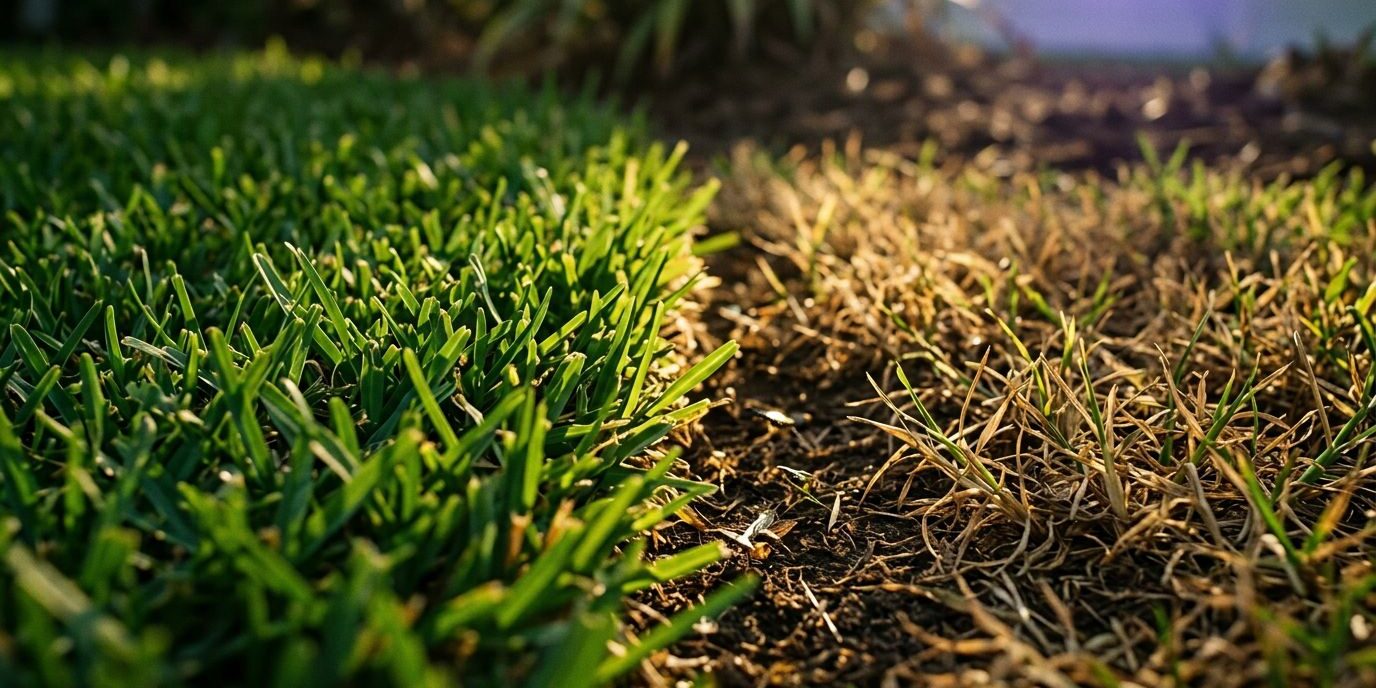
When I look at chinch bug damage in St. Augustine grass, I do not start with the brown patch itself. I start with the pattern, the location, and the thin edge where green grass is starting to give up. That edge tells me more about the infestation than the dead center ever will.
Key Takeaways
- Focus on the Edge: Don’t look at the dead center of a patch; the most critical information is found at the active border where healthy grass meets fading, yellowing turf.
- Know the Signs: Chinch bugs inject toxic saliva that prevents water transport, causing grass to look parched and brittle despite adequate irrigation.
- Target Hot Spots: These pests thrive in hot, dry, sunny locations, especially near driveways, sidewalks, and areas with sandy soil.
- Use the Right Inspection: Because they hide in the thatch, you must part the grass at the soil surface or use a soap flush/cylinder test to accurately confirm their presence.
The first signs are subtle, then they get ugly fast
The earliest signs of chinch bug damage rarely look dramatic. At first, I notice yellow patches that seem a little off color, shifting from a rich green to a dull, sickly hue. A few days later, these areas can look sun-scalded, eventually turning into brown brittle grass that resembles burnt straw.
That shift matters because the southern chinch bug feeds in groups, causing the lawn to decline in visible stages. The outer edge starts fading while the middle is already crispy. According to the UF/IFAS topic page on southern chinch bugs, these insects live in the thatch layer and feed on the plant by sucking out phloem sap. As they feed, they inject a toxic saliva that prevents the grass from transporting water, which is why the lawn looks thirsty even when moisture is adequate.
Another clue is the texture. When I walk through an active area, the blades feel dry and brittle, but the soil underneath may not be bone-dry. The area can look like simple drought from ten feet away, but it reveals its true nature once I get down on one knee to inspect the irregular patches of dying turf.
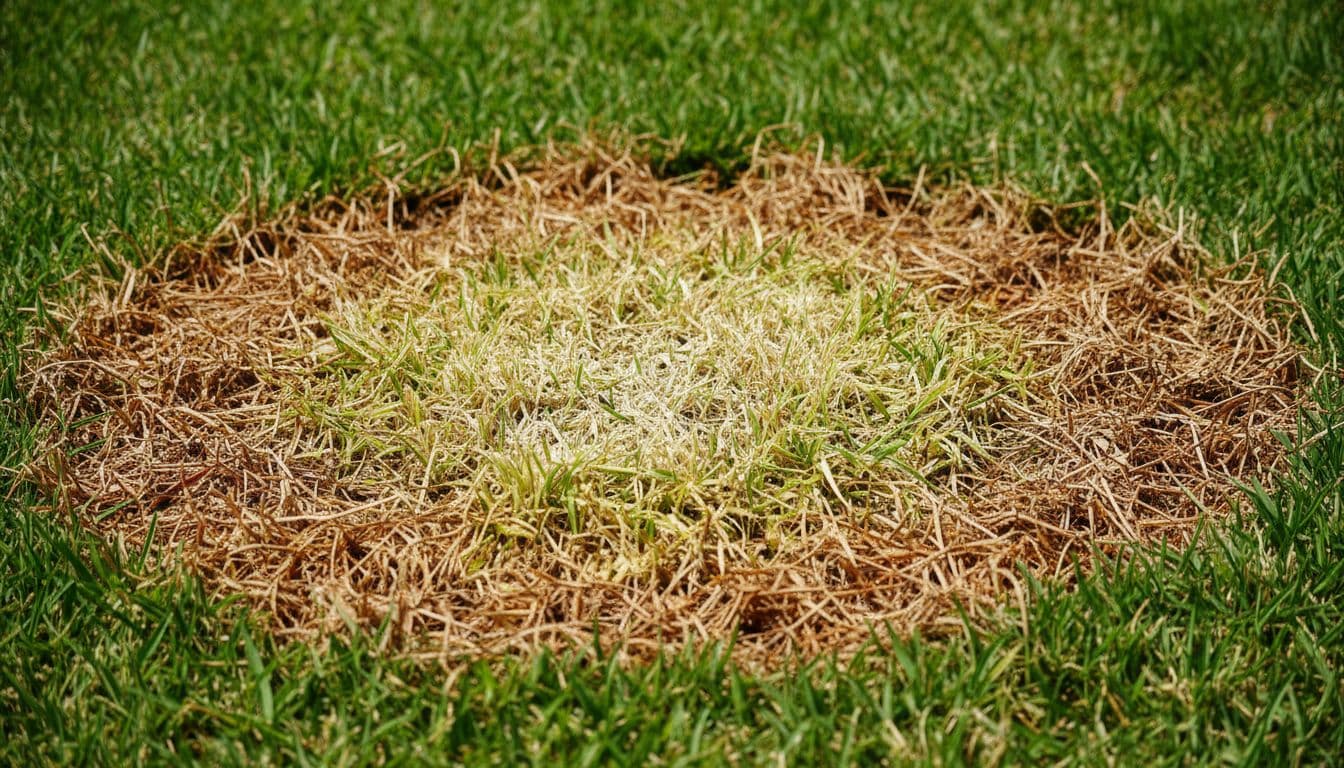
I pay close attention to the border between healthy and damaged turf. If that line looks uneven, with yellowing grass creeping outward, I get suspicious. Chinch bug damage does not usually appear as one tidy, finished spot. It looks active, and it looks like it is moving.
That moving edge is the real giveaway. The dead center tells me where the bugs were, but the spreading edge tells me exactly where they are right now.
Where chinch bug problems usually start in St. Augustine lawns
Chinch bugs thrive in the rougher parts of the yard. I usually find the first signs of damage in hot, dry weather, particularly in sunny locations along driveways, sidewalks, curbs, and other spots that dry out quickly. Lawns planted on sandy or shell-heavy soil are often more exposed to these pests.
That is not just a guess. A UF/IFAS fact sheet on southern chinch bugs notes that injury often shows up first in water-stressed areas, lawn edges, and sections growing in full sun. While some homeowners assume that simply increasing irrigation will solve the problem, these insects often persist regardless of water levels. If one side of the yard bakes all afternoon, that is exactly where I look first.
The spread follows a distinct pattern. A small yellow patch appears and then grows, with the edge eventually turning brown as the southern chinch bug moves outward. Before long, a nearby patch starts showing the same symptoms. Left alone, those areas can join into one large, dead space. It can feel like the turfgrass is burning from the outside in.
In Florida, this trouble can last through much of the warm season due to the rapid life cycle of the pest. A UF/IFAS Extension article on managing southern chinch bugs points out how important this pest is in St. Augustinegrass management. If I see damage growing during the warmer months, I take it seriously.
If I only inspect the middle of a dead patch, I can miss the bugs completely. I always check the green-to-brown edge first.
How I inspect the thatch and soil surface for chinch bugs
This part is simple, and it is where most good diagnoses happen. Chinch bugs stay low. They hide in the thatch layer, around stolons, near the soil surface, and around the crowns. If I stand there and stare at the lawn, I won’t see much. I have to part the grass and look where the blades meet the ground. If you have been neglectful with dethatching, that thick thatch layer provides the perfect cover for these pests to thrive.
The bugs are small, but they are visible. Nymphs are reddish-orange with a pale band across the back. Older nymphs and adult chinch bugs are darker, often black with white wings folded over the back. These adult chinch bugs move fast, almost like tiny seeds with legs.
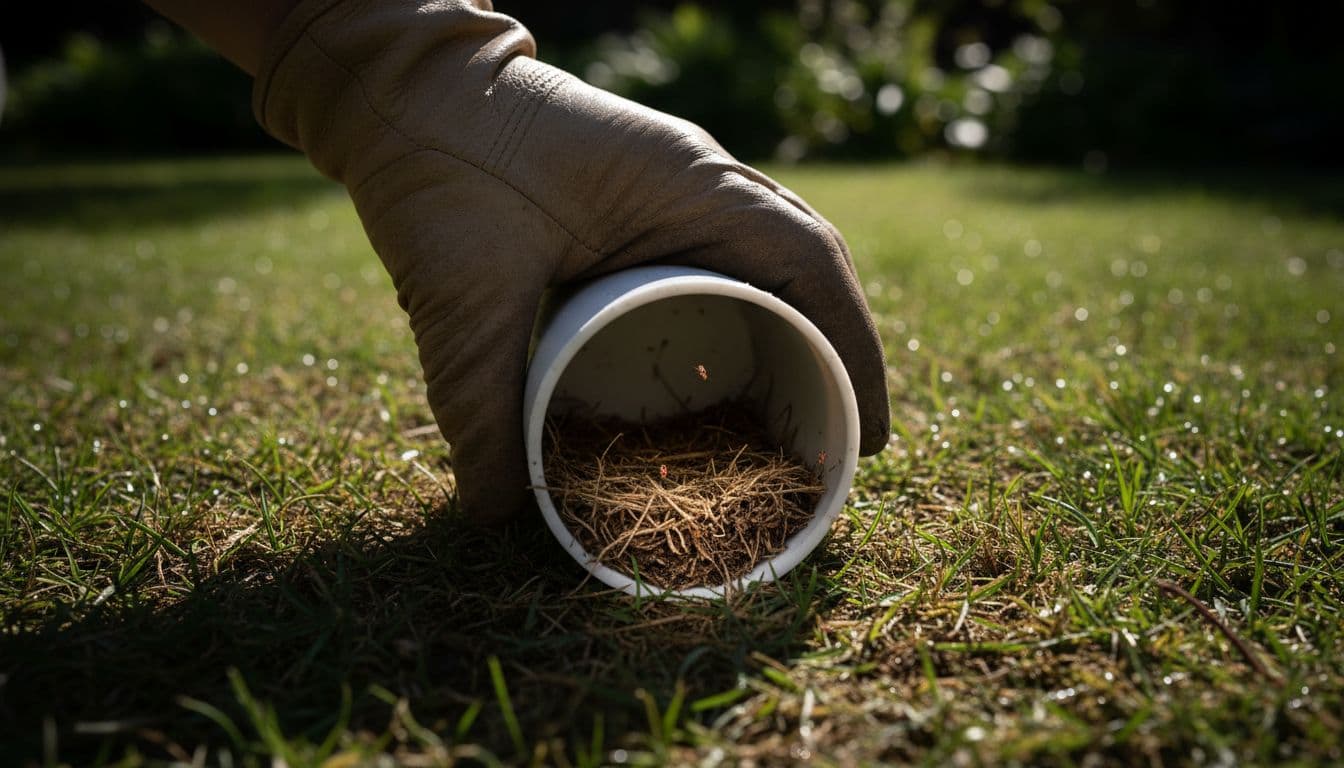
When I am checking my own lawn, I follow the same short routine every time:
- I pick the transition zone, not the dead center. I want one foot in green grass and one foot in damaged grass.
- I spread the blades apart and watch for a few seconds before touching anything. Bugs often start moving once the shade is gone.
- I inspect the thatch, stolons, and soil surface with good light. A phone flashlight helps more than people think.
- If I still do not see them, I use a simple coffee can test or a soap flush test. For the coffee can test, I press a bottomless can or open cylinder a couple of inches into the turf, fill it with water, and wait a few minutes. If I use a soap flush test, the irritation causes the insects to climb up the blades of grass. In either case, the bugs often float to the surface.
That last step helps when the bugs are buried in the thatch. I do not need to dig deep into the soil because chinch bugs are not root feeders. They stay near the surface. If several show up in a small test area, I stop calling it maybe.
I look for live insects before I blame anything else. Brown grass by itself is a symptom. Live bugs at the thatch line turn that symptom into a real answer.
How I tell chinch bug damage from drought, fungus, grubs, pet urine, and nutrient issues
This is where turfgrass often fools people. Five different problems can make St. Augustine look half-dead, and they do not all need the same fix. When I am sorting it out, I compare the pattern first, then the blade appearance, then the roots, then the bug activity.
Here is the quick version:
| Problem | What I usually see | Quick check |
|---|---|---|
| Chinch bug damage | Yellow patches that turn orange-brown, often in sunny spots, with a patch that keeps expanding | Inspect the green-brown edge and the thatch layer |
| Drought stress | Folded or wilted blades, footprints linger, dry areas may match sprinkler coverage | Water and recheck, then look for bugs at the surface |
| Fungal disease | Lesions on blades, matted grass, ring-like patches in humid weather | Check individual blades for spots or rot |
| Grub damage | Turf thins and peels up because roots are gone | Tug on the grass and look for white C-shaped grubs |
| Pet urine | Small round burn spots, often with a dark green ring | Look for repeated dog paths or isolated circles |
| Nutrient issues | Broad, more even discoloration across a larger area | Compare the whole lawn, not one moving patch |
For me, the biggest mix-up is drought. Chinch bug damage often starts in dry, sunny places, so it feels like the answer has to be watering more. However, drought stress usually looks more uniform. The turfgrass may wilt, fold, or leave footprints when I walk across it. After a solid irrigation cycle, drought-stressed turf often improves. Chinch bug damage usually does not bounce back that way, and the patch keeps creeping outward. If the irrigation does not help, you might need a targeted insecticide containing bifenthrin to manage the infestation.
Fungal disease looks different once I get close. I check the blades themselves. If I see lesions, rotting tissue, slimy areas, or a pattern that showed up after humid weather, I think disease before insects. Chinch bug damage is more about the patch shape and the live insects at the base of the grass, not spots scattered across the blade. As you investigate, keep an eye out for beneficial insects like big-eyed bugs, which are natural predators that help keep pest populations in check.
Grubs fool fewer people once they do the tug test. If the turf lifts like loose carpet, the roots are gone, and grubs jump to the top of my list. Chinch bugs do not do that. They damage stems, crowns, and stolons near the surface, but the grass usually does not peel away from the soil in sheets.
Pet urine is usually smaller and more local. I expect a roundish burn spot, often with a dark green ring around it. It does not keep advancing across a sunny strip of turfgrass like a slow fire line. If the same small spots keep showing up near a gate or along a pet route, I do not need to overthink it.
Nutrient problems are broader. A nitrogen fertilizer shortage, for example, tends to make the lawn look pale over a wide area. It does not usually create one active patch with a sharp front edge and live bugs hiding at that front. If you have adjusted your mowing height and addressed the soil fertility but the patch continues to grow, it is time to call for professional lawn care to evaluate the situation.
If I had to boil all of this down to one rule, it would be this: chinch bug damage looks like a problem that is spreading, not a problem that simply happened. Effective cultural control, such as proper irrigation and maintenance, is your best defense against these pests. Ground pearls cause similar yellow, thinning patches in St. Augustine grass but hide below the soil surface. Learn how to spot them early before the damage spreads.
Frequently Asked Questions
How can I tell the difference between drought and chinch bug damage?
While both may look like dry, brown grass, drought-stressed turf typically responds well to irrigation and shows signs like leaf folding or footprints that remain. Chinch bug damage persists even when moisture is adequate, and the patches continue to expand outward in an irregular pattern.
Can I treat chinch bugs with just water?
No, increasing your watering schedule will not eliminate a chinch bug infestation. While these pests thrive in hot, dry spots, they will continue to feed on your grass regardless of how much water you apply, so an insecticide specifically targeting these pests is often necessary.
When is the best time to check for chinch bugs?
Monitoring should occur throughout the warmer months when the pest’s life cycle is most active. Regularly inspect high-risk areas, such as sections of your lawn that receive full sun throughout the day, to catch infestations before they spread across your entire yard.
Why does my grass stay brown even after I think the bugs are gone?
Once chinch bugs have fed on the grass, they inject a toxic saliva that destroys the plant’s ability to transport water, often killing the stems and crowns. Even if you successfully remove the insects, that section of grass may already be dead and will require overseeding or recovery time to return to its original state.
Conclusion
The best clue is almost never the dead patch itself. It is the edge where healthy St. Augustine grass meets fading turfgrass and the bugs are still actively feeding.
When I slow down, check the sunny trouble spots, and inspect the thatch at the soil surface, the picture gets a lot clearer. By monitoring these areas throughout the year, including the overwintering period, you can track how populations shift. While high humidity can sometimes encourage the growth of a natural Beauveria fungus to keep numbers in check, you should not rely on it to save your lawn. If the patch is expanding and I can find bugs at that moving edge, I know I am looking at definitive chinch bug damage rather than drought, disease, or other common lawn issues.