Southwest Florida lawn pests do not wait for a clean calendar or a neat season. Warm weather, heavy rain, irrigation, and sandy soil give insects plenty of room to move, feed, and spread before the damage looks obvious.
We see the same pattern in Naples, Fort Myers, and Bonita Springs all the time. A yard full of healthy St. Augustine grass looks fine, then a few yellow spots turn into patchy turf, and the homeowner starts guessing at watering, fertilizer, or disease.
A monthly checklist keeps that guesswork down. It helps us catch the early signs, sort out the cause, and protect the lawn before the problem takes hold.
Key Takeaways
- Consistent Monitoring is Essential: Southwest Florida’s climate allows pests to thrive year-round, making monthly inspections critical for identifying damage before it spreads.
- Differentiate Between Stress and Pests: Many pest issues mimic drought, fungus, or fertilizer burn; careful observation of patterns is necessary to choose the correct treatment.
- Follow a Routine Path: Walking your yard in the same grid pattern every month makes it easier to spot subtle changes in turf health, moisture levels, and insect activity.
- Focus on Prevention: Maintaining proper mowing heights, balanced fertilization, and manageable thatch levels creates a resilient lawn that naturally resists pest infestations.
- Identify Patterns Early: Recurring brown or thinning spots are clear indicators of underlying pest pressure that require targeted action rather than just adjustments to irrigation or fertilizer.
Why Monthly Checks Matter in Southwest Florida
If a lawn in a cooler region can wait weeks for trouble, Southwest Florida is different. Our warm months stretch long, and many pests stay active through most of the year. Destructive intruders like chinch bugs, mole crickets, sod webworms, white grubs, bermudagrass mites, and fire ants can all show up when the turf is stressed.
The key issue is timing. Pest damage often starts below the surface or in small feeding spots, so the turfgrass may look thirsty long before anyone sees insects. That is why a monthly walk-through matters. It gives us a way to compare one month to the next and spot a change while it is still small.
That matters even more in Collier and Lee County, where every St. Augustine lawn deals with salt, heat, traffic, and fast weather swings. A patch that looks like drought, fungus, or fertilizer burn can actually be pest feeding instead. The treatment changes depending on the cause, so guessing usually wastes time and can make the lawn weaker.
For a clear reference on the pests that show up in Florida turf, UF/IFAS lawn insect pests is a solid place to start. It is a helpful reminder that a brown spot is not always a watering problem.
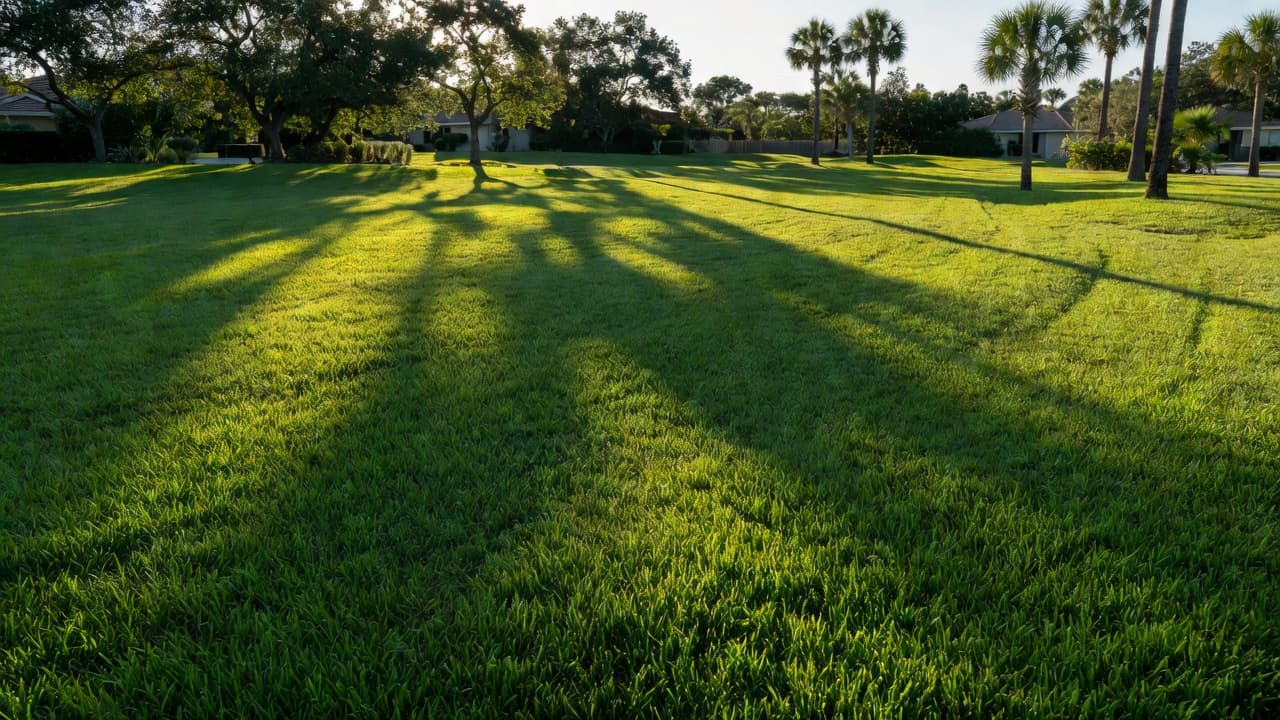
Healthy turf can hide southwest Florida lawn pests until the damage starts spreading.
A lawn can look healthy on top and still have trouble underneath. Monthly checks help us find the pattern before it turns into a bigger repair.
A Monthly Pest Checklist We Follow
The monthly routine does not need to be long. It needs to be steady, and it should always follow the same path.
We like to start at the driveway or front walk and move across the property the same way every time. That keeps the inspection consistent and makes changes easier to spot.
- We walk the yard in a slow grid, especially near irrigation heads, sunny edges, mulch lines, and shaded spots where moisture lingers. If you suspect hidden activity, perform a drench test to see if pests move to the surface.
- We look for thin turf, yellowing grass, and small brown areas that get wider from one visit to the next.
- We part the grass blades at the crown and check the thatch layer for insects, loose soil, or tiny pellets near the base of the plants.
- We pay close attention after rain or heavy watering, because some damage is easier to see when the lawn is damp.
- We inspect the edges along curbs, driveways, and beds, since pests often move in where turf is already under stress.
- We note ant mounds, spongy patches, and spots that feel soft underfoot, because those are common clues that the problem is below the surface.
A checklist like this works because it creates a clear comparison. When we see the same lawn every month, we can tell the difference between a one-time dry spot and a spreading pest issue. We can also spot when the problem starts in one corner and moves across the yard.
This is the kind of simple routine that saves time later. It keeps the lawn observation honest, and it helps us make better decisions before the damage gets expensive.
What the Damage Usually Looks Like
The same brown patches can mean different things, so the pattern matters. Pest feeding usually leaves a distinct shape, texture, or line of spread, and that clue tells us where to look first.
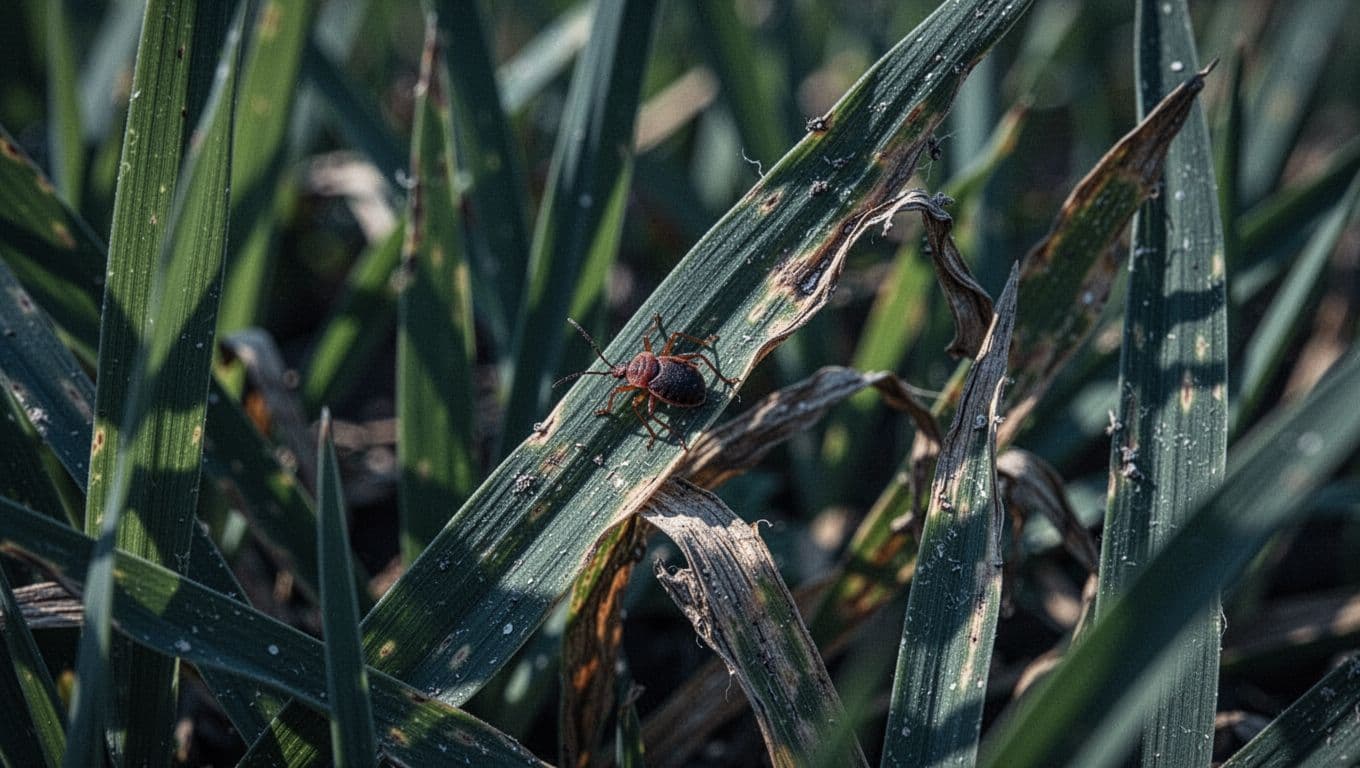
Fresh lawn damage often starts with a small pattern that is easy to miss on a quick walk-through.
Chinch Bugs and Dry-Looking Patches
Chinch bugs feed on sap within the grass blades, so the damage often begins with yellowing that looks like drought. The southern chinch bug is notorious for causing these issues; the resulting brown patches may spread across sunny turf, especially where the lawn is already thin or stressed. We check the edges of those areas first, because chinch bugs usually begin their feeding there.
Sod Webworms and Fall Armyworms
Sod webworms chew leaf blades, which leaves ragged tips and thin turf. Fall armyworms can move quickly and strip a section of grass in a short time, especially after warm, wet weather. If the lawn changes almost overnight, we pay close attention to these pests.
Mole Crickets, Billbugs, and Loose Turf
Mole crickets tunnel through the root zone and loosen the soil, while billbugs also contribute to thinning turf by feeding on roots and stems. The grass can feel soft, uneven, or easy to pull up, and the roots may not hold the way they should. In a sandy Southwest Florida yard, that kind of damage, along with the hidden presence of white grubs, can spread fast.
Fire Ants and Disturbed Edges
Fire ants do not feed on grass, but their mounds still damage the yard. They break up mowing patterns, disturb roots, and create rough spots around beds and open areas. That is why we treat them as part of the lawn problem, not as a separate issue.
If the damage spreads quickly, we do not assume it is just heat or watering. We check the pattern, the weather, and the soil, then match the response to the pest.
Prevention That Fits Heat, Rain, and Sandy Soil
The best prevention is steady turf care. In Southwest Florida, small maintenance problems can give pests a place to settle in, and once the lawn is stressed, it loses ground fast. That is why we focus on the basics of consistent lawn maintenance before we reach for chemical treatments.
| Monthly habit | What it helps us catch | Why it matters |
|---|---|---|
| Maintain proper mowing height | Scalping and weak spots | Stressed grass invites pests fast |
| Follow a balanced lawn fertilization | Weak or yellowing blades | Well-fed grass resists infestation |
| Check thatch layer for debris | Hidden feeding areas | Thick buildup shelters insects |
| Inspect irrigation and drainage | Leaks, runoff, and hot spots | Water issues often look like pest issues |
| Recheck after storms or long rain | New damage and fresh mounds | Weather changes can reveal activity fast |
This approach aligns with integrated pest management, which prioritizes long-term prevention over quick fixes. We start with careful observation and habitat adjustment, using targeted control only when pressure builds. Whether you are managing bahia grass, bermuda grass, zoysia grass, or st. augustine grass, these methods allow us to explore biological alternatives first. For instance, we may introduce beneficial nematodes or encourage natural predators to manage populations before considering a conventional insecticide application. By keeping the turf healthy and resilient, we reduce the need for harsh interventions.
When a recurring patch needs a closer look
If the same section keeps thinning out, or if the damage returns after watering changes, the problem is usually bigger than a one-time fix. A focused inspection can separate pest pressure from poor irrigation, soil stress, or disease, and that saves time.
That is where consistency matters most. A lawn that gets checked, corrected, and watched again has a better chance to stay healthy through another wet season, another hot stretch, and another round of pest pressure.
Frequently Asked Questions
Why does my lawn look like it is drying out even when I water it regularly?
In Southwest Florida, pests like chinch bugs feed on the sap inside grass blades, which causes yellowing and browning that looks exactly like drought stress. If your lawn stays brown despite consistent watering, you should inspect the thatch layer for insects before assuming you need more water.
What is a drench test and how do I perform one?
A drench test is a simple way to bring hidden pests to the surface of your soil. You mix a small amount of liquid dish soap with water and pour it over a suspected area; the irritation forces insects like mole crickets or sod webworms to emerge, making them easier to identify.
How often should I inspect my lawn for pests?
We recommend a thorough, consistent inspection at least once a month. Because of the rapid growth and heat cycles in Naples and Fort Myers, monthly check-ins allow you to catch early signs of activity before they turn into expensive, widespread turf damage.
Should I treat fire ant mounds separately from other lawn pests?
Yes, fire ants should be managed as part of your overall turf health plan because they disturb root systems and create uneven surfaces that hinder mowing. While they may not feed directly on your grass blades like chinch bugs, their presence causes structural damage that leaves your lawn vulnerable to other issues.
A Monthly Habit That Keeps Damage Smaller
A monthly pest check is a core component of effective lawn maintenance, and it gives your St. Augustine lawn a much better chance to stay healthy throughout the year. When we inspect the same yard every month, we notice subtle changes before they turn into widespread damage.
That is the real value of a checklist in Southwest Florida. It helps us accurately identify if lawn stress is caused by watering issues, disease, or common local pests. By catching signs of chinch bugs, mole crickets, sod webworms, fall armyworms, or two-lined spittlebugs early, we can often manage the population without resorting to an excessive insecticide application.
If the same patches keep reappearing, we should treat that as a pattern. For instance, recurring thinning in sunny areas often signals chinch bugs, while tunneling or mounds may indicate mole crickets are active. The sooner we confirm the cause, the easier it is to protect your turf and keep it looking vibrant, often allowing us to avoid a heavy insecticide treatment altogether. Regular monitoring remains the most efficient way to keep your lawn resilient through another long season.