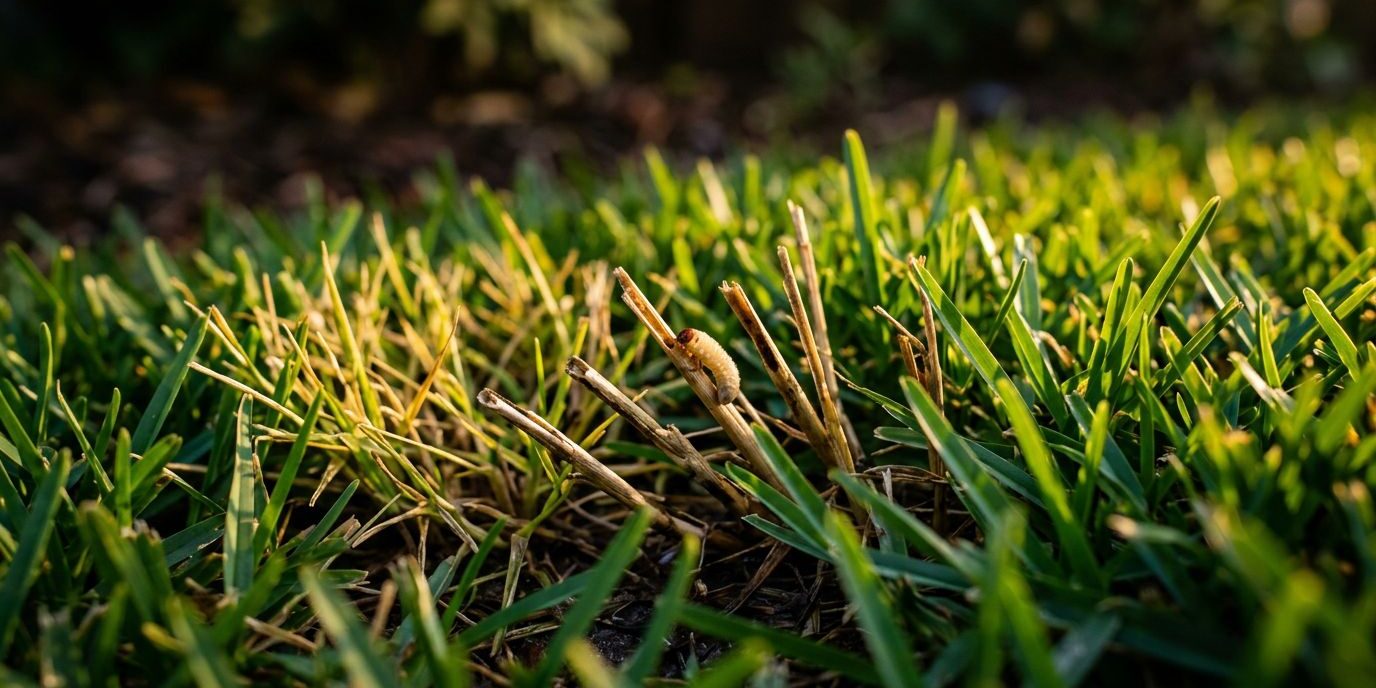
Hunting billbugs often cause extensive damage to St. Augustinegrass before most homeowners notice the presence of an insect. The first clue is typically a thin, yellow-brown patch that fails to recover after watering. Because similar symptoms can arise from chinch bugs, disease, drought, or poor soil conditions in this popular warm-season grass, correct identification is essential.
Before choosing a treatment, it is vital to begin the scouting process to confirm the source of the lawn decline. Once hunting billbug activity is confirmed, early control, proper lawn care, and regular inspections can protect the remaining grass and reduce the risk of repeat damage.
Key Takeaways
- Hunting billbugs damage St. Augustine grass from inside the stems, stolons, and crowns.
- Yellow patches, loose turf, hollow stems, and legless larvae are key indicators of an infestation.
- Other issues like chinch bugs, root disease, drought, and irrigation problems can mimic damage caused by hunting billbugs.
- Effectively managing this turfgrass pest requires a combination of regular inspections, proper mowing and watering habits, and timely chemical treatments.
- Because hunting billbugs can cause rapid decline, severe or spreading damage warrants professional evaluation before you attempt to repair the lawn.
What Hunting Billbugs Do to St. Augustine Grass
Hunting billbugs, scientifically known as Sphenophorus venatus vestitus, are snout beetles that can attack warm-season turfgrass. While they are a notorious pest in St. Augustine grass, these insects also affect zoysiagrass, bermudagrass, and centipedegrass. The adult beetle is usually dark brown to nearly black, characterized by a distinct snout and a hard, compact body. However, the larvae are far more destructive than the adults. These larvae are small, legless grubs with pale bodies and darker heads.
The larvae feed inside grass stems, stolons, and crowns. Because these plant parts are responsible for transporting water and nutrients through the turfgrass, internal feeding during their life cycle can disrupt healthy growth even when the blades initially appear green. Damaged runners may break easily, causing sections of turf to lose contact with the soil.
The University of Florida’s hunting billbug identification guide includes images and information about the appearance of adults and larvae along with their specific feeding damage. We recommend comparing suspected insects with a reliable extension resource before treating the lawn.
Hunting billbugs are more likely to become a concern when turfgrass is already under stress. Poor irrigation, compacted soil, excessive thatch, low mowing, and root damage can all reduce the ability of the lawn to recover. A healthy lawn may tolerate some feeding, while stressed grass can develop visible thinning much sooner.
Damage often starts in scattered areas instead of covering the entire yard. That pattern can make the problem easy to overlook. However, larvae hidden inside the turf can continue feeding while the visible patch expands.
Identifying Hunting Billbug Damage Symptoms
The earliest signs of trouble are usually changes in color and turf strength. St. Augustine grass may develop pale green, yellow, or brown areas that appear irregular rather than perfectly circular. These patches can resemble drought stress, but affected grass often remains thin after irrigation.
We look for several signs during an inspection:
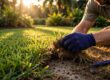
- The tug test: Damaged sections may lift easily or pull away from the soil because larvae have injured the stolons and crowns.
- Hollow stems: If you notice grass that breaks easily, inspect the runners to reveal tunnels inside the plant caused by feeding.
- Fine plant material: Sawdust like debris may appear around damaged stems or at the base of the grass.
- Legless larvae: These pale grubs with brown heads may be found inside stems, near crowns, or just below the thatch layer.
- Slow recovery: The lawn does not fill in normally after mowing, watering, or mild weather.
- Scattered thinning: Damage may begin in separate spots before several areas join together.
Consistent scouting is the most effective way for homeowners to catch an infestation early. Select a border between healthy and damaged grass, then perform a tug test on a small section of turf. Examine the stems, thatch, and upper soil for legless larvae or feeding tunnels. Avoid judging the entire lawn from one spot because billbug damage can be uneven.
Brown grass alone does not confirm hunting billbugs. The insect or its feeding evidence needs to be found before we select a control plan.
The time of year can also provide context. Warm conditions support billbug activity, but Florida lawns can experience insect pressure during more than one season. Irrigation patterns and lawn stress often influence when the damage caused by these larvae becomes visible.
Billbugs or Another St. Augustine Grass Problem?
Several common lawn problems can create the same yellow-brown appearance. Treating the wrong pest wastes time and may add unnecessary pesticide to the yard. Because healthy turfgrass is more resilient, it is important to confirm the source of damage before applying treatments.
Chinch bugs usually feed on the outside of grass blades and can cause yellowing, browning, and rapid decline in sunny, dry areas. A close inspection may reveal small black insects with white markings near the base of the grass. In contrast, hunting billbugs are found inside stems, stolons, or crowns. While St. Augustine is highly susceptible, homeowners with zoysiagrass should also be vigilant for similar symptoms, as these pests are not strictly limited to a single grass variety.
Take-all root rot can also cause thinning and yellowing in St. Augustine grass. Root disease often affects the root system and may appear after stressful weather or poor growing conditions. Drought damage tends to match irrigation coverage, soil depth, or areas near pavement and structures.
Other possible causes include:
- Compacted soil that limits root growth
- Excessive shade
- Poor drainage or constant moisture
- Chinch bug activity
- Nutrient problems
- Mower injury
- Excessive thatch
- Damage from recent herbicide use
The UF/IFAS guide to St. Augustinegrass for Florida lawns provides practical information about mowing, irrigation, fertilization, and common lawn concerns. These basic conditions matter because insect control will not correct the overall health of turfgrass that remains stressed by poor care.
We also recommend checking the irrigation system before assuming insects are responsible. Broken sprinkler heads, clogged nozzles, and uneven coverage can create distinct dry areas that look like pest damage. If the pattern follows the sprinkler zones, billbugs may not be the main problem.
How to Control Hunting Billbugs
Effective hunting billbug control starts with confirmation. We do not recommend blanket treatment based only on brown patches. Once larvae or clear feeding injury are found, a targeted treatment can be selected based on the insect’s location and life stage.
Many products used for turf insects are not equally effective against billbug larvae inside plant material. Effective control often relies on choosing the right insecticide. For example, active ingredients such as imidacloprid, bifenthrin, chlorantraniliprole, or thiamethoxam are often found in products labeled for this purpose. Product labels may direct applications toward the thatch or soil surface, while some treatments work better when applied before extensive damage develops. The correct product, timing, rate, and irrigation instructions must always be taken from the current product label.
Homeowners should read the entire label before applying any insecticide. Keep children and pets away from treated areas for the time listed on the label, protect water sources, and never apply more product than directed. Florida regulations and product labels can change, so older recommendations may not fit current use requirements.
Professional treatment is often appropriate when:
- Damage is spreading across multiple areas
- The pest cannot be confirmed
- The lawn has both insect and disease symptoms
- Previous treatments failed
- The affected turf is near ponds, drains, or other sensitive areas
- You want a treatment plan that includes monitoring and prevention
Our approach includes inspecting the turf, identifying the cause, and considering the lawn’s condition before treatment. That helps us avoid treating symptoms without addressing irrigation, mowing, soil, or thatch problems that can support continued decline.
Repair should wait until the active problem is under control. New sod or plugs placed into damaged soil may decline again if larvae remain. After treatment, we can remove badly damaged material, correct soil or irrigation issues, and help the lawn recover under suitable growing conditions.
Preventing Repeat Damage in Southwest Florida
Prevention begins with consistent turfgrass care. St. Augustine grass needs enough sunlight, water, nutrients, and proper mowing height to recover from normal stress. It also needs protection from practices that create weak, overly lush, or shallow-rooted growth common in warm-season grass varieties.
Keep mower blades sharp and avoid cutting more than one-third of the blade height at one time. St. Augustine grass is commonly maintained at a taller height than many other turf types. The proper setting depends on the cultivar and site, so we adjust mowing based on the lawn rather than using one setting everywhere.
Water deeply enough to wet the root zone, then allow the surface to dry as appropriate for the weather and soil. Frequent, shallow irrigation can create weak roots and may keep the lawn under constant stress. At the same time, overwatering can worsen disease and drainage problems.
Fertilizer should follow Florida recommendations and the lawn’s actual needs. Excess nitrogen can produce soft, fast-growing turfgrass that needs more mowing and may be more difficult to manage when pests arrive. Soil testing can help identify nutrient needs before fertilizer is applied.
We also check for conditions that make billbug damage harder to detect or control. Thick thatch, compacted soil, heavy shade, and poor drainage can all reduce recovery. Removing thatch should be done carefully because aggressive raking can injure St. Augustine runners.
Regular inspections are valuable, especially when a lawn has a history of billbugs. Scouting is an essential part of this process, and you can enhance your monitoring by using pitfall traps to catch adults during their active periods. Walk the property during routine mowing and look for new yellow patches, loose runners, or thinning near older damaged areas. Early detection gives the grass a better chance to recover before entire sections decline.
When to Call for Professional Lawn Pest Control
A few discolored blades do not always require a pesticide application. However, spreading patches, loose turf, and confirmed larvae should receive prompt attention. Waiting until the grass is fully brown can make recovery slower and increase repair costs.
Professional inspections are useful because billbugs may be hidden while another issue is visible above the soil. We perform careful scouting of the grass, thatch, stolons, crowns, irrigation patterns, and surrounding conditions. This broader inspection helps separate insect damage from disease, drought, and soil problems.
For homeowners in Fort Myers, Naples, Bonita Springs, and nearby communities, lawn conditions can change quickly with heat, rainfall, irrigation, and shade. A treatment that worked in one part of the property may not address the cause in another. Ongoing service can include inspection, exterior lawn treatments, cultural recommendations, and follow-up monitoring.
A practical control plan usually includes:
- Scouting the damaged and healthy areas for signs of activity
- Confirming billbugs or identifying another cause for the stressed turfgrass
- Selecting a labeled treatment when larvae or adults are present to prevent the next generation of eggs
- Correcting irrigation, mowing, or soil stress
- Monitoring for new damage
- Repairing turf after the problem is controlled
That combination protects the lawn more effectively than treating every brown patch the same way.
Frequently Asked Questions
How can I tell the difference between billbug damage and drought?
While both cause brown, thinning patches, billbug-damaged turf will lift easily from the soil during a ‘tug test’ due to chewed crowns. Unlike drought damage, which often corresponds to irrigation coverage or proximity to structures, billbug-damaged grass remains thin even after you apply adequate water.
Can I treat for billbugs if I only see a few brown spots?
We recommend against blanket treatments unless you confirm the presence of larvae or adult beetles first. Because other issues like chinch bugs or root disease can mimic billbug symptoms, misdiagnosis leads to unnecessary chemical application and fails to address the actual problem.
When is the best time of year to monitor for hunting billbugs?
Although they are most active in warm weather, Florida’s climate can support billbug activity across multiple seasons. It is best to inspect your lawn consistently during routine maintenance, keeping a close watch for thinning patches or loose runners throughout the year.
Will my St. Augustine grass grow back after a billbug infestation?
If the crown of the plant remains intact and you stop the insect feeding, the grass has a chance to recover with proper care. However, if the larvae have destroyed the stolons and roots in an area, you may need to clear the dead material and replant with fresh sod or plugs once the infestation is fully controlled.
Conclusion
Hunting billbugs damage St. Augustinegrass from inside the stems, meaning visible browning often appears only after the infestation is already established. Loose turf, hollow runners, sawdust-like debris, and the presence of legless larvae serve as more reliable indicators than color change alone.
We achieve the best results when we accurately confirm the pest, follow specific product labels, and correct lawn conditions that slow recovery. By committing to regular inspections and consistent care, homeowners can effectively protect their turfgrass and address the threat of hunting billbugs before the damage spreads across the entire lawn.