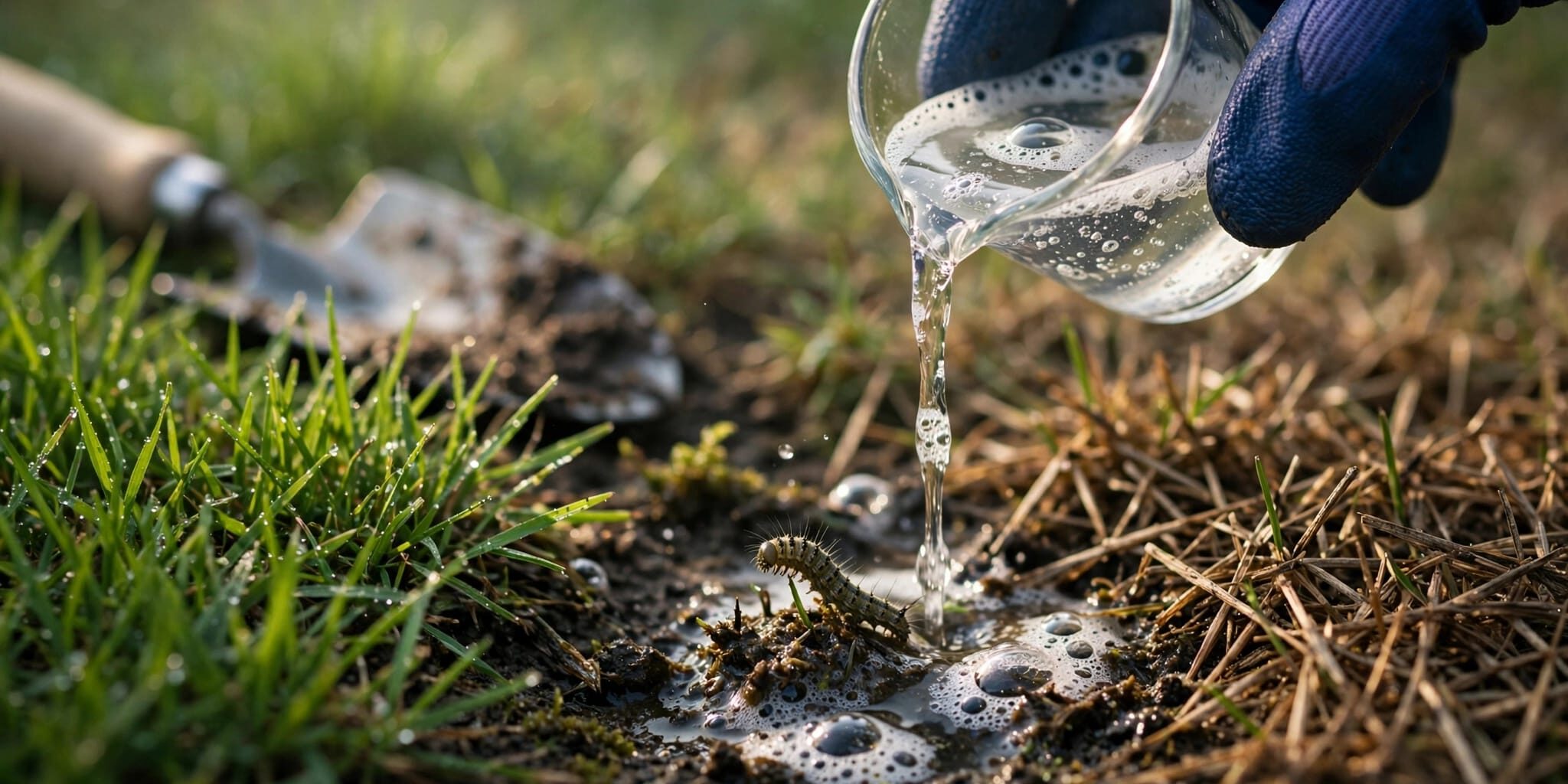
To find lawn caterpillars, pour a measured soap-and-water mixture over healthy grass beside a damaged patch. A soap flush test can bring hidden larvae into view within 5 to 10 minutes.
We recommend using it as a scouting tool, since insect damage can resemble drought or disease. Its findings can help determine whether an insect infestation warrants further investigation. Start by inspecting the grass, then test a small area before spending money on insecticide.
Key Takeaways
- Apply the solution at the green-to-brown border, rather than in the center of dead grass.
- Measure both the soap mixture and test area, then watch for insects for up to 15 minutes.
- Repeat in separate locations, identify what emerges, and connect those findings with fresh lawn damage before choosing treatment.
When a Soap Flush Test Is Useful
A soap flush helps locate insects hiding near the soil line and within thatch, the layer of plant material beneath green growth. The solution irritates susceptible insects, encouraging them to emerge where you can count them.
Look for Fresh Feeding Damage
Caterpillars remove leaf tissue, so inspect blades for ragged edges, clipped tips, or thin, scraped areas. Small green droppings and webbing near the soil line also support further investigation.
Tropical sod webworms shelter in thatch during daylight and feed at night. Fall armyworms can cause rapid thinning. However, birds pecking at the lawn or moths rising at dusk don’t establish an infestation by themselves.
Separate Blade Damage From Root Problems
Loose turf and weakened roots call for a different inspection. White grubs are root-feeding pests, while mole crickets can disturb roots through tunneling.
A negative caterpillar flush won’t rule out those problems. We recommend comparing the blades, roots, and irrigation pattern before deciding what caused the decline. Our guide to identifying lawn pest damage explains these overlapping symptoms.
How to Mix the Soap Solution
Published soap-flush recipes vary. Keep each recipe paired with its stated coverage rather than averaging the measurements.
These commonly cited protocols use different concentrations.
| Source | Soap and Water | Test Area |
|---|---|---|
| NC Turf Bugs | 1 to 2 tablespoons (15 to 30 mL) in 1 to 2 gallons (3.8 to 7.6 L) | About 1 square yard |
| Super Sod | 3 tablespoons in 1 gallon | 3 × 3 feet |
| Sod University | 2 fluid ounces in 1 gallon | About 1 square yard |
A 3 × 3-foot patch equals one square yard, or nine square feet. NC Turf Bugs specifies lemon-scented liquid dish detergent, or dish soap, and recommends a more dilute solution on bentgrass.
Choose a Measured, Small-Area Recipe
For homeowner caterpillar checks, we favor starting with the dilute end of NC Turf Bugs’ range: 2 tablespoons in 2 gallons over approximately one square yard.
That delivers about two-thirds of a teaspoon of detergent per square foot. Measure accurately and mix by hand until suds appear. Wear gloves to limit skin contact.
Avoid Concentrated Soap Applications
Sod University names Lemon Joy, Ultra Dawn, and Ivory Clear as lower-damage choices, but that doesn’t make concentrated applications harmless.
Its large-area guidance also mentions two parts water to one part detergent. We don’t recommend pouring that concentrated mixture onto turf. The same source warns that stronger solutions can seriously damage grass.
NC State’s organic lawn care guidance provides another dilute scouting protocol. These differences reinforce the importance of following a complete recipe rather than improvising.
How to Apply a Soap Flush Test
Gather a measuring spoon, water, liquid dish detergent, a timer, and a watering can or bucket for the soapy-water flush. Keep a small container available for collecting a specimen.
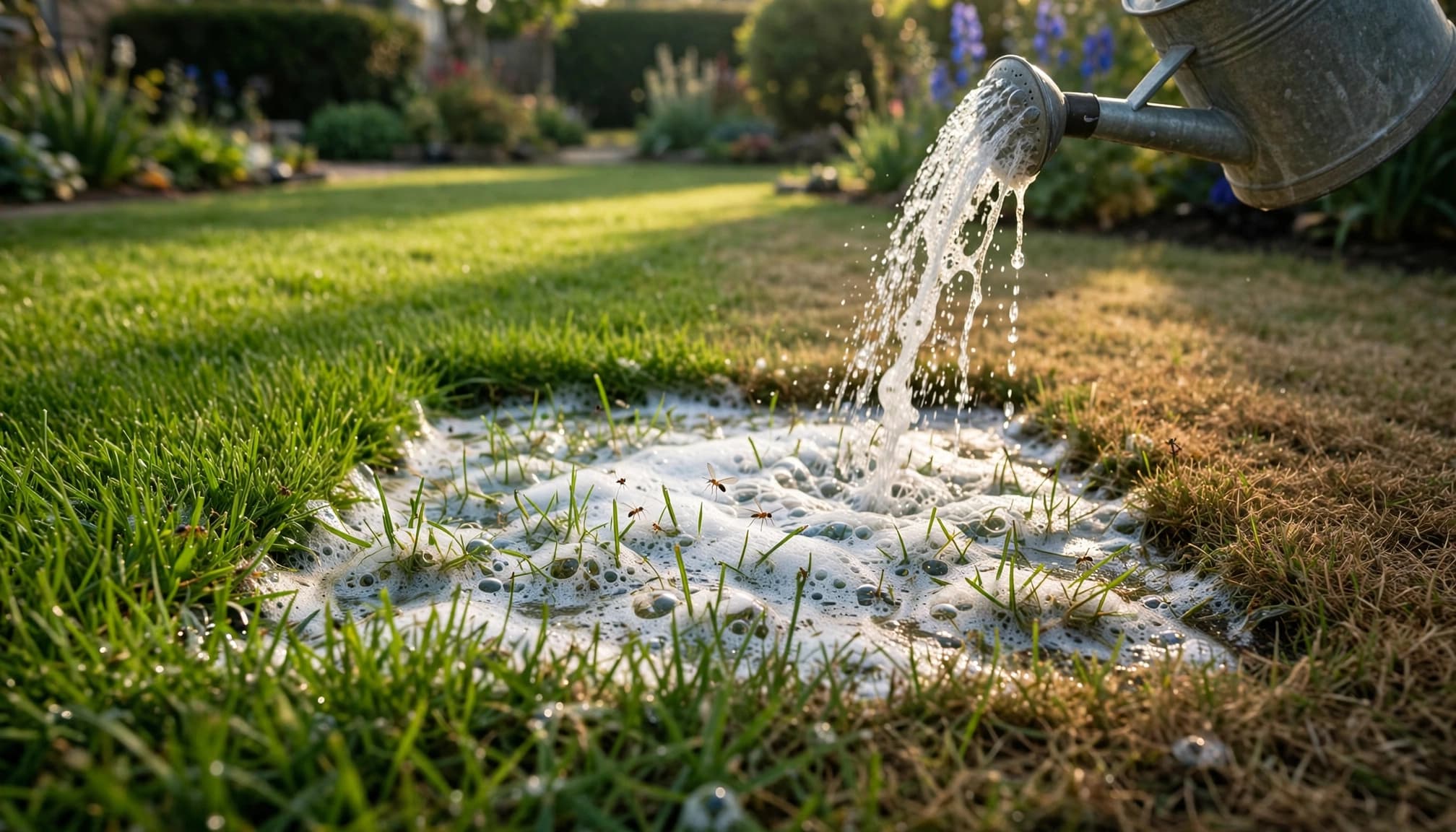
- Select the damage border. Choose mostly healthy turf immediately beside yellowing or chewed grass. Caterpillars may have already left a heavily damaged patch.
- Measure the coverage. Mark a 3 × 3-foot area, approximately 0.84 square meter, so your counts have a consistent reference.
- Prepare the mixture. Measure the soap and water separately, then stir until suds appear.
- Pour slowly and evenly. Apply the soap flush test solution across the entire patch rather than dumping it into one spot.
- Watch the grass closely. Begin observing immediately. Most insects emerge within 5-10 minutes, although sod webworms may take 15 minutes.
- Record and rinse. Note the insects and counts, collect a specimen if possible, then rinse the patch with clean water to reduce soap exposure.
A watering can gives you controlled coverage, while a bucket also works. Sod University describes a hose-end sprayer as useful for large areas. However, for a homeowner’s measured test, we recommend the simpler tools because the dilution is easier to control.
Avoid repeated applications to the same patch, especially during hot weather.
What May Surface During the Test
A positive flush means insects are present. It doesn’t establish that every insect you see is damaging your lawn.
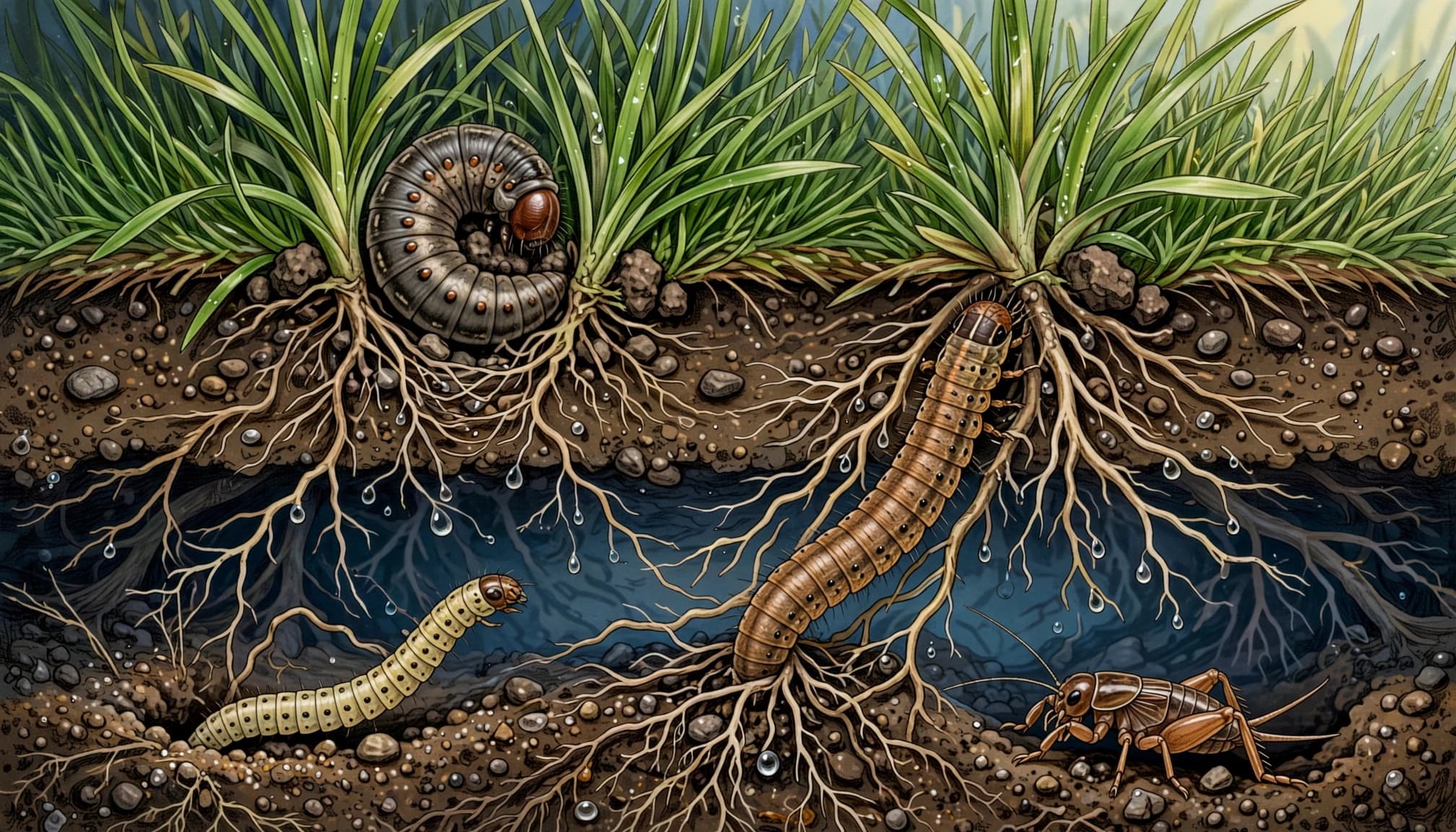
Caterpillars and Other Target Insects
NC Turf Bugs lists cutworm larvae, fall armyworm larvae, and tropical or other sod webworm larvae among insects monitored with soapy water.
The method supports monitoring in turfgrass for annual bluegrass weevil adults, black turfgrass ataenius adults, and mole cricket nymphs and adults. Therefore, collect or photograph unfamiliar insects rather than assuming every emerging insect is a caterpillar.
NC State’s turf arthropod guide covers these pest groups and their sampling methods.
Small Insects and Helpful Predators
Chinch bugs are very small and easy to overlook. Getting down on hands and knees and watching for movement can help you notice them.
Earwigs, often called pincher bugs, may also appear. Sod University identifies them as predators of chinch bugs rather than sod-damaging insects. Their presence alone doesn’t justify spraying.
We recommend learning to distinguish beneficial turf insects before treating an unfamiliar insect. For caterpillar-related symptoms, compare your findings with the fresh feeding signs described in our guide to tropical sod webworm damage.
What to Do When Nothing Appears
An empty test doesn’t prove your lawn is pest-free. The insects may be concentrated elsewhere, hidden below the sampled layer, or no longer feeding in the damaged section.
Retest Along Another Edge
Choose a different green-to-brown border and repeat the same measured procedure. You can also retest at another time of day, particularly around dusk when caterpillars become active.
Keep the mixture, coverage, and observation period consistent across samples. Record each location separately because combining counts can hide a concentrated pocket of activity.
Testing several locations provides a better picture of population density than repeatedly flushing one patch.
Inspect Beyond the Surface
If the grass pulls loose, examine the roots and upper soil rather than increasing the detergent concentration. Root-feeding insects require belowground inspection.
Meanwhile, compare damaged areas with sprinkler coverage and soil moisture. Disease, poor drainage, and mowing stress can also cause thinning.
More soap won’t correct a poorly placed sample. Move the test to fresh damage and inspect the feeding zone instead.
For suspected chinch bugs, a water-filled, open-ended can pressed into the turf offers a separate flotation method without adding more detergent.
How to Use the Findings Before Treatment
We recommend recording the test location, area, observation time, and insects recovered. Photograph a specimen beside a ruler when possible, and note whether nearby blades show fresh chewing.
Keep sampling units consistent. A count from nine square feet can’t be compared directly with a recommendation expressed per square foot. In addition, a treatment threshold for sod webworms shouldn’t be borrowed for armyworms or chinch bugs.
Put Armyworm Activity in Context
Super Sod recommends scouting for fall armyworms from July until the first autumn frost. In Southwest Florida’s warm conditions, fresh feeding remains a reason to inspect beyond that calendar window.
Its Georgia case study describes a lawn purchased on August 17, followed by a positive fall armyworm flush on September 12 and treatment with an armyworm insecticide. That example illustrates the value of prompt inspection, rather than a universal treatment schedule.
Base Decisions on More Than Presence
Weigh the lawn insects you find by identity, fresh damage, population density, and lawn condition before deciding whether to treat. The presence of pests alone doesn’t justify treating the entire property.
Our guidance on when lawn insect damage warrants treatment explains that decision. When chewing continues or patches expand quickly, we recommend a professional assessment. Our lawn insect and disease management services address these problems in Collier and Lee counties.
Frequently Asked Questions
Does a Soap Flush Kill Lawn Caterpillars?
The purpose is detection, not dependable control. Some insects may suffer from exposure, but dish detergent isn’t a substitute for a treatment selected for the identified pest.
We don’t recommend using soap routinely across a lawn. Heavy or repeated applications can injure turf, especially during hot weather.
Should Every Brown Patch Get a Soap Flush?
No. We recommend flushing when the damage suggests surface-feeding insects, particularly chewed blades, droppings, or webbing.
If the main problem is loose sod or missing roots, inspect beneath the turf instead. When discoloration follows sprinkler gaps or prolonged wet conditions, evaluate irrigation and drainage alongside pest activity.
Confirm the Cause Before Treating the Lawn
A useful soap flush combines a measured mixture, the right location, and patient observation. Repeat the test in separate areas, then connect the insects you find with fresh damage.
That evidence helps you avoid unnecessary insecticide and choose the right response. When the cause remains unclear or damage keeps spreading, professional identification can protect healthy grass while addressing the actual problem.