Brown patches are frustrating, but a brown patch isn’t a diagnosis. Lawn pest damage can resemble turf disease, irrigation failure, fertilizer burn, or drought stress. Each cause requires a different response.
If you treat the wrong cause, you may spend money while the grass continues to decline. We inspect the lawn’s pattern, make a few close checks, and use simple field tests before recommending treatment. Start with evidence from the turf, not the product on the shelf.
Key Takeaways
- Brown patches are not a diagnosis; lawn pest damage can resemble turf disease, irrigation problems, fertilizer burn, or drought stress.
- Inspect the transition zone between healthy and damaged grass, then use field checks such as a tug test, spade dig, soap drench, or coffee can test.
- White grubs and billbugs damage roots, crowns, or stems, while chinch bugs, sod webworms, armyworms, and cutworms feed above ground and leave different injury patterns.
- Treatment should target a confirmed pest and its active life stage, using only products labeled for the turf type and pest in your state.
- Proper mowing, irrigation, soil care, thatch management, and local diagnostic support can improve recovery and help prevent repeated damage.
Lawn Pests or Turf Disease: Read the Pattern First
Walk the entire lawn before examining one damaged spot. Look at where the problem started, how quickly it is spreading, and whether the edge is sharp or irregular. These details often narrow the possibilities before you turn over a single piece of turf.
Lawn insects commonly create irregular thinning, scattered yellow areas, or patches that expand along the edge of healthy grass. Sap-sucking pests such as lawn leafhoppers leave pale, stippled blades, and lawn aphids can leave yellowing that mimics drought stress, while root-feeding insects can leave turf loose enough to lift. Surface-feeding caterpillars leave clipped blades, ragged edges, or visible pellets in the thatch.
Lawn fungus often follows moisture. Circular patches, rings, leaf spots, gray or white fungal growth in the early morning, and damage concentrated in poorly ventilated areas all point toward possible turf disease. However, fungus doesn’t always create a perfect circle, and insect damage doesn’t always look irregular.
Southwest Florida lawns, including those in Fort Myers, Naples, Bonita Springs, and Lehigh Acres, add another layer to the diagnosis. Heat, humidity, irrigation patterns, and warm-season turf can support both insects and fungal disease. St. Augustinegrass, bermudagrass, and zoysiagrass have different mowing and watering needs, and Japanese beetle activity may follow a different schedule.
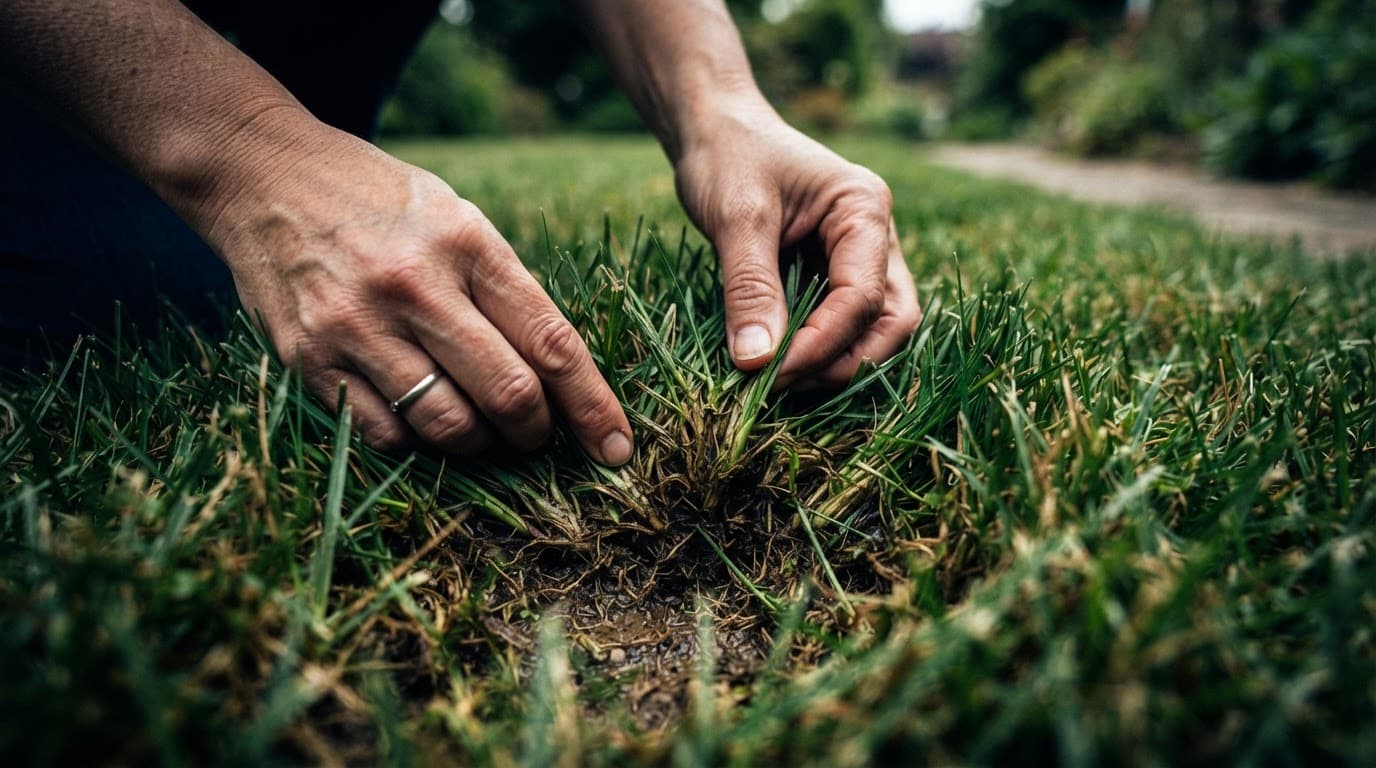
For a useful comparison of insect symptoms, disease, fertilizer injury, and mowing problems, review Purdue Extension’s turfgrass insect management guide. The right diagnosis starts with separating similar-looking problems.
A Quick Comparison of Brown Patches and Turf Damage
Use this table as a first pass. It won’t replace an inspection, but it can show you where to look next.
| What you see | More likely cause | First check |
|---|---|---|
| Turf lifts like a loose carpet and roots are missing | White grubs | Dig through the root zone at the edge of the patch |
| Yellow or brown grass during hot, dry weather | Chinch bugs or drought stress | Perform a water flotation test and check irrigation |
| Ragged blades, clipped grass, or pellets in thatch | Sod webworms | Use a soap drench after checking the damaged edge |
| Hollow stems and sawdust-like material near the crown | Billbugs | Split several stems and inspect inside |
| Circular patches with leaf lesions or morning fungal growth | Lawn fungus or another turf disease | Examine individual blades and recent moisture conditions |
| Damage follows a sprinkler pattern or compacted area | Irrigation or soil stress | Check sprinkler coverage, soil moisture, and drainage |
The location of insects matters. Finding one Japanese beetle in the grass doesn’t prove it caused the damage. Look for the pest in the active transition zone, where declining grass meets healthy turf.
NC State Extension provides a helpful key to turfgrass insect damage because different insects leave different injury patterns. We recommend using identification clues together instead of relying on one symptom.
Inspect the Lawn Before Choosing a Treatment
A careful inspection usually takes less than 20 minutes and can prevent an unnecessary whole-lawn application. Choose a damaged area that still has a small amount of living grass at the edge. Insects often move through this transition zone rather than staying in the dead center.
- Compare healthy and damaged grass. Look at blade color, cutting height, thatch thickness, and soil moisture in both areas.
- Check the blades and crowns. Search for chewing, lesions, discoloration, silk, frass, or hollow stems. The crown is where the blades meet the roots.
- Try the tug test. Pull gently on several sections. If the turf lifts easily and has few attached roots, inspect for root-feeding insects.
- Dig a small sample. Use a hand trowel or spade to examine the upper few inches of soil, grass roots, thatch, and crowns.
- Repeat the inspection. Check more than one location because insects may be concentrated in pockets.
Using a Soap Drench Test for Surface Caterpillars
A soap drench test helps bring sod webworms, armyworms, cutworms, and other surface-feeding insect larvae out of the thatch. A common field mixture is about two tablespoons of mild liquid dish soap in two gallons of water. Test a small area first, then pour the mixture slowly over roughly one square yard of turf.
Wait five to ten minutes and watch the surface. Caterpillars may rise through the grass, especially near the damaged edge. Collect one if possible for identification, or take a clear photograph beside a ruler. This test is for detection, not routine treatment, and concentrated detergent can injure grass.
Checking for Chinch Bugs
Use a coffee can or another open-ended metal container. Push it two or three inches into the soil at the edge of the damaged area, fill it with water, and keep the water level steady for five to ten minutes. Chinch bugs often float to the surface, so testing the damaged edge and a healthy-looking area gives a better comparison.
Look for small reddish nymphs with a pale band and darker adults. Test two or three spots, including one area that still looks healthy. This approach can reveal activity that is easy to miss in the center of a damaged area.
White Grubs and Billbugs Hide Below the Grass
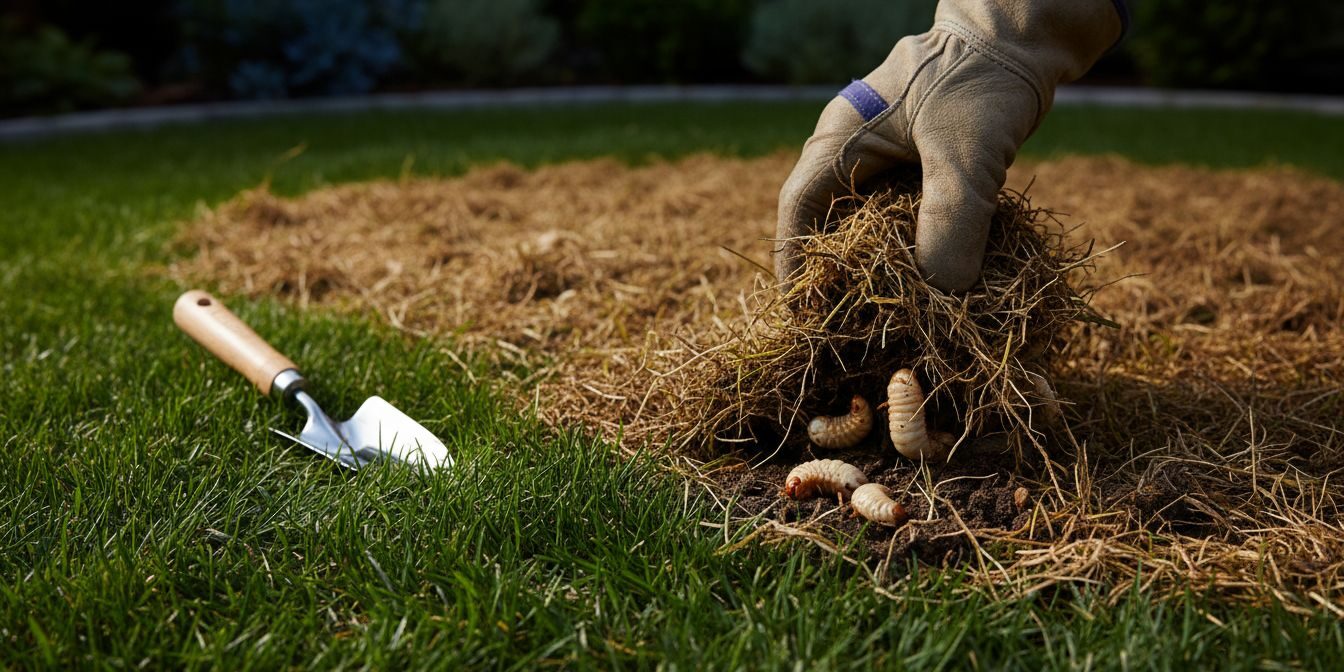
White grubs are beetle larvae that feed on grass roots. They are usually C-shaped, with a pale body, brown head, and small legs near the head. Adult beetles, including the Japanese beetle and European chafer, lay eggs that develop into root-feeding insect larvae. Species and timing vary by region.
Root injury weakens the turf’s root system and reduces its ability to absorb water and nutrients. Continued feeding makes the grass thin, wilt, and die. Animal digging by birds, skunks, or raccoons is a clue, not proof.
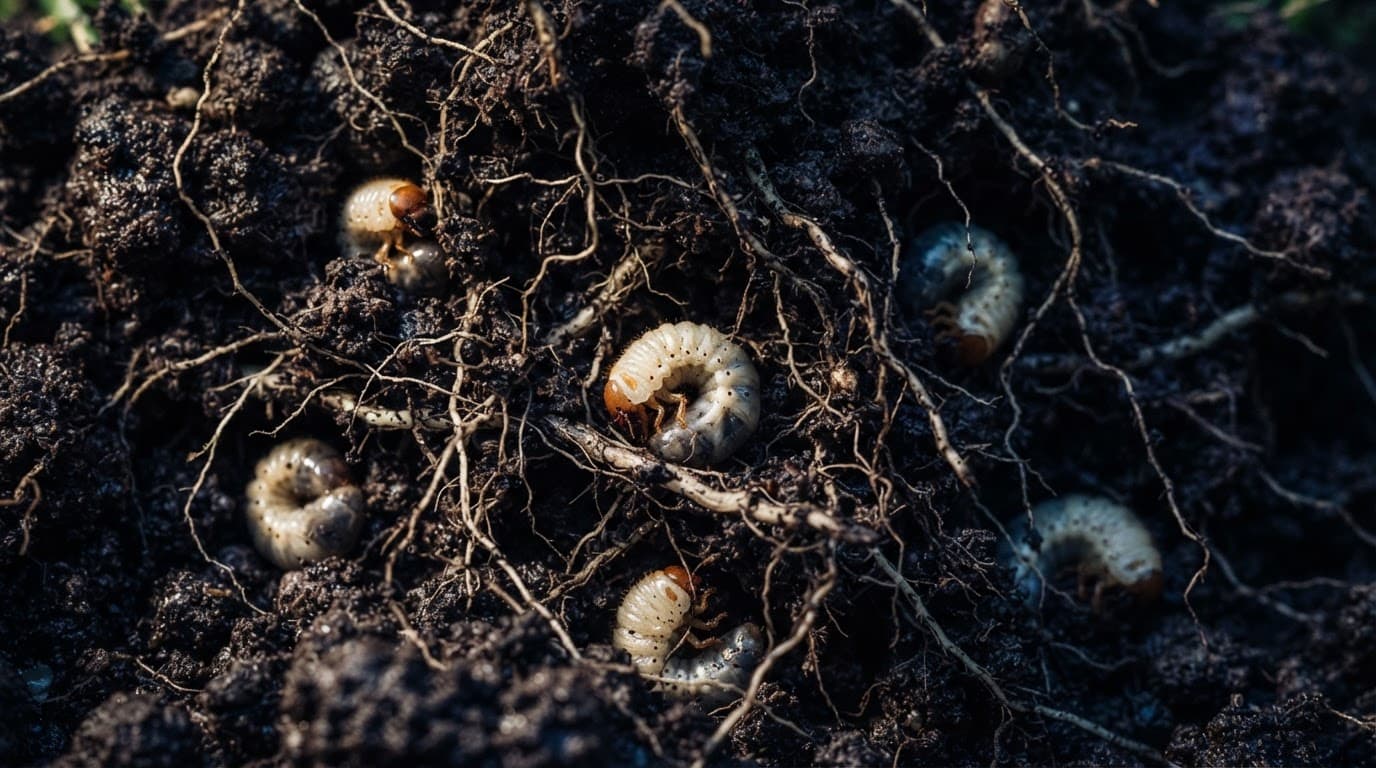
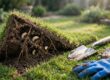
To check for white grubs, cut three sides of a one-foot square at the edge of the damage. Peel the turf back carefully and examine the grass roots and soil two to three inches deep. Count what you find, photograph the larvae, and check another section before deciding whether treatment is needed. Damage thresholds differ by turf type, grub species, and regional conditions, so no single number applies to every lawn.
Chemical control must match the insect’s life stage. Preventive treatments are usually intended to reach young larvae before they become established, while curative products have a narrower window. The Japanese beetle grub stage is one example of why timing matters. Watering after an application may be required, but always follow the product label for timing, rate, protective equipment, pets, and re-entry.
The Common Turfgrass Pests publication from Utah State University Extension includes useful inspection details, although local timing still matters. In Southwest Florida, warm conditions can change the usual seasonal pattern, so scouting is more reliable than applying a product by date alone.
Billbugs Leave Hollow Stems and Fine Frass
Billbugs are weevils, and their larvae feed inside grass stems and crowns. The damage may look like drought stress at first, but affected stems often pull apart easily and contain sawdust-like frass. The larvae are small, pale, and legless, while adult billbugs have a short snout.
Split several stems near the border of the damaged area. Check the crown and lower stem before assuming the problem is a root grub. A product labeled for white grubs may not control billbug larvae after they have moved inside the plant.
Chinch Bugs, Sod Webworms, and Armyworms Feed Above Ground
Chinch Bugs Thrive in Hot, Dry Conditions
Chinch bugs use piercing-sucking mouthparts to remove plant fluids. Their saliva can also injure turf tissue, so grass may continue to turn yellow and brown after the insects move elsewhere.
Damage is often most severe in sunny, water-stressed areas. St. Augustinegrass is especially vulnerable when heat, drought, thick thatch, and irregular irrigation occur together. Hairy species are important in some cooler regions, while southern types are more common in many warm-season lawn areas. The symptoms and water flotation test are similar, but correct identification helps select the right treatment.
Improving irrigation and reducing excessive thatch can lower stress, but those steps won’t remove an established infestation. If chinch bugs are confirmed, use only a product labeled for the grass type and pest in your state. Targeting active nymphs is often more effective than treating after the grass is fully brown.
Caterpillars Chew the Leaf Blades
Sod webworms feed mostly at night and hide in thatch during the day. Look for short, clipped blades, small green pellets, silk-lined tunnels, or webbing around the base of the grass. Birds may gather in the area because they are searching for caterpillars, but bird activity alone isn’t enough to confirm the cause.
Armyworms are larger caterpillars that can consume grass quickly. Their feeding may leave ragged sections across a lawn, and several damaged areas can appear within a short time. A soap drench is useful for finding both armyworms and sod webworms while they are near the surface.
Cutworms also chew grass at night and may cut young plants at the soil line. They are more common in newly established turf and garden areas than in a mature, thick lawn. Once the insect is identified, treatment should target armyworms and other caterpillars during their active feeding stage. Active cutworms may require a targeted response. Mowing, watering, and fertilizing improvements support recovery, but they don’t replace control when caterpillars are actively removing grass.
How Lawn Fungus and Environmental Stress Look Different
Lawn fungus usually affects plant tissue first. Examine individual blades for spots, bands, lesions, rotting crowns, or discoloration that begins before the whole patch dies. Fungal growth may appear as fine threads on damp mornings, although its absence doesn’t rule out disease.
Patches caused by lawn fungus often develop after long periods of leaf wetness, frequent evening irrigation, poor air movement, or excessive nitrogen. In humid Southwest Florida conditions, a lawn can stay wet long enough for disease to spread even when the soil below doesn’t look saturated.
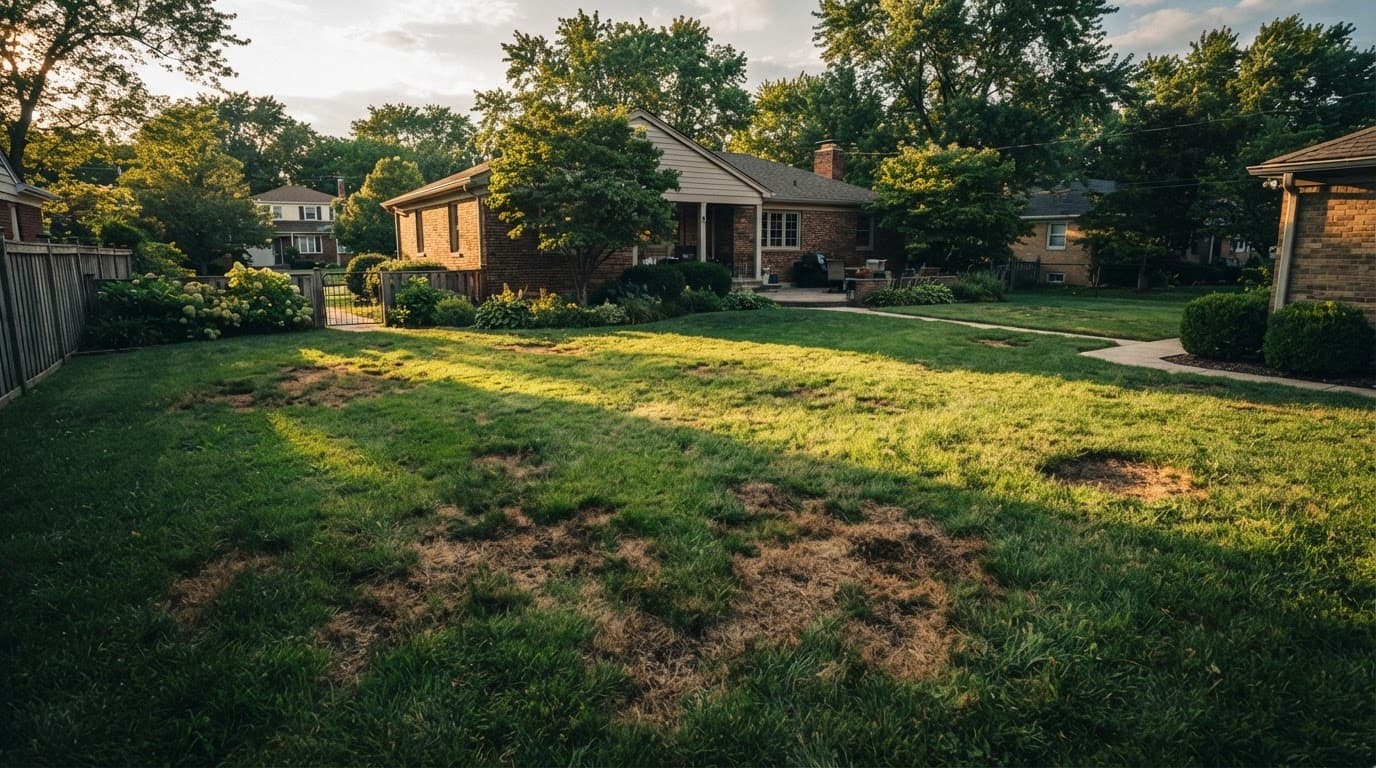
Environmental stress can create similar symptoms. A broken sprinkler, compacted soil, scalped grass, fertilizer spill, salt exposure, or pet urine may produce dead patches without insects or fungus. Compare the damaged area with irrigation coverage and recent maintenance records.
Fungicide won’t repair roots chewed by grubs, and insecticide won’t correct prolonged leaf wetness or poor drainage.
If the cause remains unclear, collect a sample that includes healthy and damaged tissue, roots, and surrounding soil. The Purdue insect resource also warns that disease, fertilizer burn, improper mowing, and insects can create overlapping symptoms. A local diagnostic service is often more useful than applying several products at once.
Build a Treatment and Prevention Plan Around the Cause
Integrated pest management starts with confirmation. After identifying the insect or disease, use a focused pest control plan with the least disruptive effective option. Reserve chemical control for confirmed, active problems, and monitor the result. Treating every lawn problem with a broad insecticide can waste money, affect non-target organisms, and delay the right correction.
Mowing and other cultural practices are part of pest prevention. Keep the blade sharp and follow the recommended height for the turf species. Avoid removing more than one-third of the leaf blade at one mowing. Scalped grass has less leaf area for recovery, while overly tall or heavily thatched turf can shelter some insects.
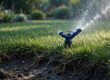
Water early in the day when possible, and adjust irrigation for rainfall. Repair areas that receive too much or too little water. Frequent shallow watering can keep the surface damp and encourage weak growth. Severe drought stress also makes turf more vulnerable, so aim for consistent moisture rather than either extreme.
Soil health supports recovery after feeding injury. A healthy root system improves recovery. Use a soil test before adding large amounts of fertilizer, and consider organic matter when assessing soil condition. Avoid excess nitrogen, relieve compaction when turf and season permit, and manage thatch when it becomes excessive. Healthy roots don’t prevent every pest, but they give grass a better chance to tolerate limited feeding.
Natural predators provide biological control as part of the plan. Birds feed on surface insects, while skunks and raccoons often expose grubs while searching for food. Ground beetles, spiders, and parasitoid insects can reduce some pest populations. Their presence is helpful, but it doesn’t replace inspection when turf is declining.
Treatment timing should follow the pest’s life cycle. Chemical control works best when aimed at the active pest stage. Surface-feeding insects need attention while they are active. For example, Japanese beetle prevention often targets young larvae after egg hatch, but timing varies by species and climate. UF/IFAS Extension encourages homeowners to use local extension diagnostic services when an insect cannot be identified with confidence.
When a Professional Lawn Inspection Makes Sense
Professional pest control is appropriate when brown areas spread quickly, turf lifts across a large area, multiple pests appear, or irrigation corrections fail. It’s also practical when children, pets, pollinators, or nearby waterways make product selection and application more sensitive.
When we inspect declining turf, we review the transition zone, root condition, thatch, moisture, mowing history, and visible insects together. At sensitive sites, we compare cultural practices, biological control, and labeled products before recommending an approach.
A professional recommendation should identify what was found, which life stage is active, and which labeled product or method fits the problem. It should also explain whether chemical control is warranted and which lawn care changes may help prevent a repeat issue.
Frequently Asked Questions
How can I tell whether brown grass is caused by lawn pests?
Inspect the pattern, transition zone, roots, crowns, and individual blades before choosing a treatment. Loose turf, missing roots, hollow stems, frass, clipped blades, or visible insects can point toward pest damage, while lesions and prolonged leaf wetness may suggest disease.
What is the quickest way to check for lawn insects?
Use a tug test and dig a small sample at the edge of the damaged area. A soap drench can bring surface-feeding caterpillars to the surface, while a water-filled coffee can helps reveal chinch bugs.
Do brown patches always need insecticide?
No. Brown patches may result from lawn fungus, drought, poor irrigation, compaction, fertilizer injury, mowing problems, or pet urine. Confirm an active pest before using chemical control, and correct environmental stresses that may be contributing to the decline.
When should I call a professional for lawn pest damage?
Professional help makes sense when patches spread quickly, turf lifts across a large area, several pests are present, or irrigation corrections do not improve the lawn. A professional can identify the pest and life stage, assess whether treatment is warranted, and recommend a focused plan.
A Brown Patch Needs Evidence Before Treatment
The fastest way to solve lawn pest damage is to identify where the injury occurs, whether it affects roots or blades, and which insects are present. A tug test, spade dig, soap drench test, and coffee can test can answer many questions before treatment begins.
Disease, including lawn fungus, and environmental stress still need attention, especially in warm, humid lawns. When the pattern is unclear, a local inspection protects your lawn, your budget, and the beneficial organisms working around it. A brown patch is only the visible part of the problem, so check below the surface before choosing a solution.