A brown patch in a newly sodded lawn can feel like a costly setback. Insects are one possible cause of damage to new sod, but fresh turf can also yellow when its roots haven’t reached the soil beneath it or irrigation misses an area.
New sod needs close attention because it has little established root growth to support recovery. We start by checking where the damage appears and what is happening at the grass blades and roots. Those clues help you protect the lawn and follow establishment guidance for watering and appropriate starter fertilizer timing.
Why New Sod Insect Damage Can Appear So Quickly
Fresh sod arrives with grass and roots, but those roots still need to grow into your yard’s soil. During that period, turf has less ability to tolerate feeding or recover from stress. New sod insect damage can appear soon after installation when insects already in the soil become active.
Shallow Roots Leave Less Room for Damage
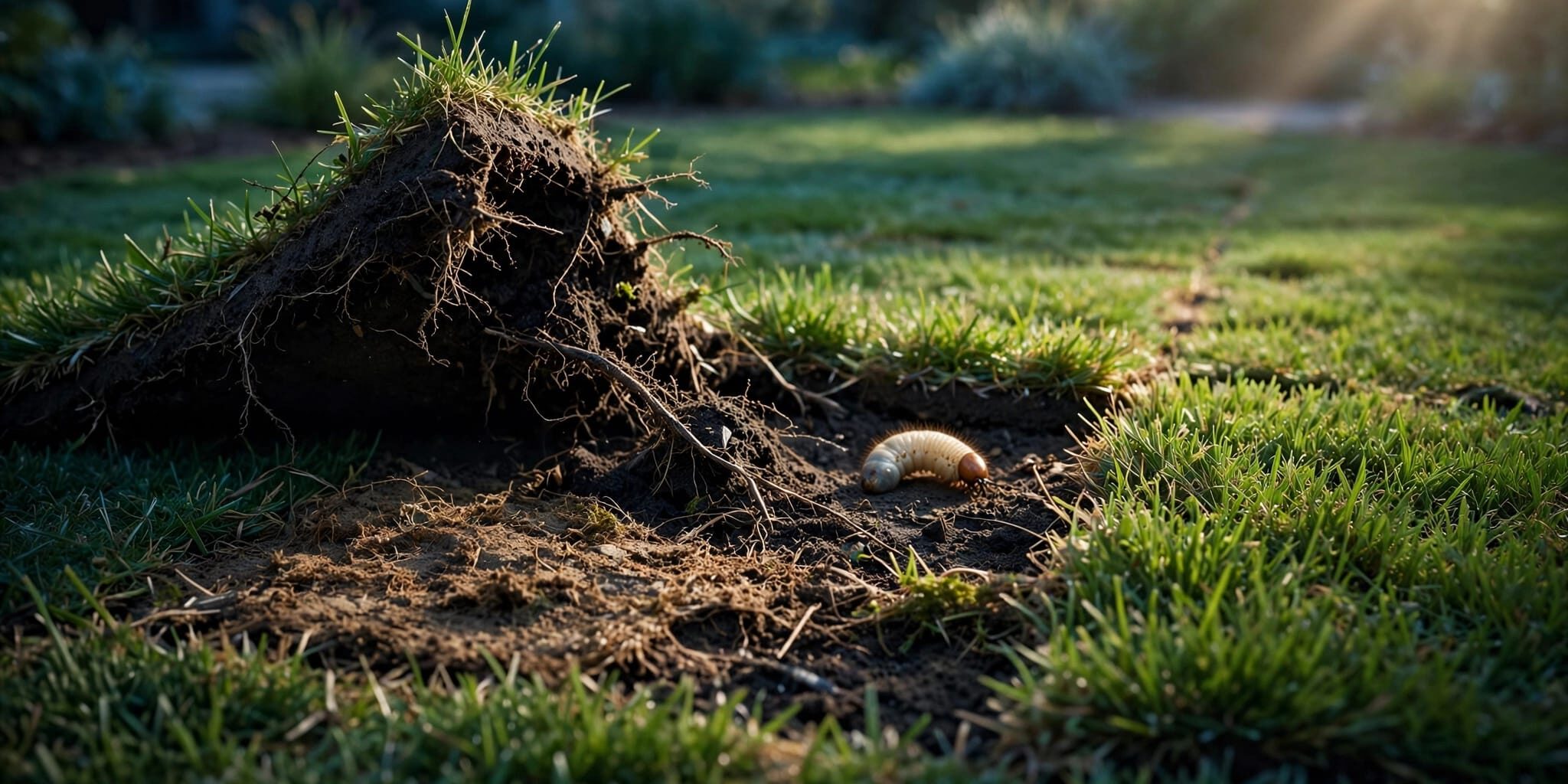
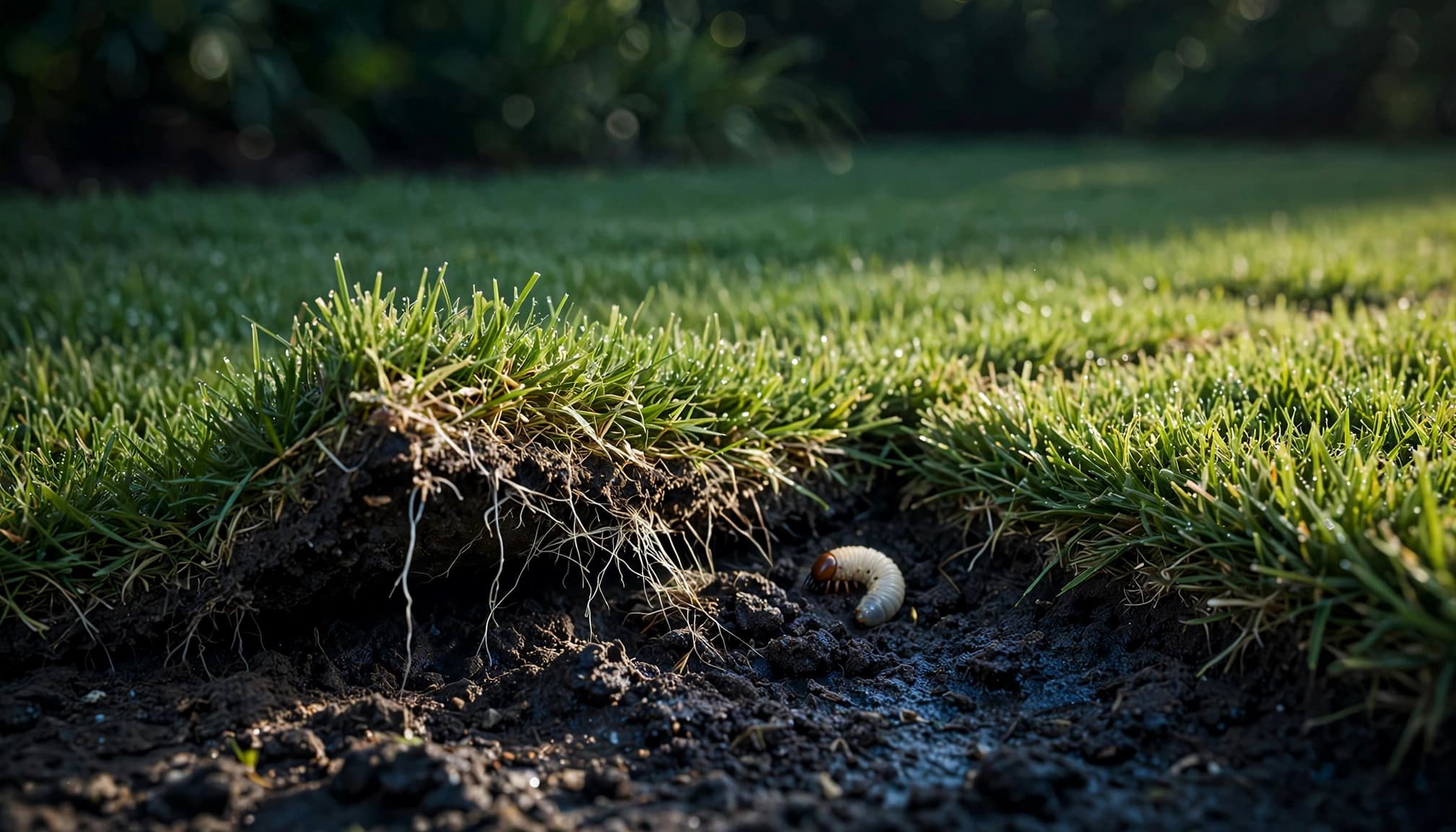
White grubs feed around the root zone. When roots are still shallow, damage to a small area can make it harder for new grass to take up water. The turf may wilt despite regular irrigation, which makes the problem easy to mistake for drought.
Fresh sod can also lift before it has rooted firmly. When checking for new sod insect damage, treat loose turf as a reason to inspect below it, not proof that grubs are feeding. Confirm the cause before choosing lawn insect control.
Moisture and Existing Lawn Conditions Matter
New sod needs consistent moisture during establishment. However, water collecting beneath it can leave roots struggling and may contribute to root rot or fungal diseases. Gaps in sprinkler coverage create the opposite problem, with dry sections that decline quickly.
Thatch, soil compaction, and uneven drainage can add stress, while starter fertilizer should be used according to its directions. We consider those conditions alongside insect activity because a brown patch can have causes unrelated to insects.
Which Insects Damage Newly Installed Sod?
The most useful distinction is where lawn pests feed. Some damage roots below the sod, while others feed on blades or near the soil surface. A brown patch alone doesn’t confirm a pest infestation, so inspect for feeding signs before choosing lawn insect control. UF/IFAS identifies white grubs as scarab beetle larvae that feed on turfgrass roots.
Root Feeders: White Grubs and Mole Crickets
White grubs can weaken the root system until turf wilts, thins, or pulls away easily. Look beneath a declining patch for pale, C-shaped larvae near the roots. Finding one grub doesn’t establish that it caused all the damage; check more than one area.
Mole crickets disrupt turf by tunneling through the soil. Thin, soft, or spongy ground and fresh tunnels give us a better reason to investigate than brown color alone. Both pests are concerns in Florida lawns, but their treatment needs differ.
Surface Feeders: Chinch Bugs and Caterpillars
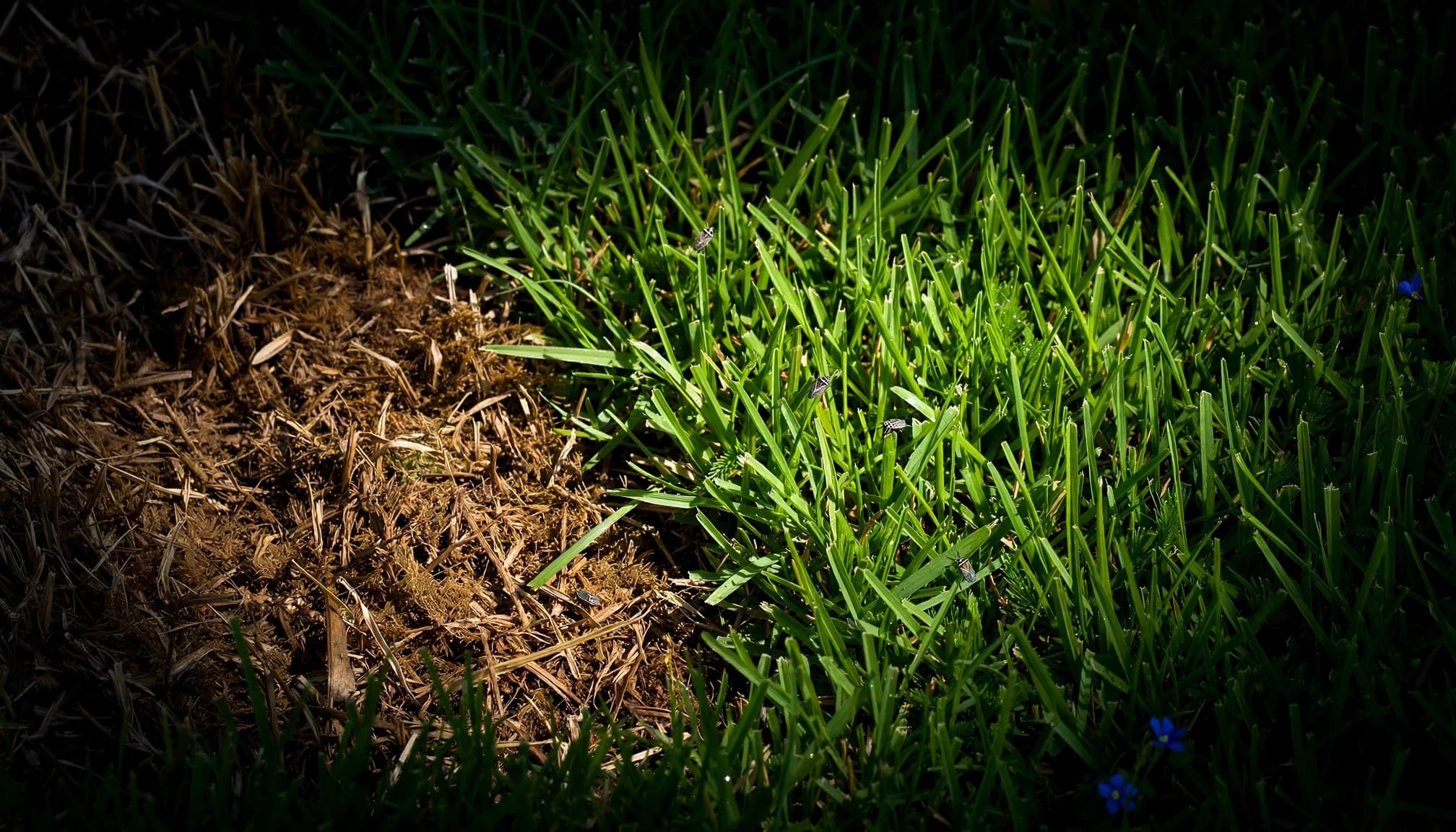
Southern chinch bugs are a concern in St. Augustinegrass. Feeding often begins in warm, sunny spots, including turf near pavement. Yellowing can develop into irregular brown patches, so we inspect the boundary where green grass meets damaged grass.
Tropical sod webworms and fall armyworms chew leaf blades, and armyworms can leave clipped or ragged grass when damage appears quickly. Caterpillars often shelter low in the turf during the day and are easier to find around dusk. A close look at damaged blades can separate their feeding from root injury.
For local grass types and seasonal checks, our Southwest Florida lawn pest checklist offers a useful starting point.
Read the Damage Before Choosing a Treatment
Brown turf alone doesn’t tell us which insect, if any, is responsible. Brown patch and other problems can produce similar symptoms. Start at the green-to-brown border, where active feeding and fresh injury are more likely to be visible. Then compare the blades, soil, and roots with the pattern across your yard.
| What you notice | What to investigate next |
|---|---|
| Loose sod and damaged roots | White grubs, poor root establishment, or soil problems |
| Spongy ground and visible tunnels | Mole crickets or disturbed soil |
| Ragged or clipped grass blades | Sod webworms or armyworms |
| Expanding yellow-to-brown patches in sunny St. Augustinegrass | Chinch bugs, dry soil, or irrigation coverage |
| Decline after prolonged wet conditions | Drainage trouble or turf disease |
These are inspection clues, not final diagnoses, so confirm the cause before choosing lawn insect control. For suspected armyworms, look for fresh feeding on blades near damaged areas. A sprinkler head that misses one corner can produce a patch that looks much like insect injury or brown patch. Wet soil may also support fungal diseases while hiding weak roots. Root rot and soil compaction can cause similar decline. We check these possibilities before recommending lawn insect and disease management.
Two Simple Checks for Active Lawn Pests
A field check can narrow down lawn pests and identify a target for lawn insect control. Choose a spot near the edge of fresh damage, and compare it with a healthier section. Discoloration alone, even a brown patch, doesn’t confirm insect activity. Take a photo before disturbing the turf so you can track whether the patch expands.
Use a Careful Tug and Root Check
Gently lift a small edge of affected sod in a tug test. If it comes away easily, examine the roots and soil beneath them for grubs or other signs of injury. Check more than one place because new sod may lift simply because it hasn’t rooted yet.
The important question is whether insects and damaged roots occur together. If the roots look sound but the sod hasn’t attached to the soil, review watering and soil contact before assuming you need an insecticide.
Try a Soap Flush for Surface Feeders
A soap flush test can bring some hidden insects to the surface. UF/IFAS Extension’s lawn pest scouting advice describes mixing 2 tablespoons of dish soap with 2 gallons of water. Pour it over about 4 square feet of suspect turf, then watch for roughly three minutes.
Use the flush as a detection test, not a treatment. It can help reveal caterpillars near the surface, but it won’t reliably diagnose root-feeding grubs. Avoid repeatedly soaking new sod with detergent. If insects appear, photograph them and compare the result with the damage pattern.
Water and Maintain Sod Without Adding Stress
New sod care is a balance. Roots and the soil beneath the sod need enough moisture for root establishment and growth. Constantly saturated ground can deprive roots of air, contribute to root rot, and raise concerns about fungal diseases.
Check Moisture Beneath the Sod
Lift a corner in a healthy area and feel both the underside of the sod and the soil below. Check a declining area the same way. Dry soil beneath damp-looking blades suggests water isn’t reaching the roots, while persistently soggy soil calls for a closer look at drainage, irrigation run time, and possible soil compaction. Brown patch can resemble pest damage, so don’t treat discoloration alone as a diagnosis.
We don’t use one watering schedule for every yard in Fort Myers, Naples, or Bonita Springs. Rain, soil, shade, and sprinkler coverage all affect how quickly sod dries. Adjust gradually and follow your sod supplier’s establishment instructions.
Hold Off on Extra Stress
Wait until the sod is firmly rooted before mowing, then avoid cutting it too short. Heavy foot traffic can shift newly laid pieces and interfere with soil contact.
Starter fertilizer won’t fix watering problems or poor contact between sod and soil. Give new turf time to settle before applying starter fertilizer; our guidance on proper timing for lawn fertilization accounts for Southwest Florida’s heat, rain, and sandy soils.
Choose Insect Control Based on the Pest
A preventative insecticide isn’t automatically needed because sod is new. First identify the pest, where it feeds, and whether its activity is causing damage. That approach helps us choose targeted lawn insect control and avoid repeated applications that don’t solve the problem. It’s the basis of our integrated pest management for lawns.
Know What Acelepryn Covers
Acelepryn contains chlorantraniliprole, its active ingredient, and may fit a preventative grub-control plan. The manufacturer’s Acelepryn turf product information describes season-long grub control with a single application in April or May. The chlorantraniliprole label sets the approved uses and timing, which aren’t based on how many days have passed since sod installation.
It isn’t a one-step answer to every brown patch. Chinch bugs, caterpillars, disease, and irrigation problems require their own diagnosis. Product formulations also differ, so check the exact label before relying on a listed pest or application window.
Match the Label to the Yard
For any insecticide, confirm that the label permits use on the site and lists the pest you intend to control. Follow its directions for rate, application, watering, and re-entry. A product meant to reach soil pests may not address insects feeding on blades, while a surface treatment may miss activity around roots.
Granules and products containing imidacloprid can have formulation-specific directions. A different imidacloprid product, or one containing bifenthrin or chlorantraniliprole, may have different permitted uses. Check each product’s label rather than assuming directions are interchangeable.
If damage is spreading or the insect is unclear, a pest control service can inspect before you apply more products. Starter fertilizer can support establishment, but it won’t resolve pest damage. We look at the turfgrass, soil moisture, roots, and active feeding before choosing the next step.
Watch the Lawn After Damage Is Found
Check the same spots every few days and photograph the patch edges, including areas that might be mistaken for brown patch. New green growth and stable boundaries are more useful signs of progress than a quick change in brown blades. Grass that has already died won’t turn green again, even if pest activity has stopped.
As part of lawn insect control, keep checking irrigation coverage and whether the sod is taking hold. If fresh injury appears after treatment, follow the label for any applied product, such as chlorantraniliprole, and reassess before treating again. Our UF/IFAS turfgrass pest reference is also useful when the insect you find doesn’t match the first suspected pest.
Key Takeaways
- Fresh sod has limited root growth, so insect feeding, brown patch, and ordinary establishment problems can look similar.
- Inspect the border of fresh damage and identify whether injury is on blades, in soil, or at roots.
- Use a root check for suspected grubs and a soap flush to investigate surface-feeding insects.
- Correct irrigation or drainage problems, then treat confirmed pest activity with a product labeled for the target.
Frequently Asked Questions
Does New Sod Bring Insects Into the Yard?
Insects may already be living in your soil or nearby turf before installation. New sod doesn’t automatically mean an infestation arrived with it. Inspect both the new grass and the soil beneath it before deciding where the problem began.
When Should Preventative Insecticide Be Applied?
There is no universal number of days after laying sod. Timing depends on the pest, its active stage, the product label, and local conditions. A grub-prevention window shouldn’t be treated as a schedule for chinch bugs or other insects.
Can Too Much Water Cause Problems That Look Like Insect Damage?
Yes. Persistently wet soil can interfere with root establishment and increase disease concerns, including brown patch, though discoloration has other possible causes. Compare moisture under healthy and declining sections of sod. Wet soil alone doesn’t confirm root rot, but if the ground is wet and roots are weak, check drainage before adding water or pesticide.
Protect the Roots Before the Patch Spreads
New sod insect damage deserves prompt attention, but the first step is an inspection. Finding where injury starts helps distinguish active pests from watering, drainage, soil compaction, or lawn problems such as brown patch.
Confirm the cause before treating. That gives your new lawn a better chance to root, recover, and grow into the healthy yard you expected.