A lawn can look thirsty even when the sprinkler system is working. Dense soil may be restricting its roots, while insects feed beneath the grass. Both problems can leave you with thin, yellow turf, and neither is easy to identify from the sidewalk.
For homeowners in Southwest Florida, the practical answer is to check the soil and roots before adding water or insecticide. A closer look can reveal what the lawn needs and help prevent a small damaged area from spreading.
How Dense Soil Weakens Turf Before Insects Arrive
Soil needs open spaces for air and water to reach grass roots. Foot traffic, vehicles, construction equipment, and repeated passes with heavy machinery press soil particles closer together. According to UMass guidance on turf compaction, traffic-related compaction reduces aeration and creates problems for root growth.
Roots Have Less Room to Grow
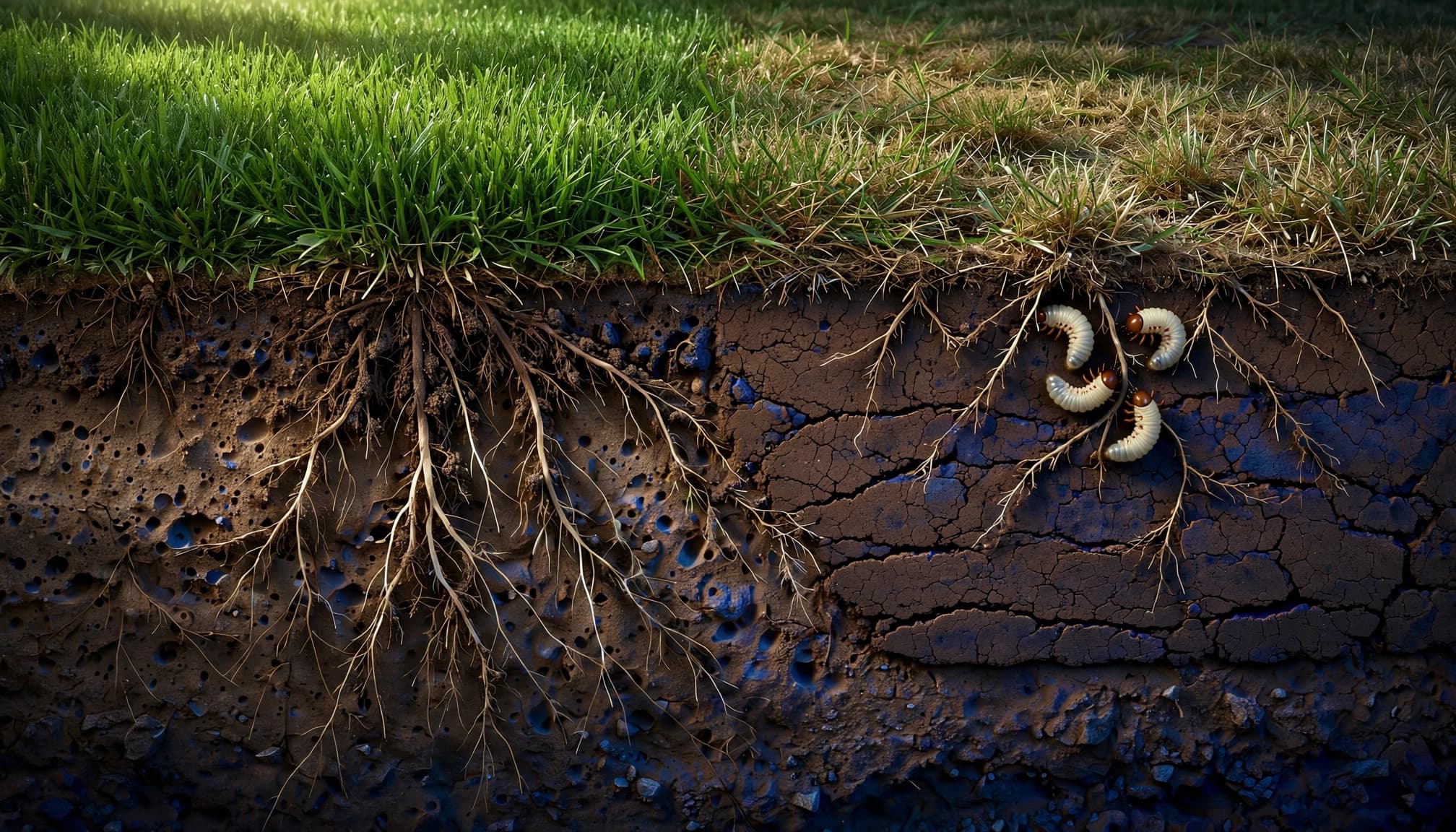
When roots encounter dense soil, root systems can stay shallow or spread along the surface instead of growing into a larger volume of soil. Water can also have trouble entering a compacted area evenly. Grass then has fewer healthy roots available to take up moisture during hot weather.
This can happen even in a yard that generally drains well. A firm strip beside a driveway or a route used by contractors may behave differently from the turf a few feet away.
A Smaller Root System Has Less Margin
Root-feeding insects can damage any susceptible lawn, but their injury matters more when roots are already limited. The grass has less capacity to draw water and recover after feeding. It may wilt sooner, especially between rain or irrigation cycles.
Compaction doesn’t prove that insects are present or cause an infestation. It can make existing insect damage more noticeable while making the real cause harder to recognize from above.
Which Turf Insects Can Add to the Damage?
The insect’s feeding location matters. Some pests injure roots and the surrounding soil; others feed on blades or stems. We look for that distinction before recommending a treatment.
White Grubs and Mole Crickets
White grubs are beetle larvae that feed on turf roots, as UNH Extension’s grub guidance explains. Damaged grass may loosen because fewer roots hold it in place. If the soil also restricts healthy root growth, the lawn has a harder time replacing what it loses.
Mole crickets can disturb the root zone through tunneling and feeding. Soft, raised, or uneven areas may point toward their activity, although loose soil alone isn’t confirmation. In both cases, a look beneath the turf is more useful than the color of the grass.
Chinch Bugs and Blade Feeders
St. Augustinegrass near sunny pavement can develop chinch bug damage that resembles drought stress. Sod webworms and armyworms leave a different set of clues, including chewed or clipped blades. These insects don’t need to be underground for compacted soil to matter: weak roots can slow the lawn’s recovery after above-ground feeding.
Our Southwest Florida lawn pest checklist helps homeowners recognize which pests may be active, but finding the insect in the damaged area is still essential.
Why the Damage Stays Hidden
The first visible symptom is often wilting, thinning, or discoloration. Those signs tell you the grass is under stress, but they don’t show whether the original problem is roots, insects, irrigation, or disease. Root-feeding injury can become especially apparent during dry periods, as Virginia Tech’s lawn guidance notes.
One Brown Patch Can Have Several Causes
A sprinkler head that misses one corner can produce a dry patch. Excess water may contribute to disease. Fertilizer injury, poor establishment, and compacted soil can also weaken turf. Insect activity may occur alongside any of those conditions.
Location offers useful clues. Decline along a driving route raises questions about soil pressure. A sharp problem area beside hot pavement calls for a close insect and irrigation check. Neither pattern is a final diagnosis.
Watch How the Patch Changes
Take a photo, then note recent rain, sprinkler coverage, and whether the patch expands. Compare its edge with nearby healthy grass rather than inspecting only the dead center. Fresh damage often provides clearer clues because some living turf remains.
If the grass continues to decline after you correct an obvious watering issue, it’s time to inspect below the surface. Our guide to diagnosing brown patches in lawns explains how pests, disease, and water stress can resemble one another.
How to Check the Soil and Turf Roots
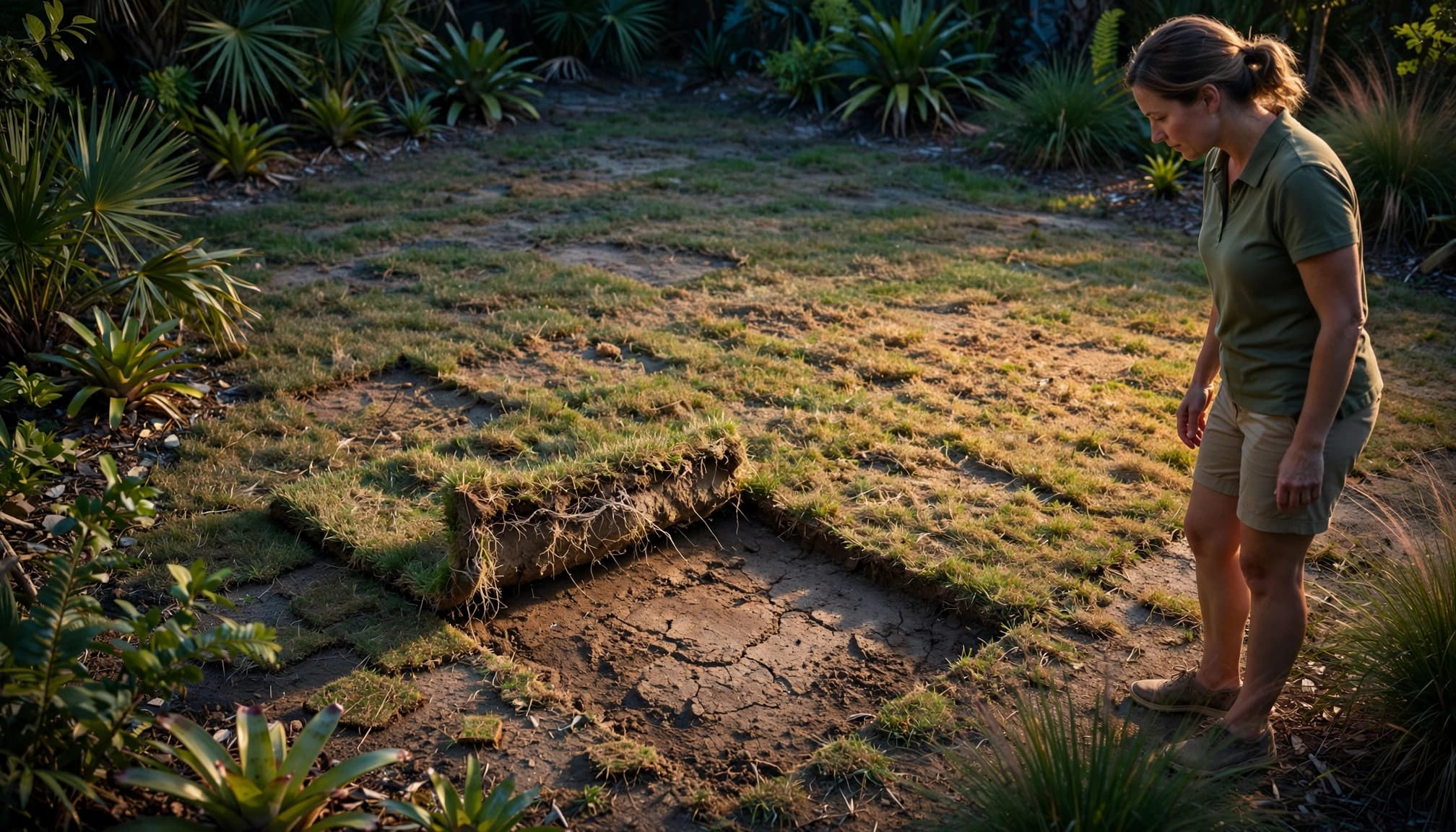
A careful inspection doesn’t require digging up the whole yard. Choose a small area where healthy grass meets thinning turf, then compare it with a healthy spot nearby. We recommend checking more than one location because insects and soil conditions can vary across the same lawn.
Compare Moisture and Soil Resistance
Check whether the affected area is dry, soggy, or similar in moisture to healthy turf. Press a hand tool into each area to get a basic sense of resistance. Soil that is much harder to penetrate at similar moisture levels deserves a closer compaction check; dry soil alone can feel hard.
Look for puddling after rain, runoff, or grass that struggles along a familiar walking route. These signs help build a picture, but none identifies the pest.
Lift a Small Section of Turf
Gently tug at the damaged edge. If the grass lifts easily, examine its roots, crowns, and the upper soil beneath it. Use a hand trowel to inspect a small sample and look for live grubs, tunnels, or roots that appear chewed or sparse.
Grass can also lift because new sod hasn’t established. Finding one insect nearby doesn’t establish that it caused the patch. We want the evidence to fit together: active pests, injury in the same location, and a pattern consistent with their feeding.
An easy-lifting patch tells us to inspect the roots. It doesn’t tell us to apply insecticide.
How to Relieve Compaction Without Missing the Pest
Soil care can improve the conditions roots need, but it won’t remove an active insect infestation. Likewise, insect control won’t relieve soil compaction. When both problems are present, each needs its own response.
Protect the Area From Repeat Traffic
Start with the source of pressure. Keep cars and equipment off the lawn, redirect routine foot traffic where practical, and protect turf during construction work. If the same route gets compressed again, aeration alone may offer limited long-term improvement.
Core aeration removes small plugs of soil and creates openings for air and water. The University of Wisconsin Extension’s aeration guidance explains how those channels can support root growth. Aerate when the turf is actively growing and the soil is moist enough to work, but not saturated. Mark irrigation lines and shallow utilities first.
Support Recovery With Consistent Care
Check sprinkler coverage instead of extending every watering cycle. Frequent light watering may leave roots concentrated near the surface, while severe drought adds stress. Adjust for rainfall and repair areas receiving too much or too little water.
Keep mower blades sharp and use the recommended height for your grass type. Avoid removing more than one-third of the blade at one mowing. Moderate fertilization and sensible thatch management support recovery, but neither replaces pest identification.
Construction Traffic Can Affect More Than the Lawn
Residential projects often create narrow zones of heavy traffic beside driveways, patios, and access gates. Vehicles, stored materials, and repeated trips with equipment can leave the soil beneath nearby grass denser than the rest of the yard. The turf may decline later, after the crew has left.
Mature trees deserve attention too. Their roots extend beyond the trunk, including beneath surrounding lawn. Protect those areas from unnecessary driving and material storage during a project. If turf near a tree needs aeration, avoid aggressive work around major roots and ask a qualified professional when the root area is unclear.
After construction, compare the affected route with undisturbed turf. A persistent hard strip calls for soil assessment, while loose grass or visible feeding calls for a pest inspection. The two findings can occur together.
When Professional Inspection Is the Better Next Step
Request help when patches keep expanding despite corrected irrigation, turf pulls away easily, or suspected insects return after treatment. Widespread decline can involve several causes, especially during Southwest Florida’s warm, wet growing season.
We inspect the grass type, roots, thatch, soil condition, watering pattern, and any live insects before choosing a plan. That approach helps us separate a chinch bug problem from root-zone injury or disease. Our integrated pest management approach starts with identification and correction of contributing conditions.
Chemical control belongs in a focused plan for a confirmed, active pest. Using a broad insecticide on every brown patch can waste money, affect non-target organisms, and leave the soil problem untouched. If treatment is needed, the product must be labeled for the pest and turf, with application and watering directions followed carefully.
Key Takeaways
- Soil compaction restricts the air, water, and growing space turf roots need.
- Root-feeding insects can cause more visible decline when grass already has a limited root system.
- Brown grass alone can’t distinguish insects from compacted soil, poor watering, or disease.
- Inspect the edge of fresh damage, then address confirmed pests and soil conditions separately.
Frequently Asked Questions
Does Compacted Soil Attract White Grubs?
Compaction alone doesn’t establish that grubs are present or that more will arrive. It can restrict the roots they might feed on, leaving turf less able to tolerate injury. Check beneath an actively thinning area for larvae and damaged roots before considering grub control.
Will Aeration Fix an Insect-Damaged Lawn?
Aeration can improve soil conditions where compaction is part of the problem. It won’t control insects already feeding in the lawn. Confirm the pest, correct the source of compaction, and give healthy turf time to regrow under appropriate watering and mowing.
Protect the Roots Before the Patch Spreads
A thirsty-looking lawn may have a problem below the surface, even when the sprinklers run on schedule. Check the roots and soil first. That inspection can reveal whether compaction, insect feeding, or both are limiting recovery.
When you identify each cause before treating it, your lawn has a better chance to regain healthy, consistent growth.