Beneficial insects in turf hunt pests, parasitize harmful insects, or support nearby flowering plants. To distinguish them from lawn pests, check their life stage, feeding behavior, and location. Connect those clues with observable grass injury.
A dark beetle or unfamiliar larva doesn’t automatically threaten your lawn. We recommend identifying the insect before treating, because unnecessary applications can remove helpful predators. Start with the grass and the insects living near fresh damage.
Key Takeaways
- Identify insects by life stage, feeding behavior, and location, then check whether they occur alongside fresh grass injury.
- Predators, parasitoids, and pollinators have different roles. Some beneficial insects hunt pests in turf, while others support flowering plants nearby.
- Flowering borders, accessible water, and modest shelter in beds can support beneficial insects. Remove thick leaf mats from grass.
- Treat confirmed pest activity with targeted methods when damage warrants it. Broad-spectrum insecticides can harm beneficial insects, and purchased releases aren’t a replacement for diagnosis.
Start With Feeding Evidence, Not a Brown Patch
The Old Farmer’s Almanac estimates that only about 10% of backyard insects are destructive. The rest are beneficial or harmless, so finding insects in grass is normal.
Inspect the Damaged Edge
Inspect the border between healthy and declining grass, then compare it with an unaffected area. Part the blades and examine the crowns, thatch, roots, and upper soil.
A white tray beneath gently brushed grass can make small insects easier to see. Photograph unfamiliar insects before disturbing them, and record whether they’re adults, larvae, or nymphs. Repeat the inspection in several locations because one insect doesn’t establish an infestation.
Morning inspections are useful for general scouting. Caterpillars are often easier to find around dusk, while southern chinch bugs may be active during warm, sunny conditions.
Match Insects With Fresh Injury
Look for chewed blades, droppings, weakened roots, or expanding yellow patches. These clues help establish whether an insect is feeding on grass or simply hunting there.
Drought, poor sprinkler coverage, disease, and mowing stress can produce similar discoloration. Our guidance on identifying lawn pest damage explains these overlapping symptoms.
We base treatment decisions on active pests, fresh injury, and whether the affected area is spreading.
Recognize Beneficial Turf Insects by Life Stage
Predators consume other insects. Several useful predators live in turf or move between grass and nearby beds, though their immature stages can look unfamiliar.
Lady Beetles and Their Larvae
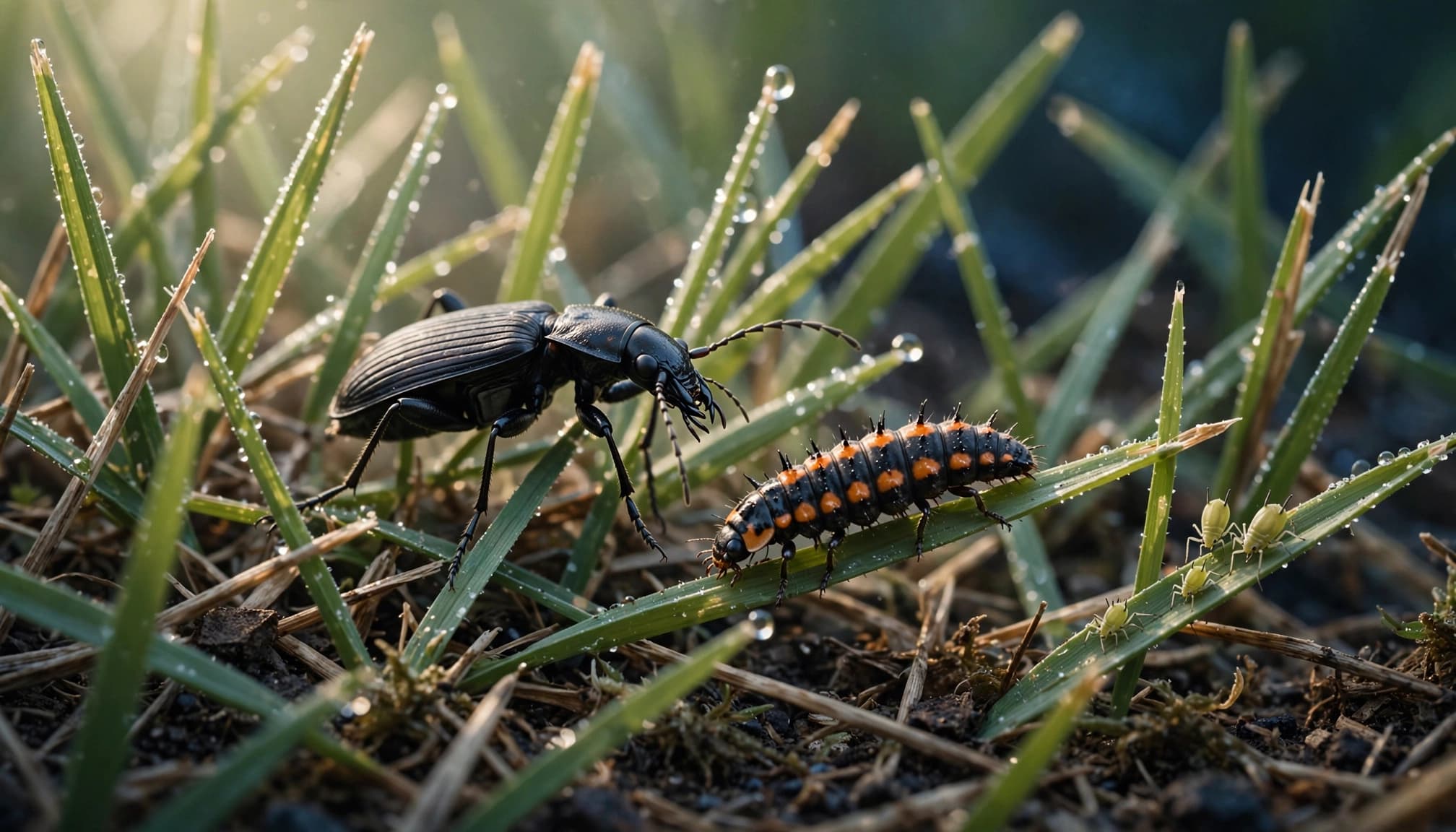
Adult lady beetles, often called ladybugs, have rounded bodies. Their larvae are elongated, usually dark, and marked with orange or yellow. These active, somewhat spiny larvae are often mistaken for pests.
Both stages eat aphids and other small, soft-bodied insects. According to Oklahoma State University’s beneficial-insect fact sheet, convergent lady beetles average about 28 days per life cycle. Their larvae consume 10 to 50 aphids daily.
Protect nearby flowering plants and avoid unnecessary sprays when prey is present.
Ground Beetles
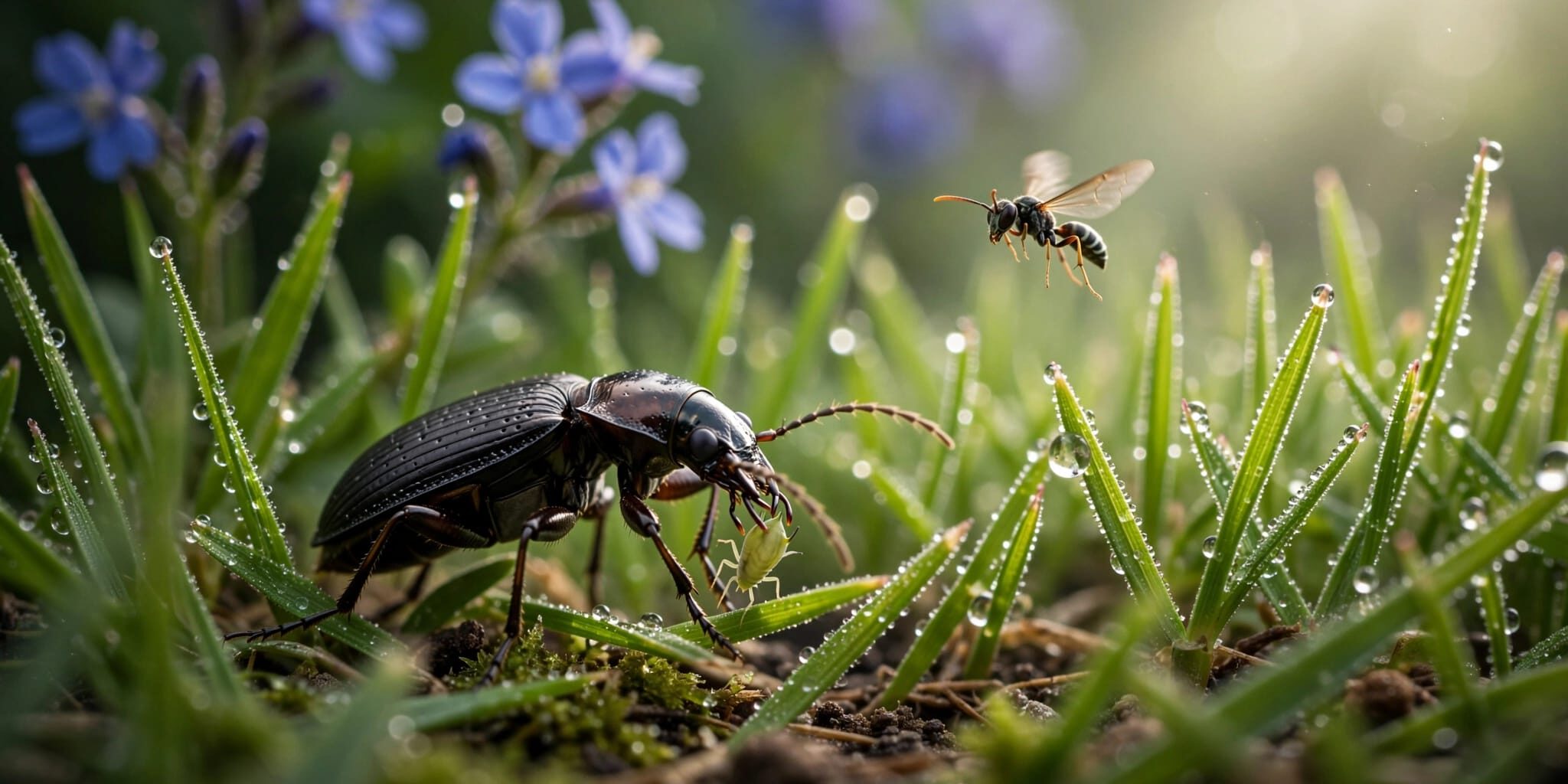
Ground beetles generally have firm, elongated bodies, noticeable jaws, and strong running legs. Many are dark and shelter beneath debris during daylight.
North America has about 2,500 species. Both adult and larval ground beetles can be beneficial, feeding on insects and other small invertebrates. Their larvae are usually elongated, unlike the thick, C-shaped form associated with white grubs.
Preserve modest shelter in adjoining beds instead of spraying every beetle found at soil level.
Big-Eyed Bugs and Spiders
Big-eyed bugs are small predators with broad heads and prominent eyes. Chinch bugs have narrower bodies, often with black-and-white markings, and feed on grass sap. An insect’s presence alone doesn’t establish turf damage, so observe the lawn before spraying.
Spiders also capture turf insects, although they’re arachnids rather than insects. Leave these hunters alone when they aren’t creating a household concern. Their presence in the lawn alone isn’t a reason to treat.
Recognize Lacewings and Hoverflies Near the Lawn
These insects often use flowering borders as adults. Their larvae hunt small pests, so protecting the entire life cycle matters.
Green Lacewings
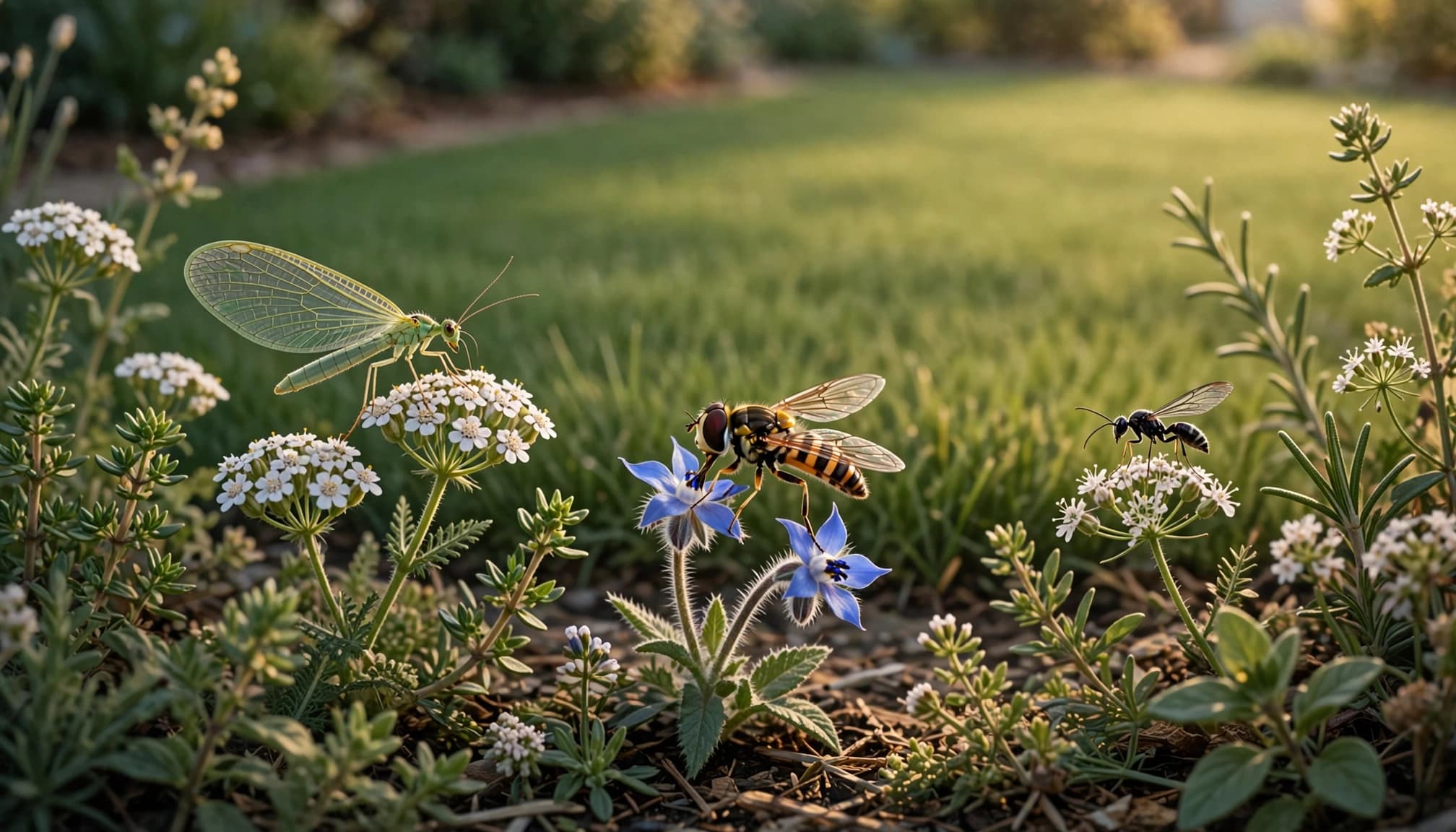
Adult green lacewings have slender green bodies, long antennae, and delicate, net-veined wings. Their eggs often sit individually on thin stalks attached to vegetation.
Green lacewings have larvae with elongated bodies and curved, forward-projecting jaws. Called aphid lions, they attack aphids and other small prey. Garden Design reports that one larva can consume as many as 200 pests weekly.
Flowering borders supply adult food and shelter. Preserve stalked eggs and avoid spraying aphid colonies automatically when predators are already active.
Hoverflies
Adult hoverflies resemble small bees or wasps, but they have one pair of wings and frequently hover above flowers. They don’t sting.
Many hoverfly larvae are legless and maggot-like. Their appearance can prompt unnecessary treatment, even when they’re feeding within an aphid colony. Garden Design reports that a larva can consume up to 400 aphids during its lifespan.
These feeding estimates aren’t guarantees of lawn protection. Adults need suitable flowers, and larvae need the right prey. The Xerces Society’s beneficial-insect habitat guidance connects those needs with practical habitat planning.
Understand Parasitoids, Pollinators, and Mantises
Beneficial insects are commonly grouped as predators, parasitoids, and pollinators. Each group contributes differently.
Parasitoids develop in or on one host after an adult deposits eggs or larvae. The developing parasitoid ultimately kills that host. Many are tiny wasps that homeowners rarely notice.
Trichogrammatid wasps parasitize moth eggs and are commercially released. However, species identification and release timing are critical. A release must match the target moth’s egg stage, rather than simply coincide with visible lawn damage.
Florida also has natural mole cricket enemies, including the parasitoid wasp Larra bicolor. These relationships help explain why preserving natural enemies is part of responsible turf management.
Pollinators support flowering plants around your yard. Most turfgrasses are wind-pollinated, so bees aren’t directly controlling lawn pests.
Praying mantises require a different expectation. They’re non-selective predators that eat pests, bees, butterflies, and each other. Large mantises can even capture hummingbirds. We don’t recommend buying mantises as a dependable lawn pest-control solution.
Match Common Lawn Pests With Their Feeding Location
A pest’s location often provides a better clue than its color. In Southwest Florida, inspect both the grass canopy and root zone.
Use these differences to guide identification.
| Insect | Recognition Clue | Feeding Location and Injury |
|---|---|---|
| Southern chinch bug | Adults are small and dark with white wings; young nymphs can be reddish | Crowns and thatch; sap feeding linked to spreading yellow-to-brown patches, often in sunny St. Augustinegrass |
| White grubs | Cream-colored, C-shaped beetle larvae with a brown head and three pairs of legs | Root zone; weakened roots and loose turf |
| Sod webworm | Small caterpillar concealed in grass or thatch | Blades; chewed tissue, thinning grass, and droppings |
| Mole cricket | Enlarged, shovel-like front legs | Soil and roots; tunnels, disturbed soil, and thinning turf |
Ground beetles and their elongated larvae hunt other invertebrates, while white grubs feed on roots and can loosen turf. Big-eyed bugs have broad heads and prominent eyes, unlike chinch bugs, which feed on sap in crowns and thatch and are linked to spreading yellow-to-brown patches.
These are identification clues, not automatic treatment triggers. Confirm that the insect and injury occur together, with active feeding and fresh damage.
A beetle larva isn’t always a grub, and a moth flying above grass doesn’t prove its caterpillars are damaging it. Our guide to scouting Southwest Florida lawn pests explains where to inspect for active feeding.
Create Habitat Without Neglecting the Lawn
Beneficial turf insects need food, shelter, and suitable moisture. Nearby beds can provide those resources while the lawn stays maintained.
Provide Flowers and Accessible Water
Choose flowering plants with overlapping bloom periods to provide pollen and nectar throughout the growing season. Small, accessible flowers support hoverflies, lacewings, and tiny parasitoid wasps.
A shallow saucer with pebbles and water gives insects a place to land and drink. Empty and refresh it often to prevent mosquito breeding.
Keep these features in maintained beds, away from the home’s foundation.
Preserve Shelter in Beds, Not Smothered Turf
Leave a modest amount of leaf debris in suitable beds to shelter beneficial insects through winter. Where practical, wait until spring to clean up. Remove thick leaf mats from grass because they block light and retain too much moisture.
SARE’s strategies for supporting beneficials describe straw mulch as humid shelter for spiders and ground beetles. In crops, straw can also make it harder for aphids and leafhoppers to locate plants.
These are farm practices, not a reason to spread straw mulch across established turf. SARE also reports that perimeter trap cropping reduced one Florida grower’s insecticide applications by 56%. That result supports habitat-based management, but it doesn’t promise the same reduction for residential lawns.
Use Targeted Control Only When Damage Warrants It
Our integrated pest management approach combines inspection, cultural care, and biological controls. It keeps pest control focused on confirmed activity and uses targeted treatment when needed. Healthy turf tolerates some feeding better than stressed grass.
Protect Natural Enemies During Treatment
Many general-purpose pesticides, including broad-spectrum insecticides, can harm helpful insects along with target pests. Natural origin doesn’t guarantee selectivity: pyrethrum and rotenone also kill many beneficial insects.
Bacillus thuringiensis products such as DiPel are more selective. Appropriate Bt formulations target susceptible caterpillars rather than insect predators and parasitoids. However, they can harm butterfly caterpillars, and any application must follow the product’s labeled site and target.
Avoid treating blooms or active bee-foraging areas. Follow label directions for application, irrigation, and re-entry.
A product that controls caterpillars won’t automatically control chinch bugs or root-feeding grubs.
Strengthen Turf Before Buying Beneficials
Keep mower blades sharp, use the recommended height for your grass, and avoid removing more than one-third of the blade at once. Correct irrigation gaps without leaving soil saturated, and avoid excessive nitrogen.
Advice on purchased insects differs. Some garden guides recommend releasing lady beetles at dusk near prey. However, Oregon State University’s beneficial-insect guidance reports limited benefit from yard and garden releases and doesn’t currently recommend them.
We favor conserving established natural enemies rather than treating purchased insects as a replacement for diagnosis.
Frequently Asked Questions
How can I tell whether an insect in my lawn is beneficial or harmful?
Check its life stage, feeding behavior, and location, then look for fresh injury nearby. An insect’s presence alone doesn’t prove it’s damaging grass.
Are all beetle larvae in turf white grubs?
No. Ground beetle larvae are usually elongated and hunt other invertebrates. White grubs are cream-colored and C-shaped, with a brown head and three pairs of legs, and feed on roots.
How can I support beneficial insects near my lawn?
Grow flowering plants with overlapping bloom periods and provide a shallow saucer with pebbles and water. Leave modest leaf debris in suitable beds, but remove thick leaf mats from grass.
Should I release purchased beneficial insects or use insecticides?
The article recommends conserving established natural enemies rather than relying on purchased insect releases, which may provide limited benefit. If treatment is needed, choose a targeted product for the confirmed pest and follow its label, since broad-spectrum insecticides can harm beneficial insects.
Protect the Lawn by Identifying the Insect First
Beneficial insects can look unfamiliar, especially as larvae. Accurate identification protects those helpers while allowing treatment to focus on insects causing measurable injury.
Start at the damaged edge, compare healthy turf, and connect the insect with its feeding location. Preserve nearby habitat and correct mowing or irrigation stress.
When damage keeps spreading or identification remains uncertain, a professional inspection can separate pest activity from disease and environmental problems before treatment begins.