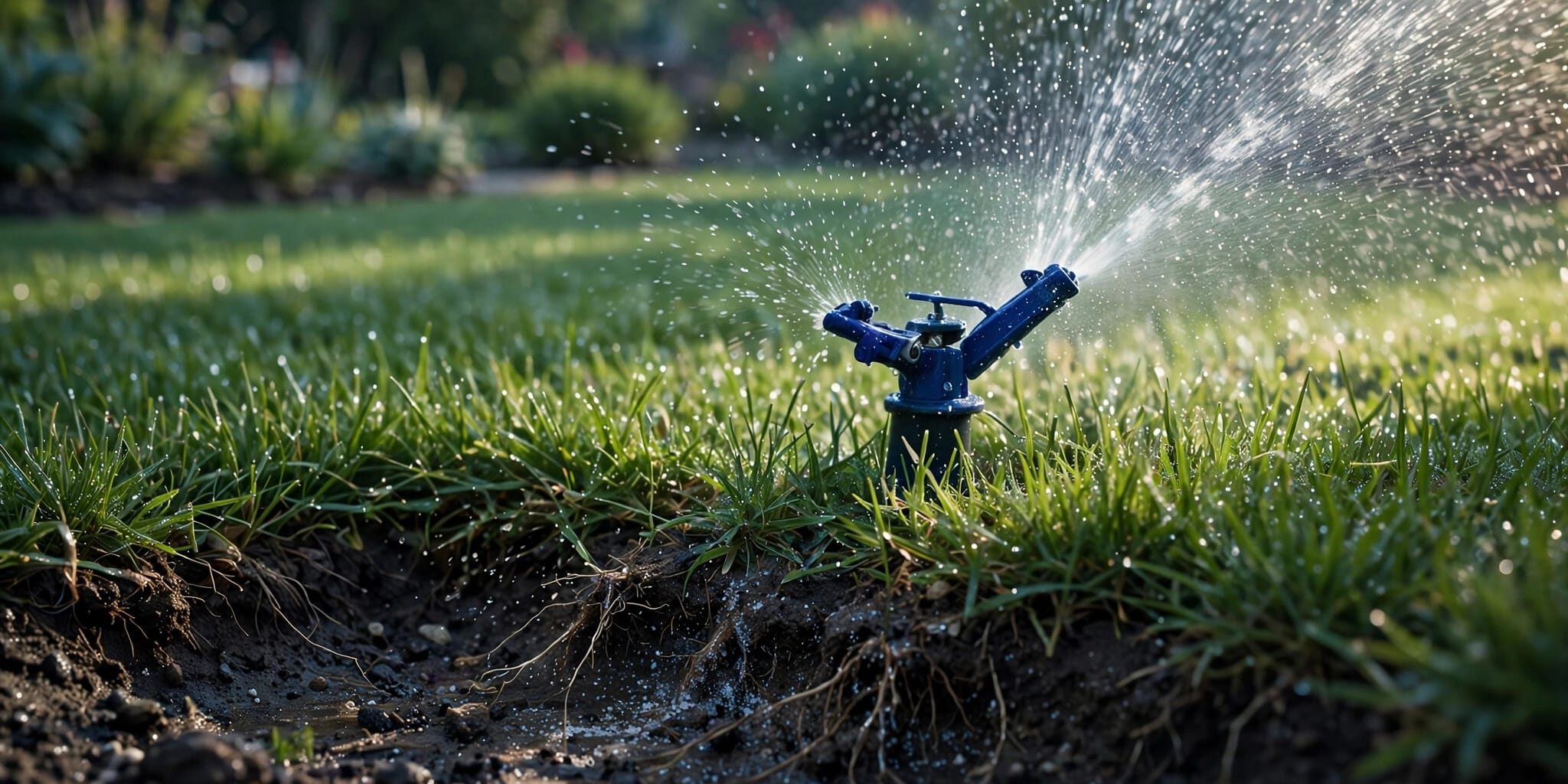
Watering after a lawn treatment can help the product reach pests, but watering too soon can reduce its effectiveness. The right time to water after lawn insecticide depends on the specific product, where pests feed, and your lawn’s condition. Root-feeding grubs and chinch bugs feed in different parts of the lawn, which can affect timing.
We recommend checking the label instructions before starting treatment or changing your sprinkler schedule. Some insecticides need immediate irrigation, while others require a dry period, so follow the product label.
Match Watering Timing to the Product
There isn’t one waiting period for every lawn insecticide. UF/IFAS explains in its Florida pesticide-use guidance that users must follow the label for each lawn treatment.
Granular Soil Treatments
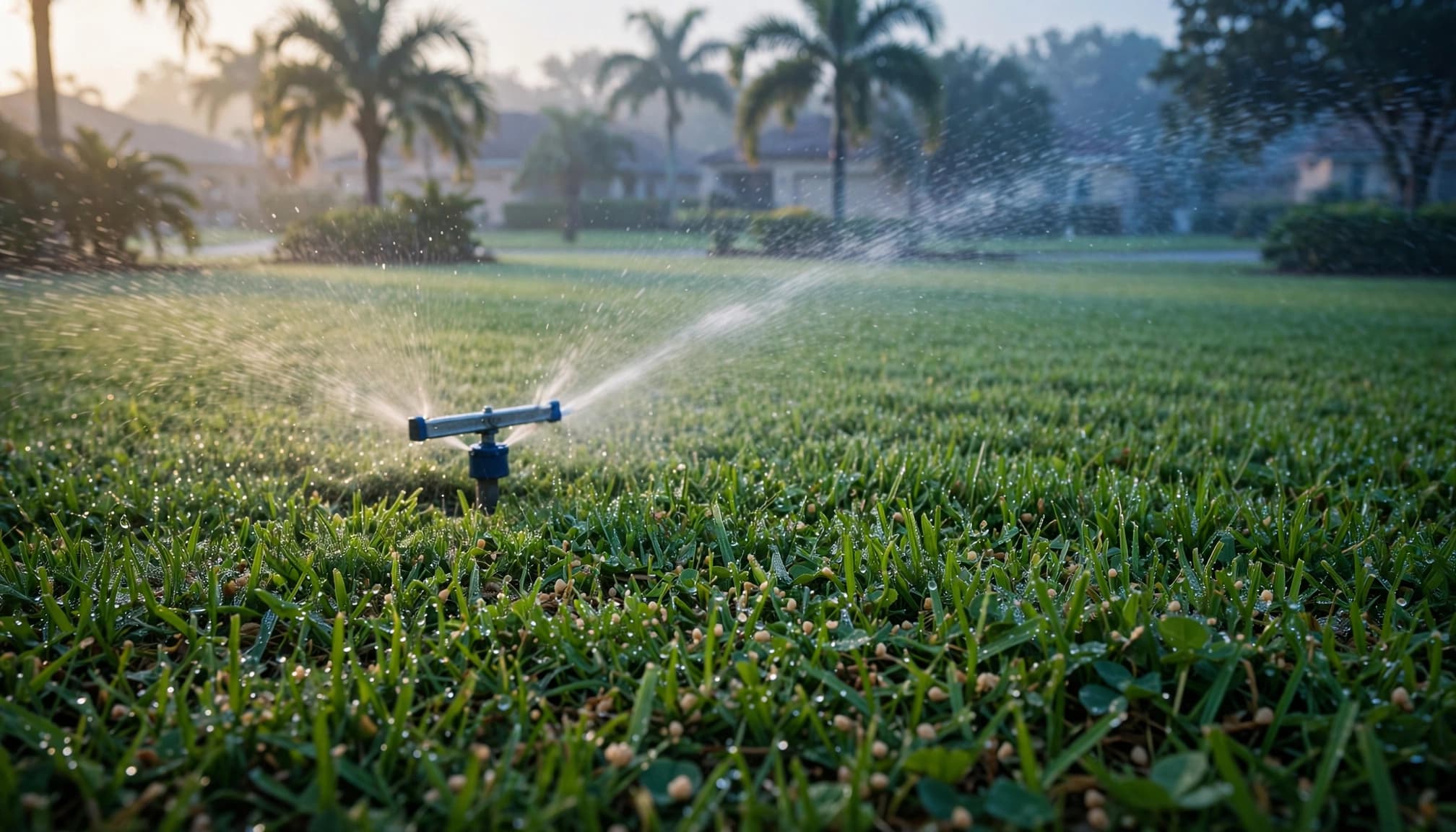
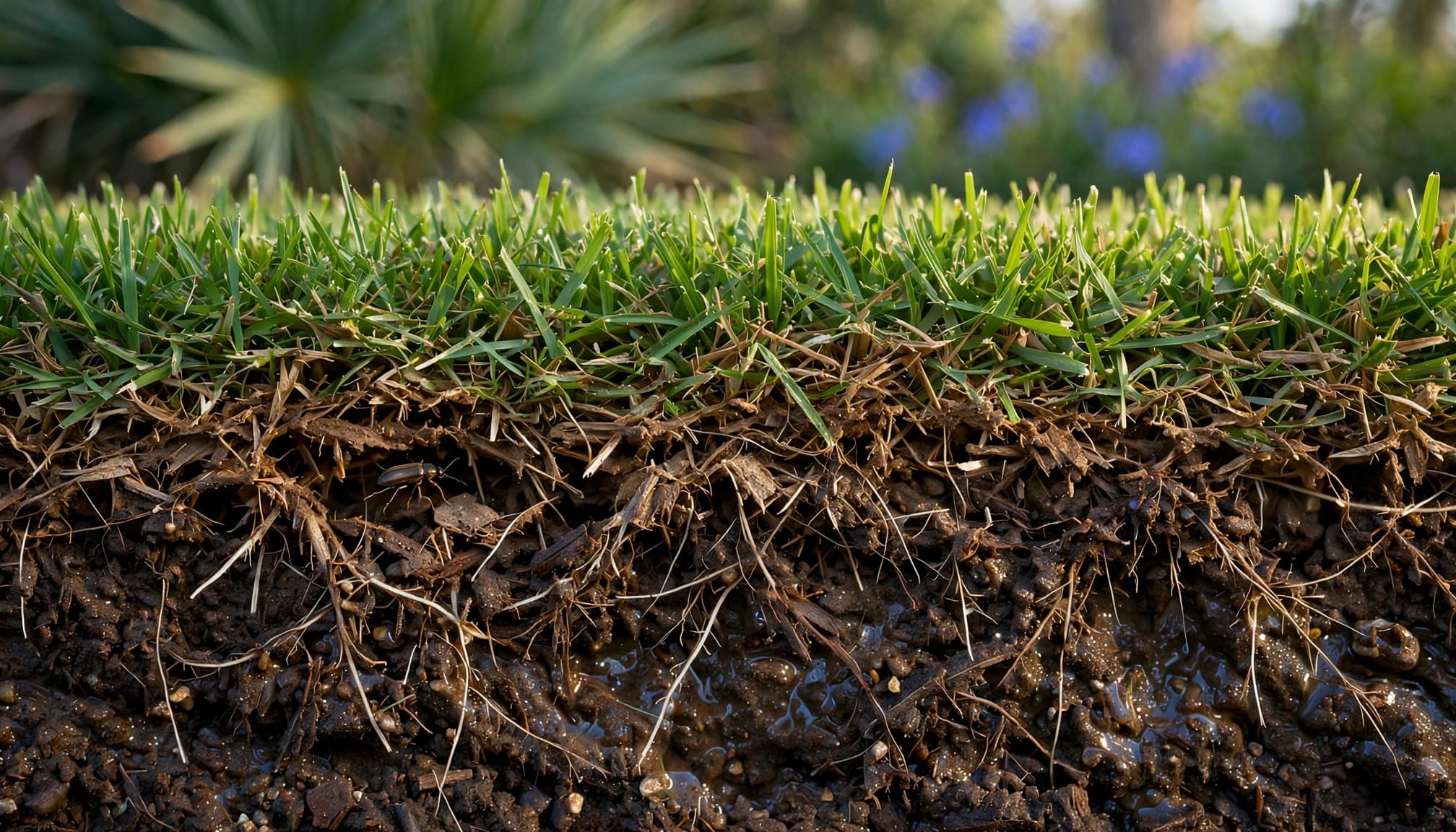
Many granular soil treatments need irrigation to move the active ingredient through the thatch layer and toward the root zone, where pests feed. White grubs feed around roots, so leaving a grub control product on the surface can limit its effectiveness.
For example, Imi-Lambda Granular T&O Insecticide directs light watering immediately after application to dry grass. Its directions also require moving the active ingredient into the soil within 24 hours.
Allectus 0.225 G Plus Turf Fertilizer directs irrigation if rainfall doesn’t occur within 24 hours. These examples are product-specific, and directions for a separate granular fertilizer don’t establish insecticide watering requirements.
Liquid Treatments and Granular Baits
Liquid insecticides aren’t automatically products that need a 24-hour drying period. Some target insects on grass blades, including chinch bugs, while others are intended for soil placement. Watering requirements depend on the product.
Granular baits are another important exception. Certain mole cricket baits need to remain dry so insects can feed on them.
Our guidance on granular and liquid lawn insecticides explains why pest location and formulation matter. Neither method is automatically stronger, and the active ingredient alone doesn’t establish watering timing.
How Much Water Should You Apply?
For some grub treatments, guidance uses 1/4 to 1/2 inch of water as an example. That range isn’t a substitute for the product’s instructions. The Imi-Lambda and Allectus label excerpts above don’t specify a water depth.
This example doesn’t set watering amounts or timing for liquid weed killer, granular fertilizer, or weed and feed. Follow each product’s own label.
Watering-in should move a soil-targeted treatment toward the root zone without creating puddles or runoff. Overwatering beyond the label’s directions can cause runoff. Don’t automatically run your system for an hour, because sprinkler output varies between lawns and irrigation zones.
To measure output, place several straight-sided containers across the zone and run a timed cycle. Measure the collected water to calculate how long your system needs to apply the label-directed amount.
Uneven measurements indicate a coverage problem. We recommend checking blocked heads, poor overlap, and leaks before increasing watering time. Extra irrigation won’t correct a dry section if the sprinkler never reaches it.
Protect the Treatment in Southwest Florida Weather
In Collier and Lee counties, afternoon storms can quickly change an irrigation plan. Check the forecast and soil before a lawn treatment, then set the sprinkler timer according to label instructions.
Pest control products vary: some need soil-directed irrigation, while others require treated foliage to stay dry. A natural insecticide, liquid weed killer, granular fertilizer, or weed and feed may each have different directions, so none has a shared watering rule.
Rainfall, Saturated Soil, and Runoff
Rain can replace irrigation only when the label allows it and rainfall meets the product’s requirements. Note how much rain fell and when, since a brief shower may be insufficient and a heavy storm can carry product off the lawn.
After unexpected rain, don’t automatically irrigate or reapply. Check the label and contact your provider if it’s unclear whether the product’s requirements were met.
Avoid applying products to waterlogged turf when their labels prohibit it. Imi-Lambda and Allectus warn against runoff, puddling, and saturated conditions.
If water moves toward a street, pond, or storm drain, stop irrigating and assess the problem. Don’t add more water just because the lawn treatment was recently applied.
Early morning hours are often practical for scheduled irrigation because turf can dry during the day, which may help limit turf disease.
Family Access and Product Handling
Watering instructions and re-entry instructions are separate requirements. Keep children and pets off treated turf until every label requirement is satisfied, including any watering, drying, or restricted-entry period.
A natural or reduced-risk description doesn’t remove handling precautions. UF/IFAS’s reduced-risk pesticide guidance still calls for following the manufacturer’s directions.
We recommend confirming access restrictions with your technician before allowing normal yard use.
Coordinate Insecticide With Other Lawn Treatments
Combination lawn treatments can create conflicting watering instructions. A soil insecticide may need irrigation, while post-emergent treatments such as a liquid weed killer may require a rain-free period for foliage absorption.
Don’t assume every liquid weed killer needs exactly 24 or 48 hours without rain. Check the product label for its required rain-free period. Another liquid weed killer may have different timing, so follow the directions for the product applied.
Likewise, directions for granular fertilizer, weed and feed, or a pre-emergent herbicide don’t establish the right schedule for insect control. Granular fertilizer instructions apply to that product, not to insecticide.
If separate products have incompatible instructions, ask your lawn care professional to separate the applications. For a combination product, follow its complete label rather than combining directions from unrelated treatments.
Afterward, watch for fresh feeding and expanding damage, including signs associated with chinch bugs. Our guidance on lawn recovery after insect treatment explains why brown grass alone doesn’t justify another application. Reassess treated areas after seven to ten days unless your service instructions specify otherwise.
Key Takeaways
- Confirm whether the product requires immediate watering, delayed irrigation, or dry conditions.
- Measure sprinkler output instead of guessing at watering time.
- Avoid runoff and follow all weather and re-entry restrictions.
- Coordinate overlapping treatments before application, and confirm active pests before considering retreatment.
Frequently Asked Questions
How long should I wait to water after applying lawn insecticide?
There isn’t one waiting period for every product. Check the label, because some treatments need immediate irrigation while others require treated foliage to stay dry.
Can rainfall replace irrigation after treatment?
Rain can replace irrigation only if the label allows it and the rainfall meets the product’s requirements. After unexpected rain, check the label before irrigating or reapplying.
How much water should I apply?
Follow the product label rather than using a general amount. The 1/4-to-1/2-inch range is an example for some grub treatments, not a rule for all insecticides.
When can children and pets return to the lawn?
Follow all label requirements for re-entry, including any watering, drying, or restricted-entry period. Watering instructions and re-entry instructions are separate requirements.
Protect Results With Product-Specific Watering
The right time to water after a lawn insecticide application depends on the current product label, not a general rule for liquids or granules. Correct timing helps your lawn pest control treatment reach the areas where target insects feed.
If aftercare directions from your pest control provider are unclear, contact them before restarting irrigation. We recommend resolving that question early so your watering schedule supports the treatment rather than interfering with it.