Lawn thatch can shelter lawn thatch insects, but brown patches alone don’t confirm an insect infestation. Thick thatch makes inspection more difficult, while drought stress, irrigation problems, and disease can create similar symptoms.
We recommend checking where the damage starts before choosing a treatment. For Southwest Florida homeowners, that means examining the blades, thatch, and roots for signs of lawn pests rather than treating every discolored area the same way.
How Lawn Thatch Creates Insect Shelter
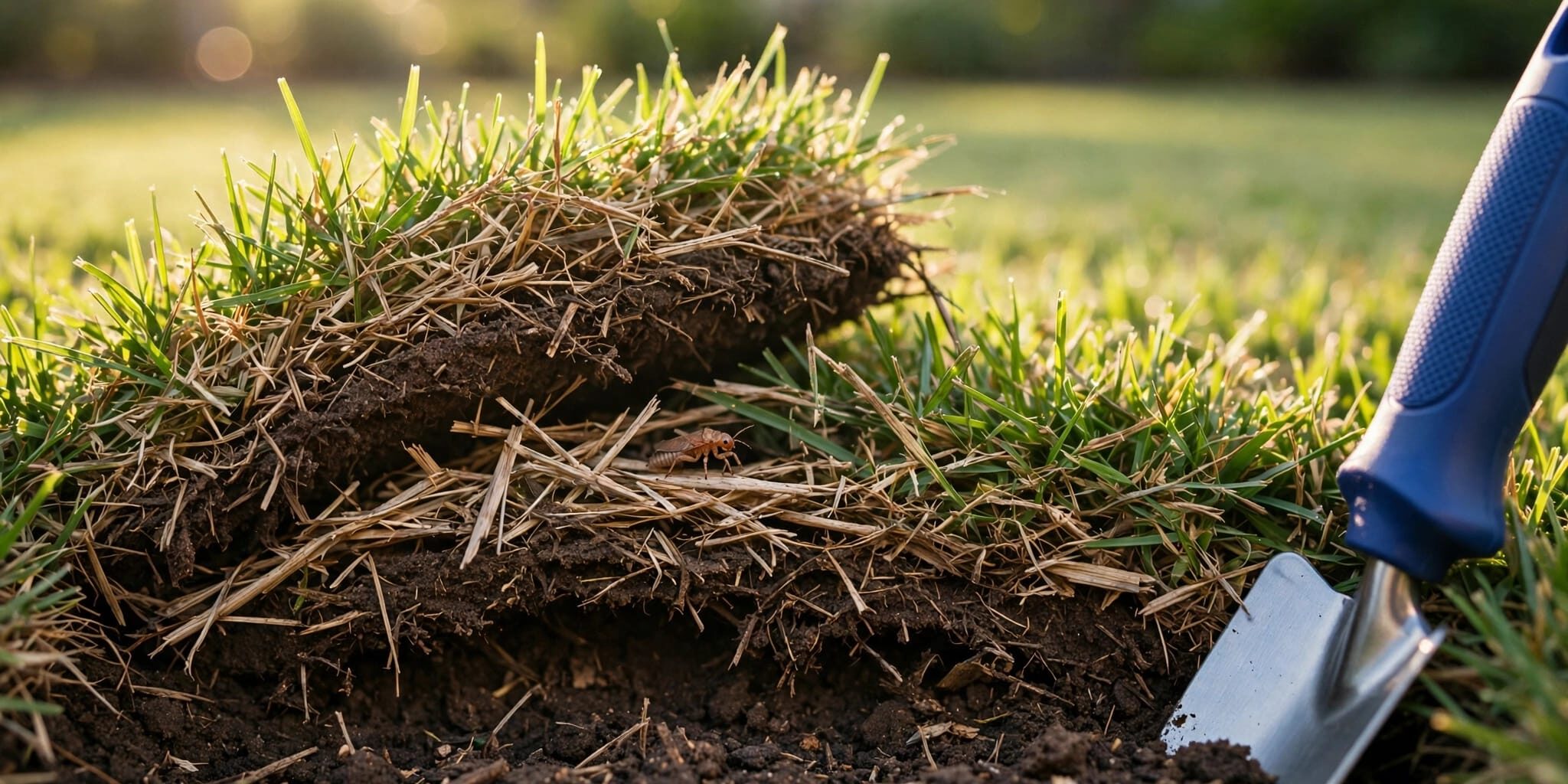
Thatch is a tightly packed layer of living and dead stems, roots, and other plant material between green grass and soil. A thin layer is normal. Excessive thatch accumulation can create protected spaces where lawn thatch insects may hide.
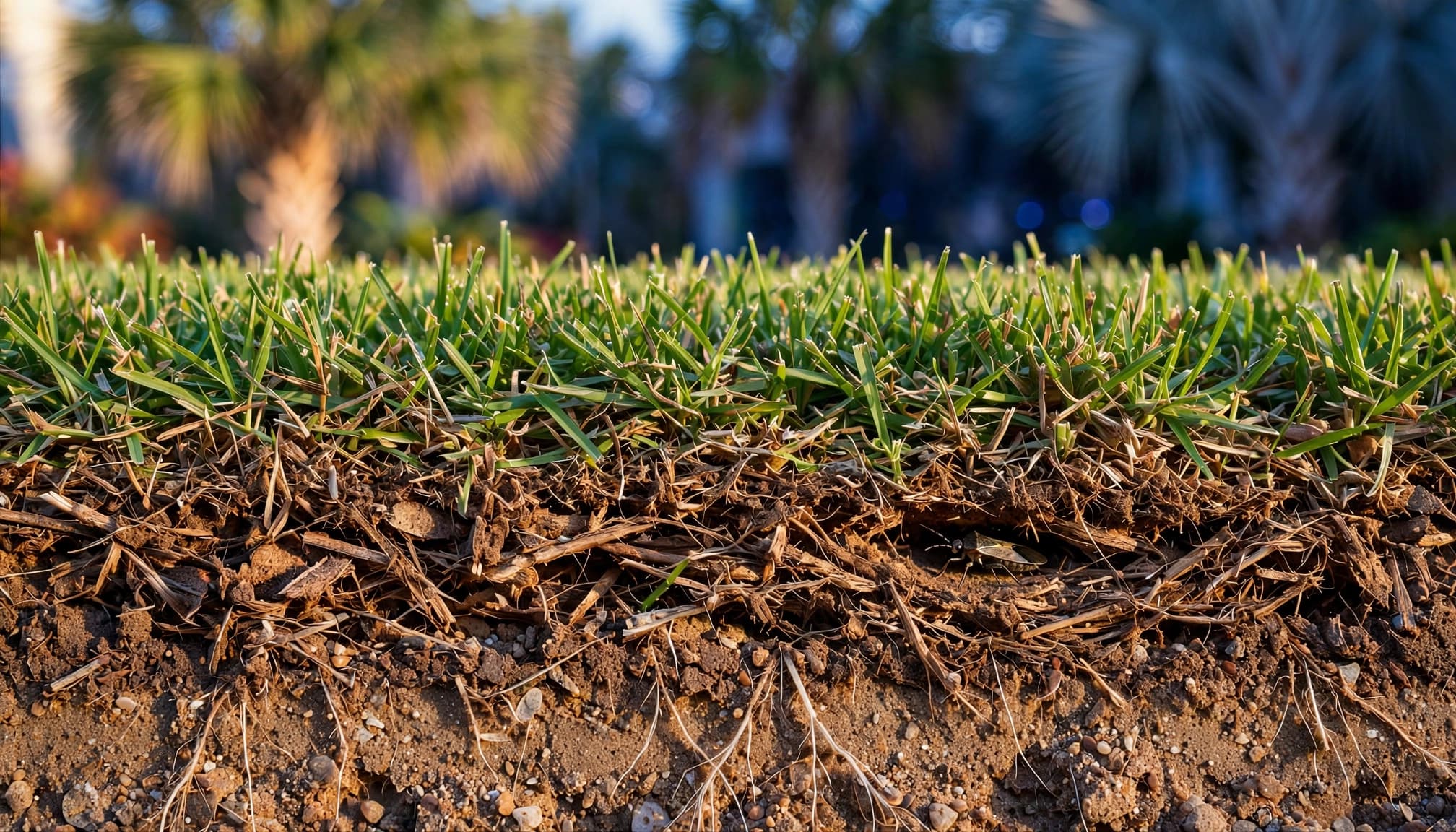
Dense thatch can also complicate turfgrass management by disrupting water movement and making soil moisture uneven. Excess nitrogen fertilization encourages growth that can contribute to buildup.
However, thatch alone doesn’t cause an infestation, and not every insect found there is a harmful lawn pest. Beneficial predators also live near the turf surface. We consider the insect, feeding damage, and lawn condition together before recommending control.
Which Insects Use the Thatch Zone?
Different lawn pests damage different parts of the turf. Knowing where lawn pests feed helps you inspect the right area.
Chinch Bugs Feed Around Grass Crowns
Southern chinch bugs are an important concern in Southwest Florida St. Augustinegrass. They stay near grass crowns and within thatch, where they remove plant fluids with piercing-sucking mouthparts.
Damage often begins as yellowing in sunny, water-stressed turf. It can develop into irregular brown patches, especially near pavement. We inspect living grass beside the damage because active insects may have moved away from the dead center.
Hairy chinch bugs are associated with cooler regions, so local identification matters when choosing a control plan.
Caterpillars Hide While Grubs Feed Near Roots
Tropical sod webworms are insect larvae that shelter in thatch during daylight and feed on grass blades at night. Ragged tips, clipped leaves, green droppings, and webbing near the soil line can signal sod webworms. Fall armyworms also chew foliage and can cause rapid thinning.
White grubs occupy a different feeding zone. Oklahoma State Extension explains that white grubs feed on grass roots at or just below the thatch layer. Their injury can weaken the lawn’s attachment to the soil. Billbugs can also damage stems or roots, but inspection and identification are needed to confirm the cause.
How to Separate Insect Damage From Drought
Brown patches are only a starting point. We compare the damage pattern with irrigation coverage, blade condition, and findings beneath the turf.
Inspect the Green-to-Brown Border
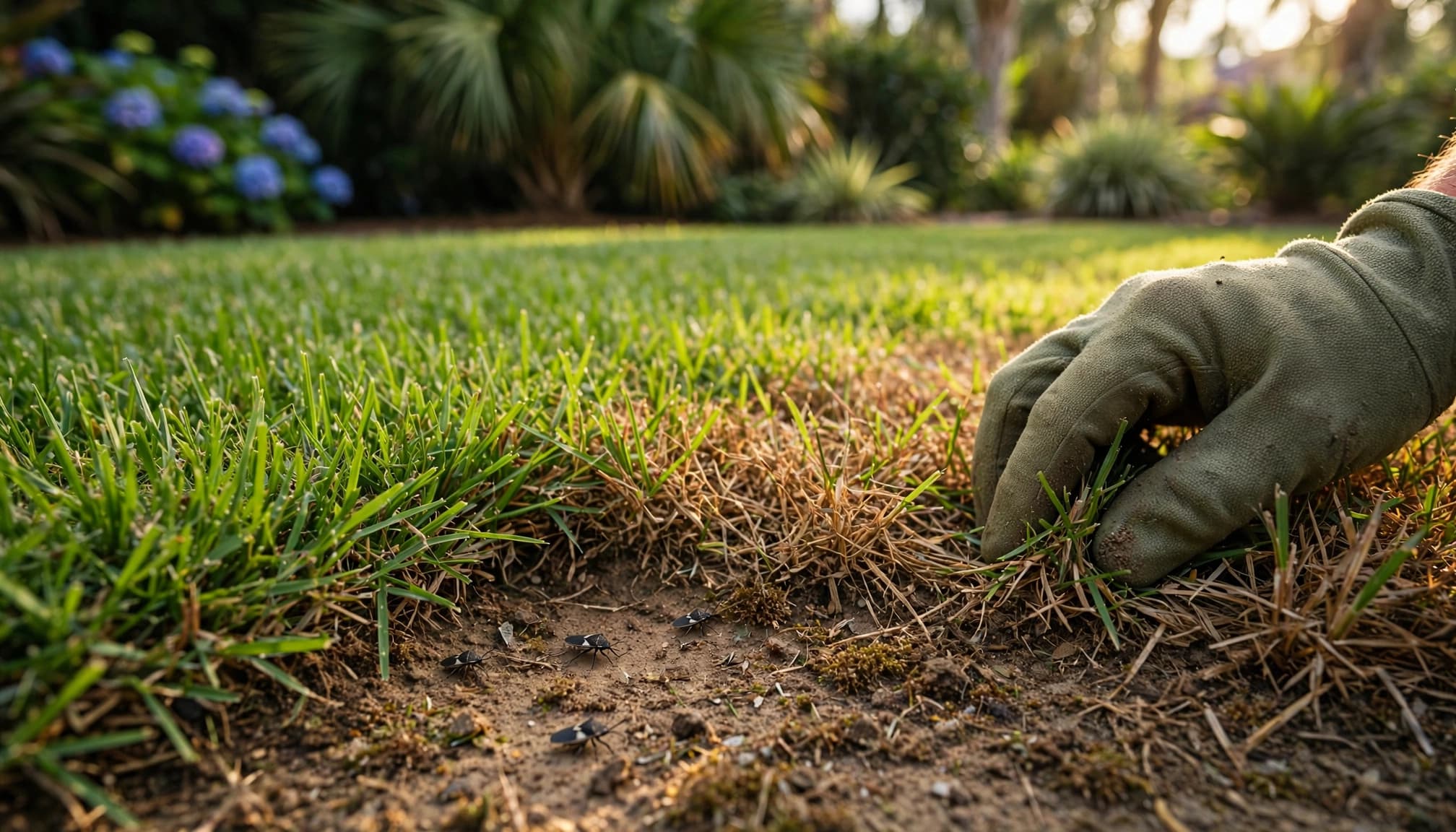
Part the grass where healthy turf meets yellowing or brown turf. UNH Extension recommends checking grass crowns beside damaged areas when hairy chinch bugs are suspected.
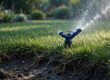
Drought stress may follow a missed sprinkler zone or dry strip. Caterpillars such as sod webworms leave chewed grass blades. Check irrigation output rather than relying only on your watering schedule.
A soap flush can help reveal surface-feeding caterpillars, but match the mixture and method to the suspected pest. Moths or birds alone don’t confirm an infestation.
Lift Turf When Roots Appear Damaged
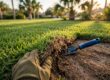
If grass pulls up easily, examine the root zone. Cut three sides of a one-foot square of sod, about two inches deep, and carefully peel it back.
Look for pale, C-shaped white grubs, shortened roots, and disturbed soil. Check several locations, including a healthy comparison area, then replace the sod.
One grub doesn’t explain widespread decline. Mole crickets and root disease can also weaken turf, but tunnels alone don’t confirm mole crickets are present. Treatment for lawn pests should depend on confirmed activity, the extent of damage, and whether findings reach an economic threshold. Our Southwest Florida lawn pest checklist helps you compare these local warning signs.
How Thatch Affects Treatment Decisions
Treatment must match the identified insect, its active life stage, and your grass type. Chemical control, thatch reduction, and irrigation correction can support recovery, but they won’t remove an established infestation by themselves.
Don’t assume systemic insecticides solve a heavy-thatch problem or that liquid products always work better than granular ones. Broad-spectrum insecticides can affect non-target organisms, so don’t use them without a confirmed need. For suitable, confirmed pests, beneficial nematodes may offer biological control. Organic options may also fit, but effectiveness depends on the pest, product, and conditions.
Mississippi State Extension emphasizes following insecticide label watering directions before and after chinch bug treatment. These directions vary by product, so don’t assume one watering schedule fits all.
Timing matters. When sod webworms are actively feeding, target insect larvae; confirm grub activity near roots before treating. Eggs may survive some applications, so follow-up inspections help distinguish continued activity from old damage.
We recommend targeted treatment only after confirming activity and considering damage severity and the economic threshold. Monitor for fresh feeding from lawn pests, and don’t repeat applications just because damaged grass remains brown.
Reduce Thatch Without Adding Lawn Stress
Prevention starts with balanced cultural practices. Excess fertilizer, unsuitable mowing heights, and frequent shallow irrigation can weaken turf and contribute to thatch accumulation. Sound maintenance also supports regular monitoring for lawn pests, but it won’t eliminate an established infestation.
We recommend keeping fertilizer applications appropriate for the grass and local conditions. Our lawn fertilization in Southwest Florida focuses on feeding needs without encouraging unnecessary growth.
Correct irrigation leaks and coverage gaps, and avoid keeping the soil surface constantly wet. Mow at the recommended height for your grass rather than scalping stressed areas.
Before scheduling thatch removal, assess lawn health, grass type, and recovery needs. Aggressive dethatching can injure St. Augustinegrass, especially during heat or drought stress. When insects and excessive thatch occur together, coordinate the work with pest management instead of assuming mechanical removal replaces treatment.
Frequently Asked Questions
Does thick thatch mean my lawn has insects?
No. Thatch can provide shelter for insects, but its presence alone doesn’t confirm an infestation. Inspect the grass, thatch, and roots for active pests and matching feeding damage.
What are common signs of lawn insects?
Chewed blades, green droppings, webbing, or insects near grass crowns can point to specific pests. Brown patches alone can also result from drought, irrigation problems, or disease.
Should I treat brown patches right away?
We recommend confirming the cause before treating. Match any control to the identified pest, its active life stage, and the extent of damage.
Does dethatching eliminate lawn insects?
Dethatching doesn’t replace pest identification or targeted treatment. Aggressive removal can injure St. Augustinegrass, so assess lawn health and recovery needs before proceeding.
Protect the Lawn by Confirming the Cause
Thatch can provide shelter for turf insects, but correct identification determines the next step. Chewed blades, active insects near crowns, and damaged roots provide better evidence than brown grass alone.
We help homeowners in Collier and Lee Counties identify lawn pests through inspection, targeted control, and practical lawn care. Addressing the confirmed problem protects healthy turf and avoids unnecessary treatments.