A treated lawn can still show new damage, live insects, or thinning grass days later. Lawn pests after treatment may reflect delayed damage, new life stages, weather, irrigation stress, or activity from nearby properties, not treatment failure.
A pest control treatment can reduce active insects, but one-time treatments can’t immediately repair damaged roots, reverse visible injury, or prevent every new hatch. In Southwest Florida, sod webworms, armyworms, and cutworms can create different signs across stressed turf grass amid heat, sandy soil, rainfall, and long pest seasons.
Key Takeaways
- Lawn pests after treatment do not always indicate treatment failure; visible damage, active insects, and turf recovery can lag behind pest control.
- New pest activity may result from surviving eggs, different life stages, or adult insects moving in from nearby lawns and landscape areas.
- Overwatering, drought, excess fertilizer, short mowing, wet thatch, and disease can stress St. Augustinegrass and make damage worse or harder to diagnose.
- Inspect the grass blades, thatch, soil, roots, lawn edges, and green-to-brown borders before applying more pesticide.
- Follow product labels and service instructions, monitor the lawn for 7 to 10 days, and use professional inspection and integrated pest management for recurring damage.
Lawn Pests After Treatment: What’s Normal?
Most lawn insect treatments do not create an instant visual change. Insects may remain active briefly, and damaged turf needs time to recover after feeding stops. Even effective one-time treatments don’t prevent every new pest from emerging later.
Treatment Works on a Timeline
Liquid and granular products work differently. Some need watering-in to move into the soil, while others work when insects contact treated grass blades or soil. The product label tells you whether irrigation is needed and when it should happen.
White grubs, for example, feed below the surface. An insecticide needs to reach the root zone where they’re feeding. Chinch bugs feed in the thatch and near the soil surface. Sod webworms and armyworms chew grass blades, often at night. Cutworms feed on grass blades and around the crown.
We recommend checking the treated area again after 7 to 10 days, especially where damage has appeared before. UF/IFAS also recommends monitoring recurring lawn hot spots on that schedule.
Active Insects Do Not Always Mean Failure
It’s normal to see some pest activity shortly after service. A treatment may affect pests after they move through treated turf, rather than the moment it’s applied. Pest eggs already in the lawn can also hatch after an earlier insecticide application. Dead pests may indicate that the treatment is working, even before the turf recovers visually.
What isn’t normal is rapidly expanding damage, turf that pulls up easily, or increasing insects in the same area after the expected treatment period. Those signs call for an inspection, not an automatic second application.
Brown grass is not proof of an active insect problem. Turf can remain discolored after pests are controlled, especially when roots were damaged before treatment.
Pest Life Cycles Create New Waves of Damage
The pest life cycle is a major reason lawn problems seem to return. A product may control one insect stage without affecting another. Treatment timing must match the active stage in the pest life cycle, whether eggs, larvae, or adults.
One-time treatments may be followed by a new hatch when pest eggs survive the application. That delayed activity can resemble fresh damage, but it doesn’t always mean a new infestation.
Eggs and Larvae May Be Below the Surface
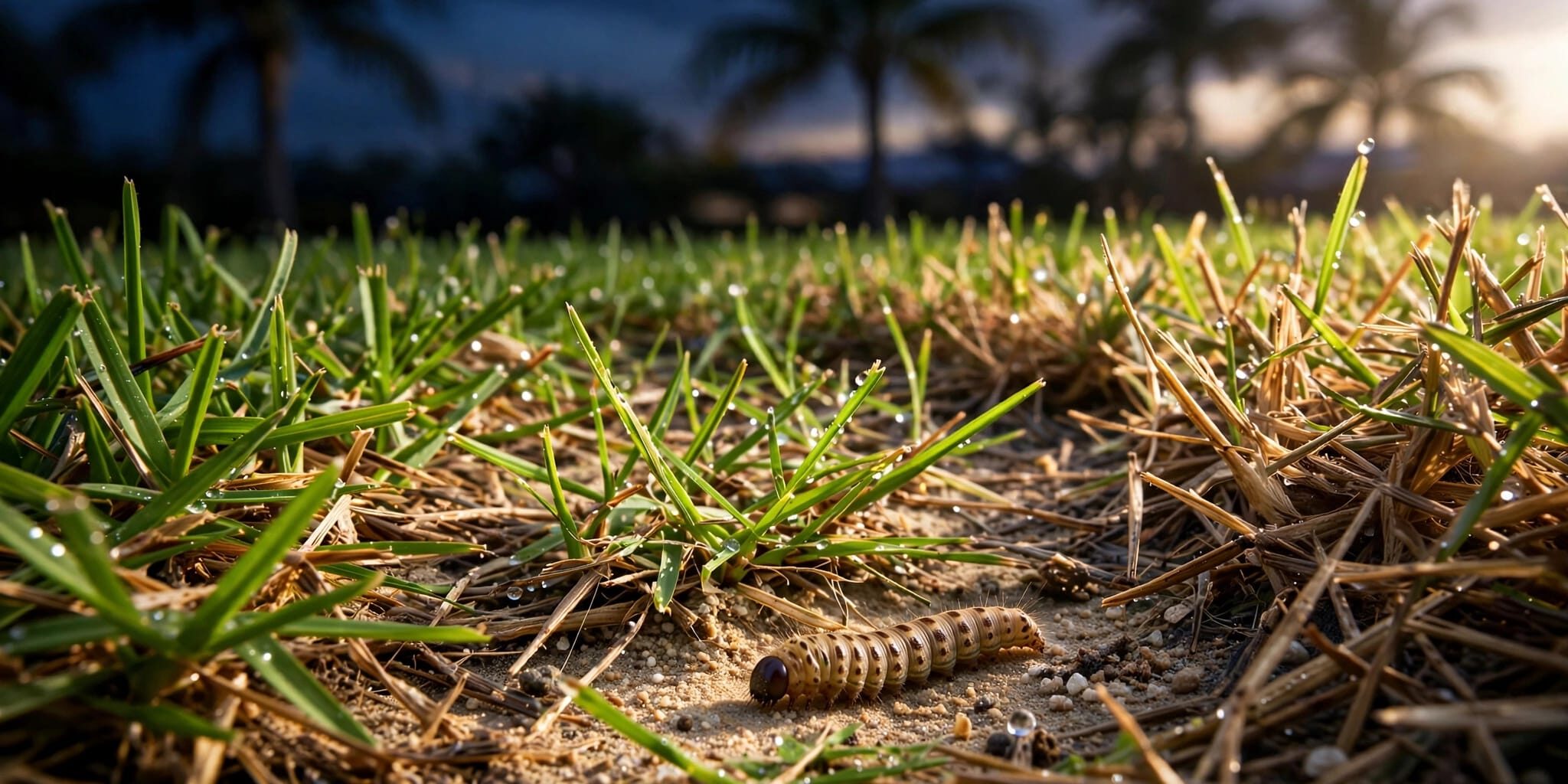
White grubs are beetle larvae that feed on turf roots. Their damage can look like drought stress because the lawn wilts, turns yellow, and eventually dies back. Sod webworms chew grass blades, armyworms can strip foliage quickly, and cutworms feed near the soil line.
In Florida, preventive grub treatments are generally timed for spring egg laying and hatching, often from April through June. Curative treatments are more common during summer larval activity.
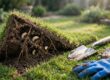
For St. Augustinegrass, UF/IFAS recommends lifting a section of sod about 2 inches deep to check for white grubs near the roots. Its Florida lawn guidance for St. Augustinegrass also identifies several common turf pests.
Adult Pests Can Re-Enter the Yard
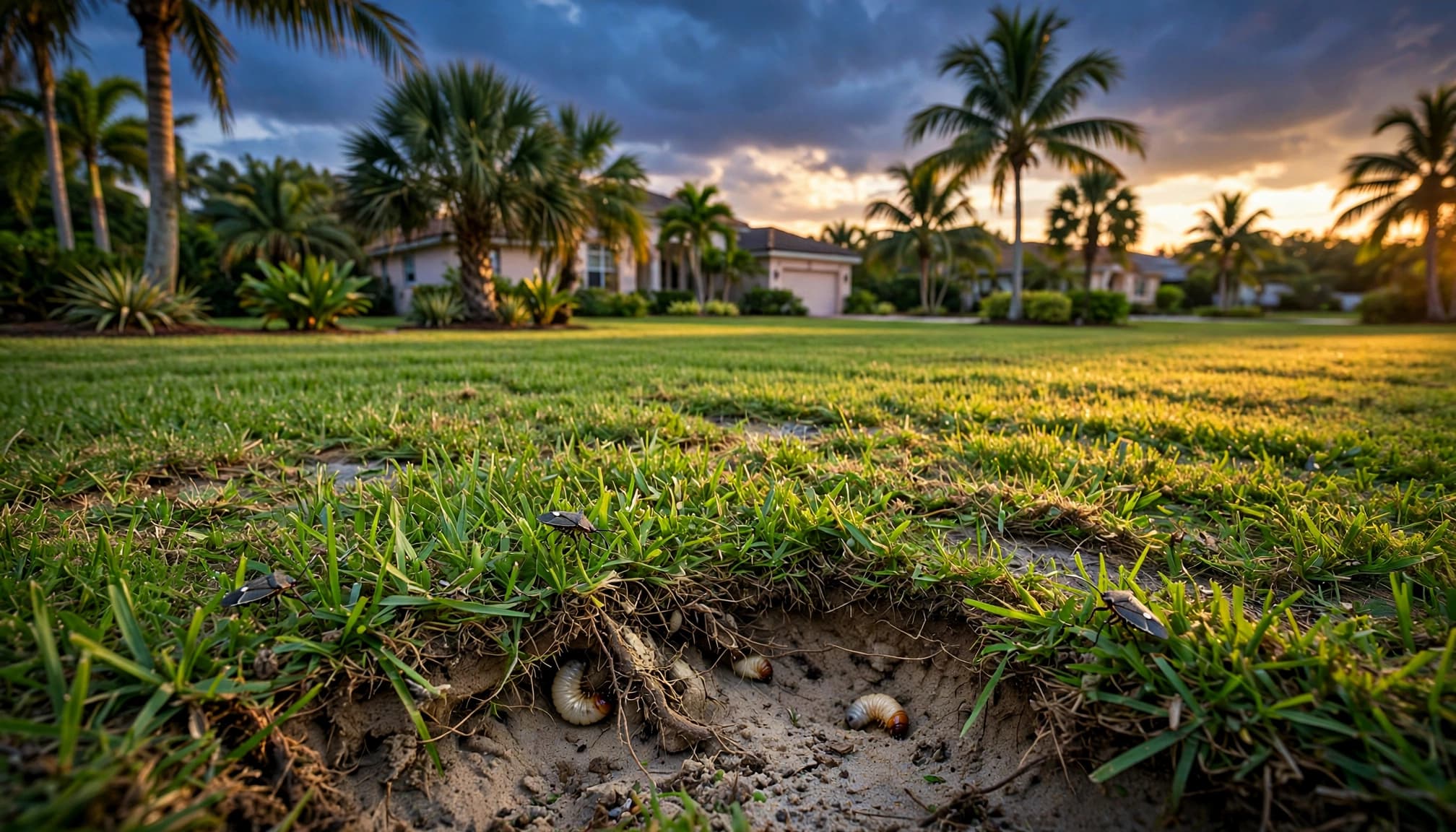
A treated property isn’t sealed off from insects. Adult moths, beetles, and chinch bugs can move in from nearby untreated lawns, landscape beds, or neighboring properties. This movement can cause re-infestation in Southwest Florida communities with connected lawns and shared irrigation patterns.
This pest is especially common in St. Augustine lawns. It often feeds along the edge where healthy grass meets brown grass. That active border is where UF/IFAS recommends looking for chinch bugs.
Wet Thatch and Turf Stress Bring Pests Back
Treatment matters, but turf conditions matter too. A stressed lawn is more likely to show visible pest damage and recover slowly after an infestation. Moisture or drought stress can make older damage stand out without proving that pests have returned.
Over-Watering Creates Better Pest Habitat
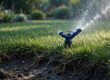
Southwest Florida lawns often receive more water than needed during rainy periods, even when heat increases evaporation. Sandy soil drains quickly, but frequent light watering can keep the surface and thatch damp while shallow roots remain stressed. Good moisture control means adjusting irrigation schedules for rainfall, drainage, and current turf needs instead of watering by habit. Wet thatch can support pests and turf disease, while drought stress can make existing damage more noticeable.
Mature St. Augustinegrass should generally be watered when it shows moisture stress, such as wilted or blue-gray blades. A deeper watering of about one-half to three-quarters of an inch is more useful than frequent shallow cycles. Watering frequency should change with the weather, not stay fixed year-round.
Rain does not automatically mean irrigation should continue. Check the soil, inspect drainage, and adjust your schedule for current weather. Follow local water restrictions.
Fertilizer and Mowing Can Add Stress
Too much soluble nitrogen can produce tender, lush growth and create more thatch. Mowing too short weakens turf, especially during heat or drought, and exposes the soil. Damage from armyworms and cutworms may stand out more in lush, overwatered, or stressed turf. That appearance alone doesn’t confirm reinfestation. Both conditions make lawn recovery harder.
Healthy turf is not pest-proof, but it is better able to withstand pressure. These pest prevention strategies bring together correct mowing height, moderate fertilization, irrigation changes, and thatch reduction. Monitoring is also part of integrated pest management, rather than relying only on pesticides. Together, these practices support long-term prevention while helping turf withstand pest pressure. The UF/IFAS lawn insect pest guide recommends reducing thatch and avoiding excess fertilizer and water as part of insect management.
Correct Identification Prevents Repeat Treatments
Not every brown or thinning patch in St. Augustinegrass has insects underneath. Disease, drought stress, irrigation failure, pet damage, root decline, and insects can create similar pest symptoms. Inspect before applying more pesticide.
Look for Signs Before Applying More Product
Chinch bugs usually start as irregular yellowing that turns brown and spreads. Check the transition line between green and damaged St. Augustinegrass. Grubs can leave grass loose after roots are eaten, while sod webworms chew leaf blades and armyworms clip or skeletonize foliage. Cutworms often damage grass near the crown or soil line.
During inspection, look for chinch bugs along the green-to-brown transition and around the base of affected turf. Compare armyworms and cutworms with disease, drought, irrigation problems, and other likely causes.
Mole crickets can tunnel below the soil and disrupt roots. A simple soap flush can help confirm their activity, but it isn’t a treatment. UF/IFAS describes mixing 1.5 fluid ounces of liquid dish soap with 2 gallons of water, then pouring it over 4 square feet of turf. Mole crickets can surface in less than three minutes.
We don’t recommend treating based on lawn color alone. Inspect before repeating a pesticide application, and follow label directions if treatment is warranted.
Disease and Insects Can Appear Together
A lawn can have more than one issue at once. Insect root damage can leave turf weak. Heavy moisture and poor air movement can then encourage disease. Stopping insect feeding may prevent new damage, but the grass may still need recovery time and improved cultural care.
This is why repeat service should begin with an inspection, not a blind reapplication. Accurate identification supports long-term prevention through proper irrigation, mowing, thatch management, and monitoring. The goal is to address the active pest, affected area, and lawn condition that allowed damage to spread.
Treatment Coverage and Timing Make a Difference
Pests don’t all live in the same place. A pest control treatment must match the confirmed pest, its location, feeding behavior, and life stage. No chemical application can overcome incorrect identification or poor timing.
Surface treatments may miss insects in thatch or soil, while soil-applied products may not control leaf-feeding caterpillars such as sod webworms, armyworms, and cutworms.
Products Must Reach the Active Pest
An insecticide application must match the product, application rate, coverage, weather, and irrigation directions to the confirmed pest and site.
Granular insecticides can sit on dry grass if they aren’t watered in when the label requires it. Liquid products can miss their target when coverage is uneven or rain arrives at the wrong time. Chemical residue on turf doesn’t prove the active pest was reached or controlled.
Chinch bugs often feed in thatch or at the soil surface. Mole crickets move deeper by day and closer to the surface at night. Late-day timing may help mole crickets when a labeled product is appropriate; treatment timing for armyworms should follow fresh feeding. White grubs live in the root zone, and timing matters because larvae become harder to manage as they grow.
For recurring chinch bugs, UF/IFAS advises rotating chemical modes of action by season. Repeating the same product year after year can produce poor results in persistent problem areas. Follow restricted entry intervals on the label before people or pets return to treated turf.
One Treatment May Not Break Every Cycle
One-time treatments can be appropriate for a small, confirmed issue. However, they may not break a pest life cycle when eggs, larvae, and new adults overlap. Southwest Florida’s warm conditions allow insect activity across much of the year. New adults can enter after treatment, causing re-infestation even when earlier activity was controlled.
Recurring lawn insect control works best as integrated pest management. Inspections and monitoring help us confirm the pest and check the label before any further application. This also helps catch new activity before it becomes a large patch of dead turf. That approach supports long-term prevention more dependably than waiting until the whole lawn is under stress.
What to Do After a Lawn Insect Treatment
After service, give the lawn a fair chance to respond. Turf recovery can lag behind pest control, and visible chemical residue or a treated surface doesn’t prove that pests remain. Don’t add pest control products after one-time treatments or repeat applications unless pest activity is confirmed or a professional recommends it.
- Follow the product label and your service instructions for watering, mowing, re-entry, and product handling.
- Keep children and pets off treated turf until the label’s stated drying time has passed and any restricted entry intervals have ended.
- Do not wash away granular treatments or heavily irrigate unless the product directions call for watering-in.
- Take clear photos of affected areas every few days so you can track whether damage is spreading.
- Check brown-and-green borders, root zones, and lawn edges rather than inspecting only the center of a dead patch.
Pesticide safety directions are product-specific. Drying times and restricted entry intervals vary by product, so there is no universal re-entry time for every lawn product. The label is the legal direction for use, and it controls when your family, pets, and service team can safely return to the area.
Lawn Treatments Do Not Stop Indoor Pest Entry
A lawn application controls pests in the turf. It doesn’t treat insects already inside the home, nor does it close openings in the structure.
Outdoor Conditions Can Lead to Indoor Activity
Ants, roaches, and other pests may move from mulch and landscape beds toward the home. They can use structural entry points, including utility openings, doors, screens, and wall gaps. Rain-driven movement, moisture, or other outdoor changes may briefly increase indoor activity, but that doesn’t mean lawn treatment caused an infestation.
Seal structural entry points around pipes, doors, screens, and utility lines. Use sanitation practices by pulling mulch back from the foundation, repairing leaks, keeping exterior areas clean, and bringing pet food inside overnight. An exterior barrier spray may support an outdoor plan, but it can’t replace sealing entry points or treating an indoor source.
When indoor pest activity continues, it needs a separate household pest inspection and treatment plan. Lawn care and indoor pest control work best when both areas are managed as part of one property-wide program for long-term prevention.
When Recurring Damage Needs a Professional Inspection
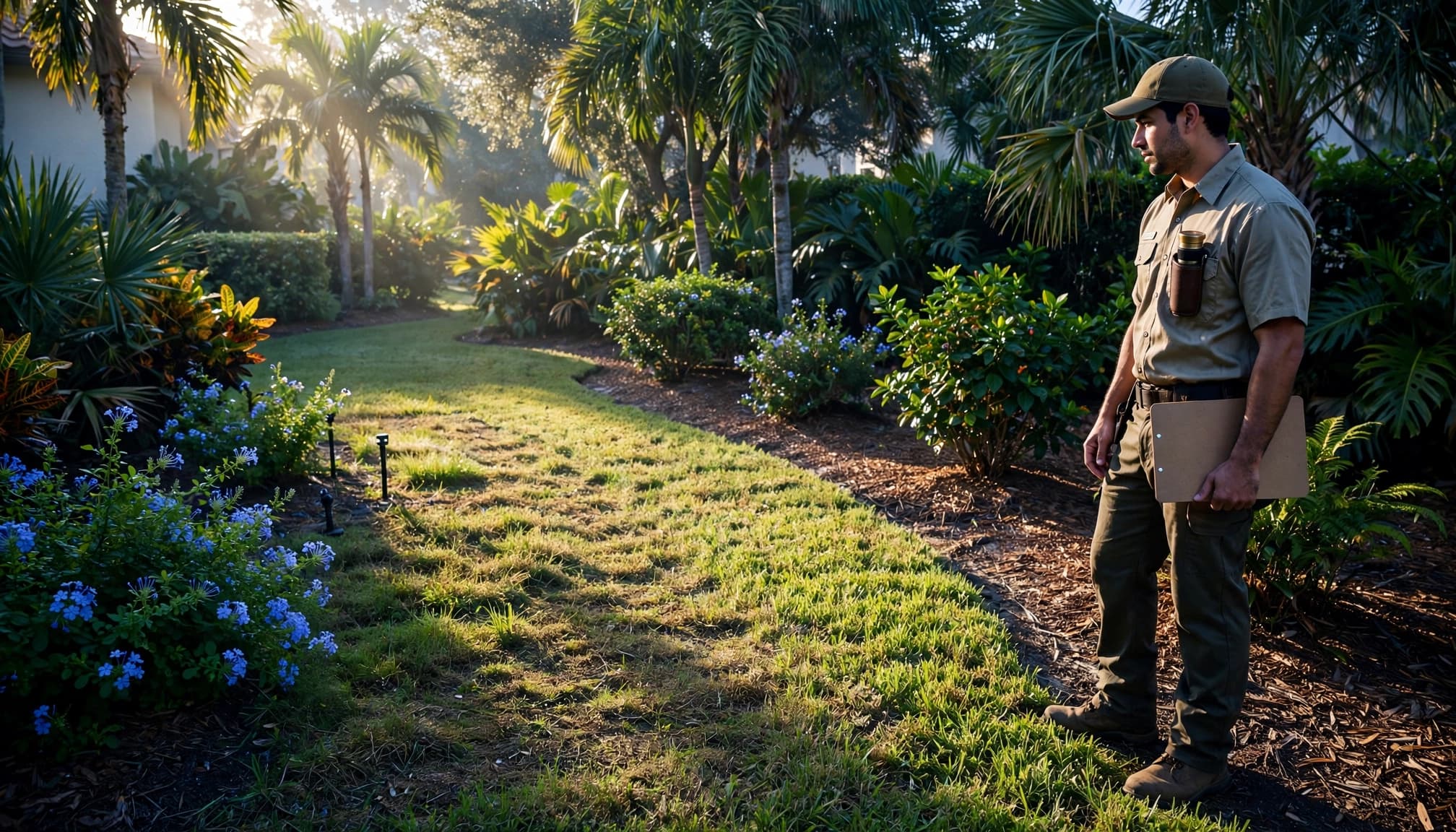
Recurring damage deserves a closer look when the lawn thins in the same places, pests remain active after follow-up, or you can’t identify the insect causing harm. A professional exterminator with turf-pest identification experience can confirm a suspected recurring pest infestation. The inspection checks for delayed visible damage, missed life stages, misidentification, irrigation or weather stress, treatment limitations, and pressure from neighboring properties. Confirmed movement from an adjacent property indicates re-infestation.
Inspection Finds the Cause, Not Just the Symptom
We inspect the grass blades, thatch, root zone, irrigation coverage, and surrounding landscape conditions. We look for patterns that distinguish chinch bugs near hot driveways. Leaf checks may reveal sod webworms or armyworms, while soil-line checks can expose cutworms. A green-to-brown border helps confirm whether chinch bugs remain active, while newly hatched eggs can produce a new wave of armyworms.
For Fort Myers, Naples, Bonita Springs, Lehigh Acres, and nearby Southwest Florida communities, local timing matters. Heat, rainfall, turf type, and pest pressure can vary across a single season. One-time treatments may not address recurring pressure, so an inspection helps determine whether a new pest control treatment is appropriate. If follow-up work is recommended, the technician explains restricted entry intervals and timing. The same evaluation supports long-term prevention through irrigation correction, turf recovery, monitoring, and integrated pest management.
Frequently Asked Questions
Is it normal to see lawn pests after treatment?
Some pest activity may continue briefly after treatment because products do not always work instantly and insects may move through treated turf. Damaged grass also needs time to recover, so brown areas do not automatically mean the treatment failed.
How long should I wait before checking the lawn again?
Check the treated area after about 7 to 10 days, especially where damage has appeared before. Look for spreading damage, active insects, loose turf, or new feeding signs rather than relying on lawn color alone.
Should I apply more pesticide if I still see brown grass?
No. Brown grass can remain discolored after pests are controlled and may also result from disease, drought, irrigation problems, or root damage. Inspect the lawn and confirm active pest pressure before repeating an application.
Why do pests return after a one-time treatment?
Eggs may hatch after treatment, and one product may not affect every pest life stage. Adult insects can also enter from nearby untreated lawns, landscape beds, or neighboring properties.
When should I schedule a professional inspection?
Schedule an inspection when damage continues to expand, the same areas repeatedly thin, insects remain active after the expected treatment period, or the pest cannot be identified. A professional can check the turf, thatch, roots, irrigation, and surrounding conditions before recommending additional treatment.
Healthy Turf Needs Ongoing Protection
Lawn pests can return after treatment when damage appears late, new insects hatch, or pests re-enter from nearby properties. Stressed roots, wet weather, and irrigation can create favorable conditions. Misidentification or a product that didn’t reach the active pest can also explain recurring damage.
Chinch bugs, sod webworms, armyworms, and cutworms follow different life cycles, so one-time treatments won’t address every cause. Accurate identification, label-compliant timing, monitoring, and integrated pest management support pest elimination without promising permanent control. Healthy, properly managed turf grass can recover more effectively, while long-term prevention protects the outdoor space around your home.