Brown patches in St. Augustinegrass don’t always mean drought or disease. A search for “cutworms St Augustinegrass” usually begins after you notice clipped blades, thinning turf, or damage that seems to appear overnight.
Cutworms are night-feeding moth larvae that hide near the soil surface during the day. Before treatment, early monitoring combines the damage pattern, a nighttime inspection, and a simple soap drench. Start with the signs that separate cutworms from other St. Augustinegrass pests.
Key Takeaways
- Cutworm damage on St. Augustinegrass often appears as clipped blades, ragged thinning, and small irregular or circular patches.
- Inspect damaged areas at night and use a soap drench to bring hidden larvae to the surface; several larvae found in multiple test areas indicate active feeding.
- Treat young larvae while they are feeding, using only products labeled for both the pest and St. Augustinegrass.
- Bt, spinosad, beneficial nematodes, and natural predators may help manage small infestations when used according to label directions.
- Reduce excessive thatch, correct irrigation problems, and continue nighttime monitoring after treatment to support turf recovery and catch renewed activity early.
Cutworm Damage in St. Augustinegrass: Signs to Check First
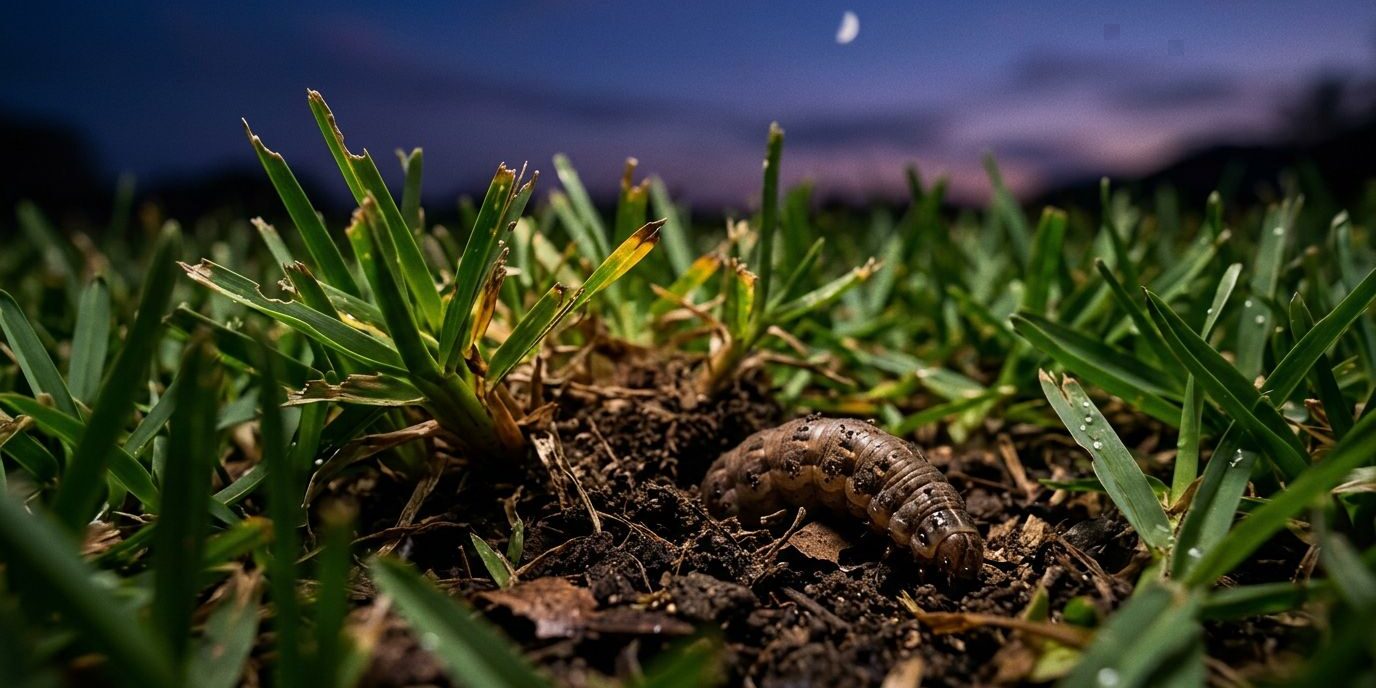
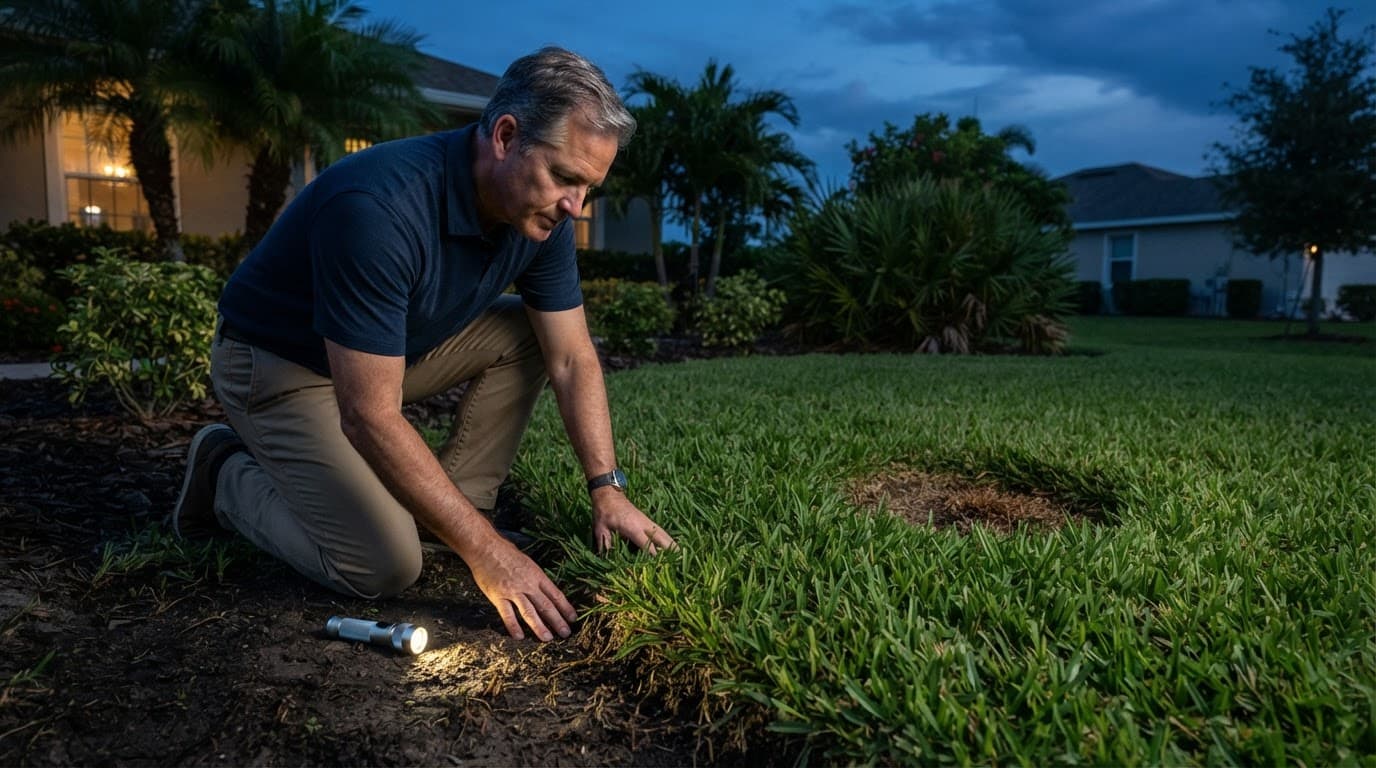
Cutworm larvae may clip blades, stems, and stolon tips close to the ground. Feeding injury often appears as small irregular patches or circular spots, though larger areas can develop when populations are heavy. Grass may look ragged, thin, or freshly cut without an obvious mowing mistake.
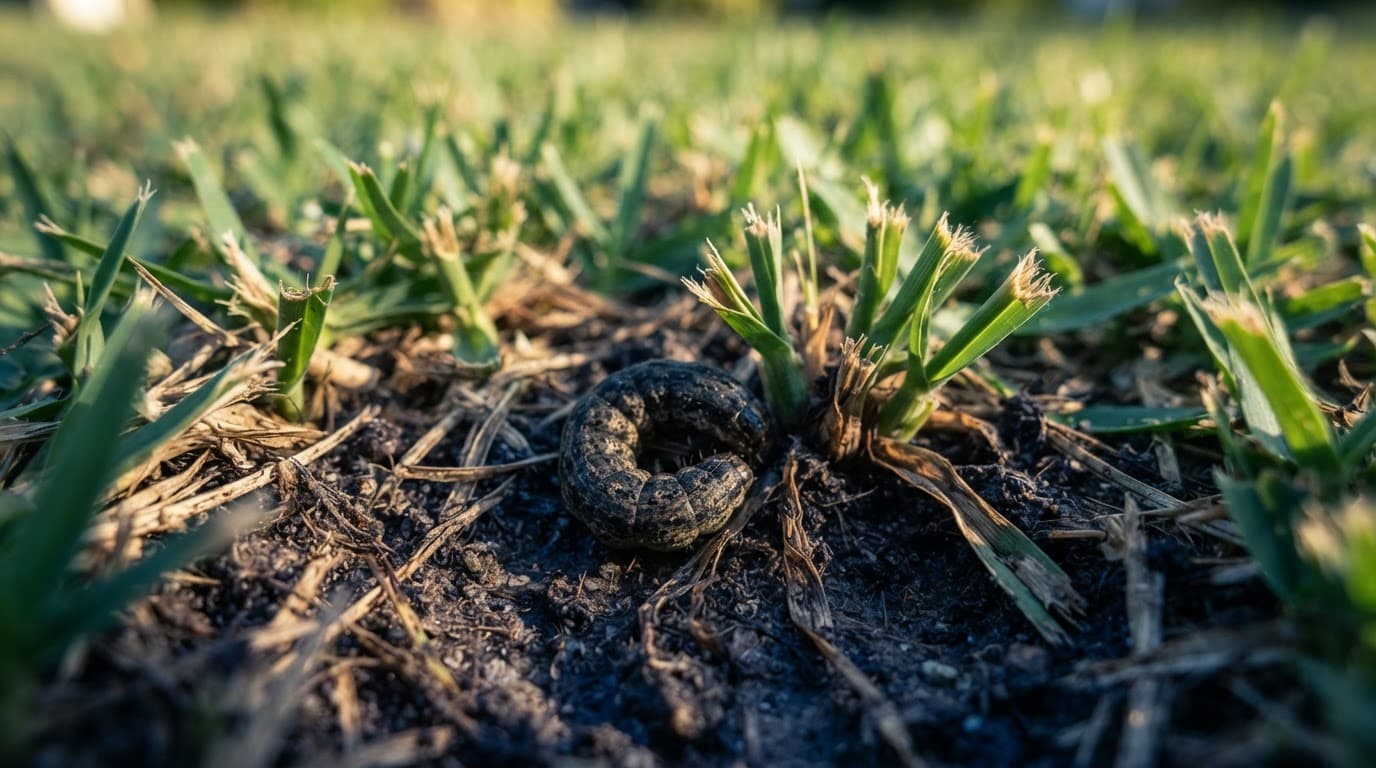
Look closely at the edge of damaged turf. You may find clipped blades, small holes in the thatch layer, or dark pellets of insect waste. When disturbed, a cutworm usually curls into a tight C-shape. Larvae can be gray, brown, or mottled, helping them blend into soil and dead grass.
Cutworms are mostly active at night, so daytime inspections often miss them. The North Carolina turf pest guide includes cutworms among caterpillar pests that feed in turf and hide during daylight hours.
Chinch bugs cause a different type of injury. They suck plant juices and often create brown patches in hot, sunny areas. White grubs feed on roots below the surface, and affected turf may lift easily when you pull on it. These clues help distinguish cutworms from other St. Augustinegrass pests.
Cutworms stay close to the soil surface by day, so a clean-looking patch doesn’t mean the pest is gone.
Use a Drench Test Before Treating
Our first field check is a drench test because it brings hidden caterpillars to the surface. It can reveal cutworms, armyworms, sod webworms, and chinch bugs, but it won’t reliably find white grubs. The University of California lawn insect guide explains this difference clearly.
Test both a damaged area and a healthy section for comparison. Use this process:
- Mix 1 to 2 tablespoons of liquid dish detergent in 1 gallon of water. Virginia Tech provides the same basic method in its turfgrass pest guide.
- Pour the solution evenly over about 1 square yard of turf. Apply it near the edge of the damaged area, where insects are likely to be feeding.
- Watch the grass for roughly 10 minutes. Cutworms may move upward through the blades or appear on the soil surface.
- Count the larvae you find, then repeat the test in another location before deciding on treatment.
A result near five per square yard is a useful warning point in turf management. Product labels, turf health, and the size of the affected area still matter. One isolated larva doesn’t always justify insecticide application, but several larvae in multiple test areas indicate an active problem.
Treat Young Larvae Before Damage Spreads
The caterpillar stage is the treatment target. Eggs and adult moths don’t chew the grass, while larger larvae may be harder to control because they stay protected in thatch or soil during the day.
In Southwest Florida, mild weather can alter the cutworm life cycle and extend the monitoring season. Late winter through spring and early fall are useful periods to inspect. Local scouting is more reliable than waiting for one calendar date. If activity is confirmed, apply products in the late afternoon or early evening, following the product label.
Biological control can work well when small larvae are actively feeding:
- Bacillus thuringiensis (Bt) is an option for young caterpillars.
- Spinosad is another option for caterpillar control, but the product must be labeled for use on St. Augustinegrass and the target pest.
- Steinernema carpocapsae is a beneficial option among parasitic nematodes and attacks larvae in the soil and thatch.
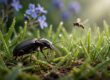
- Ground beetles, predatory bugs, and parasitic wasps can help reduce caterpillar numbers when broad-spectrum products aren’t used unnecessarily.
Bacillus thuringiensis must be eaten, so it is most effective while young caterpillars are feeding. For Steinernema carpocapsae to work, soil and thatch must stay suitably moist. Follow label instructions for application timing and watering.
Heavy infestations may require chemical control with a labeled insecticide, such as carbaryl, when the current label lists both the pest and St. Augustinegrass. Read the complete label for application rates, watering instructions, reentry limits, and turf safety. Never assume a product labeled for another lawn species is safe for your turf.
Reduce Thatch and Moisture That Shelter Lawn Pests
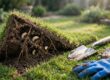
Cultural control won’t remove a heavy infestation by itself, but it can make the lawn less suitable for cutworms, armyworms, and other lawn pests. Start by checking the thatch layer. A thick buildup of dead stems and organic material gives larvae a protected place to hide during the day.
Dethatch only when the layer is excessive and the grass is actively growing. Aggressive removal can injure St. Augustinegrass, especially when the lawn is stressed by heat or drought.
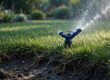
Regular lawn maintenance includes mowing at the correct height, removing heavy leaf piles, and correcting irrigation leaks promptly. These steps improve inspection and turf recovery. Avoid keeping the soil surface constantly wet. Water deeply when the lawn needs it, then allow the surface to dry rather than using frequent, shallow irrigation. Good drainage also matters, since saturated areas can weaken grass and make pest damage harder to identify.
After treatment, continue checking the same areas at night. New damage, fresh larvae, or another positive drench test means the problem needs another review instead of an automatic repeat application. When scouting remains positive, Bacillus thuringiensis may complement a labeled treatment, but cultural practices cannot replace it.
Frequently Asked Questions
How can I tell if cutworms are damaging my St. Augustinegrass?
Look for clipped blades, ragged or thinning patches, and larvae that curl into a C-shape when disturbed. Nighttime inspections and a soap-drench test provide stronger confirmation than brown turf alone.
How does a soap-drench test find cutworms?
Mix 1 to 2 tablespoons of liquid dish detergent in 1 gallon of water and apply it to about 1 square yard of turf. Watch for roughly 10 minutes, then count the larvae that move onto the grass or soil surface and repeat the test in another area.
When should cutworms be treated?
Treat after scouting confirms active larvae, especially when young caterpillars are feeding in multiple areas. Late afternoon or early evening applications are generally suitable, but always follow the product label.
Can Bt control cutworms in St. Augustinegrass?
Bacillus thuringiensis (Bt) can control young caterpillars when they eat the treated material. Use a product labeled for St. Augustinegrass and the target pest, and apply it while larvae are actively feeding.
How can I reduce future cutworm problems?
Check for excessive thatch, remove heavy leaf piles, correct irrigation leaks, and avoid keeping the soil surface constantly wet. Continue checking the damaged areas at night after treatment so renewed activity is identified early.
Protect St. Augustinegrass With Early Inspection
Clipped blades, C-shaped larvae, and a positive soap-drench result point to cutworm damage. They provide stronger evidence than a nonspecific brown area.
Confirm the pest before choosing a response, then match treatment to the infestation. For confirmed young caterpillars, a labeled option such as Bacillus thuringiensis may be appropriate. Reserve chemical control for cases supported by scouting, infestation severity, and the product label.
Appropriate mowing, irrigation, and thatch management support recovery through ongoing lawn maintenance. This confirmation-first approach also helps distinguish cutworms from other St. Augustinegrass pests.