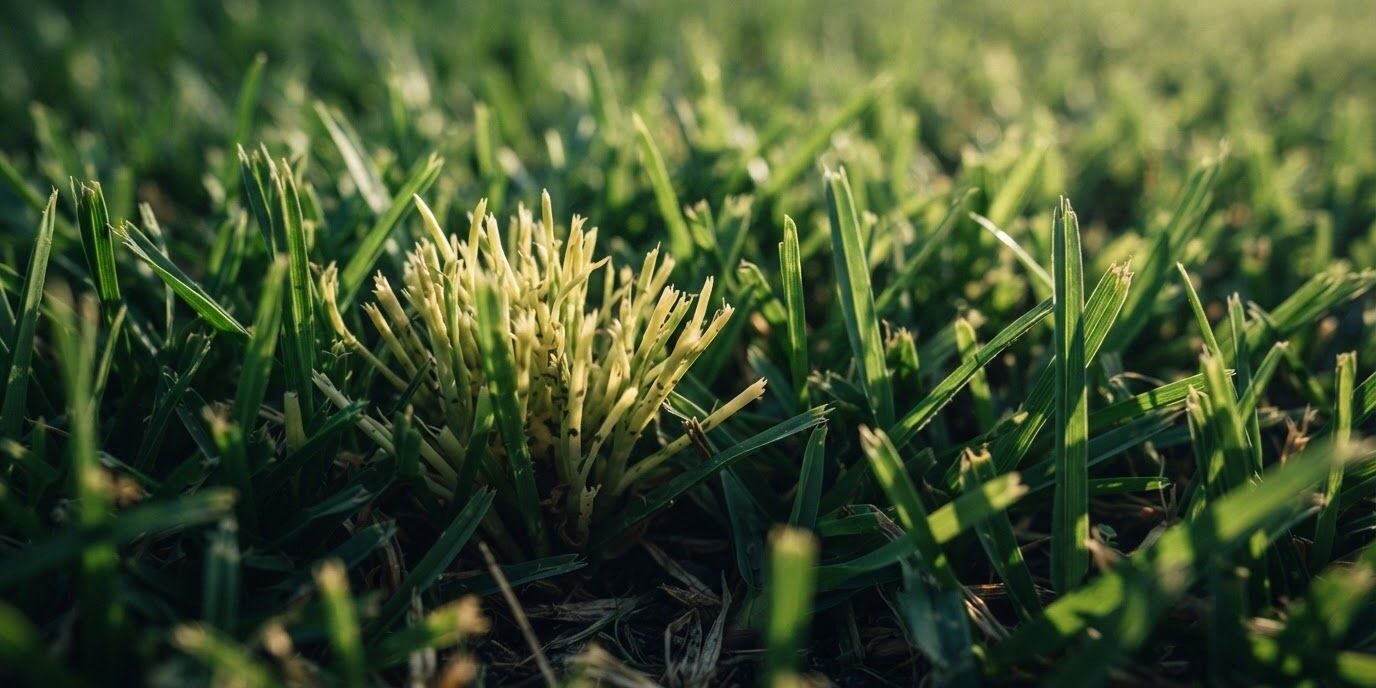
Bermudagrass mites can damage a lawn before most homeowners notice a pest problem. Early clues include short, pale shoots and odd grass clusters that resemble a small broom rather than healthy turf.
When we inspect bermudagrass mites, we look for early growth changes before thinning and bare patches develop. Detailed identification comes next. Drought, mowing damage, nutrient problems, and disease can create similar symptoms. Other bermudagrass pests can mimic these signs too, and the bermudagrass stem maggot leaves straw-colored shoot tips that can resemble frost damage. Once the signs are clear, treatment timing becomes the next important decision.
Bermudagrass Mites: Early Signs to Look For
Bermudagrass mites, also called the bermudagrass stunt mite, are microscopic eriophyid mites identified as Eriophyes cynodoniensis. They hide beneath a leaf sheath and use piercing mouthparts to remove fluids from protected plant tissue.
Because this microscopic pest is so small, homeowners usually notice damage before seeing it. Symptoms often begin in small areas, then spread through the lawn as mowing, clippings, and turf contact move mites to healthy growth.
Witches’ Broom and Stunted Shoots
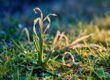
The most recognizable symptom is witches’ broom, also called brooming or rosetting. Instead of producing normal leaves and stems, the grass develops clusters of short shoots from one area. These shoots may look swollen, crowded, pale, or distorted.
Other early signs include:
- Stubby internodes, or shortened spaces between nodes, on grass stems.
- Stunted leaves that fail to extend normally.
- Pale yellow or chlorotic tips.
- Swollen stems and leaf sheaths.
- Increased tiller growth around damaged nodes.
- Small patches that look thin even when the rest of the lawn is green.
The Clemson bermudagrass mite guide includes images of shortened internodes, swollen stems, and abnormal tiller growth. These details help separate mite injury from general lawn stress.
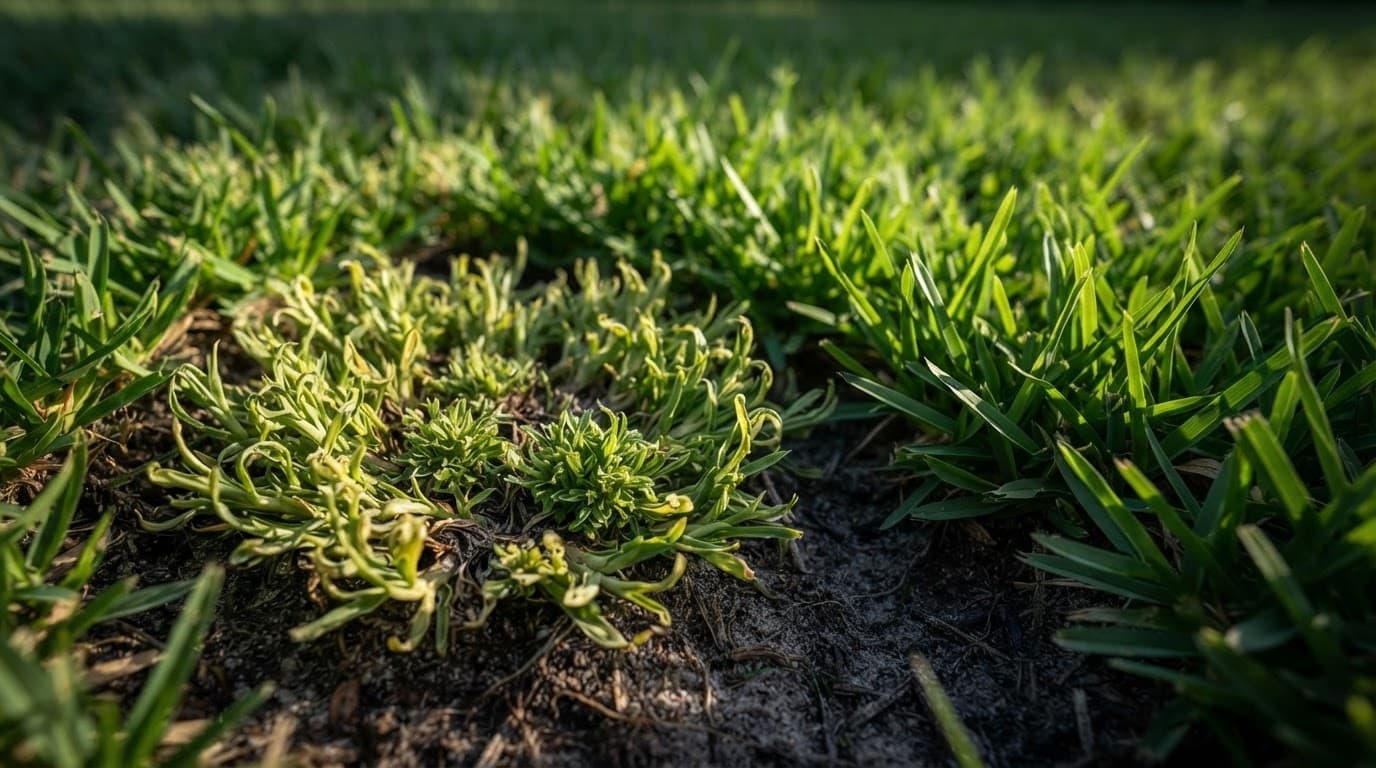
Early mite damage often appears as pale, shortened, distorted growth before the lawn begins to thin.
Confirming the Problem With Magnification
A 10X or 30X hand lens can help you examine the underside of leaves and protected areas around distorted shoots. Look near the base of affected growth, especially where the grass has a swollen or broom-like appearance.
You may still have difficulty seeing the mites. They are worm-shaped and microscopic, so their absence doesn’t rule out an infestation. We recommend collecting a fresh sample from the edge of damaged and healthy turf and sending it to a plant or insect diagnostic lab when the diagnosis is uncertain.
A professional inspection is also useful when symptoms are widespread. Treating the wrong problem can add stress to the lawn and delay recovery.
Why Mite Damage Gets Worse During Warm Weather
Bermudagrass mites reproduce quickly when conditions are warm. These eriophyid mites can develop from egg to adult in about five to ten days, allowing several generations to develop during an active growing season.
Damage often becomes easier to see in spring and worsens through summer. In Southwest Florida, warm conditions can keep bermudagrass actively growing for much of the year, so a small infestation may continue building when the lawn has not received enough recovery time.
Turfgrass Stress Makes Recovery Harder
Mite pressure and lawn stress often appear together. Drought, poor irrigation coverage, compacted soil, shade, and heavy thatch can weaken bermudagrass and make new damage more noticeable.
Excessive nitrogen fertilization can create soft, fast growth that is harder to maintain, while inadequate fertility can limit the lawn’s ability to replace damaged shoots. Neither condition should be treated as the only cause of mites. However, both can make a lawn less able to recover.
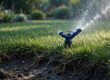
Keep irrigation even, correct broken sprinkler coverage, and fertilize according to the lawn’s needs. Florida lawn guidance from UF/IFAS explains bermudagrass mowing and care, including typical mowing heights of 1 to 2 inches under low to moderate maintenance.
Grass Clippings Can Move Mites
Grass clippings are a major concern during an active infestation. Mites can remain in freshly cut clippings, then move from drying material onto nearby healthy turf.
During an outbreak, leaving clippings on the lawn can spread the problem instead of returning nutrients to the soil.
A 2024 study found that mites moved out of infested clippings quickly. Removing clippings after mowing or scalping reduced visible symptoms or abnormal growth by more than 65% in two trials. The University of Georgia’s turfgrass mite research supports collecting and disposing of clippings away from the affected area.
Cultural Control Before Chemical Treatment
Cultural control reduces mite numbers and helps bermudagrass recover. As part of a broader turfgrass management plan, it also improves the odds that a chemical application will work when treatment is needed.
Homeowners shouldn’t rely on a spray alone. Mites can remain protected near leaf bases, and uneven turf growth can leave damaged areas vulnerable after treatment.
Mow Carefully and Remove Debris
During an outbreak, mow only when the grass is actively growing. Use a clean mower, avoid moving equipment from an infested area to healthy turf, and collect grass clippings rather than leaving them on the lawn.
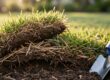
Scalping may help remove mites from the lower turf and reduce damaged growth, but scalp turfgrass only when it is healthy and actively growing. Scalping weak, dormant, drought-stressed, or shaded turf can cause additional injury. If the lawn is healthy enough for this step, remove the clippings and discard them in a sealed bag or away from all bermudagrass.
Clean mower decks and tools after working in affected areas. This step won’t eliminate mites by itself, but it reduces the chance of carrying infested plant material across the yard.
Improve Irrigation and Turf Vigor
Water deeply enough to support root growth, but don’t keep the lawn constantly wet. Check that irrigation reaches the affected area evenly, since dry sections often recover slower after mowing or treatment.
After scalping, UF/IFAS guidance recommends watering for several days to reduce stress and support regrowth. Avoid heavy nitrogen applications during recovery. A balanced fertilization plan, adequate sunlight, and thatch management give the grass a better chance to fill in.
Common bermudagrass and hybrid bermudagrass cultivars may show different levels of damage. Tifway is one example of a hybrid cultivar, but susceptibility varies, and no cultivar has demonstrated consistent resistance across all studies.
Treatment Timing for Bermudagrass Mites
Chemical treatment works best after accurate identification, mowing, and clipping removal. The recommended timing is usually immediately after the turf is scalped and the clippings are removed, once plant material has been cleared and treatment can reach more active growth.
Avoid spraying a severely stressed lawn before correcting the stress. The grass needs enough moisture and growing activity to recover after damaged tissue is removed.
When to Apply and Repeat
Abamectin has produced the strongest results in several turf studies. Research summarized by UF/IFAS found better control with two applications about 14 days apart. Other extension guidance recommends intervals closer to 10 days, depending on the product and use site.
The correct schedule depends on the current product label, weather, turf condition, and treatment site. A repeat application may be needed because eggs and mites can remain protected within a leaf sheath after the first treatment.
Thorough coverage matters. Professional guidance refers to approximately 2 gallons of spray solution per 1,000 square feet. The current product label controls the rate, volume, use site, and equipment requirements. A penetrating non-ionic surfactant or wetting agent may also be required because the mites are sheltered within the plant.
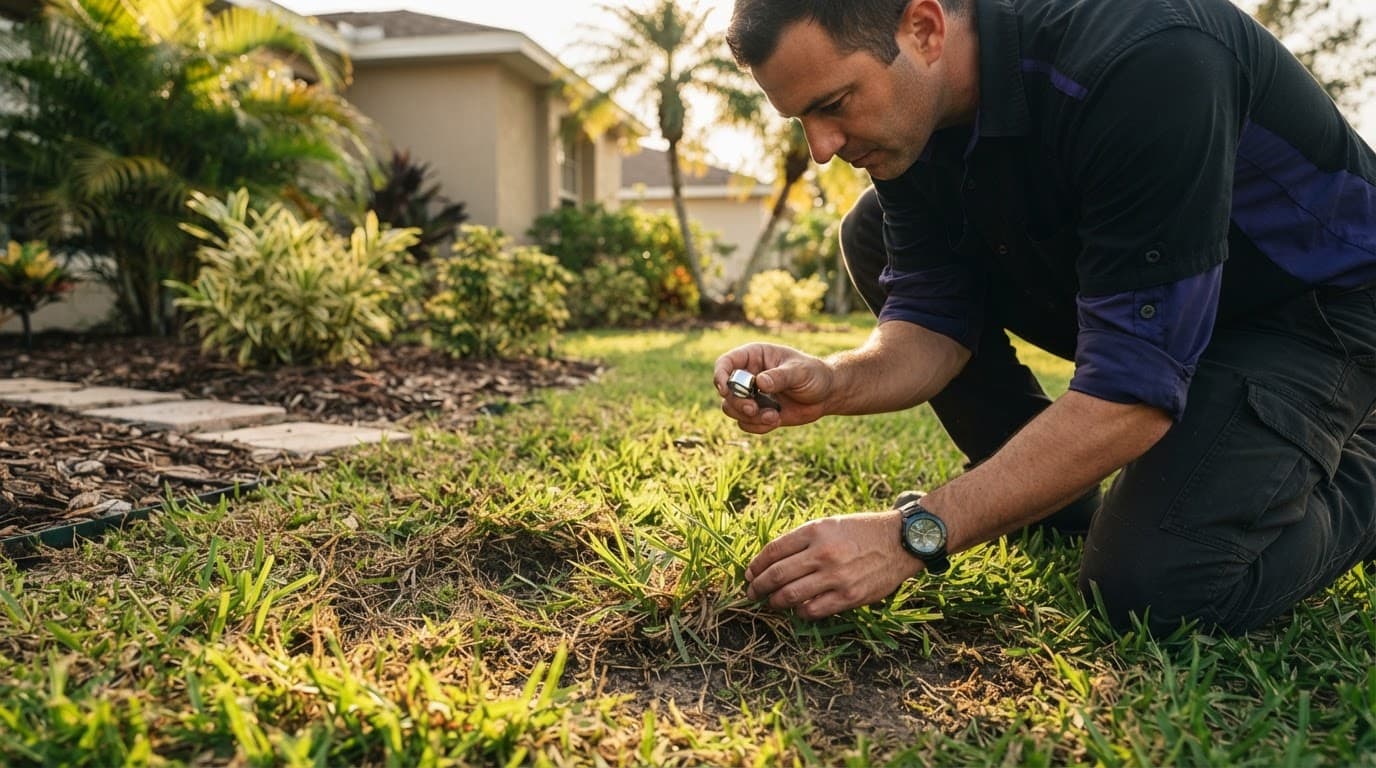
Inspection with magnification helps confirm the problem before treatment is selected.
Active Ingredients and Product Cautions
Abamectin products, including Divanem, are used in certain professional turf settings and have shown useful activity against this pest. Bifenthrin and lambda-cyhalothrin are pyrethroid ingredients that may reduce the mite population. Some combination products pair a pyrethroid with other insecticides.
Product availability and legal use vary by state, turf type, and application site. A product labeled for golf courses, athletic fields, or sod farms isn’t automatically labeled for a residential lawn. The UC IPM bermudagrass mite recommendations provide examples of treatment restrictions and repeat-application timing.
Read the entire label before applying any miticide or insecticide. Don’t increase the rate, mix products without label permission, or use a product off-label. Keep children and pets away according to the label’s re-entry instructions. Avoid mowing or heavy irrigation immediately after treatment unless the label directs you to do so.
Chemical control can be inconsistent. NC State Extension’s bermudagrass mite guidance notes that repeat abamectin treatments may help, but chemical treatment isn’t always highly effective. That is why clipping removal, proper timing, and turf recovery remain part of the plan.
A Practical Homeowner Treatment Plan
When we inspect a suspected infestation, we follow a focused pest management order rather than starting with a spray.
- Check the lawn for broom-like growth, shortened shoots, swollen stems, and pale new growth.
- Use a hand lens to examine leaf bases, then send a sample for confirmation when symptoms are uncertain.
- Correct irrigation, mowing, shade, and fertility problems that are adding stress.
- Mow or scalp only when the turf can recover, collect every clipping, and dispose of the material away from the affected turf.
- Use labeled chemical control only after clipping removal and only when the turf can recover; follow label coverage directions.
- Monitor new growth and repeat treatment only when the label and lawn condition support it.
If damage covers several areas or returns after treatment, professional service can save time and reduce unnecessary applications. We can inspect the turf, distinguish the mites from other lawn problems, and build treatment around grass condition rather than applying products without confirmation.
Frequently Asked Questions
What are the first signs of bermudagrass mites?
The earliest signs are short, pale shoots, shortened internodes, swollen stems, and broom-like clusters called witches’ broom. Small thinning patches may appear before the mites themselves can be seen.
How can I confirm a bermudagrass mite infestation?
Use a 10X or 30X hand lens to examine leaf bases, leaf sheaths, and distorted shoots. Because the mites are microscopic, send a fresh sample from the edge of damaged and healthy turf to a diagnostic lab when the cause is uncertain.
When should bermudagrass mites be treated?
Treatment is usually timed after the turf is scalped or mowed appropriately and all clippings are removed. Apply only when the grass has enough moisture and growing activity to recover, and follow the current product label for timing and coverage.
Can removing grass clippings help control bermudagrass mites?
Yes, collecting clippings during an active infestation can reduce the movement of mites into healthy turf. Clean mower decks and tools after working in affected areas, and dispose of clippings away from the lawn.
Will one treatment eliminate bermudagrass mites?
Not always, because mites and eggs may remain protected within leaf sheaths after the first application. A repeat treatment may be needed, but the interval and product use must follow the current label and the condition of the turf.
Conclusion
Bermudagrass mites are small, but their symptoms become recognizable when you know what to check. Witches’ broom, shortened shoots, swollen shoot bases, pale tips, and thinning patches are early warnings that deserve attention.
The best treatment timing follows a simple sequence: confirm the pest, reduce turf stress, remove infested clippings, scalp when appropriate, and apply a labeled treatment with thorough coverage. Early inspection gives your lawn a better chance to recover before microscopic damage becomes a visible bare patch.