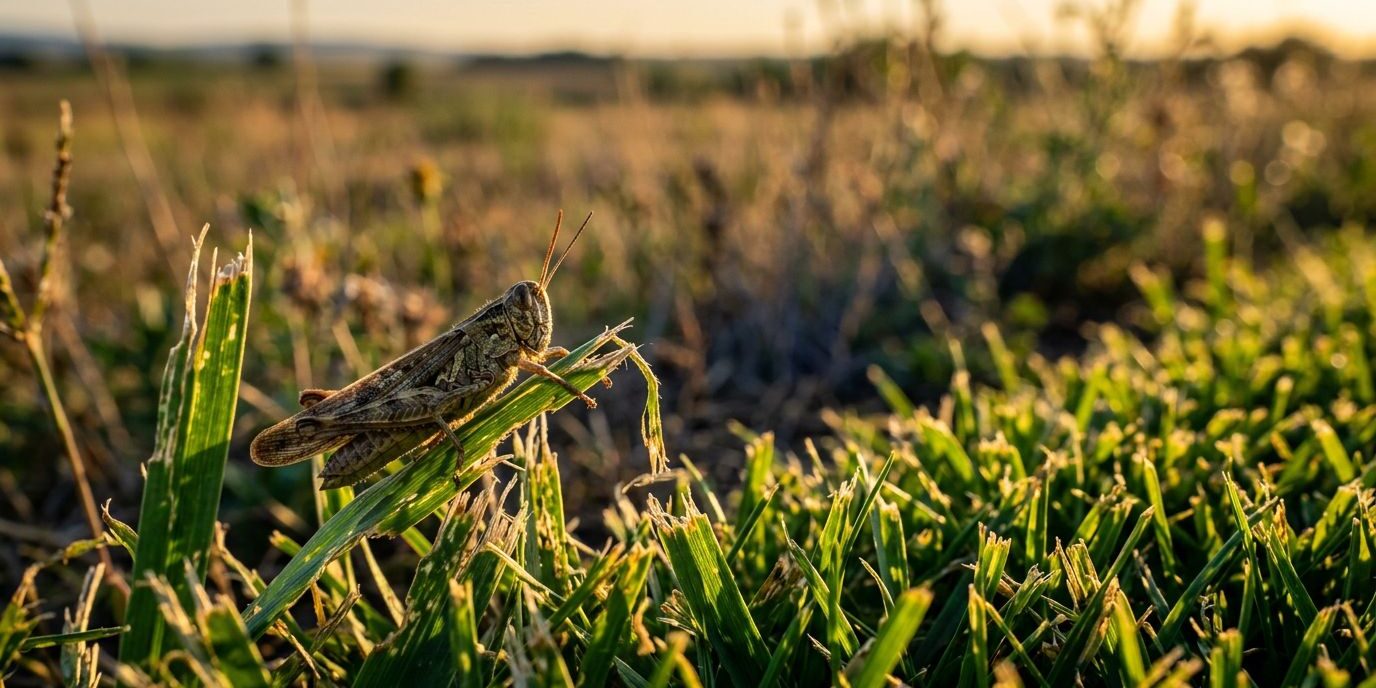
Grasshopper damage in turf can resemble drought stress, but its pattern becomes clearer when you know what to inspect. Ragged chewing, missing grass blades, and fresh injury along sunny lawn edges often signal an active infestation.
A practical grasshopper control turf plan depends on timing, nearby breeding areas, and lawn condition. Confirm the cause first, then combine habitat changes, early-stage treatment, and careful follow-up instead of relying on one spray.
Key Takeaways
- Ragged chewing, missing grass blades, and fresh feeding along sunny lawn edges can indicate grasshopper activity rather than drought stress.
- Inspect property borders, weeds, open lots, and other dry, undisturbed areas where grasshoppers may develop and enter the turf.
- Third- and fourth-instar nymphs are usually the best treatment target because they are smaller, less mobile, and easier to control than adults.
- Combine scouting, border management, biological or nonchemical options, and only label-approved turf treatments for a safer control plan.
- Recheck the lawn after treatment, since untreated vegetation and nearby properties can continue supplying new grasshoppers.
What Grasshopper Damage Looks Like in Turf
Grasshoppers are chewing insects. They remove sections of leaves instead of creating the small spots or stippling caused by sucking pests. Damage may begin along the outside edge of a yard before moving into irrigated turf and garden beds.
Ragged Chewing, Not Uniform Browning
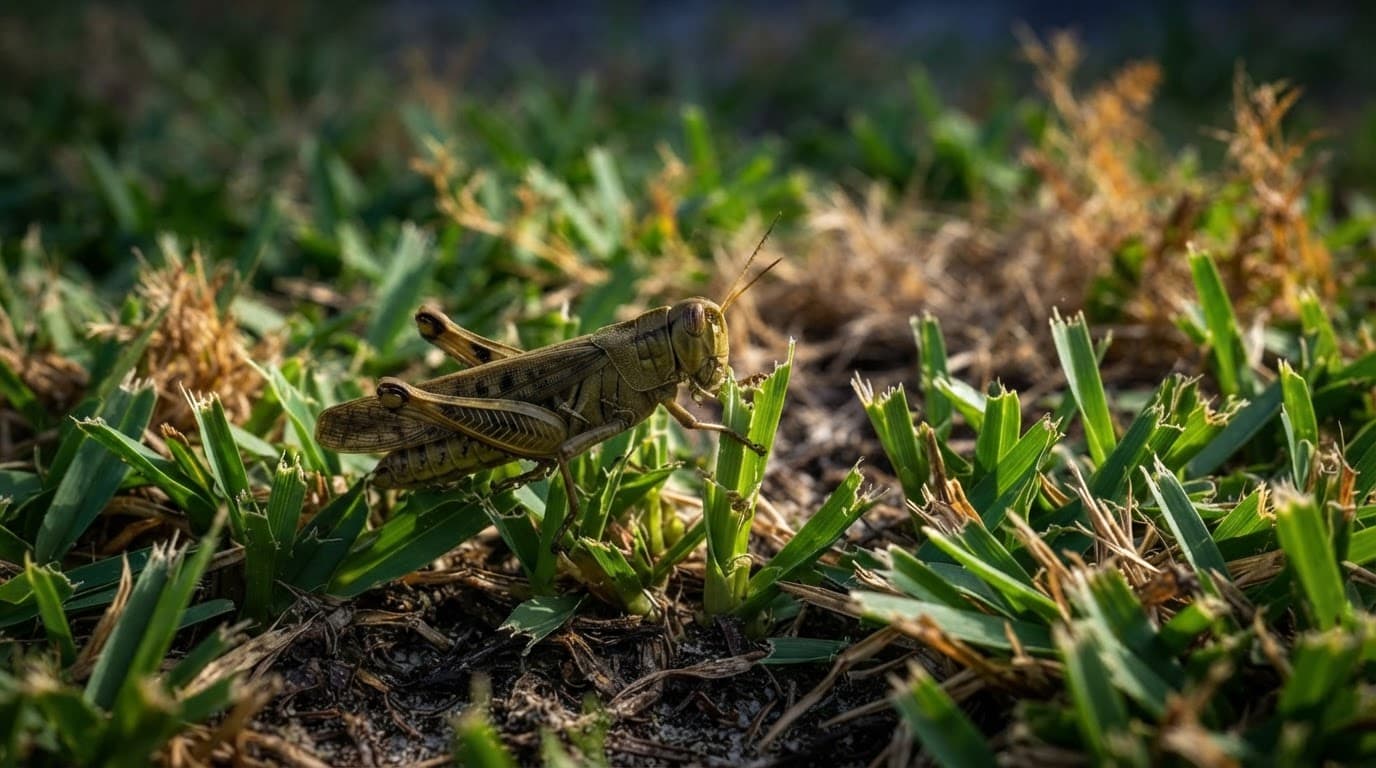
Inspect grass blades near property borders, fences, ornamental beds, and areas beside vacant lots. Grasshopper feeding creates irregular notches, shortened blades, and thin patches. Heavy feeding can leave turf visibly uneven, especially on St. Augustinegrass, zoysia, or bermudagrass.
Uniform yellowing usually points to another issue, such as poor irrigation, nutrient stress, disease, or a turf insect that feeds at the roots. Chinch bugs and lawn diseases are common sources of confusion, so look for the insect before treating the entire yard.
Check Plants Beyond the Lawn
Grasshoppers often feed on landscape plants, vegetables, flowers, shrubs, and young trees before they cause obvious turf damage. Check bean plants, tomatoes, ornamentals, and broadleaf weeds around the same time you inspect the grass.
Look for missing leaf edges, shredded foliage, and grasshoppers jumping away when vegetation is disturbed. Damage across several plant types usually means the insects are entering from a nearby source rather than developing only inside the lawn.
Why Dry Weather Can Increase Grasshopper Pressure
Weather conditions affect grasshopper numbers more than many homeowners expect. Prolonged heat and drought can reduce surrounding vegetation and encourage movement toward watered yards.
Drought Pushes Feeding Toward Irrigated Yards
During a dry period, unmanaged grass and weeds lose moisture first. Irrigated lawns and garden beds stay green, which can intensify grasshopper infestations around watered properties. Grasshoppers can move across roadsides, drainage areas, open lots, and property borders before settling into healthier turf.
Warm, dry fall weather also gives adults more time to feed and lay eggs. Texas A&M AgriLife reports that dry weather improves nymph and adult survival, while warm autumn conditions allow more feeding and egg laying. Their seasonal grasshopper guidance provides useful background on this seasonal pattern.
Egg Pods Wait in Undisturbed Soil
Female grasshoppers deposit egg pods below the soil surface, often about one-half to two inches deep. Depending on the species, each pod may contain dozens of eggs, and a female can deposit several pods during the season.
Preferred sites include dry, uncultivated soil, weedy borders, ditches, fallow areas, and the edge between open ground and maintained property. For scouting purposes, these dry, undisturbed border areas are egg beds, meaning they contain or may contain egg pods. Texas A&M notes that each pod can contain 20 to 120 eggs, and the pods can survive winter when soil remains undisturbed.
You don’t need to dig up healthy turf looking for egg pods. Focus inspections on these source areas, especially bare soil and unmanaged borders near the lawn. The Texas A&M egg-pod notes explain why these border areas deserve attention before young grasshoppers spread.
Identify Nymphs and Common Grasshopper Types
Correct identification helps you choose the right timing. Grasshoppers pass through egg, nymph, and adult stages. Nymphs resemble adults but are smaller and wingless. The third- and fourth-instar nymph stages are more exposed and easier to target before they spread across the property.
Nymphs Are the Best Treatment Target
The most useful treatment window is usually the third and fourth instars. At this point, many nymphs are about one-half to three-quarters of an inch long and still have limited mobility.
Early nymphs are more exposed, consume less plant material individually, and are generally more affected by properly timed control products. Adults are harder to manage because they are mobile and have a more developed waxy exoskeleton. They can quickly reinvade from nearby property. A label-approved spreader sticker may improve spray wetting, but use it only when the product label permits it.
The Utah State IPM advisory also identifies the nymph stage as an important control period. In Southwest Florida, calendar dates can shift, so size and wing development are better guides than a fixed month.
Species Clues Help, But Don’t Guess
Species can vary by region, and a clear photo is often needed for a confident identification. Common field clues include:
- A differential grasshopper is often large, with dark markings on the hind legs.
- A twostriped grasshopper commonly shows pale stripes along the upper body.
- A redlegged grasshopper may have reddish coloring on the lower hind legs.
- A clearwinged grasshopper has noticeably transparent wings.
- A migratory grasshopper varies in color and markings, so behavior and location can help confirm an identification.
Species identification matters most when an infestation is large or persistent. For a small residential problem, identifying the life stage, feeding pattern, and source area is usually more useful than naming the exact species.
Grasshopper Control Turf: Start With Early Scouting
Our inspection-first turf approach starts with a site check, not immediate chemical application. Scouting shows whether activity is current, where insects are entering, and whether nymphs or adults are present.
Inspect the Edges First
Walk the perimeter of the yard during a calm morning. Inspect the grass, weeds, and ornamental plants. Check sunny areas beside fences, retaining walls, sidewalks, drainage swales, and open land.
Move slowly through taller grass and weeds. Count the insects you see, note their size, and record areas with the heaviest feeding. Repeat the inspection every few days during a suspected outbreak. A single adult may be a visitor, while repeated findings of young, wingless insects in different nymph stages show that local pressure is developing.
A field record can optionally note species such as differential grasshopper, twostriped grasshopper, redlegged grasshopper, clearwinged grasshopper, and migratory grasshopper.
Reduce the Source Around the Yard
Mow or remove tall weeds along property borders before they mature and provide cover. Keep grass at its recommended height, trim vegetation touching the turf, and avoid unmanaged strips beside the lawn.
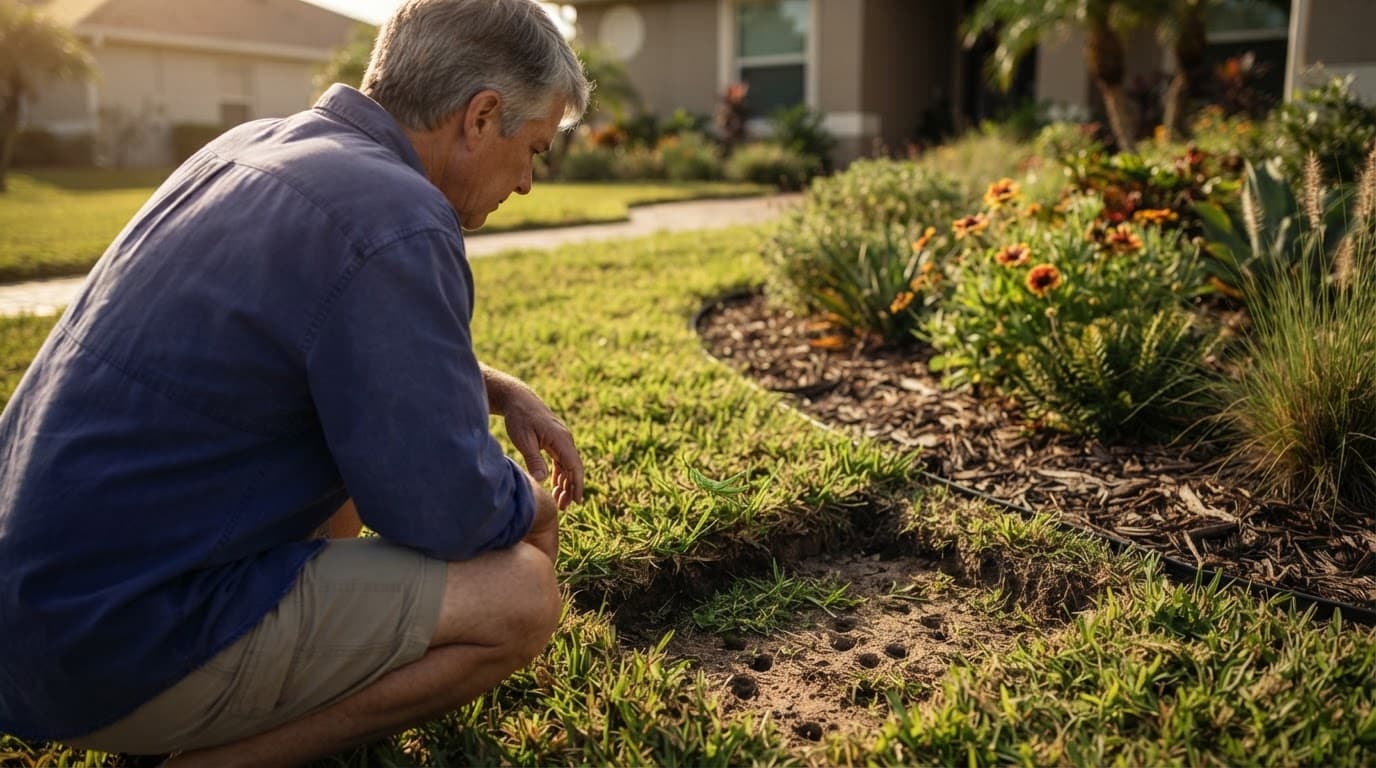
Habitat reduction won’t stop every grasshopper from flying in. It can reduce shelter and feeding sites, which makes later treatment more focused. Colorado State Extension recommends locating concentrated, dry, undisturbed border zones, or egg beds, as likely egg-pod areas without disturbing healthy turf. Check for young nymphs after hatching. Their Colorado State area-wide guide supports this broader approach.
Nonchemical and Biological Control Options
Nonchemical methods work best when grasshopper numbers are low or when protecting a small garden area. They offer a lower-impact way to manage garden pests and limit broad-spectrum sprays around homes, pets, flowering plants, and pollinators.
Barriers and Natural Predators
Fine insect netting can protect vegetables and young plants, although it isn’t practical for a full lawn. Removing weeds near the garden reduces feeding sites, while hand removal can help with small numbers on shrubs and beds.
Birds, spiders, praying mantises, and other predators feed on grasshoppers. Avoid unnecessary insecticide applications that remove these helpful insects. Predators won’t control a major migration by themselves, but they can contribute to lower pressure when habitat is managed properly.
What Nosema locustae Can and Can’t Do
Nosema locustae is a biological control used in some bait formulations. It acts slowly after grasshoppers consume treated material, so it isn’t an instant insect killer. Results with nosema locustae can vary by species, weather, bait placement, and untreated vegetation.
Use only a currently registered product and follow its label for the intended site. A biological bait may fit a long-term integrated pest management plan, but it shouldn’t replace scouting or immediate action when turf and ornamental plants are losing substantial foliage.
Choosing Chemical Treatments for Residential Turf
Chemical treatment can be useful when grasshopper numbers continue rising or damage is spreading across the yard. The active ingredient, application site, timing, and label directions all matter.
Active Ingredients Require a Turf Label
Extension control tables commonly include active ingredients such as bifenthrin and carbaryl for certain grasshopper situations. Diflubenzuron is an insect growth regulator used against early nymphs in some labeled settings. Acephate and permethrin may appear in other agricultural recommendations.
Those names don’t automatically approve a product for residential turf. A product containing bifenthrin may still be restricted to spot treatment, and some agricultural products aren’t labeled for home lawns. The University of Missouri turfgrass guide reminds users to read and follow the product label before applying any insecticide.
Insect killer granules and outdoor insect killer products may be useful only when grasshoppers and the exact turf application site are listed on the label. Treating the lawn alone may not solve the problem when adults continue to enter from weedy borders or open ground.
A labeled bait containing nosema locustae may provide a biological option in some approved settings.
Why a Spreader Sticker May Help Adults
Adult grasshoppers have a waxy outer surface that can cause spray droplets to run off. A label-approved spreader sticker or other adjuvant can improve wetting and contact with some products, but it won’t make an unapproved mixture safe or effective.
Don’t add an adjuvant unless the product label allows or directs it. Some formulations already contain surfactants, and the wrong additive can injure turf or change how the spray behaves. Early nymphs remain the preferred target because they are smaller, less mobile, and easier to contact.
A spreader sticker can’t override label directions, so avoid spraying flowering plants, standing water, or active pollinators. Follow the label’s reentry period, protect children and pets, and observe every restriction for wind, runoff, irrigation, and nearby edible plants.
A Safer Treatment Sequence for Southwest Florida Lawns
A safer grasshopper control plan may require different timing in Southwest Florida than in the Plains or Midwest. In Collier and Lee counties, local weather, irrigation, nearby open space, and turf type should guide decisions.
Use a Four-Part Plan
- Confirm fresh chewing damage and determine whether the insects are nymphs or adults.
- Inspect for weeds, tall borders, and unmanaged vegetation near the lawn, then reduce those conditions where practical.
- Choose an outdoor insect killer labeled for the exact residential turf site. If the label permits it, the spray may contain bifenthrin or carbaryl. Use a spreader sticker or bait containing nosema locustae only when the label approves it.
- Recheck the lawn and surrounding plants after treatment, because new insects may continue moving in.
Don’t apply more product just because adult grasshoppers remain visible after the first inspection. Some may be dead or affected, while untreated border areas can create new activity. Follow-up scouting gives you a better measure of control.
Know When to Call for Help
A professional pest control service makes sense when damage is spreading quickly, insects are entering from neighboring property, or the correct product and application site are unclear. A trained technician can inspect turf, ornamentals, garden beds, and likely egg-laying areas before recommending treatment. They may compare photos or field notes to distinguish a differential grasshopper, twostriped grasshopper, redlegged grasshopper, clearwinged grasshopper, or migratory grasshopper.
For homeowners in Fort Myers, Naples, Bonita Springs, and Lehigh Acres, we can assess the property as one connected system. Turf care, weed control, habitat changes, and insect treatment work better together than repeated applications made without an inspection.
Frequently Asked Questions
How can I tell if grasshoppers are damaging my turf?
Grasshopper damage usually appears as ragged chewing, notches, shortened blades, and thin patches. Inspect nearby plants and lawn edges for grasshoppers, especially in sunny areas beside weeds, fences, open lots, or drainage areas.
When is the best time to treat grasshoppers?
The third- and fourth-instar nymph stages are generally the best treatment window. Nymphs are smaller, less mobile, and more exposed than adults, which can quickly move in from nearby areas.
Will treating the lawn alone stop a grasshopper infestation?
Not always. Grasshoppers may enter from dry, weedy borders, vacant lots, ditches, or other unmanaged areas, so reducing nearby habitat and monitoring source areas are important parts of control.
Can I use bifenthrin or carbaryl on residential turf?
Only use a product when its current label lists grasshoppers and the exact residential turf application site. Follow all directions for application, reentry, irrigation, runoff, pets, children, flowering plants, and nearby edible plants.
When should I call a professional for grasshopper control?
Professional help is useful when damage is spreading quickly, insects are entering from neighboring property, or the correct product and application site are unclear. A technician can inspect the turf, ornamentals, garden beds, and likely source areas before recommending treatment.
Conclusion: Protecting Turf Through Timing
Grasshopper damage is easier to control when you find it early. Ragged chewing, active nymphs, and feeding along dry property edges give you useful clues before an infestation becomes widespread.
The strongest grasshopper control turf plan combines scouting, border management, early nymph treatment, and careful label compliance. Chemical sprays can help when timing, source reduction, and label compliance align. A labeled biological option containing nosema locustae may support an integrated plan, but it isn’t a substitute for scouting or an instant solution.
When the first signs appear, inspect the edges before the entire lawn shows stress. Early action protects more turf with fewer treatments.