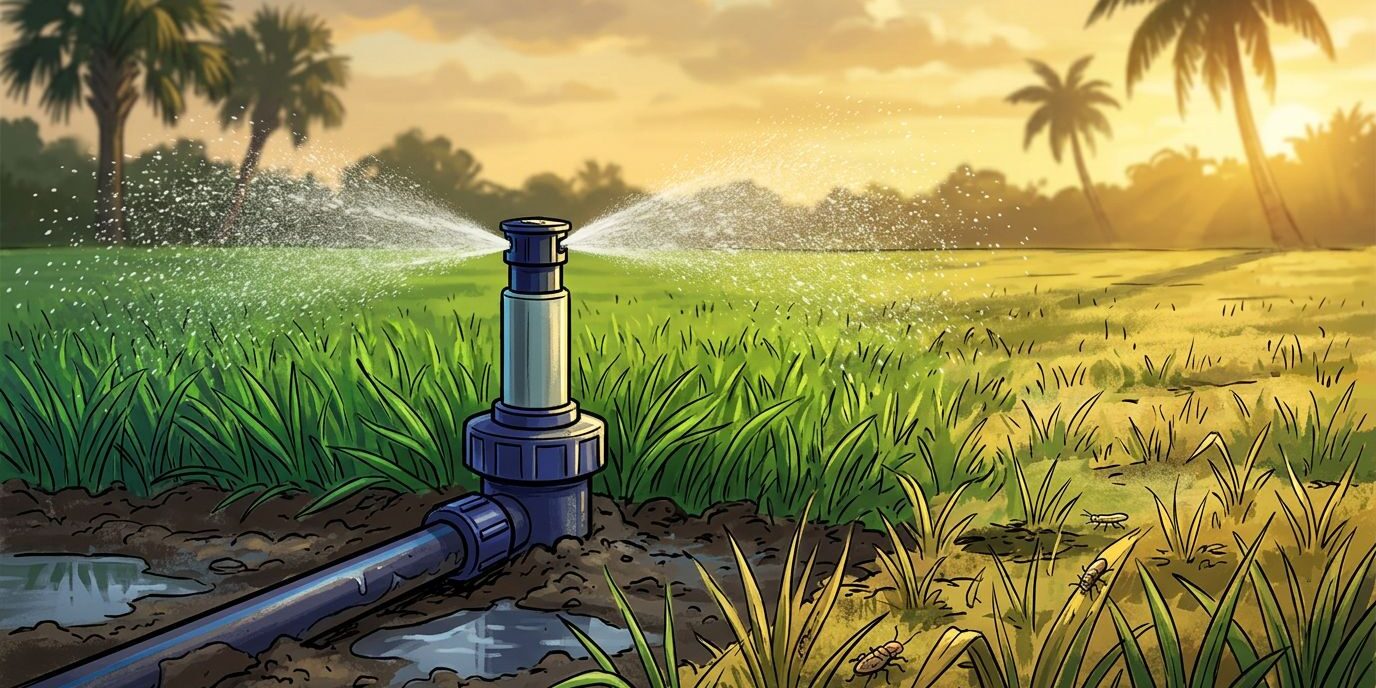
A lawn can receive water every morning and still suffer pest damage when watering is excessive, insufficient, or poorly placed. These lawn irrigation problems weaken turf, create damp hiding areas, and leave dry patches where insects can spread more easily.
In Southwest Florida, heat, sandy soil, heavy rain, and changing watering rules can make irrigation difficult to manage. We often find that pest activity becomes harder to control when an irrigation system causes uneven watering. Here are seven problems to check before small turf issues become larger lawn damage.
Key Takeaways
- Overwatering, underwatering, and fixed watering schedules can weaken turf and increase conditions that support pests and disease.
- Clogged or damaged sprinkler heads, incorrect pressure, poor spacing, and leaking pipes can create wet and dry areas at the same time.
- Inspect each irrigation zone for coverage, water pressure, leaks, standing water, spray patterns, and controller problems before changing the schedule.
- Water in the early morning, adjust irrigation around rainfall and local restrictions, and aim for even, controlled moisture rather than constantly wet grass.
- Professional irrigation repair is recommended when pumps, wiring, buried leaks, valves, or multiple zones are involved.
How Lawn Irrigation Problems Increase Pest Damage
Healthy grass can recover from normal insect activity. Stressed grass has a harder time filling thin areas, resisting disease, and recovering after treatment. A malfunctioning irrigation system can create wet and dry areas at the same time.

Wet areas and standing water
Overwatering can leave soil saturated and grass blades wet for long periods. Those conditions increase the risk of fungal disease and create damp areas where pests can remain active.
Puddles around sprinkler heads, walkways, or low spots also create a mosquito concern. If water remains after irrigation or rainfall, the system may be wasting water and contributing to a larger pest problem.
Dry areas and weak turf
A clogged nozzle or missed irrigation zone can leave parts of the lawn dry. Chinch bugs, sod webworms, and other turf pests can take advantage of thin, weakened grass, especially when the root zone isn’t receiving consistent moisture.
The goal isn’t to keep the lawn wet. The goal is even, controlled watering that supports strong roots while preventing uneven watering, runoff, and standing water.
1. Overwatering Keeps Turf Wet and Weak
Overwatering is one of the most common sprinkler system problems. An irrigation system controller can continue a cycle after the soil has enough moisture. Frequent, shallow watering also encourages a shallow root system, leaving turf less prepared for heat and dry periods.
UF/IFAS recommends watering after the root zone has lost about one-half to two-thirds of its stored soil water. Apply only enough water to refill that root zone. For many Florida home lawns, 0.5 to 0.75 inches per irrigation is a useful starting point, but rainfall and soil conditions should override a rigid schedule.
How to correct excess irrigation
Check the lawn before adding another cycle. If the soil is already damp several inches below the surface, skip watering and adjust the schedule. Use a rain sensor when available to reduce water wastage, and inspect areas where water runs onto sidewalks or collects beside the house.
Watering in the early morning is also a better choice. UF/IFAS turf irrigation guidance identifies about 4 a.m. to 6 a.m. as an efficient irrigation window that reduces evaporation and extended leaf wetness.
2. Underwatering and Poor Timing Stress the Root Zone
The opposite problem can be just as damaging. An individual zone may skip a cycle or run too briefly, and seasonal changes can alter how often watering is needed. Dry, brittle grass and wilted areas are signs that the root zone isn’t receiving enough moisture.
Southwest Florida’s sandy soils drain quickly, while heavy rain can temporarily remove the need for irrigation. A fixed controller schedule doesn’t let the irrigation system adapt to either condition and can cause uneven watering. We recommend tracking rainfall and checking soil moisture instead of relying only on the controller clock.
Reset watering around lawn needs
Start with one early-morning start time, then observe each of the irrigation zones while they run. Regional guidance from the Southwest Florida Water Management District recommends watering only one or two days per week when needed, rather than allowing automatic daily cycles.
Watering restrictions vary by location and can change during shortages. Homeowners should check the current rules for their county and water management district before changing watering days or times.
3. Clogged Sprinkler Heads and Broken Spray Heads Create Dry Patches
Blocked nozzles, filters, and damaged spray components can reduce coverage without stopping the system. You may hear the irrigation system run normally, yet one section of grass receives very little water.
Debris, sand, grass clippings, and mineral buildup can block a nozzle. A mower or vehicle can crack a head, push it below the turf, or change its spray direction. The result is often a dry patch beside an overly wet area, creating uneven watering.
Cleaning a clogged sprinkler head
Run the zone and compare the affected sprinkler heads with nearby heads. Turn the water off before removing the nozzle, then rinse the filter and nozzle. A soft toothbrush can remove buildup without damaging the opening.
Don’t enlarge a nozzle with a knife or wire. A small change in the opening can alter application rates and cause uneven watering. If a head is cracked, sunken, or leaking around the body, replacing it is usually better than cleaning it. After cleaning or replacement, run the zone and confirm the sprinkler heads deliver normal water flow and coverage.
The USU Extension guide to irrigation uniformity also identifies clogged components and damaged heads as common causes of uneven application.
4. Incorrect Water Pressure Causes Uneven Coverage
Water pressure that is too low can restrict water flow, shorten spray distance, and leave the outer part of a zone dry. Pressure that is too high can produce misting, overspray, and rapid evaporation instead of larger droplets that reach the soil.
Always follow the sprinkler manufacturer’s recommended pressure. If specifications aren’t available, UF/IFAS recommends testing operation around 25 to 30 PSI and measuring the spray diameter. Fixed spray sprinklers often operate near 30 PSI, while many rotor sprinklers need roughly 40 to 65 PSI, although the product specification should control.
A sprinkler system can run on schedule and still leave half the lawn dry when low pressure prevents head-to-head coverage between sprinkler heads.
Ask an irrigation professional to test static and operating water pressure if several zones have the same issue. A pressure regulator, partially closed shutoff valve, undersized supply line, or failing pump can affect the whole irrigation system. Compare nearby sprinkler heads to identify whether coverage changes with distance from the supply.
Distribution uniformity, or DU, measures how evenly water reaches the lawn. A distribution uniformity test can compare results with a practical target of about 70 percent or higher, although acceptable values vary by sprinkler type. The Irrigation Association’s DU paper distinguishes between common rotor and fixed-spray benchmarks.
5. Leaking Pipes and Zone Valves Leave Wet Spots
Leaking pipes can reduce water flow at spray outlets while keeping one area of the lawn constantly wet. A leaking irrigation system may also involve zone valves that cause a head to drip after shutdown or let water seep through while idle.
Look for unusually green grass, soft soil, sinkholes, muddy areas, or water surfacing without recent rain. A sudden increase in water bills is another useful clue. If a zone has weak water flow at the sprinkler heads beside a wet area, a buried leak is possible.
Steps for a simple pipe repair
Shut off the irrigation supply before digging. Expose the damaged section, cut away the cracked pipe, and install a matching repair coupling. Run the zone before covering the repair to check for leaks and confirm the sprinkler heads regain normal water flow.
Root intrusion, repeated breaks, and leaks near electrical wiring require professional service. Digging without locating the line can create additional damage, especially around established trees and utilities.
6. Incorrect Head Height and Spacing Miss the Turf
Head height affects both coverage and lawn health. Sprinkler heads installed too low can become buried by growing turf or blocked by soil. Those installed too high can be struck by equipment, tilted by foot traffic, or damaged during routine mowing.
Spacing matters just as much. Sprinkler heads need enough overlap for water from one head to reach the next. If they are too far apart, dry areas become stressed while ground near the heads may become saturated. The result is uneven watering.
Check the spray pattern during a full zone cycle to inspect the irrigation system. Adjust the arc screw when the pattern is aimed incorrectly, but replace a mismatched nozzle when the throw distance is wrong. Check nearby sprinkler heads for consistent coverage. Keep spray away from walls, driveways, and sidewalks to limit water wastage and prevent damp edges where weeds and pests can persist.
7. Faulty Controllers, Relays, and Pumps Stop a Zone
A faulty controller can disrupt an irrigation system in several ways. The clock may lose its settings, a station may fail to activate, or a seasonal adjustment may increase every run time without your knowledge.
Check the time, watering days, start times, run times, rain sensor, and battery. One start time is usually enough to begin the programmed irrigation zones. If the controller has been reset, rewrite the schedule instead of assuming the old settings returned correctly.
What pump buzzing can mean
Persistent pump buzzing can point to a faulty relay, a failed capacitor, low voltage, or a motor problem. Don’t keep cycling the system to see if it starts. Turn off power at the appropriate disconnect and arrange an inspection, especially when the pump is hot, smells burned, or trips a breaker.
Electrical repairs should be handled by someone qualified to assess electrical issues and wiring connections in irrigation controls. A zone that doesn’t run can stop water flow, while a valve stuck open can create wet soil and standing water. Both problems can stress the lawn and affect the broader irrigation system.
How to Diagnose Irrigation Problems Safely
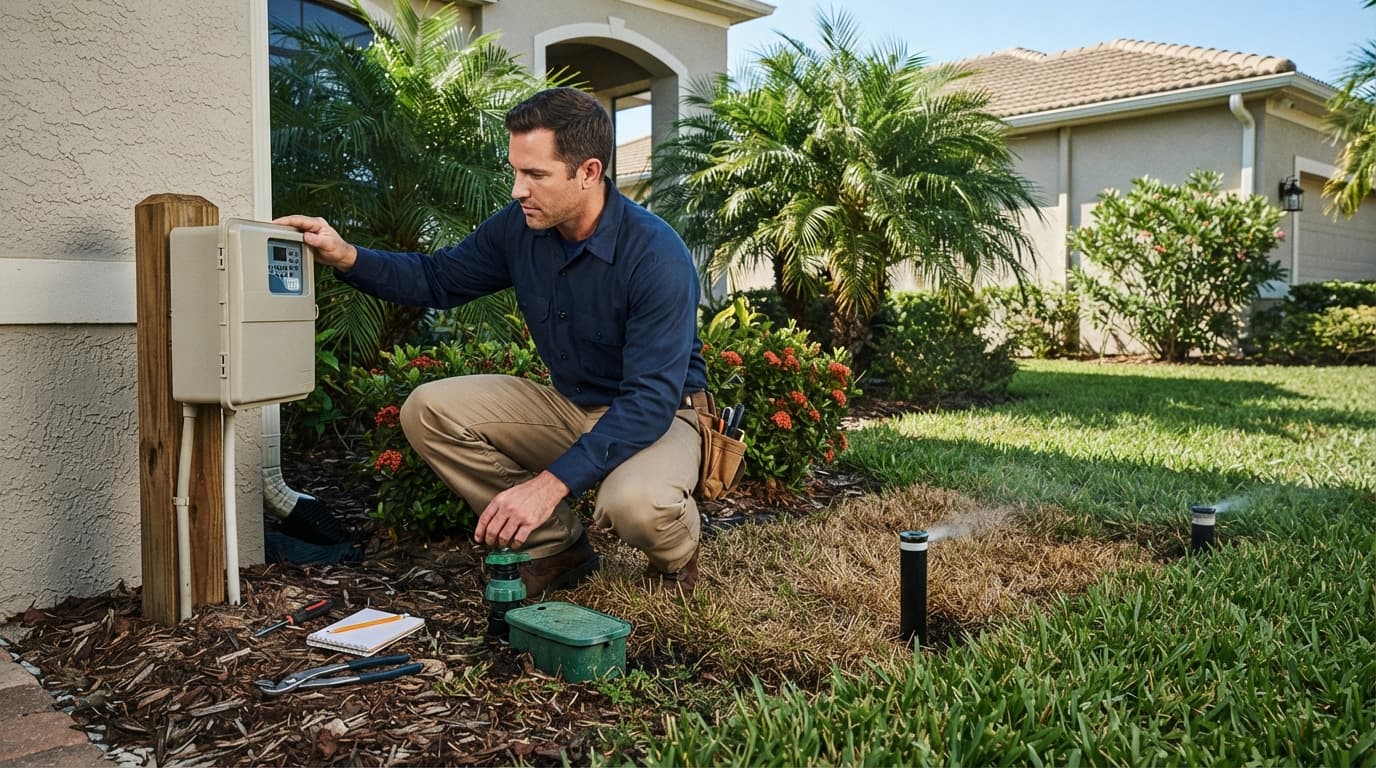
A zone-by-zone inspection of the irrigation system usually reveals more than checking the controller alone. Run each zone for a few minutes and note the pressure, spray pattern, leaks, puddles, and dry areas.
Use this order:
- Check the irrigation zones individually, then confirm the controller clock, program, rain sensor, and station number.
- Watch the sprinkler heads for clogged nozzles, tilted bodies, leaks, or poor rotation.
- Look for runoff, standing water, soft soil, and unusually dry grass.
- Compare water flow, water pressure, spray distance, and coverage between nearby heads.
- Shut off the system before removing parts or digging around buried lines.
When immediate repair makes sense
Call for professional irrigation repair services when water continues running after a zone ends, multiple sprinkler heads lose pressure, leaking pipes are suspected, or the pump makes a persistent buzzing sound. Professional help is also appropriate when wiring, valves, or a large section of pipe is involved.
If the irrigation system looks correct but brown patches or insect activity continues, the lawn may have a separate pest, disease, soil, or drainage issue. Irrigation repair and pest treatment often work better together because treating insects without correcting turf stress leaves the lawn vulnerable.
Frequently Asked Questions
How often should I water my lawn?
Watering needs depend on rainfall, soil, grass type, and local restrictions. In many cases, watering only one or two days per week when needed is better than running an automatic cycle every day.
Why does my lawn have wet and dry areas at the same time?
Clogged sprinkler heads, broken components, poor spacing, low pressure, and leaking pipes can cause uneven coverage. Run each irrigation zone and compare nearby sprinkler heads to identify areas that are receiving too much or too little water.
What is the best time to run lawn irrigation?
Early morning, generally around 4 a.m. to 6 a.m., helps reduce evaporation and extended leaf wetness. Adjust the schedule after rainfall and follow current watering rules for your county and water management district.
When should I call an irrigation professional?
Call for professional help when water continues running after a zone ends, several zones lose pressure, a buried leak is suspected, or a pump buzzes persistently. Electrical problems, wiring, valves, and large pipe repairs should also be assessed by someone qualified.
Healthy Irrigation Helps Protect the Lawn
An irrigation system doesn’t cause every lawn pest problem, but stressed turf is more vulnerable. Overwatering creates wet, disease-prone conditions, while uneven watering and low pressure leave other areas weak and dry.
We recommend regular maintenance, including zone inspections, controller adjustments after rainfall, and following local water management rules or restrictions. When a system creates puddles, misses sections, or loses pressure, correcting the irrigation problem helps protect the lawn. The healthiest turf isn’t the wettest turf, it’s turf receiving consistent moisture where roots can use it.