Brown patches aren’t always caused by watering. In Naples, Fort Myers, Bonita Springs, and Lehigh Acres, local lawn insects and hidden turf pests can feed below the grass blades or inside the thatch before visible decline appears.
Heat, heavy rain, sandy soil, and long growing seasons give insects plenty of opportunities to move through stressed lawns. A steady inspection routine helps reveal lawn insect pests before a small weak spot becomes an expensive repair.
Start at the Green-to-Brown Transition Zone
The dead center of a brown patch usually tells you less than its edge. Insects often move away after grass has died, while fresh feeding activity remains near the border where healthy turf meets declining turf.
Walk the lawn in the same direction each month. Start at the driveway or front walk, then check sunny edges, irrigation heads, shaded sections, and areas where water collects after rain.
Check the Lawn Type and Growing Conditions
St. Augustine grass, bahiagrass, and bermudagrass don’t respond to pests in the same way. St. Augustine grass is especially vulnerable to chinch bugs, while mole crickets and white grubs often cause root-zone problems in other warm-season grasses.
Look at the surrounding conditions before focusing on insects. Dry edges near pavement, uneven irrigation coverage, a heavy thatch layer, standing water, compacted soil, and mowing too short can all weaken turf. Review your lawn care practices and check soil moisture before blaming pests.
Record the Pattern Before Disturbing the Turf
Take a photo before you pull at grass or apply anything. Note the date, recent rain, irrigation schedule, grass type, and whether the patch is growing.
A drought issue often follows sprinkler coverage or shallow soil. Lawn disease may spread differently after wet weather. Insect feeding can leave clues in the grass blades, thatch, crowns, and root system. That pattern helps distinguish turfgrass damage from drought, disease, or irrigation problems.
The most useful inspection point is where green grass begins to decline, not where the turf has already died.
How To Scout Southwest Florida Lawn Pests by Damage Pattern
Hidden activity becomes easier to identify when you match turfgrass pests to the part of the lawn where they feed. Leaf feeders chew blades and hide in the thatch layer. Root feeders loosen sod, create tunnels, or weaken grass from below.
Look for Chinch Bugs and Night-Feeding Caterpillars
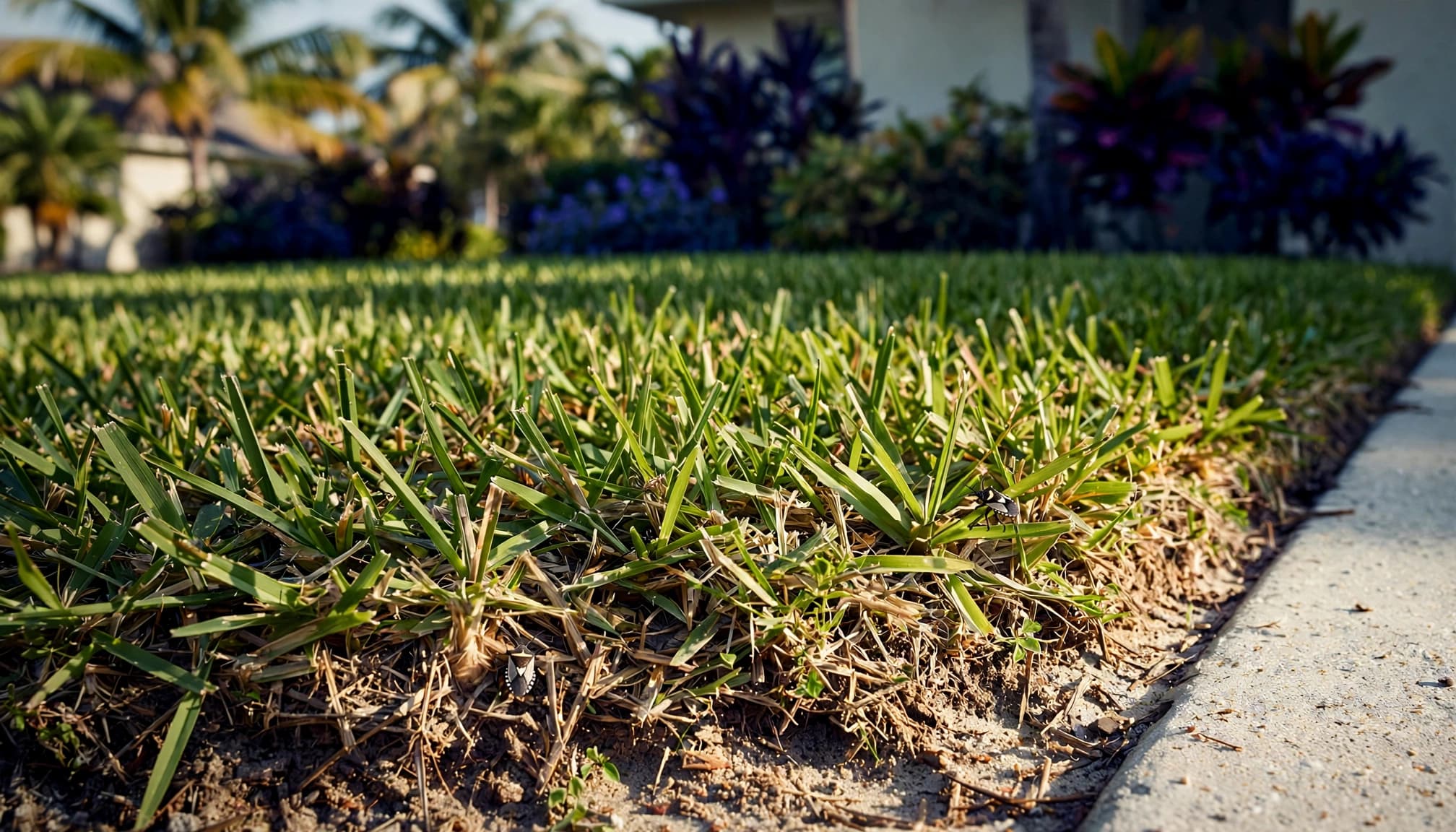
Southern chinch bugs are a major concern in St. Augustinegrass. Their damage often starts in hot, sunny locations near sidewalks, driveways, and other dry edges. Grass may turn yellow first, then develop irregular brown patches that keep expanding.
Inspect the base of grass blades along the active patch border. Small black insects with white markings may be present. Frothy masses or stippled feeding near the grass base can also point to two-lined spittlebugs, though neither clue confirms the pest alone. A handheld vacuum can collect debris from about one square foot of turf for inspection on a white tray.
Tropical sod webworms and fall armyworms are different. These caterpillars feed on leaf blades, often at night, and hide in the thatch layer during the day. Watch for clipped or ragged blades, small green droppings, silk-lined tunnels, webbing near the soil line, and moths lifting from turf around dusk.
Lift Sod for Mole Crickets and White Grubs
Mole crickets tunnel below the surface, disrupting roots and leaving turf thin, soft, or spongy underfoot. Their activity can resemble drought stress, especially in bahiagrass and bermudagrass. Fresh tunnels, loose soil, and weak turf are better clues than brown color alone.
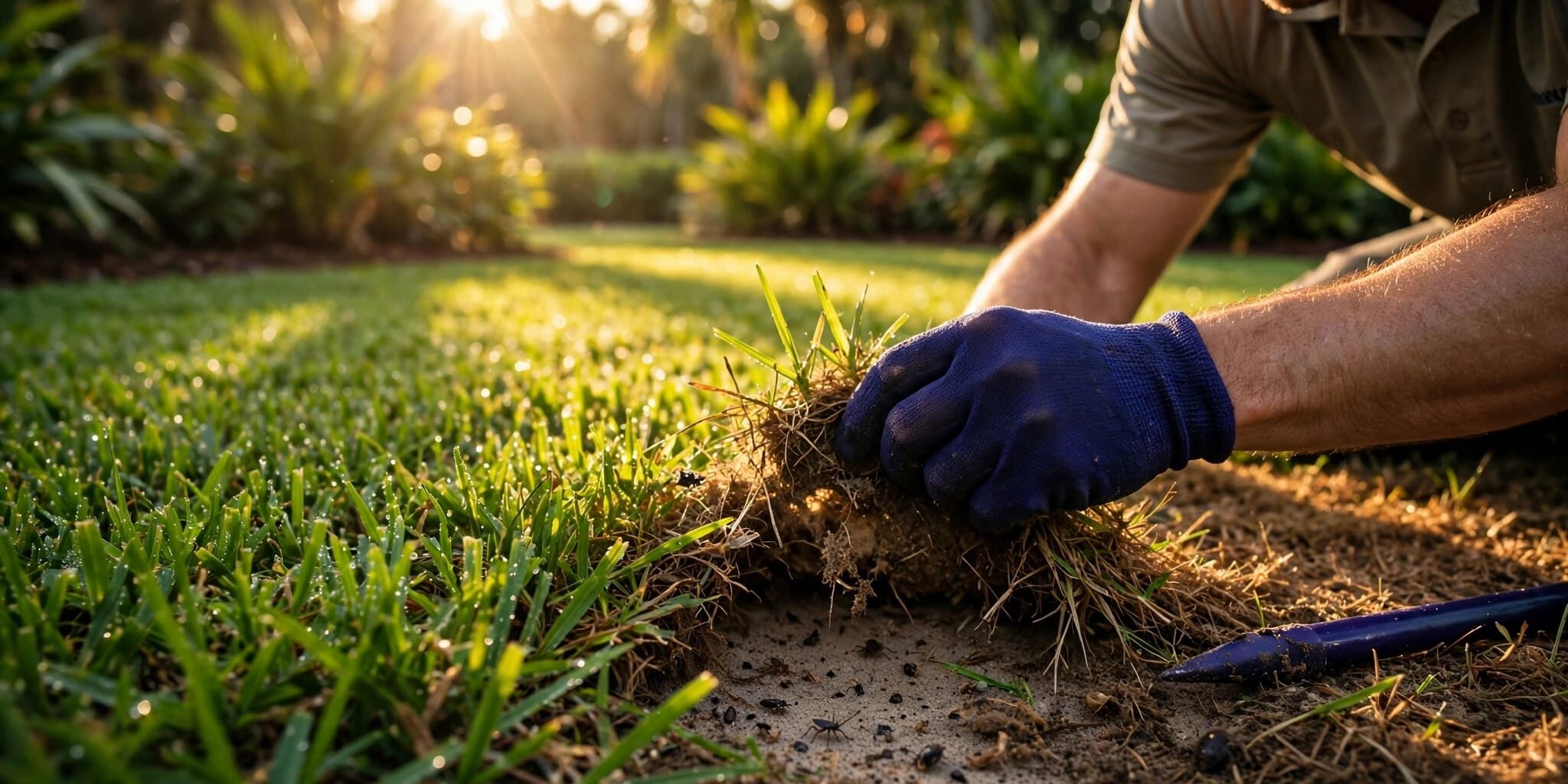
White grubs feed on the root system and can make grass pull away from the soil. Cut three sides of a one-foot square of sod about two inches deep, peel it back, and inspect the roots, soil, and thatch. Check several areas because a single grub doesn’t always explain broad turfgrass damage.
Mole crickets and grubs both damage roots, but mole crickets also tunnel. That distinction matters because a treatment for caterpillars on leaf blades won’t solve a root-zone pest problem.
Use a Soap Flush Test to Bring Pests to the Surface
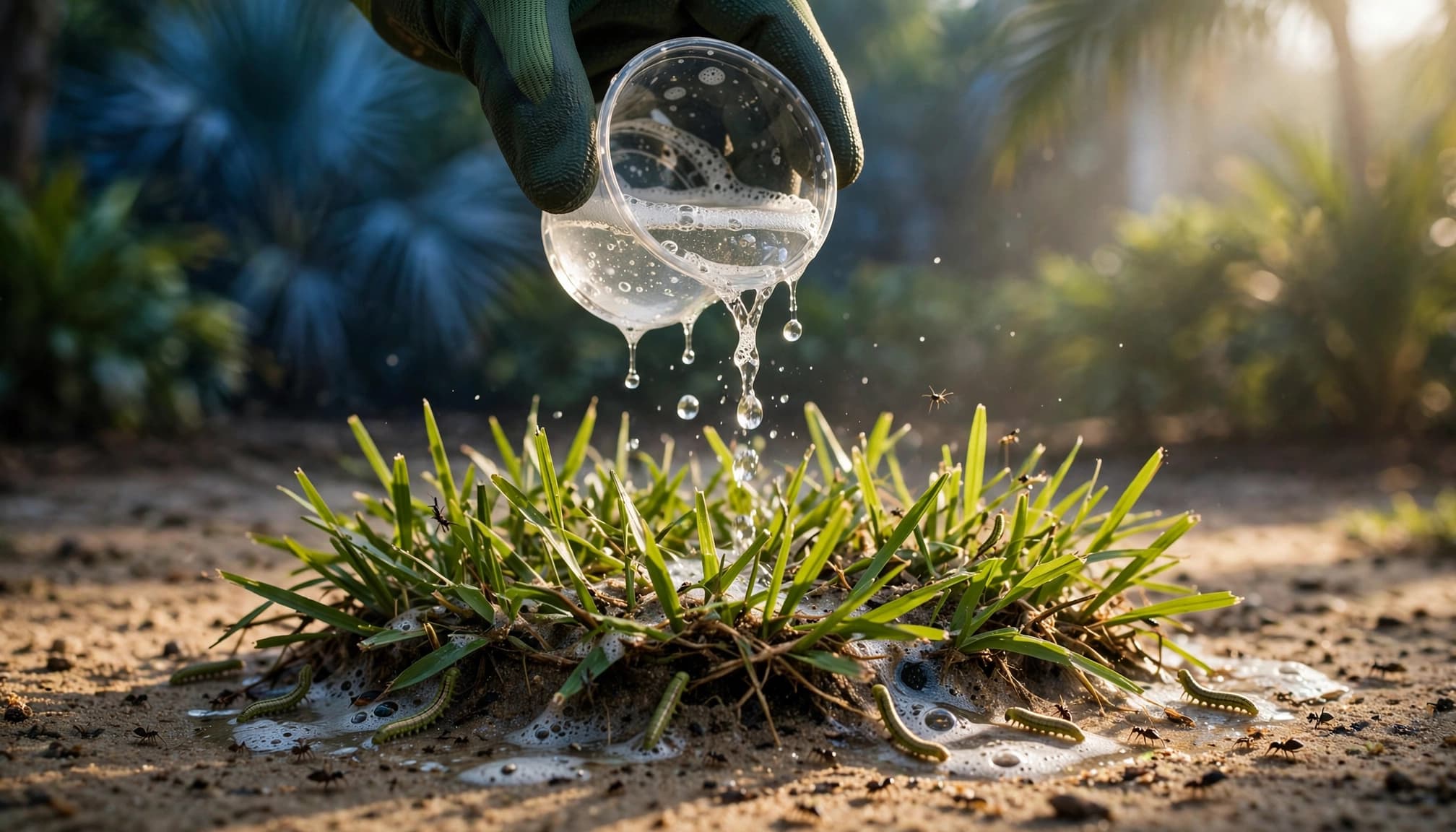
A soap flush test is a practical way to check for hidden surface pests and mole crickets. It’s a scouting method, not a treatment. Test an area with some damage and healthy grass, then repeat the test nearby.
UF/IFAS provides a helpful overview of home lawn insect scouting methods, including soap flushes for insects that stay hidden in turf.
Match the Soap Mix to the Pest You Suspect
There isn’t one universal soap-flush recipe. For fall armyworms, UF/IFAS guidance uses one tablespoon of liquid dish soap in one gallon of water across four square feet of turf. Guidance for mole crickets uses 1.5 fluid ounces of soap in two gallons over the same area.
Pour the mixture evenly and watch the surface. Caterpillars and other small insects may climb through the grass. For mole crickets, test early in the day and watch closely for three minutes.
For chinch bugs, a bottomless coffee can offers another simple test. Press it about two inches into the active damage border, fill it with water, and watch for insects floating to the surface over five minutes.
Count Activity Instead of Guessing
A confirmed pest infestation requires active insects, fresh turf injury, and a matching damage pattern. One insect doesn’t automatically mean the lawn needs broad treatment.
During scouting, record whether fall armyworms appear, how many emerge, and where activity occurs. UF/IFAS considers corrective action for mole crickets reasonable when two to four emerge from a four-square-foot flush within three minutes. Their current Florida lawn insect control guidance also reinforces a simple rule: confirm what is feeding before choosing a product.
Rule Out Disease, Drought, and Irrigation Problems
Brown patches from pests, disease, drought, and irrigation problems can look almost identical in turf grass. St. Augustinegrass may thin or yellow because of chinch bugs, take-all root rot, excessive moisture, poor drainage, mower injury, nutrient problems, or compacted soil.
Check soil moisture and compare the patch with irrigation coverage. Inspect the root system for decline, look for moisture trapped in heavy thatch, and see whether the grass recovers after watering.
Overwatering can create weak, shallow roots and keep thatch wet. Dry turf near pavement may be stressed before insects begin feeding. Compare disease, watering, and insect clues before deciding what caused the decline.
Choose Control Methods Only After Confirmation
A confirmed pest infestation should come before preventative treatments or broad applications. The right option depends on the pest, grass type, feeding location, and affected area.
Use Biological Options for the Right Situation
Beneficial nematodes can help control certain soil-dwelling pests, including mole crickets. They require suitable soil moisture and careful application. They aren’t a universal answer for chinch bugs, webworms, or every grub problem.
Florida also has natural mole cricket enemies, including the Larra bicolor wasp. Healthy turf, reduced thatch, proper irrigation, and careful monitoring support these biological controls. Biological approaches may fit an organic pest control plan when the product label and applicable standards support that use. Integrated pest management combines these steps with treatment only when an inspection supports it.
Use Labeled Insecticides Carefully
Chemical insecticides may be appropriate for a confirmed, damaging infestation. Read the label for the exact pest, turfgrass, application method, watering instructions, and re-entry directions. A granular soil product may miss caterpillars feeding in the thatch. A surface product may not reach root-feeding pests.
The EPA’s pesticide safety guidance is clear: the label is the legal direction for safe use. Avoid treating saturated turf or applying products where runoff can reach ponds, drains, or waterways.
If the same pest keeps returning, don’t repeat the same active ingredient automatically. Record the product and timing, then rotate labeled modes of action when appropriate.
Keep Turf Strong Between Inspections
Healthy turf grass isn’t pest-proof, but it handles feeding injury and recovery better. Cultural practices, including proper mowing height, even irrigation, modest fertilization, and thatch management, reduce stress that makes lawn damage more visible. These lawn care practices support stronger growth without replacing regular inspection.
Consistent lawn maintenance improves turf recovery, but it doesn’t replace inspection. Monthly checks are especially useful during Southwest Florida’s warm, wet growing season and after heavy rain.
Adult moths, beetles, chinch bugs, and two-lined spittlebugs can move into turf from neighboring properties, landscape beds, or untreated areas. Routine monitoring is preferable to automatic preventative treatments and supports an integrated pest management approach.
Key Takeaways
- Inspect the green-to-brown border of damaged turf, where active feeding is easier to find.
- Use the pattern of turfgrass damage: blade or thatch injury can indicate chinch bugs or fall armyworms, while loose sod and tunnels suggest mole crickets or white grubs.
- Use a soap flush test as a confirmation tool, with the mixture matched to the pest you suspect.
- Check irrigation, thatch, roots, and drainage before blaming insects for every brown patch.
- Treat confirmed activity with a method labeled for the pest and grass type, then monitor the area again.
Frequently Asked Questions
What are the most common lawn pests in Southwest Florida?
Chinch bugs, tropical sod webworms, fall armyworms, mole crickets, and white grubs frequently damage local turf. Two-lined spittlebugs and hunting billbugs can also affect lawns.
The grass type and damage location matter. Fall armyworms may leave ragged blades and dark droppings, but those clues don’t confirm the pest. Chinch bugs often affect St. Augustine grass, while mole crickets and grubs cause clearer root-zone symptoms.
How can you identify chinch bug damage in St. Augustine grass?
Look for expanding yellow or brown patches in sunny, dry areas, especially beside concrete or along driveway edges. Inspect the border between healthy and damaged grass, not the fully brown center.
A coffee-can water test or close examination around the grass base can help confirm chinch bugs. Don’t assume chinch bugs if the patch follows poor irrigation coverage or stays wet after rain.
What is the best way to get rid of mole crickets in Florida?
First, confirm mole cricket activity with a soap flush. Two to four crickets surfacing from four square feet within three minutes provide a useful scouting benchmark, not a guaranteed treatment decision.
Then select a labeled treatment that reaches the root zone, or discuss biological options such as beneficial nematodes with a lawn professional. A pest control service shouldn’t be selected based on brown turf alone. Uncertain cases call for professional identification or extension-based guidance. Follow-up scouting matters because new mole cricket activity can return after treatment.
Protect the Lawn by Finding the Cause First
Southwest Florida lawns can decline quickly, but the cause is often visible when you inspect the right place. The active turf border, grass blades, thatch layer, crowns, and root zone all provide useful answers.
Accurate identification is what turns a brown patch into a manageable lawn-care decision. Regular scouting gives you time to correct stress, control confirmed pests, and protect the healthy turf that remains.