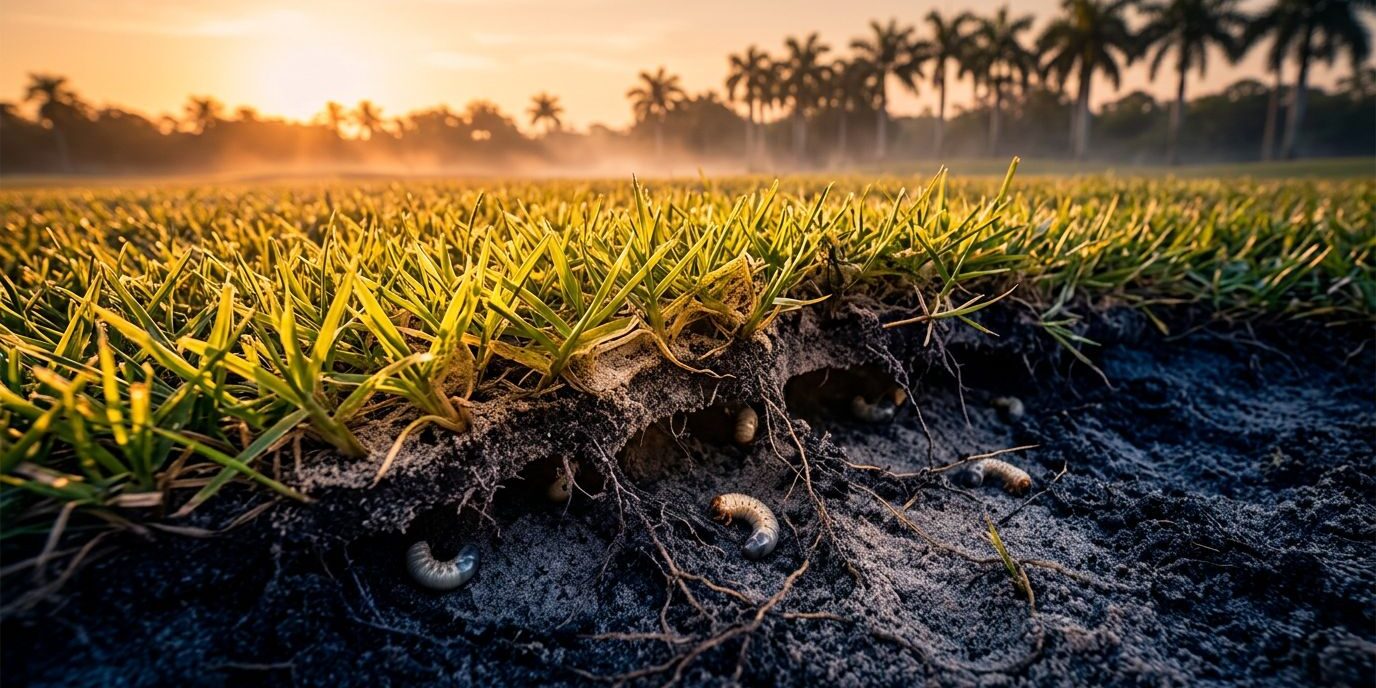
A lawn can look fine in the morning and feel loose by sunset. That is how white grub damage catches homeowners off guard, especially in Southwest Florida, where turf already deals with intense heat, salt, heavy rain, and sandy soil. These pests begin their life cycle as eggs laid by scarab beetles, which eventually hatch into hungry larvae that settle into the root zone.
The tricky part is that the early signs often look harmless. A yellow patch can look like simple drought, while a brown patch may appear to be heat stress. In reality, the larvae are beneath the surface, feeding on turfgrass roots and destroying the foundation of your lawn. By the time the grass starts lifting, the root system is often already gone.
We can spot the problem early if we know what to look for, where to look, and when to stop guessing.
Key Takeaways
- Recognize Early Indicators: White grub damage often masquerades as drought or heat stress, but the telltale sign is turf that feels spongy or lifts away from the soil like a loose carpet.
- Root-Zone Inspection: To confirm an infestation, manually lift a section of damaged turf and count the creamy, C-shaped larvae; finding more than five to ten per square foot warrants active treatment.
- Address Timing and Strategy: Differentiate between preventive treatments for healthy turf and curative controls for active infestations, ensuring you apply products according to the specific life cycle of Southwest Florida’s scarab beetles.
- Minimize Stress: During a grub outbreak, reduce foot traffic and maintain higher mowing heights to help the lawn recover while the root system is compromised.
What white grub damage looks like in Southwest Florida
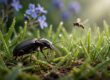
White grub damage is caused by beetle larvae that feed on grass roots. These pests are the offspring of various scarab beetles, including the Japanese beetle, the June beetle, and the masked chafer. Once the roots are chewed off, the turf can no longer hold tight to the soil. That is when the lawn starts to fail in plain sight.
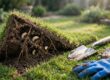
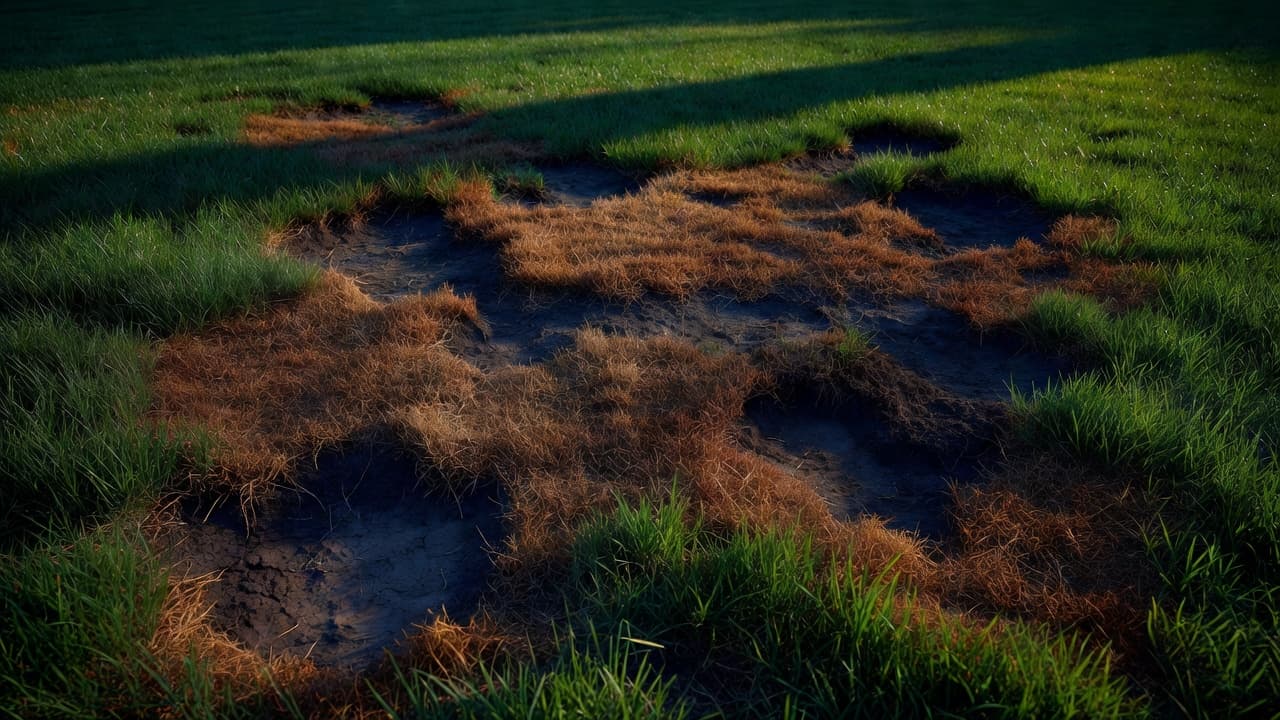
The first signs are easy to miss. We usually see irregular yellow spots that fade into brown patches. The turf may feel soft or spongy underfoot. In more advanced cases, the grass peels back like a loose carpet.
A few common clues show up again and again:
- Patches are irregular: Grub injury usually starts in random spots, not neat lines.
- The turf lifts easily: If the roots are gone, the grass may roll back with little effort.
- Wildlife starts digging: Foraging animals, such as skunks and raccoons, may tear at the lawn to hunt for the larvae.
- The grass stays weak after watering: Extra water helps the blades, but it does not rebuild destroyed roots.
For a visual reference, GardenTech’s white grub guide shows the same lift-and-browning pattern caused by scarab beetles that we look for in damaged turf.
If the grass lifts like a loose rug, we should stop blaming the weather and check the roots.
The biggest mistake is waiting for the patch to grow into a circle. By then, the roots are already doing the talking.
Why Southwest Florida lawns are vulnerable
Southwest Florida lawns grow in a climate that keeps turf active for a long season, which unfortunately provides the perfect environment for white grub damage to take hold. The life cycle of these pests is well-suited to our region, as species like the European chafer, Japanese beetle, June beetle, and masked chafer all find the warm soil and consistent moisture ideal for development. These grubs often thrive tucked away beneath the thatch layer, where they feed on root systems undisturbed.
Warm soil, frequent irrigation, and fast-draining sand can hide the problem until the damage spreads. Homeowners also tend to overwater when grass looks stressed, which can mask the real issue. The blades may stay green for a while, even while the roots keep disappearing below the surface. Because these pests are most active during the warmer months, the most significant symptoms often become visible in late summer.
Some lawns are hit harder than others. St. Augustine and other warm-season grasses can recover from stress, but only if enough root structure remains. Once the roots are too damaged, the turf thins out fast. Weather also plays a role. Heavy rain can make a lawn look healthy one week and patchy the next. We may think the grass is bouncing back, when the opposite is true. The water is there, but the roots are not.
That is why grub problems in Southwest Florida often get blamed on the wrong thing. Dry spots, fungus, poor drainage, mower height, and insect feeding can all produce brown turf. The pattern matters, and so does the feel of the lawn. If we step onto a patch and it feels unstable, that is a warning. If we can tug it up with little resistance, that is a stronger one.
How we check whether grubs are the problem
The fastest way to confirm grub activity is to inspect the root zone directly. We do not need to guess from the curb, as we need to look beneath the grass and examine the soil surface.
A simple check works well:
- Pick a damaged spot at the edge of a brown patch.
- Cut a small flap or lift a section of turf.
- Look at the roots and the top layer of soil.
- Search for creamy white, C-shaped larvae.
- To determine the severity, count how many larvae you find per square foot. If you find more than five to ten per square foot, you likely have an infestation that requires treatment.
- Compare that spot with healthy turf nearby.
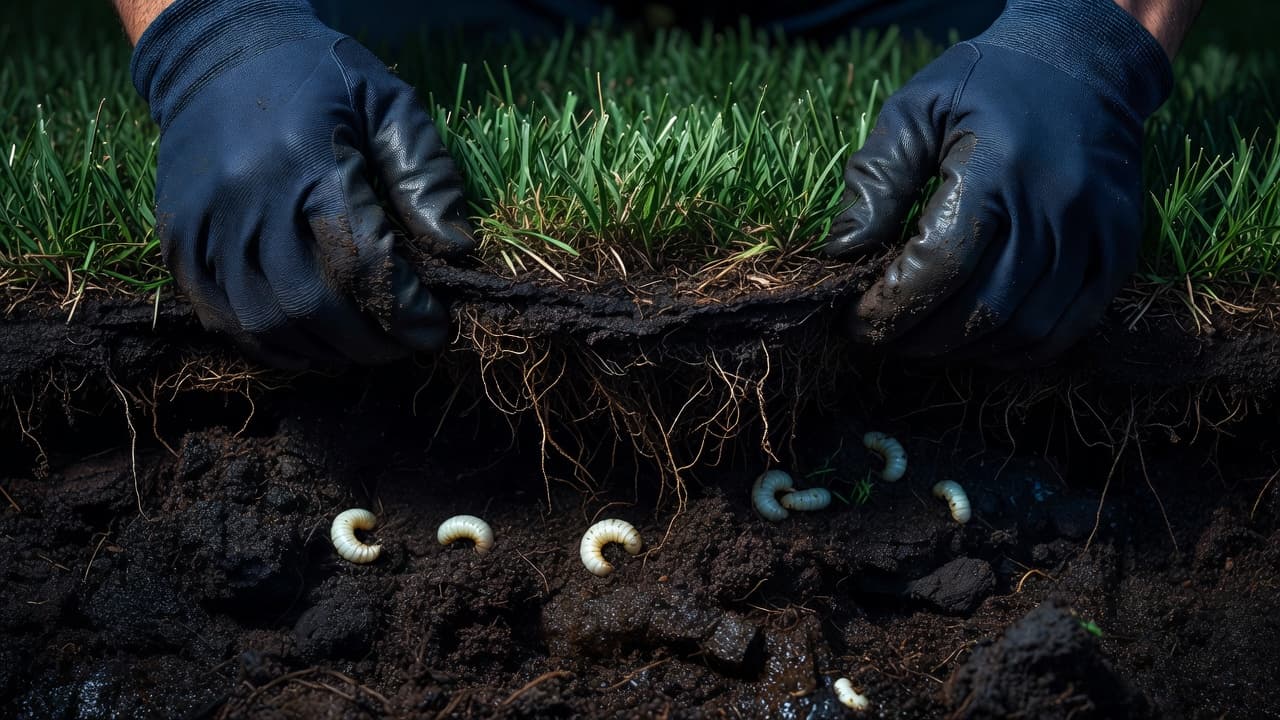
We are not looking for one lonely insect and calling it a disaster. We are looking for feeding damage plus a high concentration of live grubs per square foot. If the turfgrass roots are short, chewed, or missing, the larvae are part of the story.
The same inspection can rule out other causes. Dry roots look brittle. Fungal issues often show leaf spots or rings. Irrigation problems usually follow sprinkler patterns. Grub injury is different. The turf often separates cleanly from the ground because the roots have been stripped away.
A local homeowner guide, Your Green Team’s Florida grub signs, shows the yellowing, wilting, and carpet-like lifting that often points to grub feeding. That visual pattern matches what we see in the yard.
The sooner we check, the better the odds. Fresh feeding damage is easier to stop than a lawn that has already lost most of its root system.
What to do when the turf starts lifting
Once we confirm that grubs are active, speed matters. The goal is to stop more feeding before the patch grows larger. Waiting for the lawn to grow out of it usually gives the larvae more time to destroy the root system.
We should begin by protecting the area from extra stress. Hold off on heavy foot traffic and keep your mower deck high to avoid shaving the already weakened turf. Water only as needed, as extra irrigation will not repair missing roots.
When addressing an infestation, we must decide if the damage is localized or widespread. A professional inspection helps us distinguish between a patch that needs simple support and one that requires a targeted insecticide application. This distinction is vital, as applying the wrong remedy wastes time and money.
In some cases, we use a preventive treatment to protect healthy turf, while a curative control is necessary once the turf has already begun to lift. For chemical management, an active ingredient like chlorantraniliprole provides long-lasting results, while imidacloprid is often used for rapid knockdown. If you prefer a biological approach, beneficial nematodes can effectively target larvae in the soil. Regardless of the product, you must water immediately after application to ensure the insecticide reaches the larvae in the root zone. Please note that if you are dealing with a Japanese beetle infestation, the timing of your application must be precise to be effective.
When the turf is hanging on by a thread, the best plan is usually straightforward:
- Confirm active grubs.
- Treat the affected area with the right insecticide.
- Reduce stress on the grass.
- Recheck the lawn for new feeding signs.
Following this sequence is the most effective approach. Treating blindly often results in failure. The earlier we act, the more turf we save. Once the roots are consumed across a wide area, repair turns into total replacement, which is a much more intensive and expensive job.
How to keep grubs from coming back
Prevention is simpler than repair, and it starts with routine checks. We do not need to inspect every inch every week; we just need to watch problem areas before they spread. Lawns with a history of grub injury deserve extra attention in warm months and after heavy rain. Edges along driveways, sunny strips, and well-watered zones are worth checking first, as those spots often show stress sooner than the rest of the yard.
A strong lawn also helps by supporting beneficial insects that naturally manage pests. Healthy turf handles stress better than thin turf, and proper mowing height, sensible irrigation, and balanced fertilization keep the root system in better shape. While this does not make a lawn grub-proof, it makes recovery more likely.
To stay ahead of the cycle, consider a preventive treatment in early summer before eggs hatch. If you missed that window and see active damage, you may need a curative control to stop the infestation in its tracks. When choosing a product, look closely at the active ingredient to ensure it is effective against the specific species in your area.
We should also keep an eye on adult beetle activity during late summer. When beetles show up, the next generation is not far behind. Catching that cycle early can save a lot of trouble, and a timely insecticide application can prevent grubs from devastating your turf. If you are struggling with recurring issues, a scheduled preventive treatment program can be more effective than waiting until you spot damage. Just remember that the goal of any insecticide is to target pests while keeping the surrounding ecosystem balanced.
Here is the simple habit that pays off: inspect suspicious patches before assuming it is drought or disease. A five-minute check can prevent a five-week headache. When you do reach for an insecticide, follow the label instructions carefully to ensure your lawn stays protected all season long.
Frequently Asked Questions
How can I tell the difference between grub damage and heat stress?
Heat stress and drought usually leave the turf firmly attached to the soil, even if it is brown or wilting. In contrast, grub damage causes the grass to lose its root anchor, making it feel unstable underfoot or causing it to peel back from the soil entirely when pulled.
Can I just water more to fix the damage?
Unfortunately, extra water will not repair roots that have already been severed or consumed by larvae. While irrigation is necessary for general lawn health, watering a grub-damaged lawn may keep the grass blades green temporarily while the underlying root system continues to fail.
Do raccoons and skunks digging in my lawn mean I have grubs?
Yes, wildlife digging is a strong indicator of a grub infestation. Skunks and raccoons are often attracted to the scent of larvae, and their tearing of the turf is frequently one of the first signs that a significant population of grubs has settled in your lawn.
What is the best way to prevent future grub problems?
A combination of consistent monitoring and preventive treatments applied in early summer is the most effective approach. Maintaining a healthy, dense lawn through proper mowing and balanced fertilization also helps the grass recover faster if minor feeding occurs.
Conclusion
White grubs do their worst work below the surface, which is why the lawn often looks fine until it suddenly does not. Once we recognize the signs, the pattern is clear, including soft turf, irregular brown patches, and roots that give way too easily.
The fix starts with a quick inspection, not a guess. If the grass lifts like a rug, it is a strong indication that the grub life cycle has reached a stage where it is actively consuming your lawn. In Southwest Florida, that kind of white grub damage can move quickly across a property.
By staying vigilant, you can take control of your lawn care and focus on the health of your turfgrass roots. The sooner we identify the problem and implement a treatment plan, the more lawn we save from long-term destruction.