Mole cricket damage in Florida can make a lawn look fine on Monday, then feel thin, bouncy, and tired by the weekend. Throughout the southeastern United States, mole crickets are a common culprit, though homeowners often mistake the early signs for drought, fungus, or fertilizer problems.
I get why. Mole cricket damage in Florida doesn’t always scream for attention at first. It starts under the turf, then shows up as weak grass, loose roots, and patches that never seem to recover. If you know the signs, you can catch it before a small problem turns into a re-sod bill.
Key Takeaways
- Mole cricket damage begins underground as pests tunnel through soil and feed on roots, causing turf to become thin, spongy, and loose.
- Early warning signs include turf that feels bouncy or detached from the ground, irregular brown patches, and raised soil ridges from surface tunnels.
- Because initial symptoms often mimic drought or disease, perform a soapy water flush in suspect areas to confirm the presence of mole crickets before applying treatments.
- Success in managing infestations depends on timing; treating while the insects are in the nymph stage is significantly more effective than waiting until they are fully grown.
- Maintaining a healthy, properly irrigated, and well-aerated lawn creates an environment where turf can better withstand and recover from mole cricket pressure.
What mole crickets are doing under your turf
A mole cricket does not destroy turf in one dramatic move. It works from below, slowly compromising the health of your lawn.
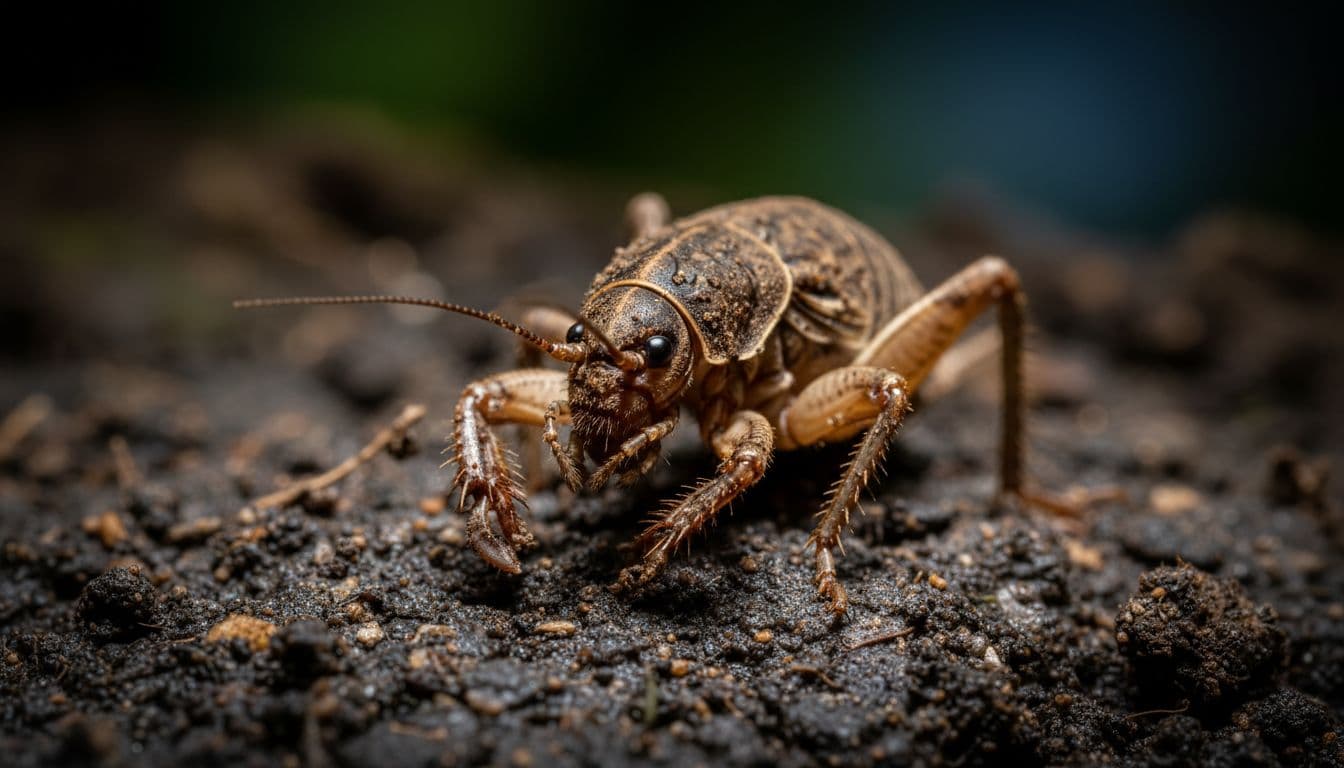
When I find mole crickets in a Southwest Florida lawn, I usually see two things happening at once. First, they are tunneling just under the soil surface. Second, the three most common species found here, the tawny mole cricket, the southern mole cricket, and the short-winged mole cricket, are feeding on roots and shoots. This combination is rough on warm-season turfgrass. The grass loses its grip, dries out faster, and starts to thin in odd patches as tunneling damage disrupts the root system below the soil surface.
Southwest Florida gives these pests a long runway. Warm soil, mild winters, summer rain, and irrigated lawns create perfect conditions for mole cricket activity. St. Augustine grass, bermudagrass, zoysia, and bahiagrass can all show injury, though the damage may look a little different from one lawn to the next.
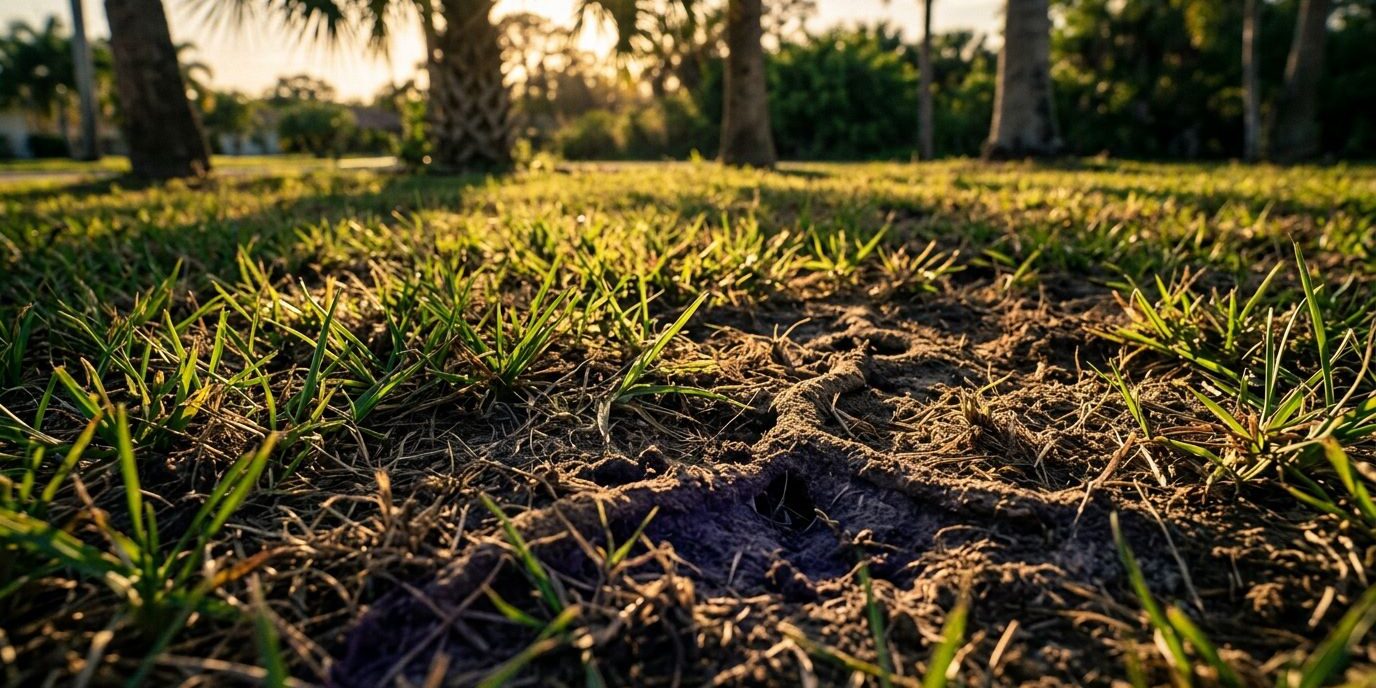
The part that fools people is the pattern. Mole crickets rarely leave a neat circle or a clean line. I see irregular spots, weak areas that spread, and turf that looks thirsty even when irrigation is running on schedule. Walk across it, and it may feel soft or springy, almost like a rug laid over loose crumbs.
Not every mole cricket in the soil is a disaster, as some species do less root feeding than others. Still, when I see tunneling paired with thinning roots, I take it seriously. Large properties can hide mole cricket infestations for weeks, but small home lawns often show the signs faster because every dying patch stands out.
The lawn symptoms that give them away
The first clue is usually the texture of your lawn. When I step on the grass, it feels like spongy turf that does not feel anchored, often giving way underfoot.
After that, I look for surface tunneling, which is a telltale sign that mole crickets are active. I watch for little raised runs in the soil, thinning blades, and brown patches that do not match the irrigation pattern. In severe spots, the turf pulls up far too easily because mole crickets have chewed back the root systems. You might also notice birds pecking at the lawn more than usual, as they hunt for mole crickets, and that extra scratching can make the damaged area look even worse.
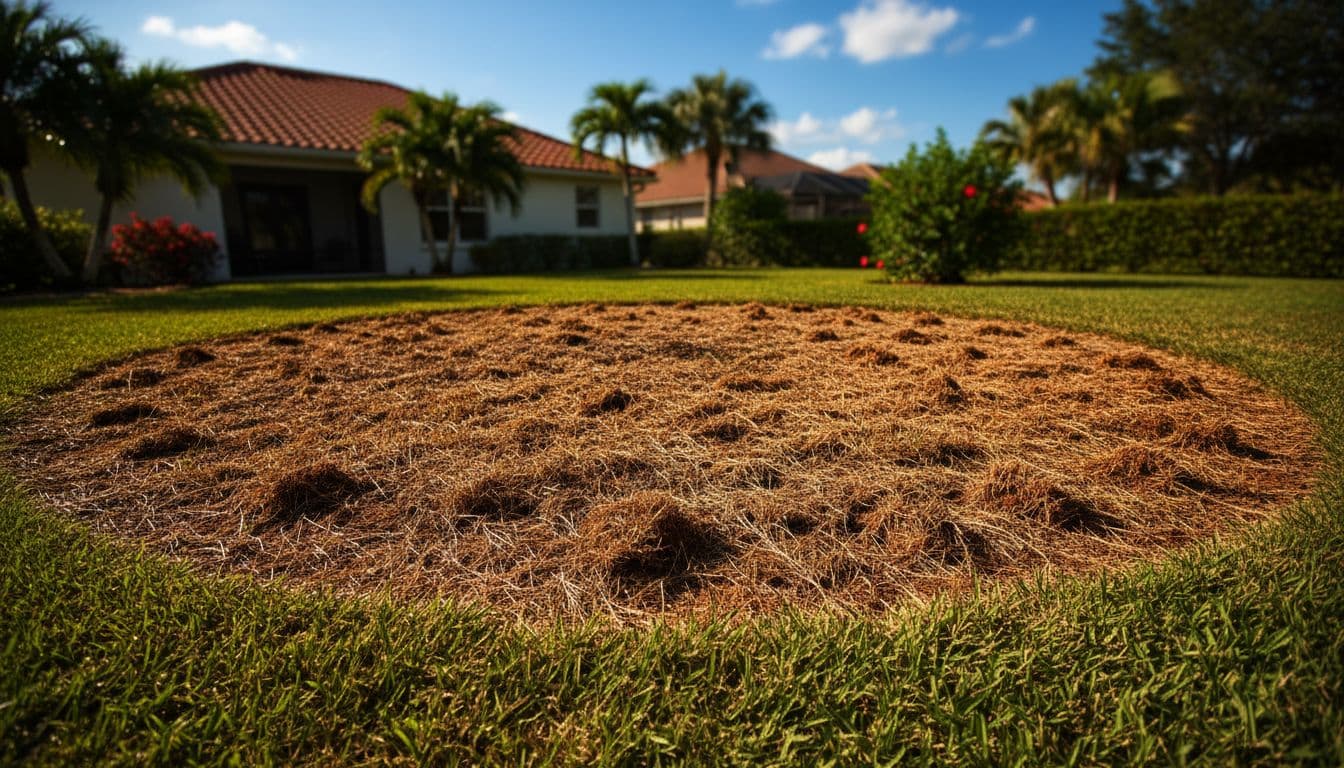
Different types of grass react in their own way to these pests. Here is what I tend to notice first.
| Grass type | What I usually see first |
|---|---|
| St. Augustine grass | Thinning patches, weak roots, turf that lifts too easily |
| Bermudagrass | Scraped-looking areas, tunneling, rapid thinning in sunny spots |
| Zoysia | Small off-color patches that grow wider as roots weaken |
| Bahiagrass | Sparse areas and uneven decline, often mixed with visible soil disturbance |
The big takeaway is simple: damage caused by mole crickets often looks messy rather than uniform.
That matters because uniform damage often points toward other issues. If an entire zone is fading evenly, I look at irrigation first. If I see clear lesions on blades, I start thinking about disease. If the lawn has a sharp edge of decline near hot pavement, chinch bugs move up my list, especially in St. Augustine grass.
Mole cricket damage is more underground than that. The grass loses support, the soil shows activity, and the lawn starts to feel tired long before it looks completely dead.
When I usually see mole cricket damage in Southwest Florida
Timing tells a big part of the story. Like in many other southern states, I often see obvious mole cricket damage build from late spring into summer. This timing correlates with their life cycle, as the egg laying period concludes and young nymphs begin feeding heavily while warm-season turf is in a phase of active growth. If the lawn is already stressed by heat, compaction, poor rooting, or uneven watering, the mole crickets cause the grass to decline much faster.
Summer rain can hide the problem for a while because the grass stays green on the surface. Then a drier stretch hits, and the weak roots cannot keep up. That is when homeowners notice sudden browning and wonder what changed. In truth, the lawn had been losing strength below the surface for a while.
I also watch for activity after mild winters, as Southwest Florida does not get much of a hard reset. Some mole crickets hang on through the winter, and damaged lawns can roll into spring already behind. My observations show the primary activity windows are during the spring and fall. HOA common areas and large commercial sites are prone to this because early thinning gets missed until the patches connect.
If I had to pick one timing mistake people make, it is waiting for major die-off before checking the soil for mole crickets. By then, the insects are often larger, harder to control, and the turf has less ability to bounce back.
How I confirm the problem before treating
I don’t like guessing with turf pests. A wrong call costs money and time, which is why accurate pest control is essential for your property.
The fastest field check I use is a soapy water flush on a small test area. A mix of water and a few tablespoons of liquid dish soap poured over active turf can drive mole crickets to the surface in a few minutes. If those mole crickets come up, I know I am not chasing a phantom. I also part the grass, look for shallow tunnels, and tug lightly on damaged spots to see whether the roots still have hold.
If the turf peels back with almost no resistance, the root system is already in trouble.
I also pay attention to pattern and location. Random thinning with soft, tunneled soil points me toward mole crickets. Dry corners with poor sprinkler coverage point me toward other issues. Grubs, disease, hunting billbugs, chinch bugs, and even heavy thatch can copy parts of the same picture, so I don’t stop at the first symptom.
Dusk checks can help too. Mole crickets are more active at night, and fresh surface runs are easier to spot after evening moisture. On larger properties, I like checking more than one area because infestations are rarely spread evenly.
The point isn’t to make lawn diagnosis complicated. It is to avoid treating the wrong issue while the real problem keeps chewing below ground.
Treatment and prevention that fit Florida lawns
Once I have confirmed the presence of mole crickets, timing matters more than panic. Nymphs are easier to control than large adults, so earlier action usually pays off when dealing with these invasive pests.
For active infestations, labeled turf insecticide products can work well when matched to the specific grass type, the site, and the life stage present. That is one reason I never treat blind. A product that fits bermuda on one property may not be the right fit for St. Augustine at another. If you are managing an HOA or commercial site, that label detail matters even more.
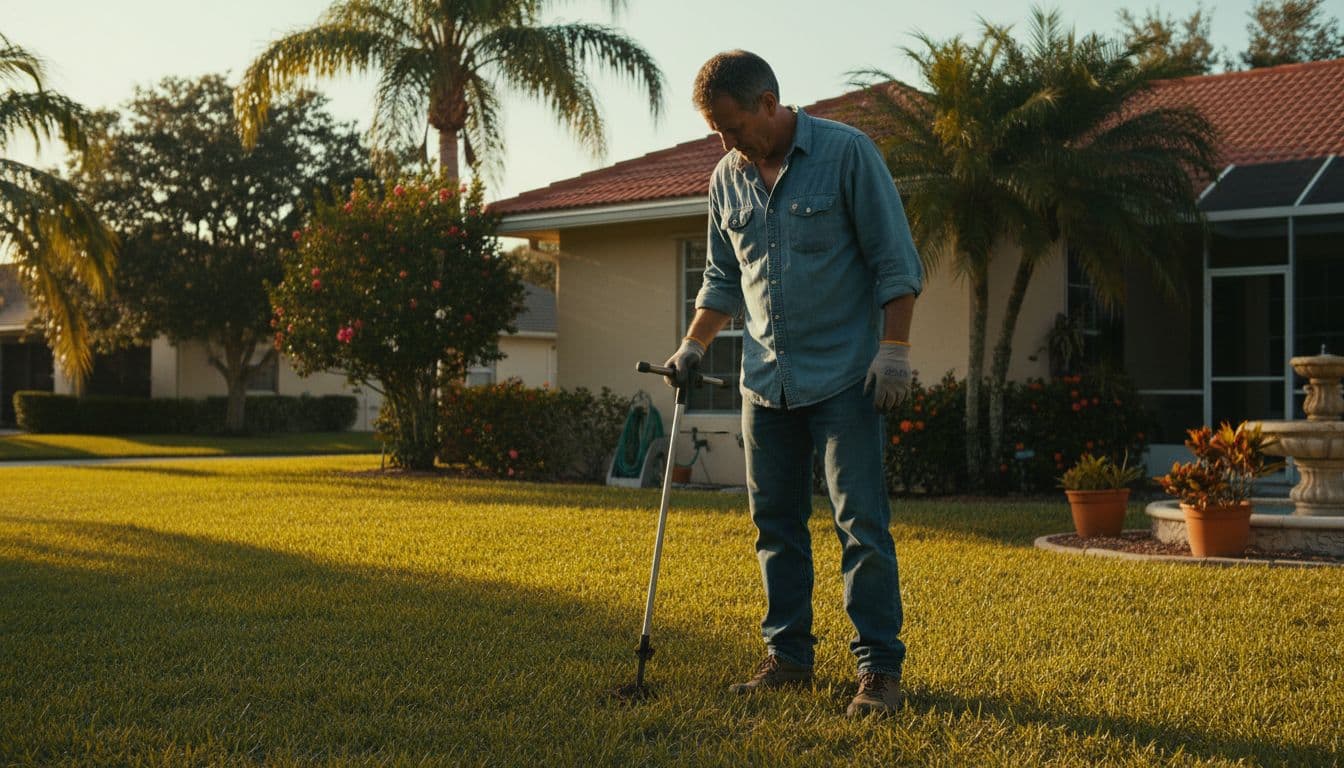
I also like prevention that makes the lawn less easy to wreck. Proper lawn care practices such as maintaining healthy roots, using appropriate mowing heights, and watering deeply but not too often are essential. A lawn that is constantly soggy or badly thatched gives mole crickets more cover and weakens turf at the same time. Balanced feeding matters too, because starving grass will not recover well after root injury.
On some lawns, biological control is part of the plan. Using the Larra bicolor wasp or a parasitic nematode can help manage populations when moisture and timing line up. Results vary, so I treat these as one tool rather than a magic fix.
What I do not do is promise a one-shot remedy for every yard. Severe damage from mole crickets in Florida can leave turf so thin that the chosen insecticide stops the insects but does not restore the lawn overnight. Sometimes the next step is recovery work, plugging, or re-sodding thin sections once the mole crickets are under control.
That is why an integrated approach works best. Confirm the pest, treat at the right time, then tighten up mowing, irrigation, and follow-up checks.
Frequently Asked Questions
How can I tell if my lawn has mole crickets versus another problem like grubs or fungus?
Mole crickets create distinct, spongy areas where the grass feels like it is resting on loose crumbs. By pulling on the grass, you will notice the turf peels back easily because the roots have been severed, whereas fungal issues often present with visible lesions on the blades.
What is the best way to confirm an infestation?
The most reliable method is a soapy water flush, where you mix liquid dish soap with water and pour it over a suspected area. If mole crickets are present, the irritation from the soap will force them to the surface within a few minutes, allowing for a positive identification.
Can I treat mole crickets myself at any time of the year?
While products are available for homeowners, timing is critical because nymphs are much more susceptible to control measures than adults. It is best to monitor for activity in the spring and fall and avoid applying insecticides until you have verified that the pests are actively causing damage.
Will my lawn recover on its own after the mole crickets are gone?
If the root damage is minor, healthy turf can often recover with proper watering, mowing, and fertilization following a successful treatment. However, in cases of severe infestation where the root system has been destroyed, you may need to plug or re-sod the affected areas to restore the lawn.
Conclusion
A mole cricket problem usually starts where you cannot see it. By the time the grass turns brown, the real story is in the soil and roots.
When I spot mole cricket damage in Florida, I trust the pattern underfoot as much as the color on top. Loose turf, shallow tunneling, and roots that will not hold are the signs that matter. If you catch these mole crickets early, you have a much better shot at saving your lawn instead of replacing it. By staying vigilant, you can effectively manage mole crickets and keep your grass healthy year round.