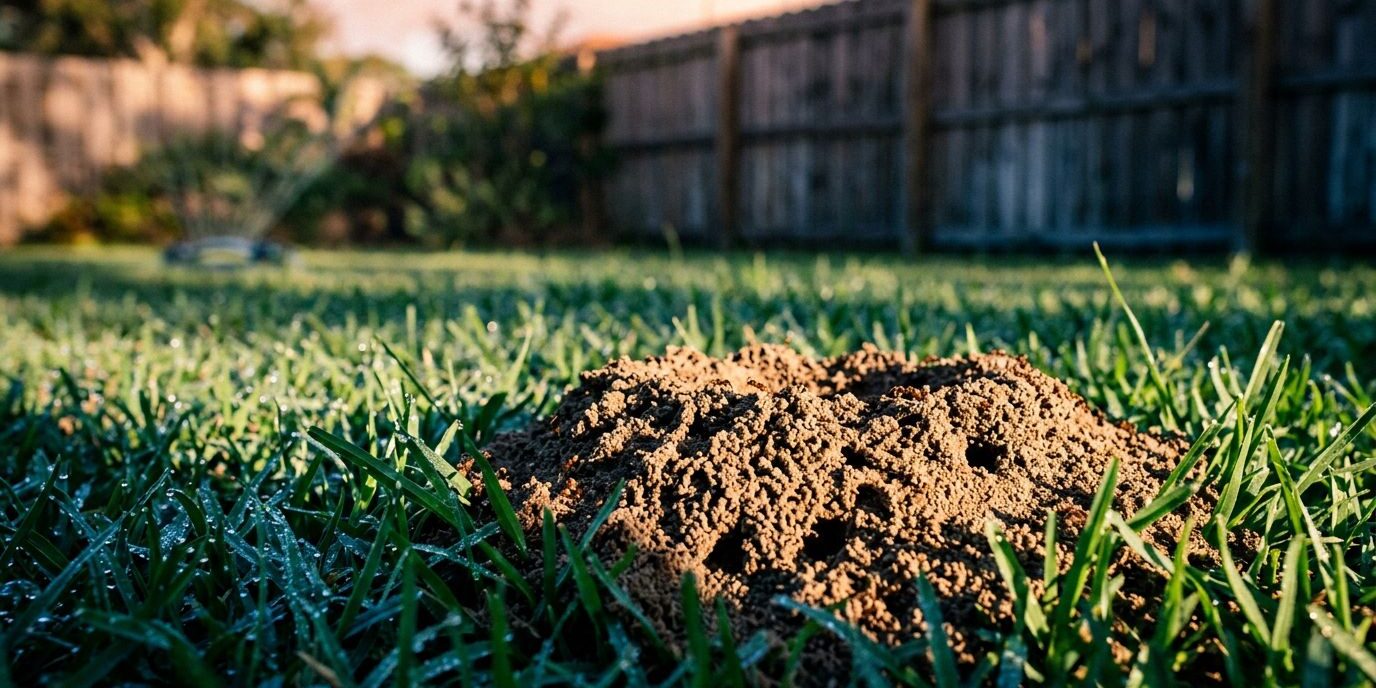
Fire ant mounds do not hide for long in Southwest Florida. One day the lawn looks fine, and the next there is a fresh dirt pile appearing right where children play, pets run, and the mower needs to pass.
That is more than just a cosmetic problem for your lawn and garden spaces. An infestation of red imported fire ants can turn a quiet yard into a rough patch fast, especially after rain, irrigation, or a warm spell. If we know what to look for, we can spot the trouble early and keep these pests from spreading across the landscape.
Key Takeaways
- Surface Mounds are Only the Beginning: What you see on your lawn is just the entry point; a massive, complex network of tunnels and queens exists deep underground, meaning surface-level disruption is ineffective.
- Avoid Disturbance: Kicking, hosing down, or using amateur home remedies like boiling water often causes the colony to scatter and rebuild, making the infestation harder to manage while risking damage to your lawn.
- Strategic Management Over Quick Fixes: Lasting control requires professional-grade products, such as baits that foragers carry back to the queen, rather than temporary surface treatments that leave the root cause untouched.
- Prevention Through Lawn Health: Maintaining thick turf and even irrigation minimizes the bare, open soil that fire ants prefer for establishing new nests, effectively discouraging them from settling in your landscape.
Why Fire Ant Mounds Show Up So Often Here
Southwest Florida provides the ideal environment for fire ants to thrive. Because the soil stays warm and heavy rain is frequent, these ants find it easy to establish nests in the open, sandy soil typical of many local lawns. While these pests remain active year-round, you will notice mound visibility peaks from spring through fall as the soil temperature stays consistent.
After a heavy shower, mounds often appear more visible. The worker ants push soil up to keep the colony dry, and that fresh dirt is hard to miss once you begin walking the yard. Irrigation systems can produce the same effect, particularly in areas that stay damp longer than the rest of the lawn.
Fire ants also favor places that remain slightly disturbed. Edges near driveways, sidewalks, mulch beds, irrigation heads, and thin turf all provide them with the perfect room to work. A healthy lawn is less inviting, but a patchy one can feel like open ground to an invasive fire ant colony.
The tricky part is speed. While a mound can seem to appear overnight due to rapid new colony formation, the insects have usually been active below the surface for much longer. The hill visible above ground is merely the entry point, while a vast network of underground tunnels supports the actual population hidden from your view.
How to Spot Fire Ant Mounds Before They Spread
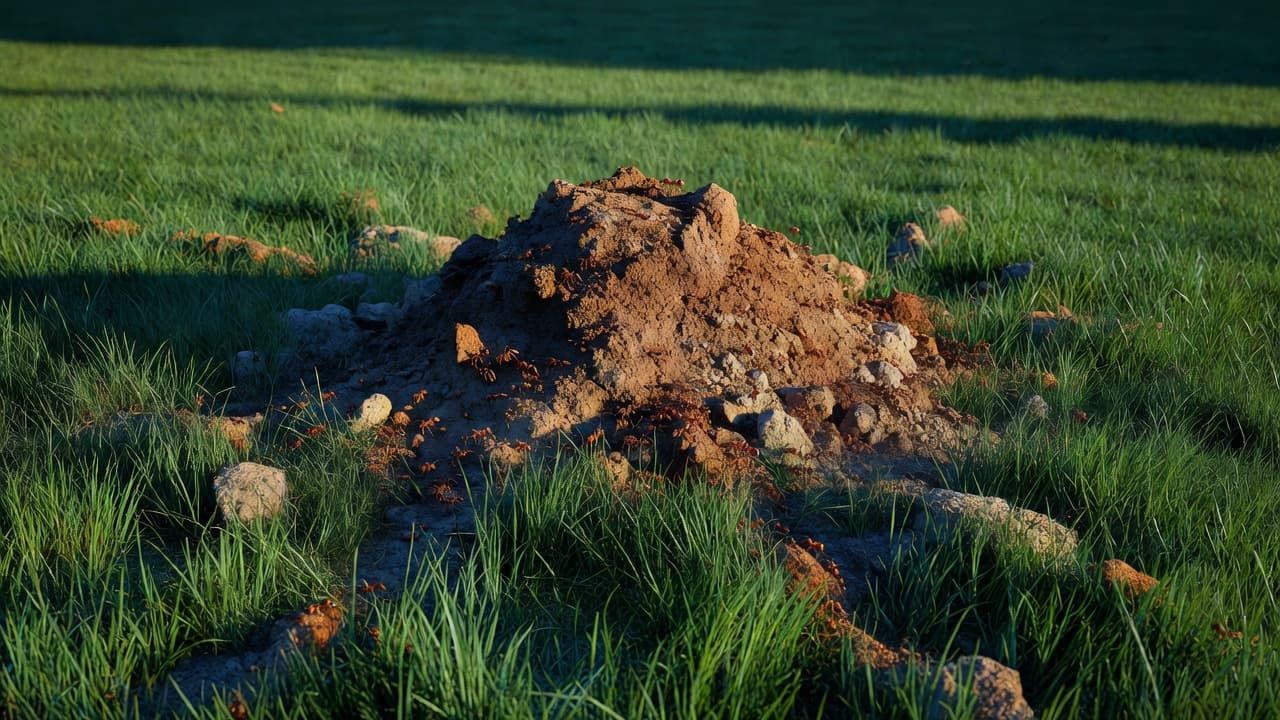
That loose, fresh soil is the clue most homeowners miss. The fire ant mounds may look small at first, but the activity underneath can be much bigger than the top layer suggests.
A few signs usually stand out:
- Loose, fluffy soil that looks freshly stirred rather than packed down.
- Dome-shaped mounds that appear as a rounded or uneven structure without a neat opening in the center.
- Fast, aggressive movement by foraging workers when the mound is bumped, stepped on, or disturbed, which often leads to painful fire ant stings.
- Several mounds in one area, often in sunny spots or along irrigation lines, which may indicate the presence of multiple queen colonies.
The soil itself can tell us a lot. Fire ant mounds often look as if someone shook a shovel of dirt onto the grass, then left it there. They do not always have a clean entrance hole on top. In many lawns, the surface looks almost sculpted, with no obvious tunnel opening.
We also want to watch what the ants do. If the mound stays calm when we pass by, it may not be fire ants. If the colony reacts instantly to the slightest disturbance, that is a much bigger clue.
One more thing matters here. A single mound does not always mean a single colony. In warm, wet weather, more than one mound can pop up in the same yard, especially in bright, open sections of grass.
What Not to Do When We Find One
A fire ant mound is not a problem that can be solved by kicking it loose. If we break it up with a shovel, a hose, or a bare foot, the ants do not pack up and leave. Instead, they scatter, quickly rebuild, and make the situation much harder to manage.
Boiling water, gasoline, and other amateur home fixes sound dramatic, but they usually cause more trouble than they solve. These methods often burn the grass, damage the soil, and create unnecessary safety risks for anyone nearby. If children or pets use the yard, those dangers escalate quickly. Rather than relying on these ineffective techniques, professional-grade individual mound treatments are a far more reliable way to address the infestation.
The mound on top is only the roof. The real fire ant colony lives deep under it.
We also should not mow right through an active mound. That approach typically spreads ants across the lawn and puts the person on the mower at risk of painful stings. If a mound is sitting near a play area, walkway, or patio, we should treat it as a serious safety issue rather than just a minor lawn stain.
The goal is simple. We want long-term control, not a short burst of chaos. If the approach only kicks the colony around, the yard usually pays for it later.
Better Ways to Handle the Problem
The best fix depends on how many mounds we see and how active the ants are. A quick surface hit can help in the moment, but lasting control usually requires a comprehensive plan.
Here is a simple comparison of effective management options:
| Approach | What it does | Best use |
|---|---|---|
| Bait treatments | Ants carry the bait back to the colony | When ants are actively foraging for broader, colony-wide control |
| Dry mound treatments | Targets the visible surface mound | When we need fast knockdown on a specific, high-traffic spot |
| Liquid drenches | Soaks the soil to penetrate deep into tunnels | For localized control of a stubborn fire ant colony |
| Broadcast treatments | Spreads granules across the entire lawn | When preventing new mounds and managing widespread infestations |
The objective is not just to flatten the pile, but to deal with the fire ant colony beneath the surface. Bait treatments are highly effective because they utilize a slow-acting insecticide that foraging ants carry back underground. For these to work, the bait must reach the queen fire ants and the ant larvae to disrupt the colony’s reproduction.
While dry mound treatments or liquid drenches provide a quick way to manage a visible hill, a broader strategy is often necessary. If you rely solely on contact sprays, you may miss the main nest. A yard-wide inspection is vital when the same lawn keeps producing new hills, as the active ingredient in professional-grade products often works best when applied systematically across the property.
An integrated approach focuses on the whole yard rather than just the first mound that catches your eye. By understanding the soil, irrigation, and surrounding landscape, you can create a plan that makes it much harder for ants to rebuild. A quick fix might make the yard look better for a day, but a strategic management plan provides the lasting control you need.
Keeping Fire Ant Mounds Out of the Same Spots
Prevention starts with the simple stuff. We do not need a perfect lawn, but we do need one that gives ants fewer easy places to settle. Dealing with these pests is a challenge shared by homeowners across the Southern US, as even species like Texas fire ants demonstrate how aggressive these colonies can be when looking for a new home.
Healthy turf helps significantly. Thin, patchy grass leaves more open soil, which invites increased foraging activity as scouts search for prime nesting locations. Even watering also matters. Too little water can dry out stressed areas, and too much can create damp pockets that draw ants in. The sweet spot for a healthy lawn and garden is steady moisture, not soggy soil.
We should also pay attention to bare patches, especially after mowing, edging, or storm damage. When a thin spot opens up, ants often move in before the grass fills back out. A little repair goes a long way here. For larger properties, applying broadcast bait treatments can serve as an effective preventative measure to disrupt colony establishment before a visible mound ever forms.
Around the yard, the same problem spots tend to come back. Driveway edges, walkway joints, irrigation heads, tree bases, and mulch borders are worth checking after rain. If mounds keep appearing in the same places, the yard is showing us a pattern. If this cycle continues, consider professional fire ant control to manage the infestation as a long-term solution.
A few habits help keep that pattern from settling into your lawn and garden:
- Keep irrigation even, not heavy.
- Repair bare spots before they grow to limit foraging activity.
- Watch sunny, open areas after storms.
- Avoid piling mulch too thick against edges.
- Check the grass often enough to catch new mounds early.
None of that guarantees an ant-free yard, but these steps make your property less attractive to a colony looking for a new foothold.
Frequently Asked Questions
Why do fire ant mounds seem to appear overnight?
While the mound may appear suddenly, the fire ant colony has typically been active underground for a long time. They often push up fresh dirt quickly following rain or irrigation to keep their tunnels dry, making the mound suddenly visible to you.
Can I just destroy the mound with a shovel to get rid of them?
Breaking up a mound is not recommended because the ants will simply scatter and move to a new location to rebuild. This does not kill the queen or the colony, and it often results in the ants becoming more aggressive, increasing the risk of painful stings.
Are there natural ways to kill fire ant colonies?
While many people suggest using boiling water or gasoline, these methods are generally ineffective and dangerous. They often kill the surrounding grass, damage the soil structure, and pose a significant safety hazard to children and pets playing in the yard.
How can I stop fire ants from coming back to my lawn?
The most effective long-term strategy involves maintaining a healthy, dense lawn and addressing bare patches where ants like to nest. Additionally, using broadcast bait treatments helps manage the colony population systematically, making your property much less attractive to new ants.
What We Learn From a Fresh Mound
A fresh discovery of fire ant mounds is never just a pile of dirt. It acts as a clear warning sign that a fire ant colony is thriving beneath your lawn, and it usually indicates that the infestation is significantly larger than what is visible on the surface.
If we spot these mounds early, avoid ineffective home remedies, and implement a strategy that reaches the queen fire ants deep within the soil, the yard becomes much easier to manage. That approach is the true path to success, rather than simply attempting to disguise the problem on the surface.
In Southwest Florida, the mound is often the first detail we notice, but it should never be the final aspect we address when maintaining a healthy landscape.