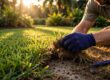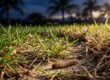
Two-lined spittlebug damage can quickly turn a healthy, lush St. Augustine lawn into a collection of thinning, brown patches, especially after periods of warm weather and heavy rain. Because the two-lined spittlebug feeds on the grass crown, affected areas often fail to recover even with consistent watering, which makes it easy to mistake the issue for simple drought stress. Identifying two-lined spittlebug damage early is essential for preventing the total decline of your turf.
We typically find these pests hiding within a layer of white, frothy foam near the base of the grass blades. Once we confirm the presence of spittlebugs, we can tailor a treatment plan based on the overall condition of your lawn, the thatch level, your specific irrigation habits, and the current timing of the infestation.
Key Takeaways
- Two-lined spittlebug activity primarily impacts the base of St. Augustine grass, leading to circular thinning patches.
- The presence of a white spittle mass around the crown or thatch is the clearest sign of active nymphs.
- A soap flush test or coffee-can float test can help confirm a two-lined spittlebug infestation in your lawn.
- Heavy thatch, excess moisture, and dense growth create ideal conditions for these pests to thrive.
- Treatment for two-lined spittlebug damage works best when we combine lawn care improvements with a turf-labeled insecticide when necessary.
What Two-Lined Spittlebug Damage Looks Like
Two-lined spittlebugs, known scientifically as Prosapia bicincta, are small insects that commonly feed on warm-season turfgrasses. St. Augustine grass is one of their preferred hosts, especially when the lawn remains humid and the thick thatch layer provides an ideal environment for them to thrive.
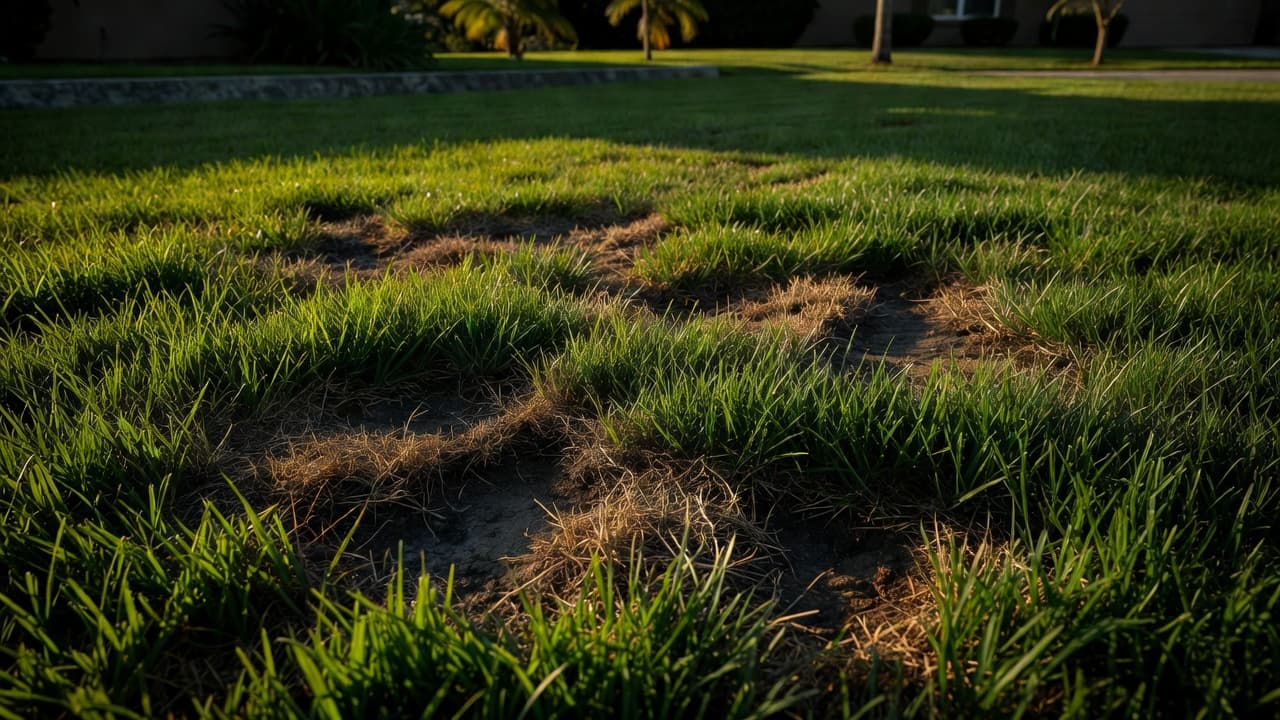
The first visible sign is often a round, thinning patch that measures about 6 to 12 inches across. These areas exhibit a distinct browning known as froghopper burn, where the grass looks yellow, straw-colored, or brown. Damage often starts along the edge of the patch, where healthy grass meets stressed grass, and then spreads inward.
When we pull back the blades, we may find weak lower stems, damaged crowns, and grass that breaks away easily. The nymphs use their piercing-sucking mouthparts to feed near the soil line, which causes the plant to die from the base upward. This is different from damage caused by a mower, fertilizer burn, or a simple lack of water.
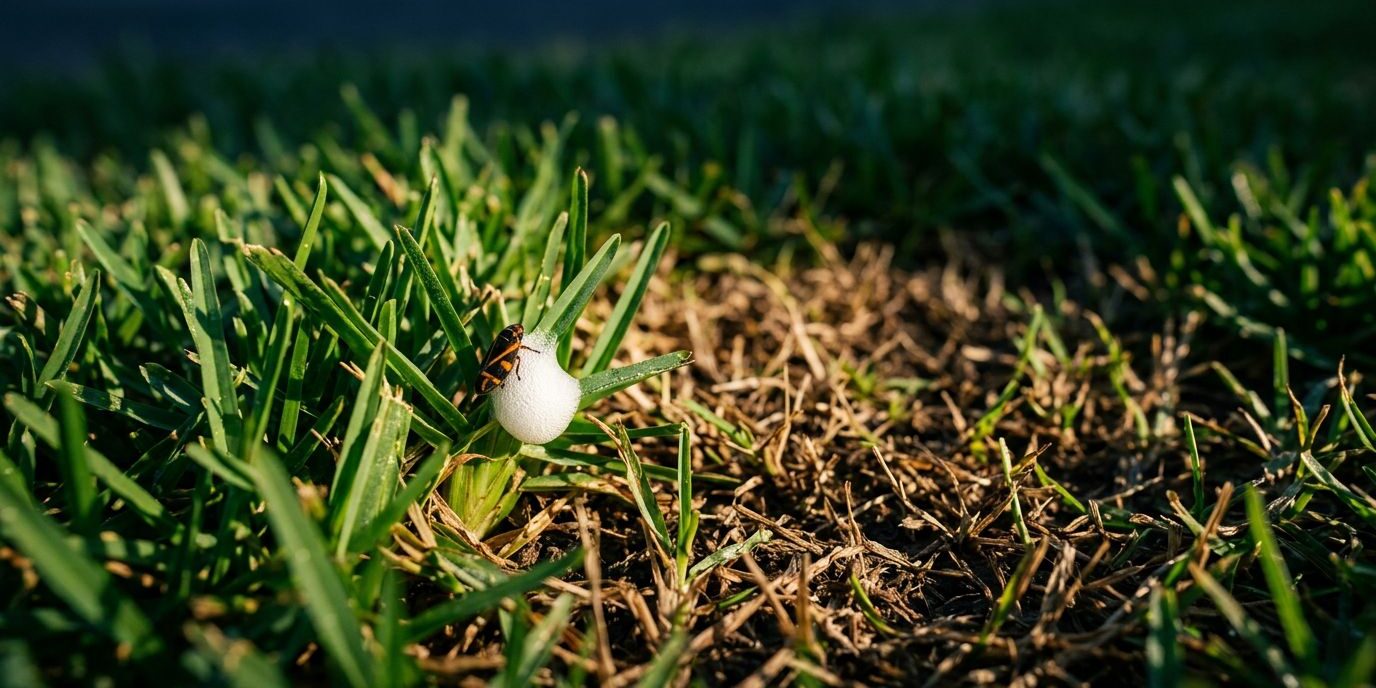
A white or yellowish spittle mass is another strong clue. The nymphs produce this sticky material as they feed to protect themselves from drying out and from some natural threats. We may see it on the lower blades, around the crown, or hidden within the thatch.
Homeowners sometimes notice this substance on their shoes after walking through an affected area. Adults are darker and more mobile than the immature stages, and they may jump or fly when disturbed. A turf-focused description of spittlebug lawn symptoms can help compare what we see in the yard with typical signs.
Not every brown patch is caused by spittlebugs. Chinch bugs, gray leaf spot, take-all root rot, poor drainage, and irrigation problems can create similar symptoms. Correct identification matters because each problem needs a different response. Hunting billbugs cause similar thinning patches in St. Augustine grass, so check for billbug damage before you treat.
How We Confirm Spittlebugs in the Lawn
The foam is useful, but we do not rely on one sign alone. We inspect the border of the damaged area, check the thatch layer, and look for living nymphs or adults. An active spittle mass with living two-lined spittlebug specimens points to a current infestation, while old, dry foam may remain after the insects have moved on.
A soap flush is a practical inspection method for homeowners. Mix about 2 tablespoons of dish detergent with 1 gallon of water, then apply the solution to a small area where the turfgrass is thinning. Wait three to five minutes and watch the surface. You may see two-lined spittlebug nymphs rise out of the grass during this process.
We recommend testing a small section first. Soap can stress turfgrass when applied heavily or repeatedly, especially during hot weather. The test is for inspection, not routine lawn treatment.
A coffee-can float test offers another way to check the edge of a damaged patch. Remove both ends of a metal can, press it several inches into the soil, and fill it halfway with water. If nymphs or adults are present in the enclosed turf, they may float or cling to the sides within several minutes.
Mississippi State University Extension describes a similar water-based lawn insect test. We should inspect more than one location because these pests may be concentrated in only a few sections of the lawn.
If we find foam but no living insects, we check nearby areas before choosing treatment. We also look at the lawn thatch depth and drainage. A correct diagnosis prevents unnecessary insecticide use and helps us address the conditions that allowed the problem to build.
Why St. Augustine Grass Is Vulnerable in Southwest Florida
Southwest Florida provides the ideal environment for the two-lined spittlebug. Warm temperatures, high humidity, and frequent summer rainfall maintain moisture in the lower turf canopy. While centipedegrass, bermudagrass, and various pasture grasses can also host these insects, dense St. Augustine runners and a heavy thatch layer provide the perfect protected habitat for nymphs to feed.
Heavy rain often triggers a sudden increase in activity. We recommend close scouting after wet spring and summer weather, with extra attention during July when infestations become more apparent. A lawn can appear healthy at the start of the season and show damage later as the population of adults grows.
Overwatering significantly adds to the problem. Irrigation that runs too often keeps the soil surface and thatch layer damp longer than necessary. Standing water, compacted soil, and poor drainage create additional stress for the grass, although these conditions alone do not confirm that the two-lined spittlebug is present.
Exterior lighting may help reveal insect activity. Adults are attracted to lights at night, so homeowners often notice them around illuminated areas near the lawn. This observation can support a diagnosis, but it is not enough by itself to confirm turf damage.
Managing organic debris is one of the most important aspects of prevention. When dead stems and runners build into a thick mat, the material shelters insects close to the soil. If the thatch layer is more than about one-half inch thick, we may need to perform dethatching during periods of active grass growth. Because dethatching at the wrong time can injure St. Augustine, proper timing and technique are essential.
Finally, overwintering eggs may survive in plant debris between seasons. Removing leaf litter, fallen twigs, and dense weeds around the lawn can reduce hiding and egg-laying sites. While these steps will not eliminate an established infestation by themselves, they are vital components of a stronger prevention plan.
Treating Two-Lined Spittlebug Damage
Small infestations may respond to basic lawn corrections. We can start by reducing unnecessary irrigation, improving drainage, and removing debris near affected areas. A firm spray from a garden hose can dislodge the foamy mass and exposed nymphs, although it will not reach every insect hidden deep inside the thatch.
Mowing also needs attention. We should avoid letting the lawn become excessively tall and dense, but we should not scalp stressed St. Augustine grass. Removing clippings before treatment helps expose insects and prevents additional organic material from collecting in the turf.
When thatch is excessive, dethatching can remove an important shelter. We may follow that work with a light sand or soil topdressing, depending on the lawn and drainage conditions. These changes help reduce future harborage for the two-lined spittlebug, but the grass still needs time to recover from crown damage.
If insect numbers are high and cultural steps are not enough, we may recommend a targeted insecticide application. Active ingredients often found in turf products include:
- Bifenthrin
- Gamma-cyhalothrin
- Permethrin
- Acephate
- Certain products combining imidacloprid and cyfluthrin
The product label controls how we use any treatment. It specifies the approved turfgrass, application rate, protective equipment, watering instructions, and re-entry interval. We do not apply a product to St. Augustine unless the label specifically includes that use.
Application timing also affects results. Because we need to account for the two-lined spittlebug life cycle, we must time treatments to reach various nymphal instars before they mature into adults. Late afternoon or early evening treatment may improve contact with active insects, as adults are often more mobile during these cooler hours. We typically mow and remove clippings before treatment, then follow the label’s watering directions so the material reaches insects in the thatch without creating runoff.
Some treatments target nymphs more effectively, while others work better against adults. Repeated use of the same insecticide class can increase resistance concerns. We prefer an integrated pest management plan that combines monitoring, lawn care, and carefully selected treatments instead of relying on one product.
A professional spittlebug control guide also recommends addressing the life cycle after an outbreak, including properly timed horticultural oil applications where appropriate. These pests may congregate on hollies or other ornamental plants, so we must be vigilant across the entire landscape. Horticultural oil is not a substitute for identifying the pest, and it must be used according to its label and weather restrictions.
Children and pets should stay off treated turf until the product’s re-entry interval has passed. We also protect nearby pollinators, ornamental plants, water sources, and beneficial insects by applying only where treatment is needed.
When Professional Lawn Service Helps
Professional help makes sense when patches continue to spread, foam returns after washing, or the lawn has several possible causes of decline. We can inspect the grass crown, thatch, irrigation pattern, and surrounding landscape instead of treating every brown area the same way. Because the two-lined spittlebug is an invasive species, professional oversight is often necessary to manage outbreaks before they overwhelm your lawn.
Our process starts with scouting. We look for active nymphs, inspect for developing nymphs within the thatch, and identify adult two-lined spittlebug activity. We also check whether disease, chinch bugs, drainage, or mowing stress may be contributing to the decline of your turfgrass.
Treatment is only one part of recovery. We may recommend irrigation adjustments, thatch correction, debris removal, or follow-up monitoring. If the crowns are badly damaged, the turfgrass may need time to fill back in through healthy runners. New treatment will not restore dead tissue overnight.
A recurring lawn plan can help us monitor high-risk areas during the wet season. Regular service gives us a better chance to find early activity before small thinning patches become broad sections of damaged turf. It also keeps fertilization, weed control, and insect monitoring working together to protect your landscape from recurring infestations.
Frequently Asked Questions
How can I distinguish between spittlebug damage and drought stress?
While both conditions lead to brown, thinning grass, spittlebug damage is localized in patches and often stems from crown-level feeding. You can confirm an infestation by checking for the telltale white, frothy foam near the soil line, which is not present in lawns suffering from simple water deficiency.
Can I just use soapy water to kill all the spittlebugs in my lawn?
A soap flush is primarily used for identifying the presence of nymphs, not as a complete treatment solution. While the solution forces insects to the surface, it is not a long-term insecticide and should not be used as a routine method to manage an entire infestation.
Is it necessary to use chemical insecticides to control two-lined spittlebugs?
Not every infestation requires chemicals, especially if you catch the damage early and address cultural issues like excess thatch or improper irrigation. If damage is extensive and cultural corrections fail to curb the population, a targeted, turf-labeled insecticide may be necessary to protect the lawn from further decline.
Why does my St. Augustine grass continue to decline after I remove the foam?
Removing the spittle mass only eliminates the immediate protection for the nymphs and does not address the underlying crown damage. Once the plant’s crown has been weakened or destroyed by feeding, the turf needs time and proper care, such as reduced stress and adequate recovery time, to produce new runners and fill in the damaged patches.
Conclusion
Two-lined spittlebug damage in St. Augustine grass often begins below the blades, where nymphs feed near the crown. Brown circular patches, thinning turf, and the presence of a sticky spittle mass are clear indicators that you should inspect the lawn before adjusting your watering schedule or applying a treatment.
We achieve the best results when we properly confirm the presence of Prosapia bicincta, reduce excess moisture and thatch buildup, and apply turf-labeled products only when two-lined spittlebug populations reach damaging levels. With consistent monitoring and timely care, we can successfully protect the health of your warm-season turfgrasses throughout the duration of the Southwest Florida wet season.