Rhodesgrass mealybugs can cause yellowing, thinning, and declining growth in Florida turf, but brown grass alone doesn’t confirm an infestation. Effective control starts with correct identification, followed by lawn-care adjustments and targeted treatment when active feeding threatens healthy grass.
Several mealybug species affect grasses, and recent pasture outbreaks have created confusion about their names and treatments. We recommend starting with the insects themselves before changing irrigation, adding fertilizer, or spraying your lawn.
Key Takeaways
- Inspect grass nodes and leaf sheaths for waxy insects, rather than diagnosing yellow patches by appearance alone.
- Protect beneficial insects and correct irrigation, mowing, and thatch problems before relying on pesticides.
- Texas pasture insecticide recommendations don’t authorize the same treatments on Florida residential lawns.
Identifying Rhodesgrass Mealybugs and Similar Species
Rhodesgrass Mealybugs in Warm-Season Turf
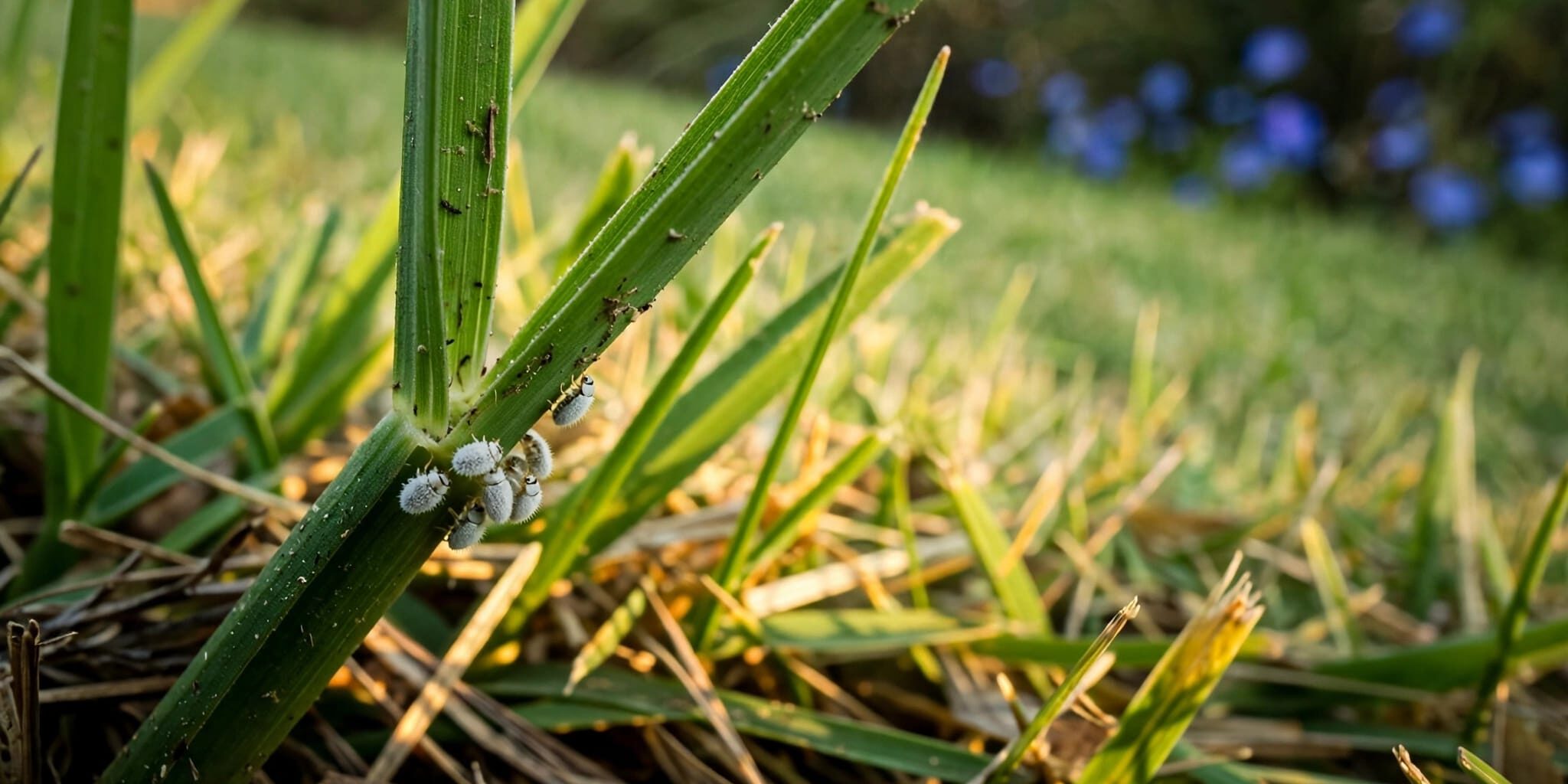
The Rhodesgrass mealybug, Antonina graminis, is an invasive, sap-sucking insect native to Asia. University of Georgia research documents its ability to infest more than 100 grass species, including warm-season turf and pasture grasses.
Bermudagrass and St. Augustinegrass are important homeowner hosts. Colonies often hide beneath leaf sheaths near grass nodes, where plant tissue makes them difficult to see.
Tuttle mealybugs are another concern, particularly in zoysiagrass. Host grass can guide inspection, but it isn’t enough to confirm the species.
Pasture Mealybugs Are Different Pests
USDA-APHIS first confirmed Heliococcus summervillei in September 2025 as the pasture mealybug associated with pasture dieback in Texas pastures and hayfields. Identification showed that the reported damage wasn’t caused by Rhodesgrass mealybugs.
Later work recognized Heliococcus novovillei as a separate species. Texas A&M AgriLife considers it probably more prevalent than H. summervillei in Texas. The two pasture mealybug species can’t be distinguished in the field.
Pasture mealybug adult females measure about 2 to 5 millimeters and have a waxy coating. Young nymphs, often smaller than 1 millimeter, are the main damaging stage. These pests are also a documented concern in Florida, so unexplained colonies deserve professional identification.
Recognizing Mealybug Damage Before It Spreads
Yellowing, Thinning, and Sticky Residue
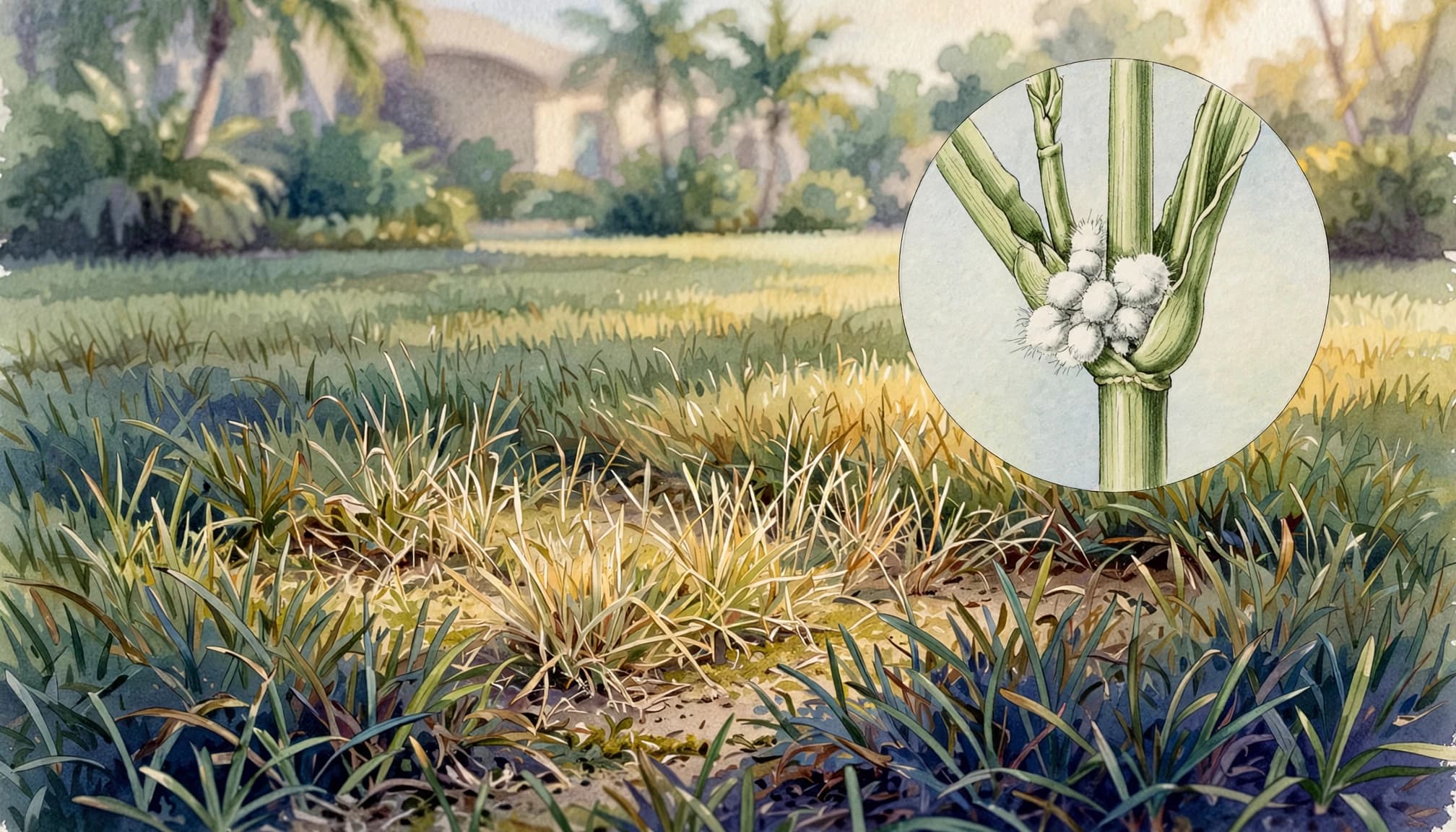
Mealybug feeding removes plant sap and weakens growth. Affected turf may become pale, thin, or slow to recover after mowing.
Mealybugs also produce honeydew, a sticky material that supports black sooty mold. Heavy mold coverage can reduce light reaching leaves and interfere with photosynthesis.
However, aphids and whiteflies also produce honeydew. Sticky grass or black residue supports an inspection, but neither proves that mealybugs are responsible.
Separating Feeding Damage From Lawn Stress
Pasture mealybug injury often begins on older leaves, with discoloration starting at the tip and moving down the blade. Yellowing or purpling can progress into patchy dieback.
Drought and nutrient problems can create similar symptoms. Disease and other turf insects can also overlap with mealybug injury.
In affected Florida warm-season turf, inspect the green-to-brown boundary, around nodes, and beneath leaf sheaths. Crawlers, the mobile young stages, may be easier to spot as they disperse from colonies, but their presence alone doesn’t confirm the species. Compare affected areas with nearby healthy grass and check soil moisture and sprinkler coverage. There is no single reliable statewide calendar for inspections, so monitor turf when symptoms emerge.
Our guide to scouting Southwest Florida lawn pests explains why blades, crowns, roots, and damage patterns all matter.
Supporting Turf Recovery With Better Lawn Care
Correct Watering and Mowing Problems
Healthy turf tolerates feeding better than grass already weakened by poor maintenance. Extra irrigation won’t remove an infestation and can introduce additional disease problems.
Water according to turf needs, rainfall, and soil conditions. Correct broken sprinkler heads, uneven coverage, and persistent wet areas instead of extending every irrigation cycle.
Maintain the recommended mowing height for your grass species. Avoid scalping damaged turf because removing too much leaf tissue slows recovery. Pasture recommendations to cut down tall forage aren’t instructions to mow a residential lawn unusually short.
Manage Thatch and Fertilizer Carefully
Excessive thatch can shelter insects and interfere with treatment reaching its target. Thatch management should match the grass species and lawn condition, so don’t automatically dethatch and aerate weakened turf.
Yellow grass also doesn’t automatically need nitrogen. We recommend evaluating moisture, roots, insect activity, and fertilizer history before feeding a declining lawn.
Excess fertilizer can increase pest pressure and create unnecessary growth without resolving the original problem. Balanced care supports recovery, but it doesn’t replace control when a confirmed infestation continues damaging grass.
Choosing Mealybug Treatments for Florida Lawns
Why Contact Sprays Often Disappoint
Contact insecticides are generally poor choices for established lawn mealybug colonies. Their waxy coating reduces exposure, while leaf sheaths protect insects from spray coverage.
Repeated broad-spectrum applications can also kill natural enemies without reaching enough mealybugs. We recommend avoiding routine treatments with pyrethroids, carbamates, or organophosphates for this problem.
Insecticidal soap and horticultural oils require direct contact and suitable application conditions. They’re not universal lawn treatments, and homemade mixtures can injure turf. A product intended for houseplants doesn’t automatically belong on St. Augustinegrass.
When Systemic Treatment May Help
Systemic insecticides move into plant tissue and can reach insects while they feed. Young nymphs may be more susceptible before populations become heavily protected, but lawn pest treatment timing doesn’t guarantee control.
Imidacloprid and dinotefuran occur in turf insect-control products, but an active ingredient’s name doesn’t authorize an application. Every product must be labeled for the diagnosed pest and Florida turf site.
UF/IFAS turf mealybug guidance supports matching management to the species involved. Follow the product label for application rate, personal protective equipment (PPE), irrigation, environmental precautions, and re-entry restrictions.
A Texas pasture exemption doesn’t authorize treatment of a Florida lawn, even when the active ingredient is the same.
Protecting Natural Enemies Without Expecting Complete Control
Biological control has a history with Rhodesgrass mealybugs. Historically, parasitic wasps such as Neodusmetia sangwani helped suppress the pest in grass systems.
The mealybug destroyer beetle, Cryptolaemus montrouzieri, is also used against mealybugs in gardens. Its garden use doesn’t establish that releasing beetles will reliably control concealed turf colonies.
Natural enemies can reduce populations, but their presence doesn’t guarantee that damaged grass will recover without additional action. Dense colonies and continuing decline still require assessment.
Our integrated pest management approach combines inspection, maintenance corrections, biological protection, and targeted chemical treatment when justified. The goal is to keep populations below damaging levels, rather than eliminate every insect.
This approach also reduces unnecessary pesticide exposure around your home. Broad-spectrum spraying can remove helpful insects and make long-term management harder.
Understanding Texas Pasture Control Recommendations
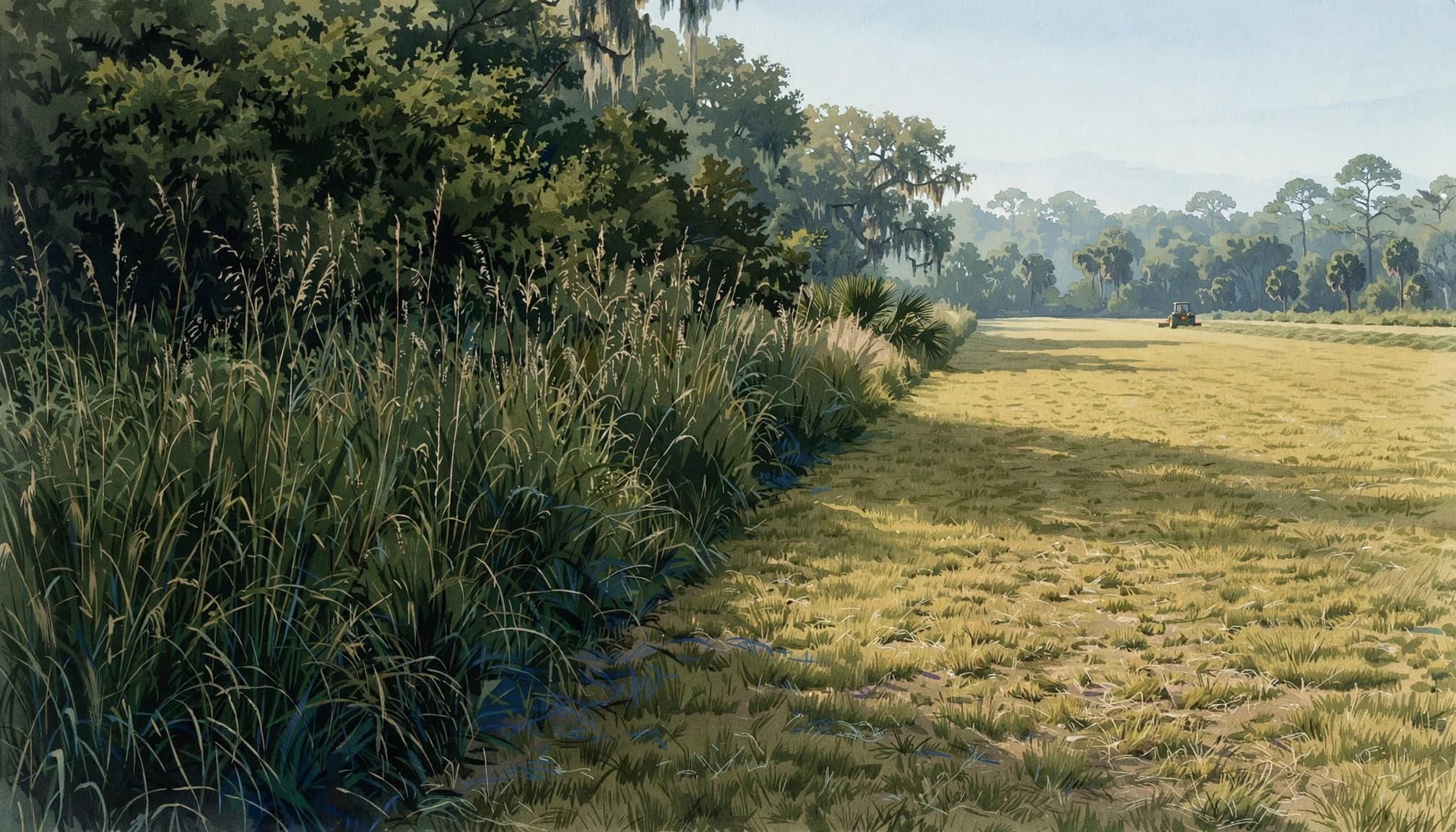
Texas pasture guidance addresses dense forage and hay production, not residential turf. Texas AgriLife’s Texas A&M AgriLife’s pasture recommendations cover pasture mealybugs, which shelter in tall, thick canopies that also limit treatment coverage.
The first recommended step is biomass reduction through cutting and shredding, bale removal, or managed heavy grazing. Grass should then regrow to about 6 to 8 inches before insecticide application because the recommended products need green leaf tissue. These steps are for pasture vegetation management, not residential lawn care.
The Texas pasture guidance distinguishes these treatment options:
| Product | Texas pasture use | Restrictions and expected result |
|---|---|---|
| Centric 40WG | Emergency use for specified pasture conditions | Use is limited to approved conditions |
| Sefina Inscalis | Suppression | High populations may remain inadequately controlled |
The Centric 40WG emergency authorization is limited to its approved pasture site and conditions. It isn’t a permanent, nationwide lawn recommendation and doesn’t authorize use on Florida residential lawns.
Admire Pro, Sivanto Prime, Assail 70WP, and Transform showed activity in research, but they aren’t labeled pasture recommendations in that guidance. Research results don’t authorize off-label application.
Besiege, Dimilin, Carbaryl, and Lannate were ineffective in the cited pasture trials. Broad-spectrum products can also damage natural-enemy populations, so don’t select a treatment simply because it’s available.
For homeowners, the practical distinction is clear: pasture rates aren’t lawn rates. Species, application site, formulation, and authorization must match before treatment.
Frequently Asked Questions
How Quickly Do Rhodesgrass Mealybugs Reproduce?
Females reproduce without mating, which allows colonies to expand without males. Biological references describe about 300 eggs over a female’s lifetime, with some females producing more than 600.
That lifetime figure shouldn’t be treated as a fixed count per egg sac. Likewise, the 60-to-70-day lifespan quoted in some lawn guidance isn’t a dependable treatment schedule. We recommend timing control to observed nymph activity and the selected product.
Is Dish Soap or Neem Oil Safe on Grass?
Household dish detergent isn’t a substitute for a labeled insecticidal soap. It can damage grass, especially under stressful weather conditions.
Neem and horticultural oil products also have plant, temperature, and application restrictions. Direct spraying can affect beneficial insects. We don’t recommend a homemade soap or oil recipe for treating an entire lawn.
Will Brown Grass Turn Green After Treatment?
Stopping insect feeding doesn’t restore dead tissue. Surviving crowns, runners, and roots determine whether damaged turf can fill back in.
Monitor new growth and continuing insect activity rather than expecting brown blades to recover. Severely damaged areas may need repair after the cause is controlled and growing conditions improve.
Protecting Your Lawn Starts With the Right Diagnosis
Rhodesgrass mealybugs require a different response than drought, fertilizer deficiency, or a newly detected pasture pest. Finding the insect and identifying its feeding location protects your lawn from unnecessary treatment.
We recommend combining accurate identification with appropriate mowing, irrigation, and targeted control. If yellowing continues or colonies appear beneath grass sheaths, a professional inspection can identify the cause and establish a practical recovery plan.