The best treatment can fail when it reaches the lawn at the wrong time. Florida lawn pest treatment timing depends on the confirmed pest location, turf condition, product type, irrigation, rainfall, wind, and label directions, not a universal hour.
For homeowners in Fort Myers, Naples, Bonita Springs, and Lehigh Acres, the best approach considers Southwest Florida’s weather conditions and local turfgrass conditions. Healthy-looking turfgrass can still have insects feeding in the thatch, leaf blades, or root zone.
Separate the best time to inspect from the best time to apply. Afternoon scouting may reveal active chinch bugs, while some applications are safer after morning dew dries or during a calm evening window. Granular and liquid products have different requirements, so follow the label for the product you’re using.
Postpone treatment after heavy rain, when sandy soil is saturated, or during active irrigation cycles. Runoff and extreme heat can also reduce control and move products away from the target area.
Identify the pest before treating to support integrated pest management. Drought stress, disease, and sprinkler problems can mimic insect damage, so confirm the cause before applying a lawn treatment.
Key Takeaways
- Confirm the pest and where it is feeding before choosing a treatment or application time.
- Scout at the pest’s most active time, but apply only when the label, turf condition, forecast, and wind support proper coverage.
- Avoid treatment during heavy rain, active irrigation, saturated soil, runoff conditions, extreme heat, or bee foraging.
- Match granular and liquid products to the target pest, turfgrass, irrigation requirements, and label directions.
- Regular monitoring, correct irrigation, healthy turf practices, spot treatments, and rotating labeled modes of action support integrated pest management.
Lawn Pest Treatment Timing Starts With the Pest
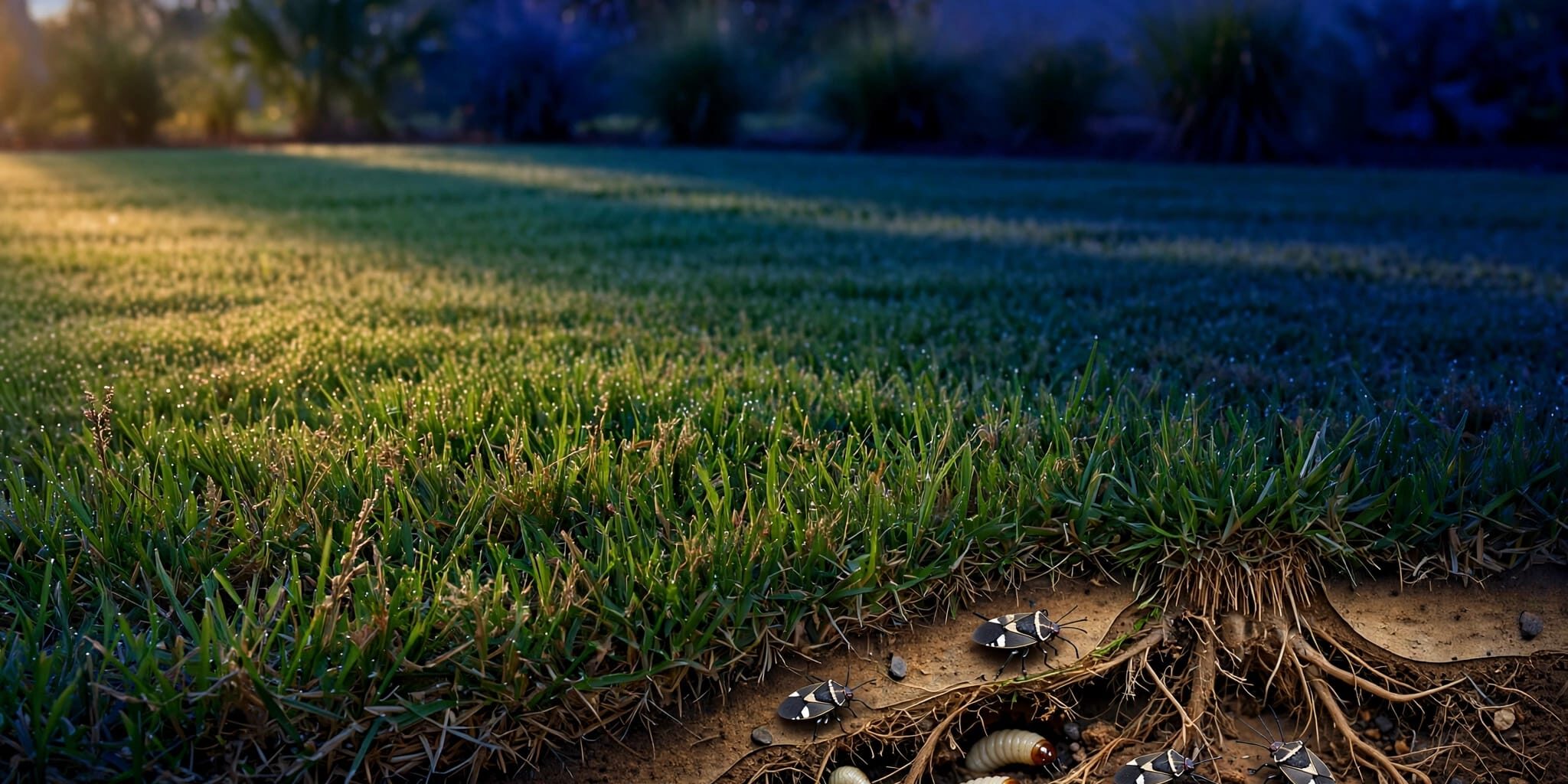
There isn’t one perfect hour for every Florida lawn insect. Chinch bugs, grubs, sod webworms, mole crickets, and armyworms feed in different areas and become active at different times.
The right application must reach the insect where it is feeding. A soil treatment for grubs won’t solve a caterpillar problem on leaf blades, and a surface spray may miss pests feeding around the roots.
Scout for chinch bugs During Warm, Sunny Conditions
Southern chinch bugs are often active on warm, sunny afternoons. They are a serious concern in St. Augustinegrass, especially near driveways, sidewalks, and other dry, full-sun areas.
Inspect the border between healthy green turf and a spreading brown patch. Sod webworms and armyworms are easier to find around dusk, after dark, or early the next morning because they feed at night. Caterpillars that remain on blades or in thatch are surface feeders. A product containing chlorantraniliprole may be labeled for some caterpillar targets, but always confirm the specific pest and turf on the label.
According to UF/IFAS chinch bug guidance, chinch bugs can remain active year-round in South Florida, even though their activity may be more noticeable during dry, hot weather.
Apply When Weather and Labels Allow
Application timing depends on the product, pest location, and weather conditions. Liquid contact products may be applied during a calm morning or evening period after dew has dried and heat and wind are suitable.
Granular products have different requirements. Some require dry turf before application, while others need irrigation afterward. Follow the label for irrigation timing, and shut off irrigation long enough to prevent the product from washing away.
Don’t apply before heavy rain, on saturated turf, or when runoff could carry product toward drains, ponds, or waterways. Avoid treatment while bees are foraging on flowering weeds or nearby plants, and follow all label precautions.
The best time to find chinch bugs may be mid-afternoon, but the best time to apply treatment is when the label, turf condition, and forecast support proper coverage.
Seasonal Windows for Florida Lawn Pests
Florida does not follow the same lawn pest schedule as northern states. In Southwest Florida, pest activity can continue through winter. Monitoring rainfall, soil temperature, turf species, and pest life cycles matters more than waiting for one fixed date.
Spring Is the Main Prevention Window
Early spring is the first useful inspection window for chinch bugs and recurring pests. White grubs prevention should follow local beetle activity, spring egg laying, and label directions rather than an automatic calendar date.
Young larvae are easier to manage than larger grubs. Some preventative treatments may contain active ingredients such as imidacloprid or chlorantraniliprole, but neither is appropriate for every turf or pest situation.
A preventative product must be labeled for your grass type and the target insect. Confirm whether it is approved for St. Augustinegrass, bermudagrass, or zoysiagrass. Follow directions carefully, and protect nearby water and pollinators.
Summer Calls for Faster Inspections
Hot, dry periods from late spring through summer are prime chinch bug conditions. Damage often starts as yellowing patches, then expands into irregular brown areas when turf is already stressed.
Sod webworms and fall armyworms can also become active during warm weather. These surface feeders often hide in thatch during the day and feed at night. Armyworms can remove leaf tissue quickly, so treatment should follow fresh feeding and confirmed caterpillar activity.
Sod webworm information from UF/IFAS is a helpful reference when different symptoms begin appearing across the yard.
Late Summer Requires Root-Zone Checks
White grubs feed below ground and can make turf wilt, yellow, or pull loose from the soil. Curative treatments are more useful when larvae are still small and active near the roots.
Lift a small section of sod about 2 inches deep and inspect around the roots. If grass pulls up easily, don’t assume grubs are the cause. Drought, root disease, poor irrigation coverage, and mole cricket damage can create similar symptoms.
How to Tell Pest Damage From Drought Stress
Brown patches do not automatically mean the lawn needs water. In Southwest Florida, chinch bugs, disease, poor irrigation coverage, and excess moisture can look similar at first.
Check the Green-to-Brown Border
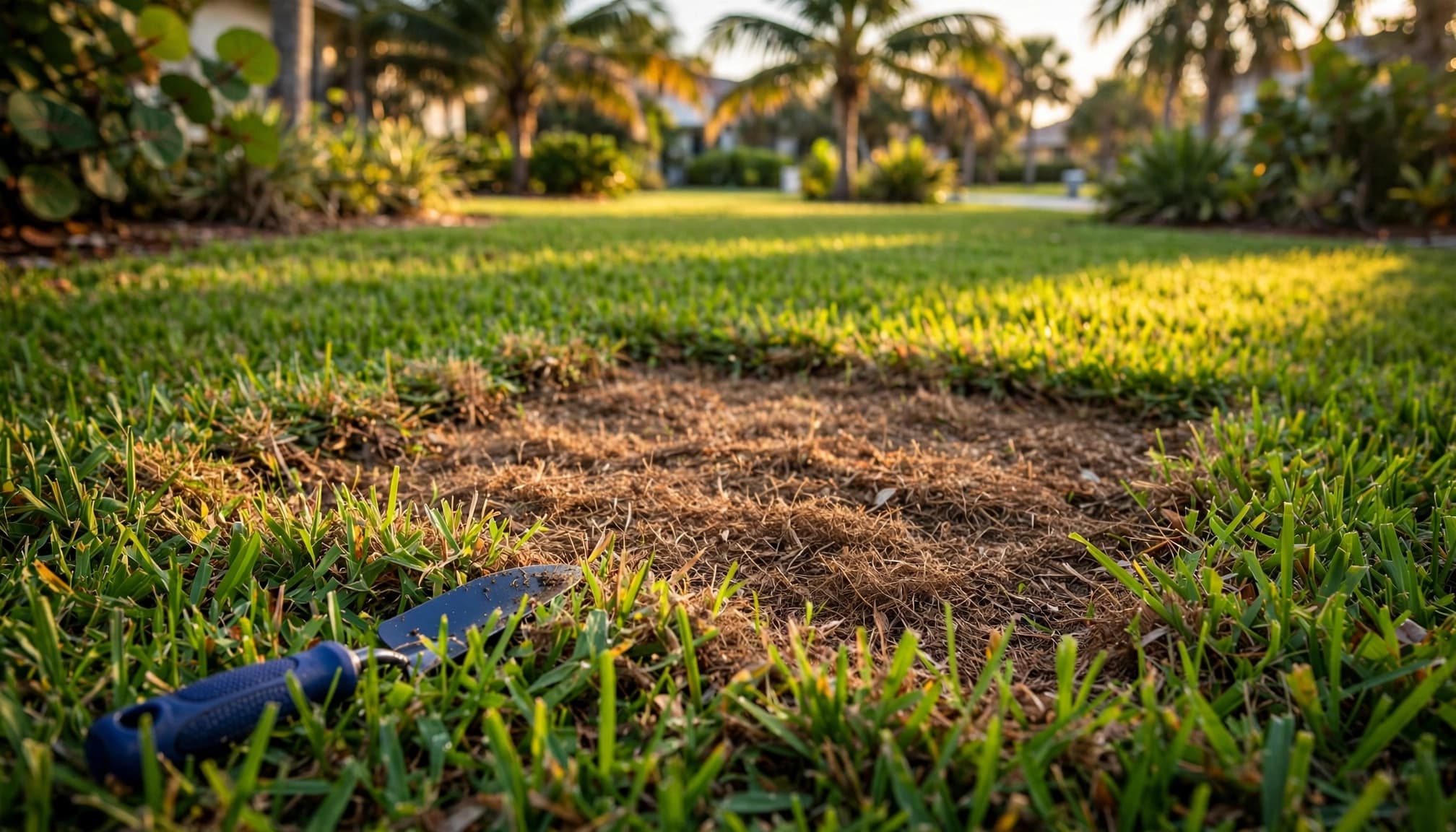
Chinch bug damage usually begins in a sunny, water-stressed section of St. Augustinegrass. The patch may turn yellow first, then brown as it expands outward.
Look closely at the transition line where green grass meets damaged turf. Chinch bugs are more likely to be active there than in fully brown grass. Drought stress often follows an irrigation pattern, such as a missed zone or dry strip beside pavement.
Check the affected area against the irrigation schedule, recent rainfall, and nearby standing water. Disease symptoms, including leaf spots or irregular discoloration, may point to a different cause. For comparison, review this Southwest Florida lawn disease management guidance before adding another treatment.
Use a Coffee-Can or Soap Flush Test
A soap flush test can bring hidden insects to the surface. For chinch bugs, press a bottomless coffee can about 2 inches into the turf at the edge of the damaged area. Fill it with water and watch for insects floating up over the next five minutes.
A second soap flush test can help locate surface feeders such as sod webworms, armyworms, and cutworms. Mix 1 to 2 tablespoons of liquid dish soap into 1 gallon of water, then pour it evenly across about 4 square feet of turf.
Repeat the test in a second area before making a treatment decision. One insect does not automatically justify a broadcast treatment. For a small, confirmed infestation, spot treatments may be appropriate when the product label permits them.
Match the Treatment to Where Pests Feed
The difference between systemic insecticides and contact insecticides matters because lawn pests don’t all feed in the same place. The active ingredients, formulation, target pest, application site, turfgrass, and label directions must all match.
| Product approach | Where it may fit | Important limits |
|---|---|---|
| Systemic insecticides | These move through the plant or soil zone only as directed. Some products containing imidacloprid may suit labeled preventative or root-zone uses. | Imidacloprid isn’t a universal answer. Target pest, timing, and label claims still control the decision. |
| Contact products | Some bifenthrin formulations work when an active insect contacts treated material. It can be a broad-spectrum solution only when the label and confirmed pest justify it. | It may fit surface feeders, but only when the label includes that pest and application method. |
| Selected caterpillar or root-zone products | Chlorantraniliprole may be labeled for selected caterpillar or root-zone targets. | A chlorantraniliprole formulation and its pest claims can differ by product. |
Granular insecticides and liquid insecticides are delivery methods, not guarantees of speed or effectiveness. Chinch bugs feed near the thatch and soil surface. Root feeders, including grubs, feed around roots, while sod webworms and armyworms feed on the blades.
Scout caterpillar surface feeders in the evening, when activity is often easier to confirm. Apply only during a calm, label-approved window. Don’t apply liquid products to wet turf or granules before required irrigation.
Never assume chlorantraniliprole is appropriate without checking the current label for the pest, turf, rate, and application site. The same caution applies to imidacloprid. Don’t treat blooming plants or active bee-foraging areas, and keep products away from drains, ponds, and waterways.
For recurring chinch bugs, avoid using the same chemical mode of action season after season. Rotating labeled modes of action, including products based on chlorantraniliprole when appropriate, is part of integrated pest management. Use imidacloprid only when its labeled timing and target fit the situation.
Watering Granular Lawn Insecticides Correctly
Watering is part of many granular insecticides treatment plans, but requirements vary by product, formulation, turf condition, and target location. Read the full label before application, not after the spreader is already loaded. Apply granules only when the turf is dry. Morning or evening may work, depending on weather conditions and label directions, while liquid products require their own label-approved timing.
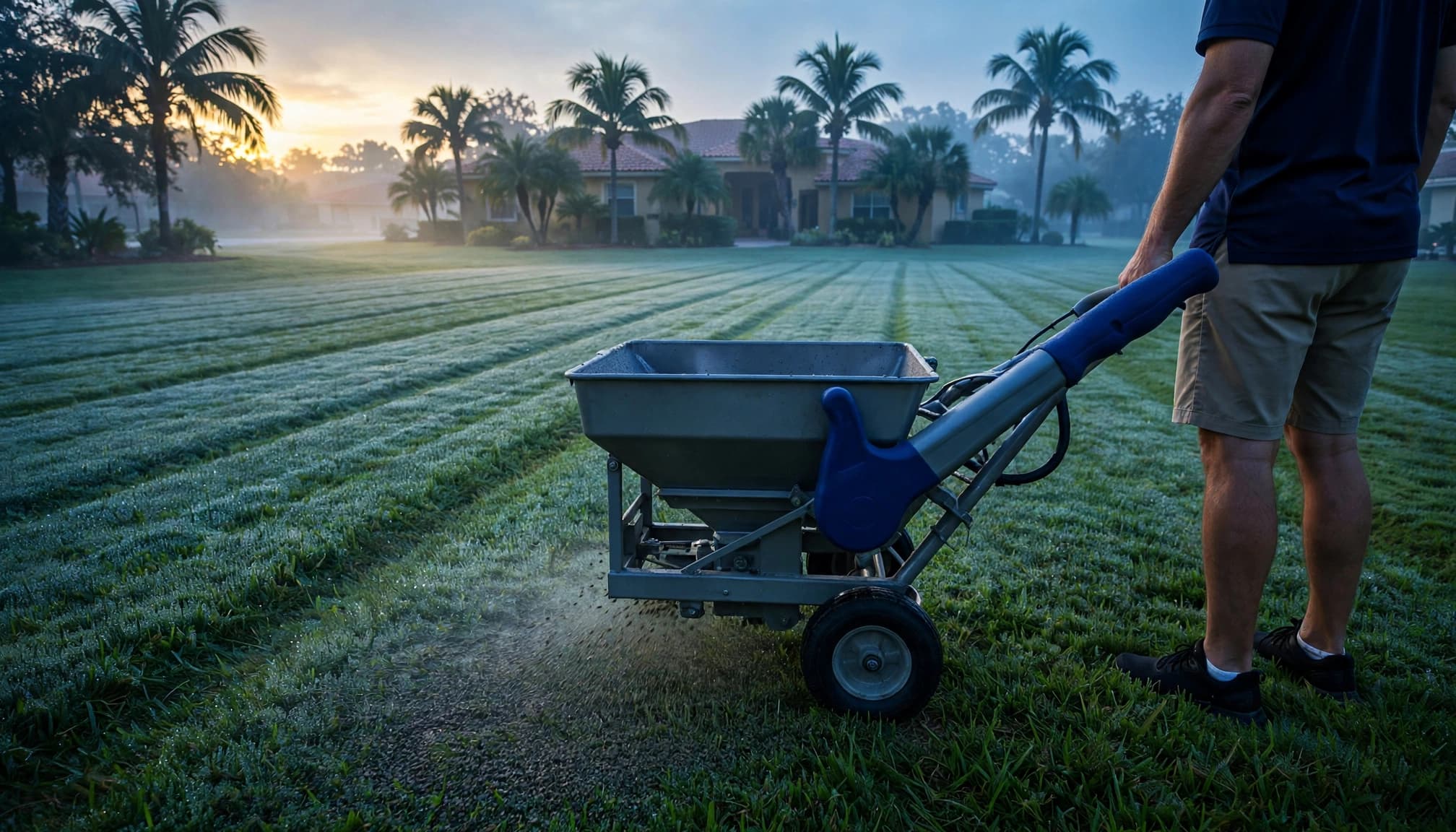
For white grubs and other root-zone pests, UF/IFAS guidance sometimes uses 1/4 to 1/2 inch of water as an example, not a universal rule. Products with active ingredients such as chlorantraniliprole or imidacloprid may require post-application irrigation according to the label. That moves the material through the thatch and into the area where grubs feed.
Some product labels allow up to 24 hours for rainfall or irrigation. The EPA label for ALLECTUS 0.18 G PLUS TURF directs irrigation within 24 hours if rain does not occur, while also warning against use on waterlogged turf or saturated soil. The same chlorantraniliprole or imidacloprid in another formulation may have different irrigation, re-entry, or site restrictions. Coordinate irrigation with forecast rain and sprinkler schedules, and don’t spread granules before a heavy storm.
Never water so heavily that product runs into the street or storm drain. Keep children and pets off treated turf for the full re-entry period stated on the label. Avoid treating flowering weeds and plants when pollinators are active.
Common Mistakes That Reduce Lawn Insect Control
Many treatment problems begin before the product ever touches the grass. A rushed application may miss the real pest while the lawn continues to decline.
Treating Symptoms Instead of Insects
Pre-emergent weed control prevents weeds, not turf insects. Extra fertilizer won’t control chinch bugs, grubs, or caterpillars either.
Confirm pest infestations before choosing a treatment. A localized problem may need a different response than drought stress, disease, or poor irrigation.
Inspect the grass blades, thatch, roots, and irrigation pattern first. A thinning area with tunnels or small mounds may indicate mole crickets. Short-clipped blades, webbing, and green pellets can point to sod webworms.
Ignoring Irrigation and Turf Stress
Overwatering can invite disease and weaken roots. Underwatering makes sunny St. Augustinegrass more vulnerable to chinch bug injury. Poorly placed sprinkler coverage can create dry patches that resemble active pest damage.
Mowing height, irrigation uniformity, drainage, fertilizer restraint, and root development all support turf health. Balanced care also improves recovery after feeding injury. Guidance on Southwest Florida lawn fertilization should account for local grass types, sandy soil, and seasonal conditions.
Broad applications can also affect flowering plants, pollinators, and aquatic areas through irrigation runoff. Use spot treatments when practical, and keep products away from water and blooming vegetation.
Expecting One Treatment to Stop Every Cycle
One confirmed, small infestation may respond to a single treatment. Still, eggs, larvae, and adults can overlap in Southwest Florida, and new insects can move in after an earlier application.
Repeatedly using the same active ingredient or mode of action, such as chlorantraniliprole or imidacloprid, can reduce control options. Always confirm that the label identifies the target pest, turf, rate, interval, and application site.
Monitor the treated area instead of assuming a brown patch will recover overnight. Treatment may stop feeding, but effective lawn insect control still depends on root health, water coverage, mowing, and weather.
Prevention Works Better With Regular Monitoring
Monthly lawn checks help catch changes before a pest population spreads. Walk the property the same way each month and compare sunny pavement edges, shaded or wet areas, irrigation gaps, and previous problem spots.
Look beneath the turf for thatch, weak roots, loose sod, tunnels, fresh mounds, and standing water. Check locations where surface-feeding pests appear after warm nights.
Focus on these signs:
- Expanding yellow or brown patches at the edge of healthy grass.
- Loose sod, weak roots, tunnels, fresh mounds, or unusual thatch activity.
- Chewed blades, webbing, green pellets, or sudden thinning after warm nights.
- Irrigation gaps, standing water, heavy thatch, and scalped grass.
Keep a brief record of the pest identification, affected turfgrass area, weather, and irrigation pattern. Before any repeat application, note the product label and mode of action. Records can include active ingredients such as chlorantraniliprole and imidacloprid, helping you rotate labeled modes of action correctly rather than repeating one product automatically.
Integrated pest management combines inspection, correct identification, lawn care, and targeted treatment when it is needed. Florida natural enemies and biopesticides guidance also outlines lower-impact pest management options that may fit certain situations.
Avoid spraying during wind, rain, bee foraging, or irrigation runoff. Professional pest control may be appropriate when the pest is unconfirmed, damage is spreading, the property borders ponds or drains, or label and pollinator precautions are difficult to manage.
A neutral Southwest Florida lawn pest checklist can help homeowners track local pests, treatment records, and warning signs that deserve a closer look.
Frequently Asked Questions
What is the best time of year for grub prevention?
Spring, usually April through June, is the common prevention period. Treatments are intended to reach young larvae after egg laying and hatching. Products containing chlorantraniliprole or imidacloprid require individual label checks for timing, turf approval, irrigation, re-entry, and target pests. Use extra caution near flowering plants, bees, ponds, and storm drains.
Should sod webworms and armyworms be treated at night?
These surface feeders may be easiest to find at night or early morning when fresh damage is visible. Scouting time doesn’t always determine application time. Morning treatment may suit some liquid products after dew dries, while evening timing can work for certain labeled caterpillar products. Granular products may require dry turf and post-treatment irrigation. Apply only during a calm, label-approved window.
When should professional pest control be considered?
Professional pest control is a good fit when the diagnosis is uncertain, damage is spreading, or label-compliant attempts have failed. Licensed help can also guide treatment near ponds, drains, and other sensitive waterways. Selective products and careful application are especially important in these areas.
A Better Timing Plan Protects Florida Turf
The best time of day to treat lawn pests in Florida is not a single hour on the clock. It is the point when you have confirmed the insect, selected a labeled treatment, and have weather conditions that allow the product to reach its target.
With steady inspections, proper irrigation, and lawn pest treatment timing that follows the pest’s life cycle, you can protect your lawn without unnecessary applications.