Accurate collection means sampling near fresh damage, recording what you find, and connecting insects with their feeding location. A brown patch alone doesn’t prove you need an insecticide.
We recommend comparing damaged and healthy turf before disturbing either area. Identification comes first, because harmless insects and beneficial predators also live in grass. Start with the lawn’s condition, then choose a sampling method that reaches the suspected pest.
Key Takeaways
- Sample the border between healthy and declining grass, rather than the center of a dead patch.
- Use a measured drench test for surface-feeding insects and lift sod to inspect for root-feeding grubs.
- Keep counts, sampling areas, and identification records together before deciding whether treatment is justified.
Start Where Fresh Damage Meets Healthy Grass
Rule Out Watering and Maintenance Problems
UC IPM’s lawn insect guidance explains that insects aren’t a common cause of residential lawn damage in California. Poor watering, sprinkler problems, unsuitable grass varieties, disease, and dog urine are more likely causes there.
That California finding isn’t a Florida pest forecast; treat it as a screening principle. Check irrigation coverage, soil moisture, and maintenance patterns before considering lawn pests. Our guide to identifying lawn pest damage explains why similar-looking patches can require different responses.
Compare the Damaged Edge With Healthy Turf
Inspect the transition between living and declining grass, then examine an unaffected area nearby. Compare blades, crowns, thatch, and roots.
Look for live lawn pests alongside fresh feeding evidence, rather than assuming every insect belongs to the problem. Morning inspections work for general scouting, while dusk can make active caterpillars easier to find.
We recommend checking several locations because lawn insects often concentrate in pockets. A single specimen, or one empty sample, doesn’t describe the entire yard.
Collecting Lawn Insects Without Losing Identification Clues
Use a White Tray and Clear Photos
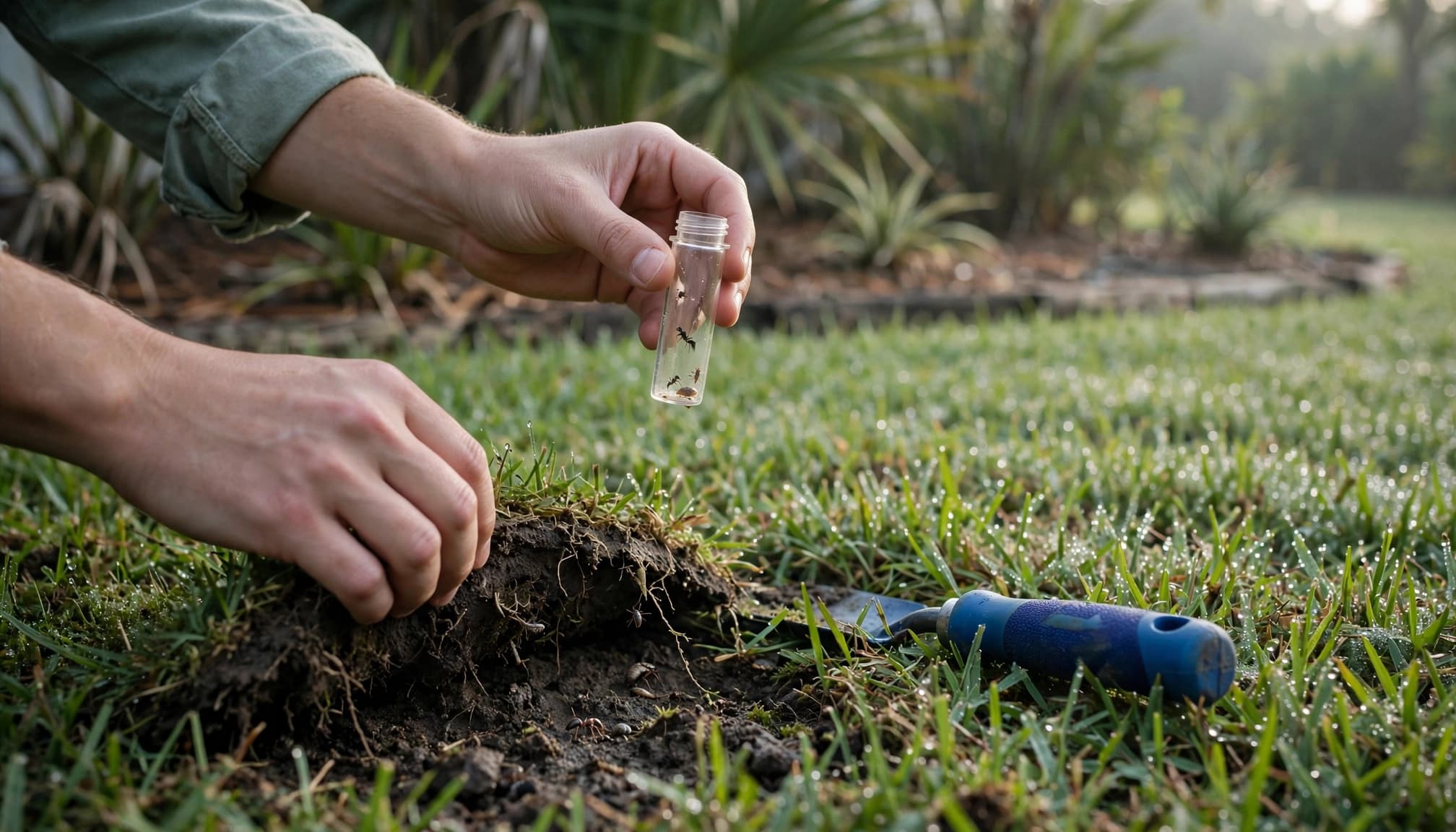
A white tray beneath gently brushed grass makes small insects easier to see. Photograph unfamiliar insects before disturbing them, then capture additional views if they remain visible.
Include a ruler beside the specimen for scale, plus a wider photograph showing the surrounding damage. Record whether you found an adult, nymph, or larva and whether it occupied blades, thatch, crowns, or soil.
Avoid crushing specimens during collection. Identification depends on visible body features, so a damaged insect may provide fewer useful clues than a sharp photograph.
Keep Each Sampling Location Separate
Label your notes by location, date, sampling method, and area. Include insect counts, recent rainfall or irrigation, and whether nearby grass shows fresh injury.
Keep location counts separate, even when you later calculate an average. Otherwise, a concentrated infestation can disappear inside a whole-yard total.
We also recommend photographing the same patch during follow-up inspections. This connects changing insect activity with actual turf recovery. Our guide to beneficial turf insects helps distinguish lawn helpers from insects that warrant closer investigation.
Use a Measured Drench Test for Surface Feeders
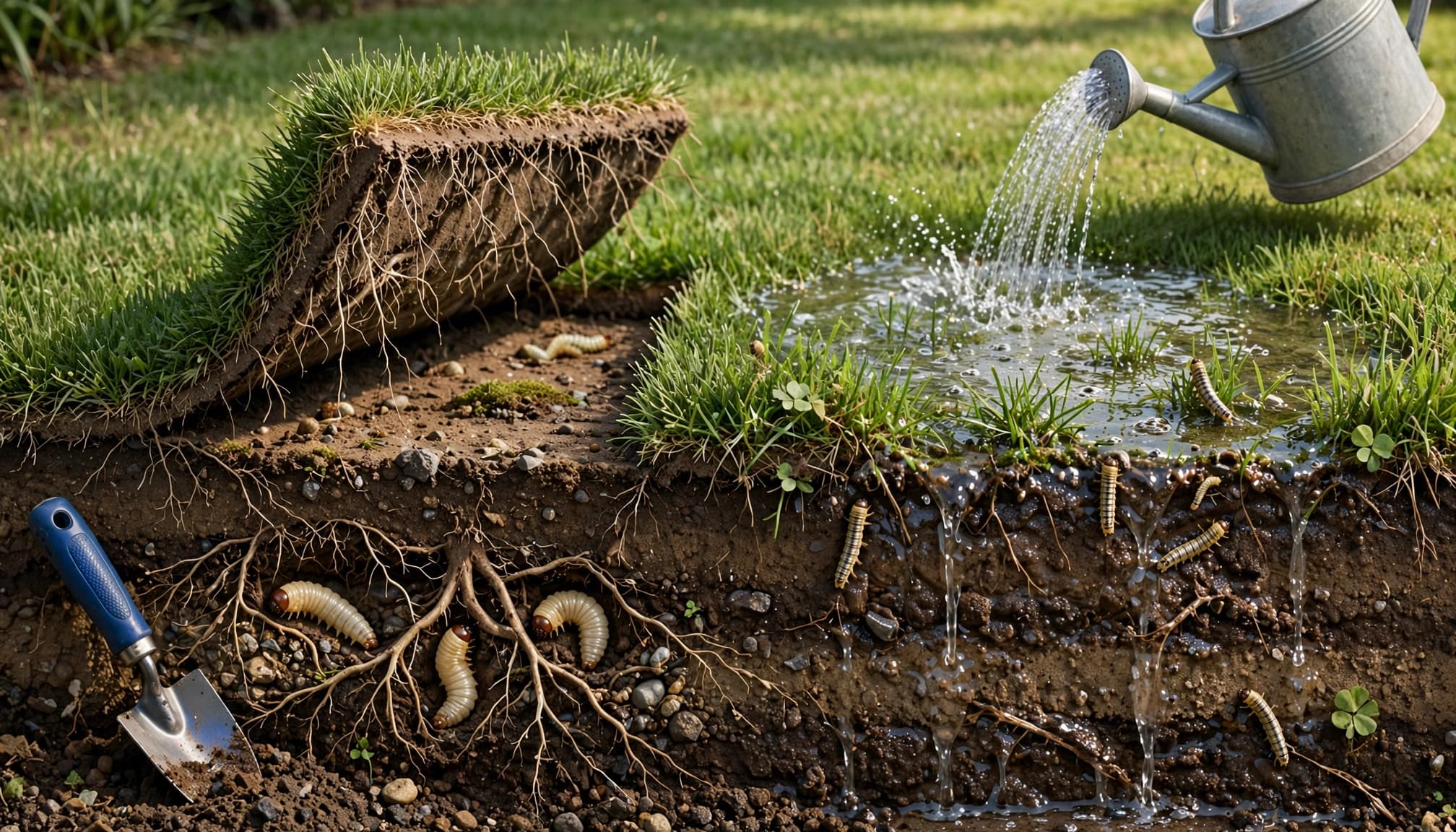
A drench test brings certain concealed insects to the surface. It can reveal surface-active caterpillars such as armyworms and cutworms, as well as chinch bugs, but it doesn’t replace digging for grubs.
Follow one complete method, such as UC IPM’s drench-test instructions, rather than combining different recipes and thresholds.
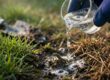
- Mark a 1-square-yard area near fresh damage. Mix 2 to 4 tablespoons of dishwashing liquid per gallon of water.
- Apply 2 gallons evenly across that square yard.
- Watch immediately and count insects surfacing over 10 minutes. Photograph or collect representative specimens, and record each insect type separately.
Test a small area first because detergent can injure grass. After recording the results, rinse the patch with clean water. Avoid repeated applications to the same spot, particularly during hot weather.
Tennessee guidance describes a separate sod webworms test: 2 teaspoons of liquid dishwashing detergent per gallon over 4 square feet. It pairs that method with a threshold of four to six or more worms.
A count from 4 square feet can’t be compared directly with a threshold for 1 square yard, which covers 9 square feet.
Lift Sod to Count Root-Feeding Grubs
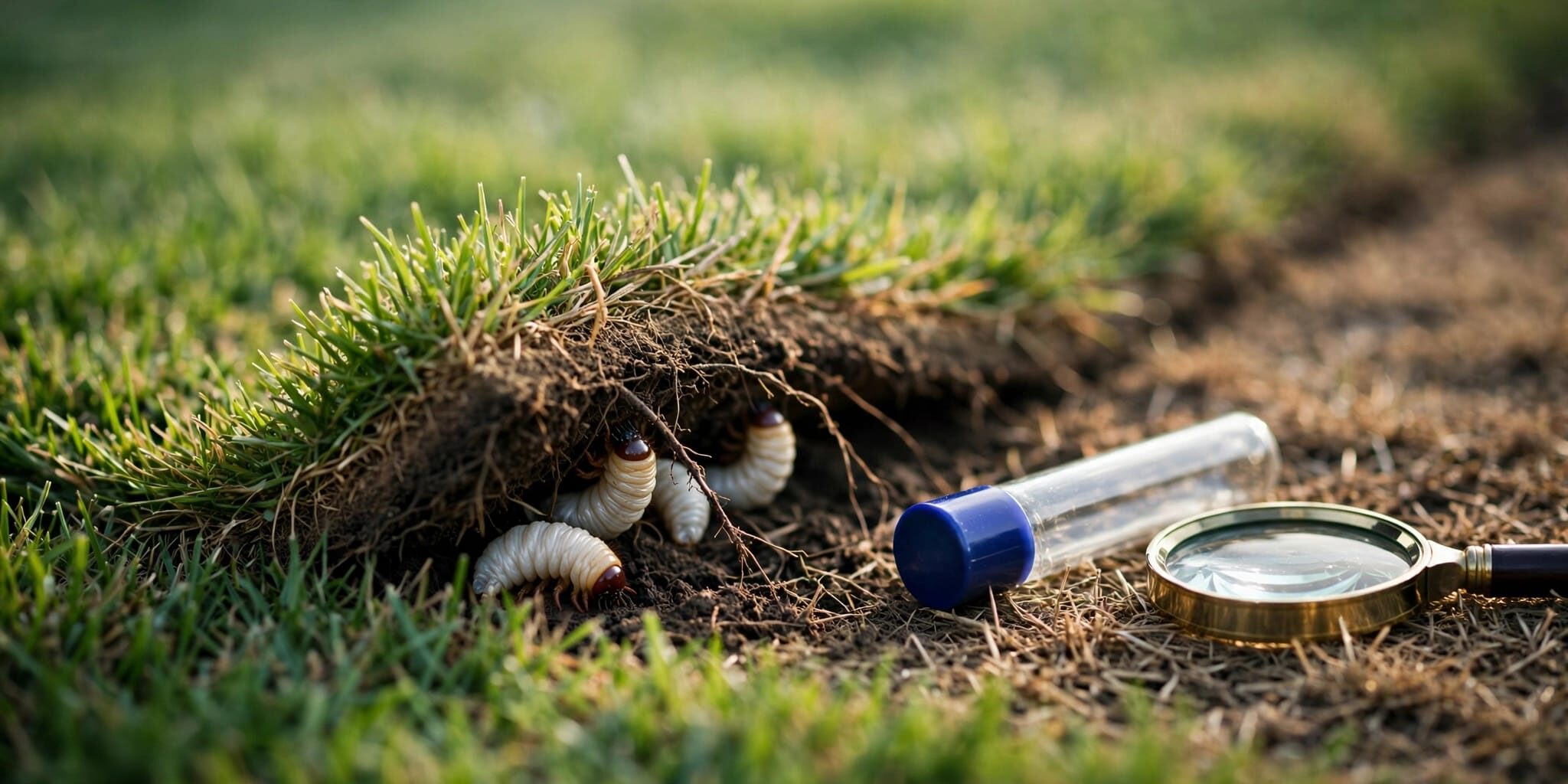
White grubs are found in the soil, while billbug larvae feed in turf crowns or stems. Check those areas too if billbugs are suspected, and inspect around roots for damage.
Grubs require a root-zone inspection because a surface flush can miss them. Tennessee’s sampling method starts with a 1-foot-square section of turf.
Cut three sides of that square, 2 to 3 inches deep, and fold the sod back. Examine the roots and exposed soil, count the grubs, then replace the turf and water it.
Repeat across several locations, including fresh damage and a healthy comparison area. Since each section covers one square foot, add the counts and divide by the number of sections to find the average per square foot.
Retain each location’s count alongside the average. A high count near a declining edge deserves attention even when other samples contain few grubs.
Our guide to white grub damage connects root inspections with lawn recovery and treatment timing.
Match Insect Counts With the Correct Threshold
Thresholds depend on the pest, sampling method, turf condition, and region. These published figures provide context, not automatic instructions to apply an insecticide. Identify billbugs separately and use a threshold based on their own sampling guidance.
| Pest and source | Sampling area | Published treatment guidance |
|---|---|---|
| Armyworms or cutworms, UC IPM | 1 square yard, UC drench | More than 5 |
| Lawn moths (larvae), UC IPM | 1 square yard, UC drench | More than 15 |
| Sod webworms, Tennessee guidance | 4 square feet, Tennessee drench | Four to six or more |
| White grubs, UC IPM | 1 square foot, root inspection | No treatment at 5 or fewer; separate guidance cites about 6 as a control level |
UC IPM’s grub inspection reference supports leaving low grub populations untreated. For white grubs, compare root-inspection counts only with guidance that uses the same sampling area and fits the region. The differing figures show why a single universal grub cutoff isn’t appropriate.
UC IPM’s armyworms and cutworms figures apply to a 1-square-yard drench area. The Tennessee sod webworms threshold uses a 4-square-foot test.
Life cycles also affect follow-up timing. GardenTech reports chinch bug eggs hatch in 20 to 30 days, and nymphs mature in four to six weeks. It describes June through September as the most visible damage period.
GardenTech also reports two to three annual generations for armyworms and sod webworms, and three to six cutworm cycles, depending on region. These broad patterns aren’t a fixed Southwest Florida calendar.
For local context, UF/IFAS Florida lawn guidance highlights southern chinch bugs as a major concern in St. Augustinegrass. We recommend letting active feeding and measured samples guide decisions.
Correct Turf Stress Before Adding Treatments
Thatch thicker than 1/2 inch encourages caterpillars and chinch bugs and can reduce insecticide effectiveness, according to UC IPM. Address excessive thatch as part of cultural control, along with mowing and irrigation. These practices reduce avoidable turf stress but don’t replace pest identification.
Keep mower blades sharp and remove no more than one-third of the grass height at once. Follow guidance for mowing height for your grass type, and correct irrigation gaps without leaving soil saturated. Also, avoid adding extra fertilizer simply to hide insect-related discoloration.
UC IPM lists general mowing ranges of 1 1/2 to 3 inches for cool-season lawns and 3/4 to 1 inch for warm-season lawns. Those broad ranges aren’t appropriate for every grass, particularly Florida St. Augustinegrass.
Similarly, UC IPM’s recommendation of 2 to 4 pounds of actual nitrogen per 1,000 square feet annually applies to most California lawns during active growth. We don’t transfer that rate directly to Southwest Florida lawns. Grass type, growing conditions, and local fertilizer restrictions determine appropriate care.
Choose Targeted Controls Before Broad-Spectrum Sprays
Start With Pest-Specific Biological Options
Bacillus thuringiensis kurstaki, or Bt kurstaki, targets susceptible caterpillars. It won’t control chinch bugs or root-feeding grubs. UC IPM recommends warm, dry evening applications because sunlight inactivates it, with another application after 7 to 10 days when label directions permit.
Bt can also harm butterfly caterpillars. Keep applications within the labeled site and target.
Azadirachtin comes from neem seeds and disrupts insect development, so affected caterpillars may take several days to die. Entomopathogenic nematodes require moist soil at least 60 degrees F. UC IPM recommends evening application and a second application about two weeks later. When the confirmed pest and life stage match, these targeted options can reduce reliance on an insecticide.
Protect Pollinators and Established Natural Enemies
“Natural” doesn’t mean selective. Pyrethrum and rotenone can kill beneficial insects, while broad-spectrum products can remove predators alongside pests.
Carbaryl became a restricted-use material in California on August 1, 2020, requiring a valid pesticide applicator’s license. It’s highly toxic to bees and other pollinators. That California restriction isn’t a Florida licensing rule.
We favor conserving established natural enemies over relying on purchased insect releases. When insecticide treatment is justified, match the label to the confirmed pest, turfgrass, and application site. Follow irrigation and re-entry directions, and avoid blooms, active bee foraging, and runoff.
Frequently Asked Questions
What Does an Empty Drench Test Mean?
An empty test doesn’t prove insects are absent. Repeat the same measured method along another fresh damage edge, or inspect around dusk. If roots appear damaged, examine the soil instead of increasing detergent strength.
Does Animal Digging Prove There Are Grubs?
Digging or bird activity alone doesn’t establish a grub problem. Inspect roots and count insects before treating. Animal activity may justify investigation, but it doesn’t identify the pest or show whether its population threatens the lawn.
Should Spittlebugs Always Be Treated?
We don’t recommend treatment based on their presence alone. Identify the insect, assess fresh injury, and correct turf stress before deciding whether control is necessary.
Build Treatment Decisions on Collected Evidence
Accurate identification starts with a measured sample, not a product choice. Keep the insect, feeding location, count, and lawn condition connected throughout the inspection.
If damage continues spreading or identification remains uncertain, our insect and disease management service can help separate pest activity from other lawn problems. Targeted care protects your grass while avoiding unnecessary treatment.