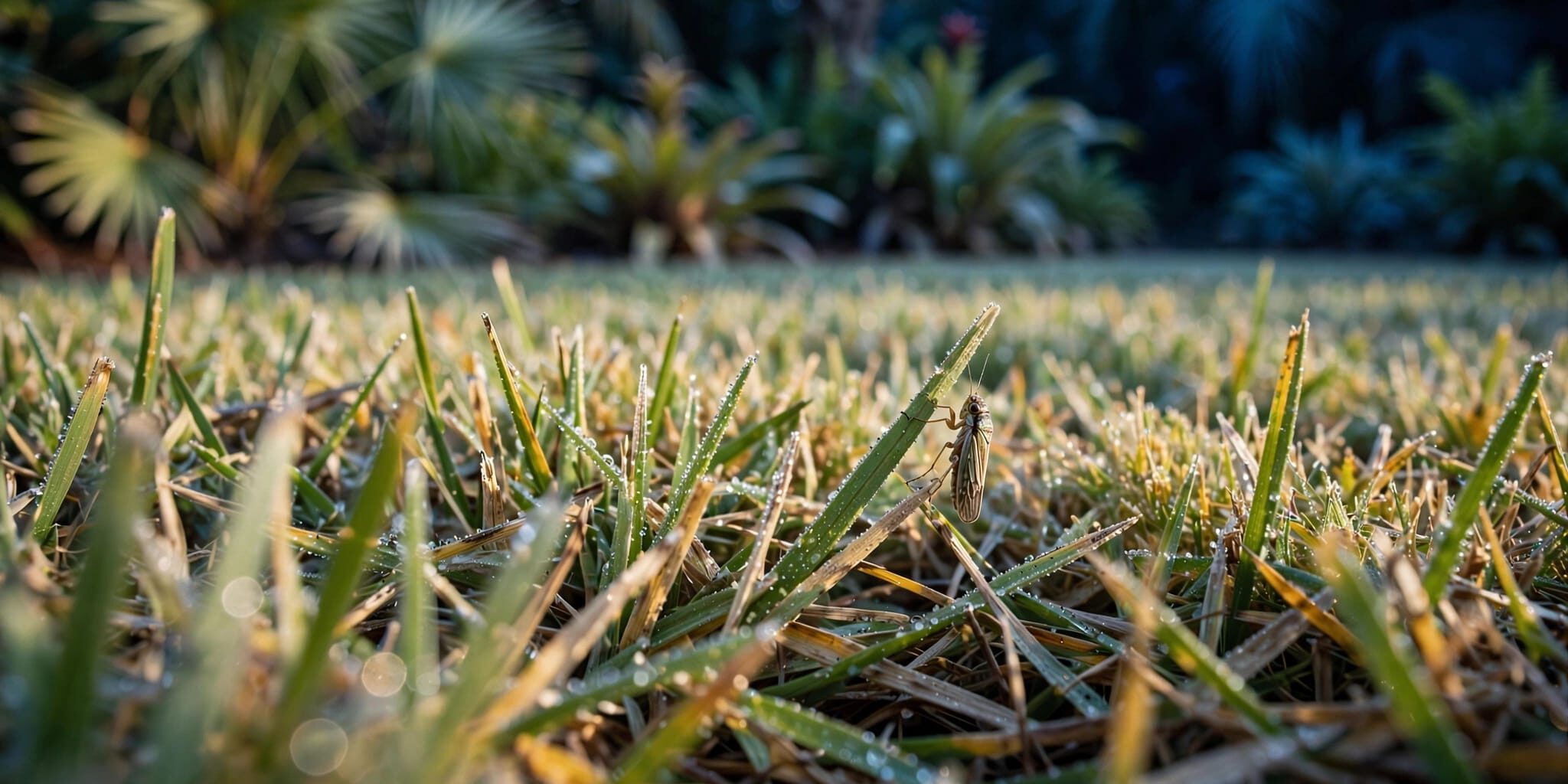
Yes, warm winter spells can extend feeding for some Florida lawn pests, especially in Southwest Florida. Activity varies by pest, turf, and local weather. Cold snaps may slow or pause feeding, while some pests overwinter in less active stages.
We recommend year-round monitoring because yellow or thinning grass can also signal drought, disease, or irrigation problems. Start with the damage pattern before choosing a treatment.
Key Takeaways
Warm winters can extend activity for some Florida lawn pests, but activity depends on the pest and local conditions. Brown grass alone doesn’t justify spraying. Identify the insect, assess fresh damage, and match treatment to where it feeds.
How Winter Changes Pest Timing
Winter activity depends on your location, grass type, recent temperatures, and the pest. Cold spells can reduce activity in North Florida, while some pests may keep feeding during warm periods in Southwest Florida.
| Season | North Florida | Southwest Florida |
|---|---|---|
| Winter | Cold spells can reduce pest activity | Some pests may keep feeding during warm periods |
| Spring and early summer | Resume regular scouting | Watch for chinch bugs and young mole crickets |
| Late summer and fall | Inspect roots and blades | Monitor caterpillars, grubs, and expanding patches |
Our guide to lawn pest treatment timing explains why pest development matters more than a fixed treatment date.
Identify Florida Lawn Pests by Their Damage
The UF/IFAS lawn insect guide distinguishes surface-feeding insects from pests that damage roots.
Chinch Bugs and Blade-Feeding Caterpillars
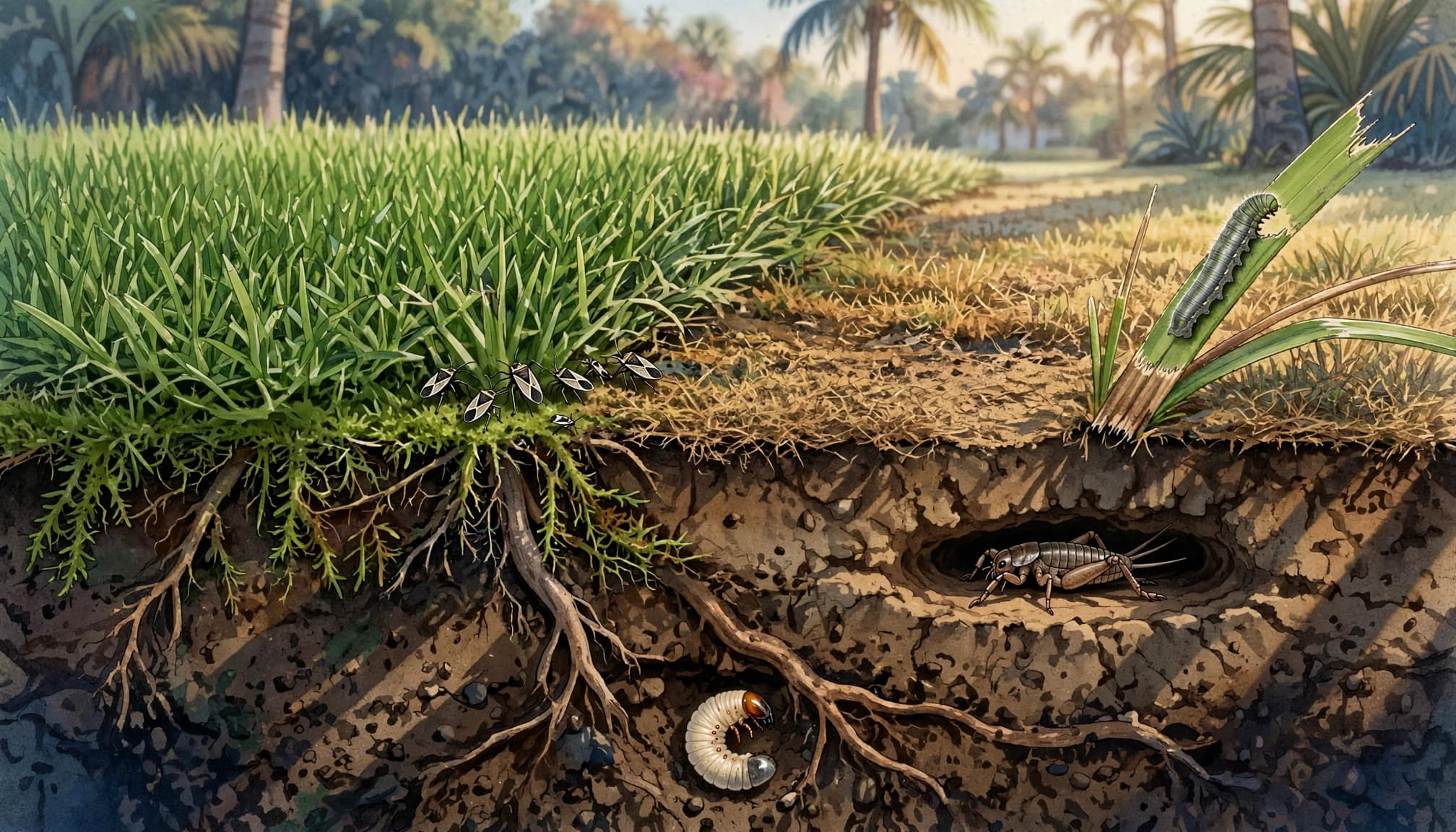
Chinch bugs are most destructive to St. Augustine grass. Their feeding causes yellow, then brown patches, especially in sunny areas beside pavement. The damage often resembles drought stress.
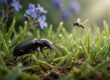
Adults are small, black insects with white wings. North Florida commonly supports three to four generations each year, compared with seven to ten in South Florida.
Tropical sod webworms are gray-green caterpillars that grow to about 1 inch. They feed at night and leave ragged, notched blades.
Fall armyworms reach 1 1/2 inches and have an inverted Y-shaped marking on their dark heads. Heavy feeding creates bare spots or large dead patches.
Inspect ragged or clipped blades at dusk for sod webworms or armyworms before treating. Cutworms can sever young grass near the soil line.
Spittlebugs leave recognizable frothy masses around grass stems.
Mole Crickets and White Grubs
Tawny, southern, and short-winged mole crickets are the three pest species found in the Southeast. Bahiagrass, bermudagrass, and a Bahia lawn are especially vulnerable. Tunneling and feeding loosen soil, disturb roots, and thin turf.
White grubs are C-shaped scarab beetle larvae, commonly called lawn grubs. They range from about 1/2 to 2 inches long, depending on species. Heavy root feeding can leave turf loose enough to pull up like a carpet.
A few grubs don’t automatically explain a damaged lawn.
Confirm the Pest Before Treating
We recommend inspecting the green-to-brown border, where active feeding is easier to find. Wear appropriate personal protection when checking vegetation. Ticks don’t feed on turf, so they don’t explain dead patches.
- For a drench test, mix one tablespoon of liquid soap with one gallon of water. Apply it over one square foot and watch for pests surfacing for about 10 minutes. Rinse the test area afterward. Pest-specific sampling formulas can differ.
- For chinch bugs, push a bottomless tin can about 3 inches into the soil. Fill it three-quarters with water, maintain that level, and watch for floating insects over 10 minutes.
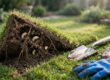
- For a turf-peel test, cut three sides of a one-square-foot section and fold it back. Inspect roots and soil, including soil 6 to 10 inches deep, for grubs. Replace and water the turf afterward.
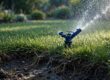
Check multiple locations. Dry patches that match sprinkler gaps suggest irrigation trouble. Persistently wet patches also warrant disease and drainage assessment.
Choose Controls That Protect Healthy Turf
Improve Lawn Conditions and Support Beneficial Insects
Correct irrigation gaps, avoid excess nitrogen, mow at the recommended height for your grass, and manage excessive thatch through dethatching only when needed. These steps support recovery.
Beneficial nematodes offer pest-specific options. Steinernema scapterisci attacks mole crickets, while Steinernema carpocapsae and Heterorhabditis bacteriophora are used against armyworms.
Larra bicolor wasps lay eggs on mole crickets and are natural predators that provide biological control. LawnStarter reports that each wasp generation kills approximately one-quarter of the local mole cricket population, although results vary.
Our integrated pest management approach combines monitoring, healthier growing conditions, and targeted treatments rather than automatic broad-spectrum spraying.
Use Targeted Treatments and Practical Safety Measures
Chinch bug treatment may need repeating after six weeks when activity persists. However, follow the product’s labeled interval and reassess insects before another application.
For fire ants, the Texas two-step method broadcasts bait across the yard, then treats remaining problem mounds with a labeled drench, bait, granule, or dust.
UGA Extension’s fire ant guidance reports that approximately 3 gallons of near-boiling water eliminates about 60% of treated mounds. However, scalding, stings, and turf injury make this a poor household option.
Keep children and pets away until all label re-entry requirements are met. Drying alone doesn’t satisfy every product’s directions.
Frequently Asked Questions
Does Finding Insects Mean the Lawn Needs Spraying?
No. Treatment decisions depend on pest identity, population, fresh injury, and lawn condition. UF/IFAS identifies more than ten billbugs per square foot as a level warranting insecticide treatment.
For grubs and other pests, isolated insects without matching damage don’t justify blanket treatment.
Can Ground Pearls Be Controlled With Pesticides?
No pesticide on the market effectively targets ground pearls. Centipedegrass is especially vulnerable, while El Toro zoysia grass and Celebration bermudagrass tolerate them better.
Because these pests feed near roots, recurring bare patches require below-ground inspection rather than repeated surface spraying.
Keep Winter Lawn Care Focused on Diagnosis
Warm winter spells may keep some turf-feeding pests active, but activity varies by pest and local conditions. Base treatment on confirmed activity, not brown color alone. Regular inspections help distinguish feeding damage from irrigation problems and disease.
We provide lawn insect and disease management throughout Collier and Lee counties. If patches keep expanding, a professional diagnosis can identify the cause before more healthy turf is lost.