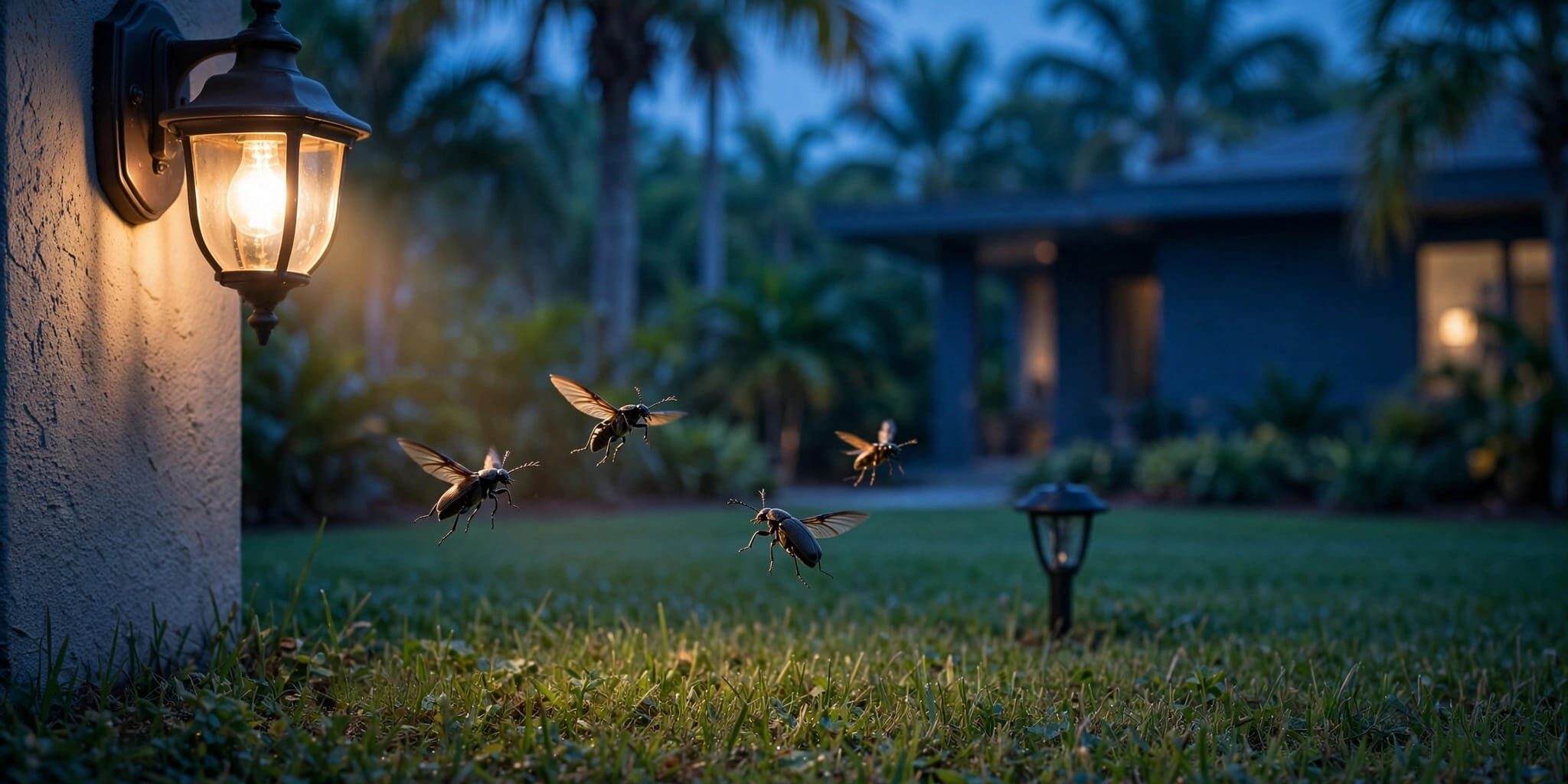
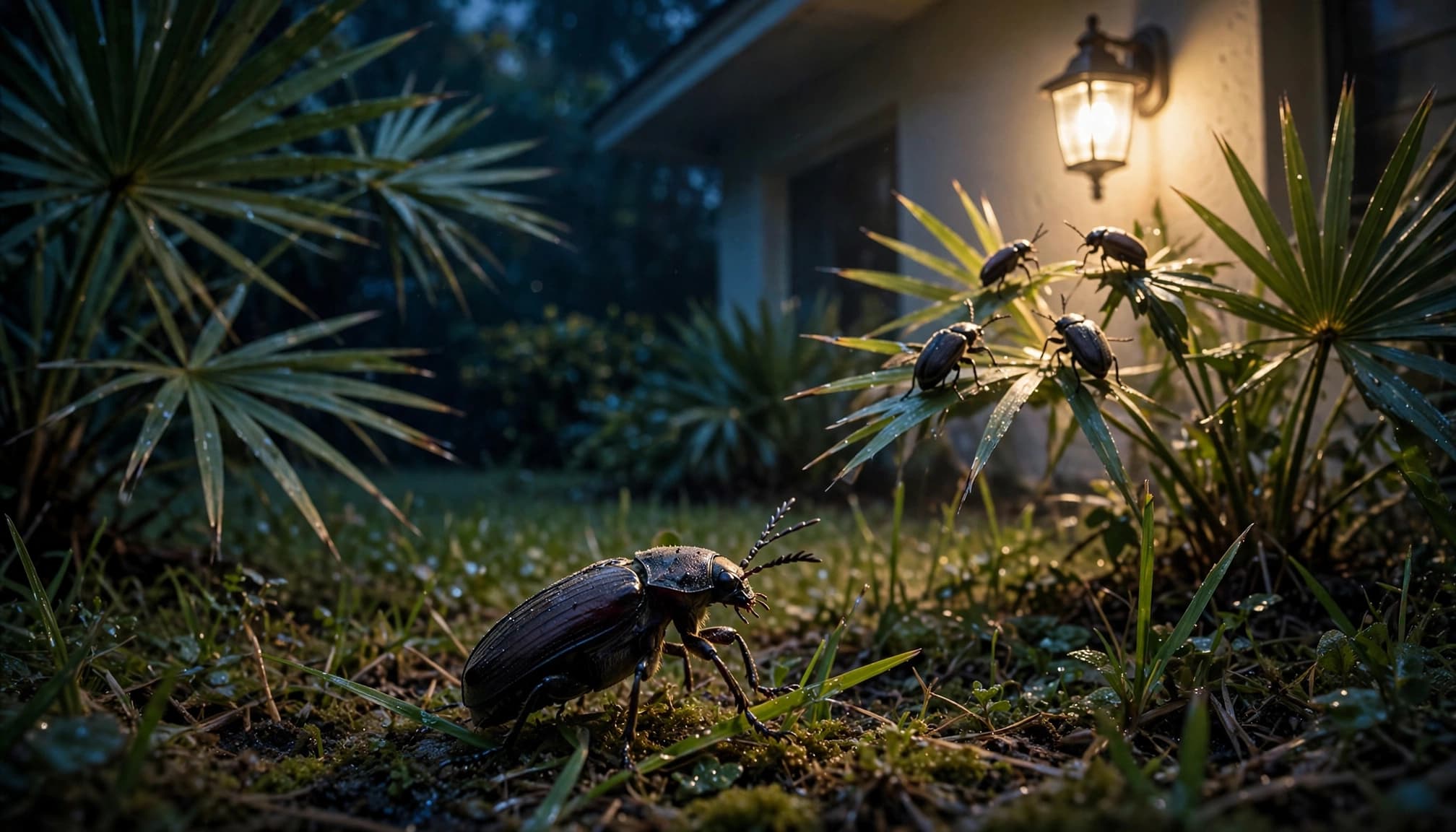
Outdoor lights can draw flying beetles toward your home and concentrate activity near the lawn. However, beetles attracted to lights don’t automatically mean your grass has an infestation or needs treatment.
We recommend treating nighttime beetle activity as a reason to inspect, rather than a reason to spray. The important distinction is whether those insects are simply gathering nearby or causing fresh turf injury.
Start by understanding the light response, then adjust unnecessary lighting and inspect any declining grass.
Key Takeaways
- Outdoor lighting can concentrate adult beetles near turf, but their presence alone doesn’t establish lawn damage.
- Shielded fixtures and shorter operating times can reduce unnecessary light exposure over grass.
- Adult sugarcane beetles and root-feeding white grubs require different diagnostic and treatment approaches.
- We recommend identifying the insect and connecting it with fresh damage before choosing a control method.
Why Beetles Gather Around Outdoor Lights
Porch lights, garage fixtures, and decorative lighting create bright points against a dark yard. For some nighttime insects, those concentrated light sources interfere with normal flight.
Artificial Light Can Disrupt Flight
A 2024 study of insect flight around lights found that flying insects often orient their backs toward artificial light. Near a lamp, that response can disrupt stable flight and produce circling, climbing, or diving movements.
This helps explain why insects may remain around a fixture instead of passing through the yard. However, the research concerns flying insects broadly, so it shouldn’t be treated as a complete explanation for every Florida beetle.
The practical concern is repeated exposure. A fixture operating all night creates a longer period of bright light than one used briefly.
Lawn-Adjacent Fixtures Make Activity More Noticeable
Lights beside turf can make beetle activity especially visible along walkways, garage aprons, and nearby grass. Homeowners may notice insects there even when the lawn remains healthy.
We separate that visible gathering from the condition of the turf. A busy porch light tells you insects are present. It doesn’t tell you which species are feeding below ground or whether treatment would protect the lawn.
That distinction matters because unnecessary applications can affect insects that aren’t causing damage.
Which Beetles Matter Around Florida Lawns
Beetles have different feeding habits and life cycles. Some damage turf, while others hunt pests or simply pass through the property. Color and location alone aren’t enough to identify their role.
Sugarcane Beetles Can Damage Turf as Adults
Adult sugarcane beetles can gather near nighttime lighting. The University of Georgia’s guide to southeastern neighborhood pests documents strong nighttime light attraction among beetles covered in its guidance.
For sugarcane beetles, the damaging stage is the adult, which feeds below ground around grass crowns, runners, and roots. That makes identification important when St. Augustinegrass begins thinning.
Our guide to sugarcane beetle lawn damage explains why loose sod, injured crowns, and adult beetles offer stronger clues than a brown patch alone.
White Grubs and Beneficial Beetles Need Different Responses
White grubs are larvae of certain scarab beetles. They typically have cream-colored, C-shaped bodies, brown heads, and three pairs of legs near the head.
However, a beetle larva isn’t automatically a white grub. Ground beetle larvae are generally elongated, and many ground beetles hunt other small invertebrates.
We recommend preserving beneficial insects in turf rather than treating every unfamiliar beetle as a threat. The useful questions are what the insect eats, which life stage you found, and whether fresh injury occurs beside it.
Separate Beetle Activity From Actual Lawn Damage
A declining patch near a light deserves attention, but its location doesn’t establish the cause. Irrigation problems, disease, chinch bugs, and other pests can produce similar discoloration.
We look for a connection between the insect and its feeding damage, rather than relying on proximity to a fixture.
Inspect Below the Grass Canopy
Start at the transition between healthy and declining turf. Part the blades, examine the crowns and thatch, and lift a small section where roots appear weak.
Look for shortened or chewed roots, damaged crowns, shallow tunnels, and insects beside fresh injury. Sod that lifts easily deserves a closer look, although loose turf alone doesn’t identify a particular pest.
Compare that area with healthy grass nearby. This helps separate a widespread maintenance problem from localized feeding. Photograph unfamiliar insects before disturbing them, and note whether you found adults or larvae.
Compare Other Causes of Brown Patches
Southern chinch bugs feed around leaf bases and crowns. Their damage commonly appears as expanding yellow-to-brown patches in hot, sunny areas.
Meanwhile, poor irrigation coverage can leave grass stressed even when the watering system runs regularly. Disease and drainage problems can also weaken turf.
Our guidance on when lawn insect treatment is warranted connects pest activity with observable injury. We recommend recording patch size, irrigation, rainfall, and nearby lighting so an inspection addresses more than the visible brown grass.
Reduce Unnecessary Light Over the Lawn
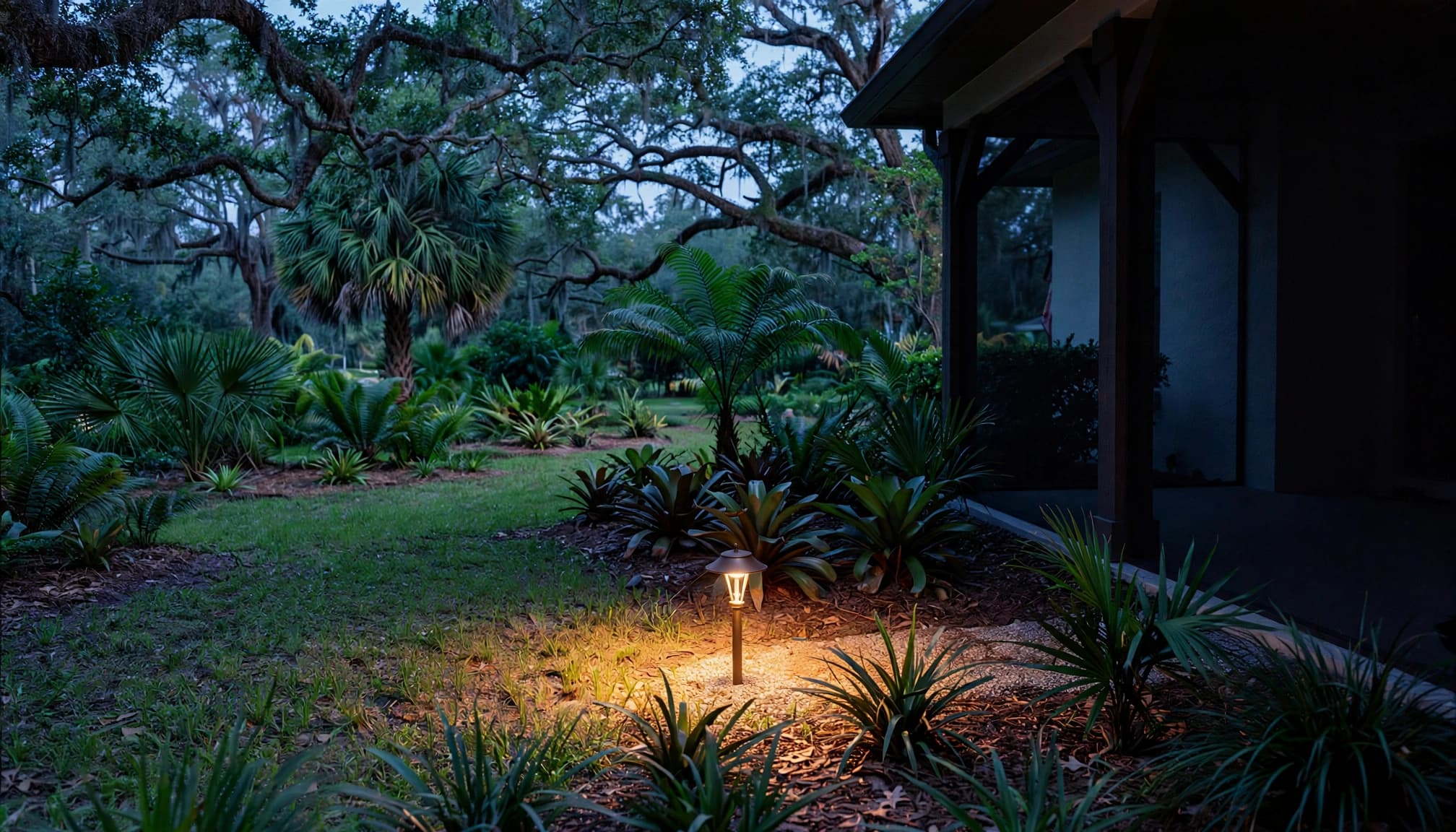
Lighting changes can reduce unnecessary nighttime exposure without leaving entrances or walkways dark. We recommend starting with fixtures that illuminate large areas of turf rather than the surfaces you need to see.
Shield and Redirect Existing Fixtures
A shielded fixture directs light toward its intended surface instead of allowing it to spread broadly across the yard. Adjust floodlights toward driveways and entrances, and avoid unnecessary spill onto grass.
For decorative lighting, consider whether the fixture needs to illuminate the lawn at all. A beam aimed across turf creates exposure beyond the planting or architectural feature you intended to highlight.
Maintain enough illumination for safe movement. The goal is more controlled lighting, not a dark approach to your home.
Shorten Operating Times Where Practical
Timers and motion controls can reduce how long a light operates. Decorative fixtures may only need to run during the evening, while a suitable motion-activated entrance light can remain off between uses.
Keep necessary safety lighting in place. However, avoid leaving every outdoor fixture on overnight simply because they share one switch.
After an adjustment, observe the same locations over several evenings. Record beetle activity and inspect any damaged turf separately. Fewer insects near a lamp doesn’t establish that a below-ground pest problem has ended, just as continued activity doesn’t automatically mean the lighting change failed.
Existing insects may remain in the yard regardless of changes to the fixture.
Protect the Lawn Without Unnecessary Spraying
Lighting management is one part of prevention. Healthy turf, accurate identification, and treatment matched to the pest remain important when damage develops.
A review of artificial light and nocturnal insects describes effects beyond the familiar gathering around lamps. Reducing unnecessary light also limits disturbance to nighttime insects that aren’t lawn pests.
Match Treatment to the Damaging Life Stage
Adult sugarcane beetles and root-feeding white grubs require different control decisions. A product selected for one pest or life stage may not address another.
We don’t recommend broad-spectrum treatment simply because beetles appear at a porch light. A treatment decision should account for the identified pest, active feeding, injury, and application site.
Any pesticide application must follow the Florida-registered product label, including turf directions, irrigation requirements, environmental precautions, and re-entry restrictions. Children and pets must remain away for the label’s specified period.
Correct Conditions That Slow Recovery
Maintain appropriate mowing height and avoid scalping stressed grass. Also address irrigation gaps or excessive watering rather than adding water whenever a patch turns brown.
Heavy fertilizer applications won’t repair damaged roots or stop feeding insects. Instead, they can complicate recovery when the underlying problem remains unresolved.
Professional inspection makes sense when patches expand, turf repeatedly loosens, or the damaging insect remains unclear. Our lawn care and pest control services support homeowners in Collier and Lee counties with identification and management.
Frequently Asked Questions
Does a Porch Light Mean White Grubs Will Develop Nearby?
No. Light can attract adult beetles, but a gathering doesn’t establish that they have laid eggs in your lawn. It also doesn’t identify which beetles are present. Root inspection and evidence of feeding provide more useful information than the number of adults around a fixture.
Will Turning Off Lights Remove Beetles Already in the Soil?
No. Reducing unnecessary lighting changes nighttime exposure, but it doesn’t remove insects already feeding below ground. If the lawn continues declining, inspect the damaged edge and root zone. Lighting adjustments support prevention; they don’t replace treatment when a confirmed pest is causing injury.
Should Healthy Grass Be Treated When Beetles Appear?
We don’t recommend treatment based on that observation alone. Healthy grass with beetles nearby needs monitoring, not an automatic application. If you find fresh feeding injury, loose turf, or expanding patches, identify the cause before selecting a control. This protects helpful insects and avoids spending money on the wrong treatment.
Keep Lighting and Lawn Protection Working Together
Outdoor lighting can concentrate beetles near Florida lawns, but visible activity and damaging infestations require different responses. We recommend controlling unnecessary light exposure while using feeding evidence to guide lawn treatment.
Shield fixtures, limit operating times where practical, and inspect declining turf before spraying. If damage continues, a professional inspection can identify whether beetles, another pest, or a lawn-care problem needs attention. The right diagnosis protects your grass without treating every insect near the porch.