Yellow patches in a Florida lawn don’t always mean the grass needs more water. Lawn aphids can feed on turf, weaken grass blades or roots, and leave damage that looks a lot like drought stress.
That is why we inspect the lawn before watering, fertilizing, or applying chemical control. In Fort Myers, Naples, Bonita Springs, and Lehigh Acres, Southwest Florida heat, rainfall, sandy soil, and irrigation variation can make garden pests and turf disorders look alike.
Key Takeaways
- Aphids are small, soft-bodied insects that feed by pulling sap from grass tissue.
- Greenbugs can cause yellow, orange, or irregular dead areas that resemble dry turf.
- Root-feeding aphids may stay below the surface, so the lawn can decline before insects are easy to see.
- Ant activity, sticky honeydew, and black sooty mold on nearby plants can point to an aphid problem.
- Ladybugs are natural enemies worth protecting, but their presence doesn’t confirm an infestation.
- Insecticidal soap requires direct contact, and it isn’t a universal turf treatment.
- A spreading patch needs a proper inspection because chinch bugs, disease, irrigation problems, grubs, and fertilizer injury can look similar.
A lawn that stays yellow after irrigation is corrected needs a closer look, not another round of watering or fertilizer.
Signs of Aphid Damage in Southwest Florida Turf
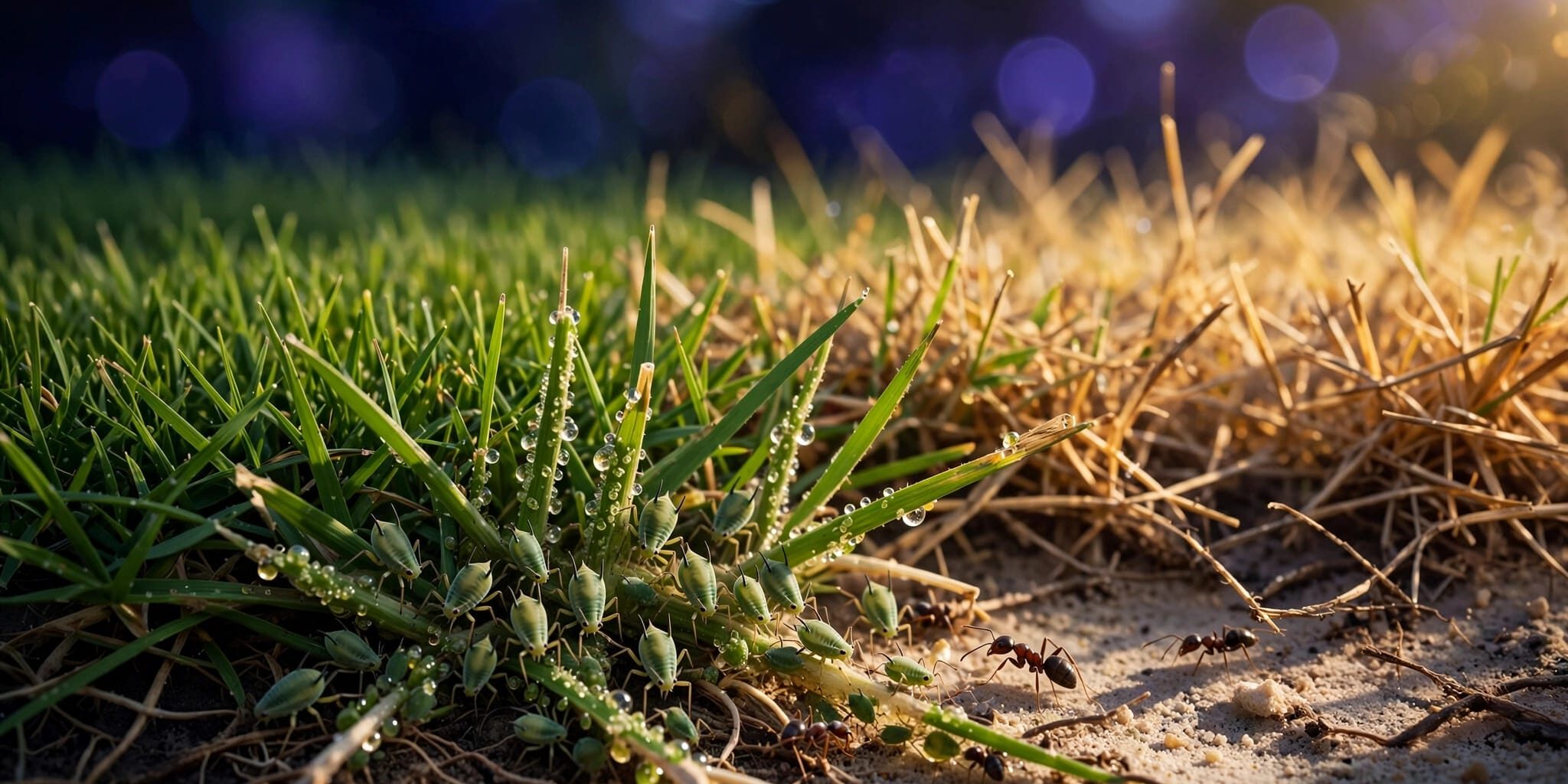
Aphids can be easy to miss because they’re small and often stay low in the grass canopy. These soft-bodied insects have piercing-sucking mouthparts that remove plant sap from leaves, stems, crowns, or roots.
The greenbug, Schizaphis graminum, is a grass-feeding aphid documented in Florida. According to the UF/IFAS greenbug profile, it feeds on phloem tissue and injects toxins as it feeds. That combination can turn subtle feeding into visible plant damage. Identification requires finding the insect or other supporting evidence.
Yellowing That Doesn’t Follow an Irrigation Pattern
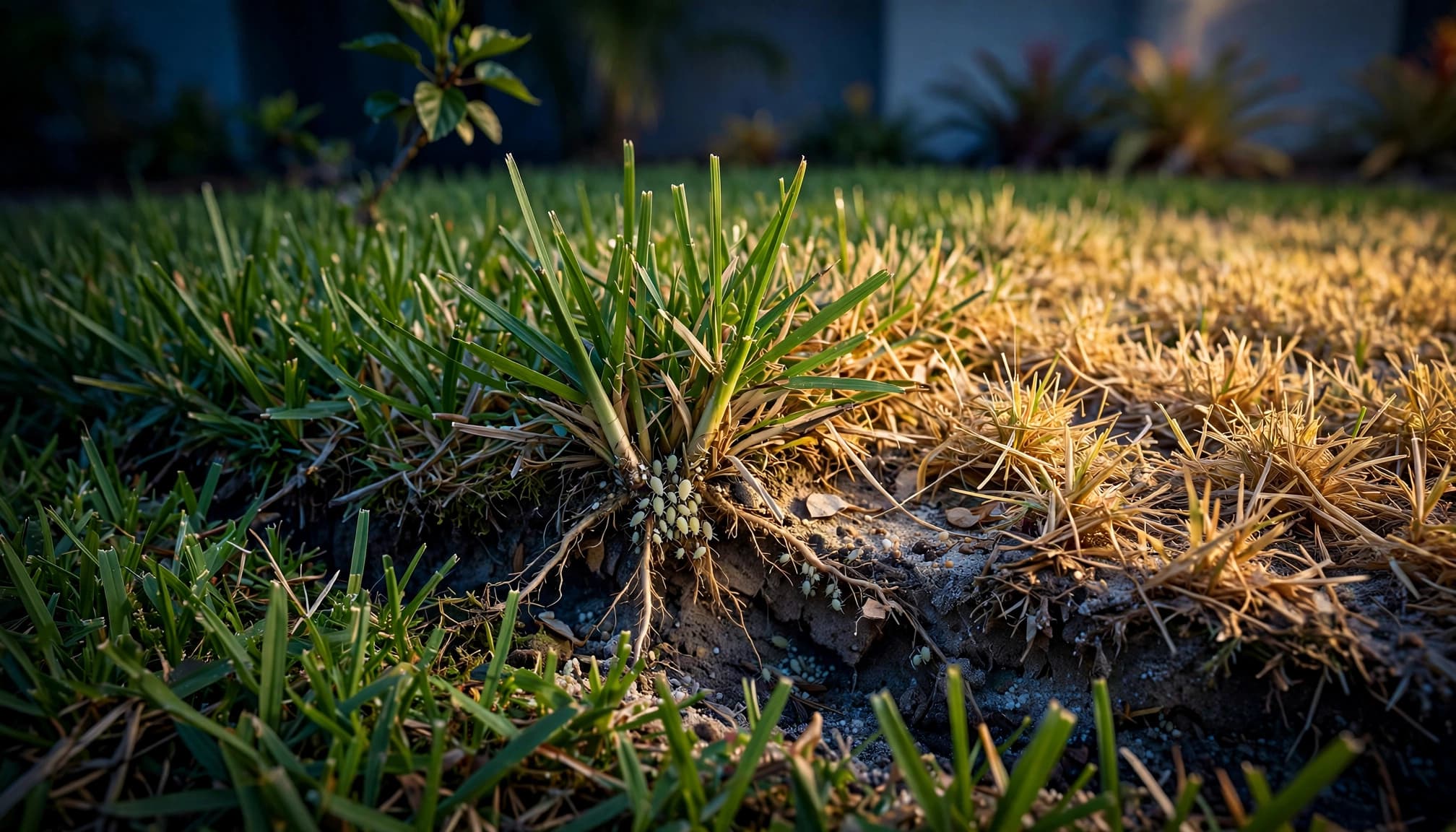
Aphid feeding often starts as pale, yellow, or faded grass. With greenbugs, the injured area may shift toward yellow-orange or rust-colored tones before blades die back.
Look at the edge of the patch, not only the brown center. Fresh feeding activity is more likely near the line between healthy turf and declining turf. An irregular patch that expands despite proper watering deserves a closer inspection.
St. Augustinegrass, bermudagrass, and zoysiagrass can all show stress differently. Grass type, sun exposure, thatch depth, and irrigation coverage all affect the final appearance.
Ants, Honeydew, and Nearby Plant Trouble
Aphids produce honeydew, a sugary material that ants readily collect. Ants may protect aphids from predators because honeydew is a food source for the colony.
If you see steady ant traffic in the lawn and sticky residue or black sooty mold on nearby shrubs, groundcovers, or weeds, inspect the area closely. Sooty mold grows on honeydew deposited on plant surfaces, rather than inside the plant itself. Our guide to common lawn disease symptoms can help separate this surface coating from a true fungal lawn disease.
Ladybugs and other beneficial insects may appear near aphid colonies on nearby vegetation. These insects and ant activity are useful clues, but neither confirms an aphid infestation by itself. Fire ants and other ant species can be active in healthy turf too.
Root Aphids Can Cause Hidden Turf Decline
Root aphids are more difficult to identify than leaf-feeding aphids because much of their activity occurs below the surface. Homeowners may notice thinning turf, weak roots, and a yellow patch that keeps getting worse.
What Root Aphids Do
Root aphids withdraw sap from roots and underground stems. That stress can reduce the grass’s ability to take up water, even when irrigation is working properly.
The result can look like drought damage. Turf may appear thirsty during hot weather, but extra watering doesn’t restore its color. In severe areas, grass can thin and lose vigor.
Some ants nurture root aphids below ground and collect honeydew from them. Rutgers’ turfgrass ant management bulletin describes this relationship and explains why ant activity can be part of the diagnosis.
Why a Surface Check Isn’t Always Enough
Aphids can multiply quickly when conditions are favorable. Some species reproduce without males for part of their life cycle, allowing populations to build before symptoms become obvious.
Root aphids require evidence and shouldn’t be the default explanation for every weak root system. Drought, excess thatch, grubs, tunneling, compaction, and saturated soil can create similar symptoms.
Surface predators, including ladybugs, may not reveal a belowground problem. Lift a small section of sod at the damaged edge and compare it with healthy turf nearby. Check the roots and soil for insects, thatch, grubs, tunneling, compaction, and excess moisture.
A yellow lawn alone doesn’t confirm the cause. For a broader look at similar symptoms, review our guide to identifying lawn pest damage. Accurate identification protects the lawn from a treatment that doesn’t match the problem.
Rule Out Other Causes Before Treating
Southwest Florida lawns often face several stresses at once. Heavy rain can create wet areas, while a broken irrigation head leaves another section dry. Fungal disease, insects, poor mowing, and fertilizer problems may overlap.
Compare the Patch With the Rest of the Yard
Start with a simple inspection. Walk the property at the same time of day and compare yellow patches with nearby healthy grass.
| What You See | Possible Cause | First Check |
|---|---|---|
| Yellow or orange irregular patches | Aphids, chinch bugs, drought stress, or uneven irrigation | Inspect blades, thatch, and irrigation coverage |
| Turf lifts easily and roots are missing | White grubs, root aphids, or other root decline | Lift sod at the patch edge and inspect the roots |
| Circular brown areas with darker edges | Lawn disease | Check morning moisture and leaf symptoms |
| Ragged or clipped blades with pellets | Sod webworms or armyworms | Inspect thatch and look near dusk |
| Thin grass in wet, thatchy areas | Spittlebugs, disease, or poor drainage | Check moisture, foam, and thatch depth |
This first check narrows the possibilities. It also prevents treating an irrigation problem as an insect outbreak.
Some pest products are often considered before the pest is identified. Beneficial nematodes target certain labeled soil pests, but they aren’t a general or proven treatment for aphids. Diatomaceous earth also loses effectiveness when wet, so it shouldn’t be treated as reliable aphid control in rainy Southwest Florida turf.
Use a Simple Turf Inspection
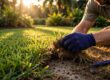
For suspected greenbugs, UF/IFAS recommends wetting your hand and pressing it into the grass in the affected area. Aphids may cling to the damp skin, making these tiny insects easier to spot.
Check several locations, including the outer edge of the damage. Look along blades, inside the lower canopy, and around the crown. Before diagnosing root aphids, check the roots, crowns, thatch, soil moisture, and actual insects. If you find no insects, don’t assume the pest has disappeared. Compare irrigation, soil moisture, roots, and nearby turf conditions before making a treatment decision.
Lawn Aphid Control Options That Protect Turf
Treatment depends on where aphids are feeding, how much damage is active, and whether the product is labeled for your turf and site. Effective pest management combines inspection, cultural controls, biological controls, and targeted chemical control. A product made for roses or vegetables isn’t automatically appropriate for a St. Augustine lawn.
Correct Lawn Stress Before Reaching for a Product
Start with the basics. Adjust irrigation only after checking soil moisture and coverage. Avoid daily shallow watering, but don’t allow dry turf to remain stressed during hot weather. Mow at the proper height, reduce excess thatch when needed, and limit traffic on declining areas. These lawn care steps can support recovery while the cause is being diagnosed.
Fertilizer should support recovery, not force fast, tender growth. Excess nitrogen can attract certain pests and add stress when roots are already struggling. Don’t apply nitrogen to stressed turf before confirming the cause. A measured approach to lawn fertilization in Southwest Florida can better support turf through heat and rain.
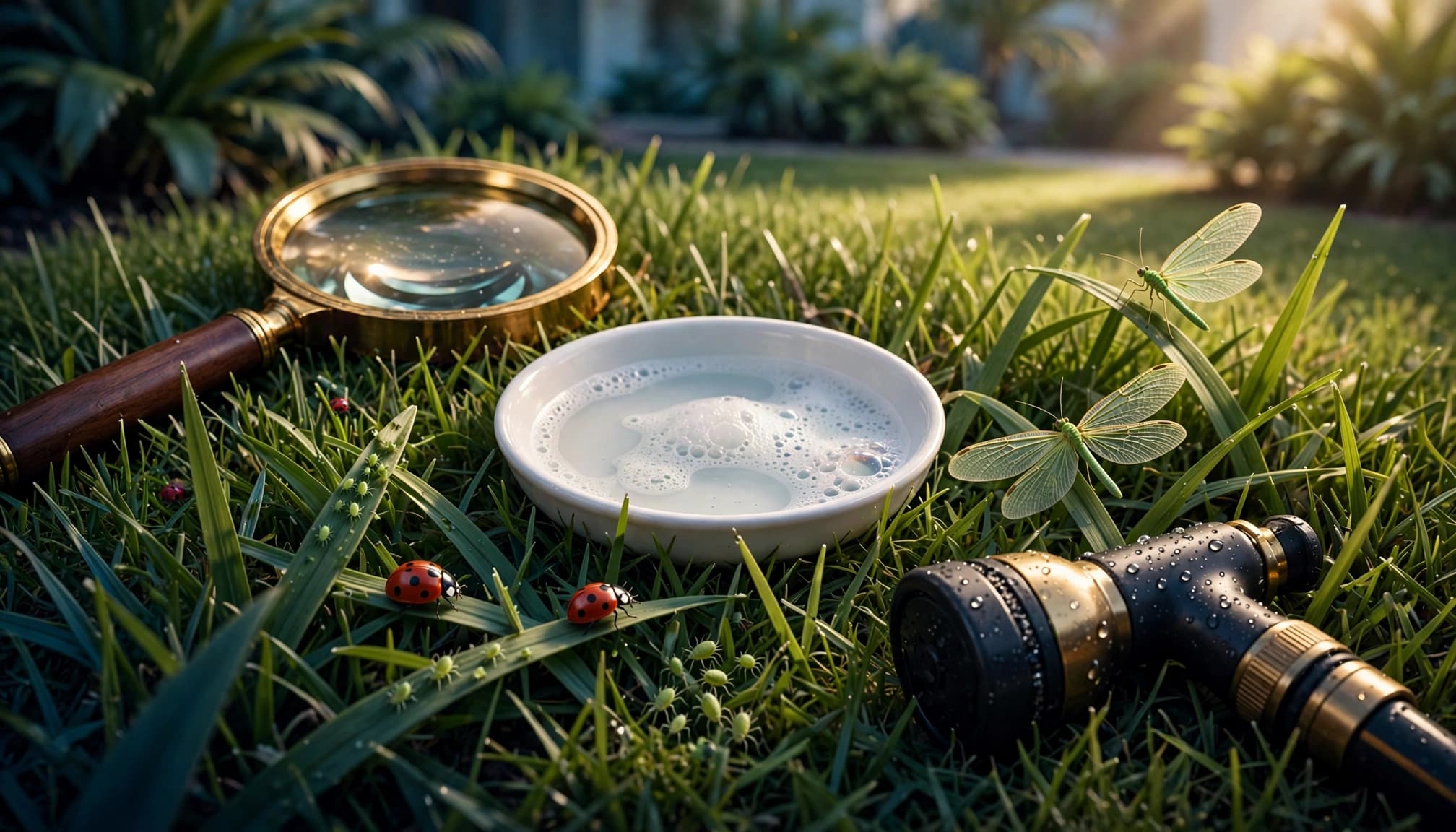
Ladybugs, green lacewings, and parasitic wasps are natural predators that feed on aphids. Protect ladybugs and other beneficial organisms whenever possible. Broad-spectrum sprays can kill these helpful populations, so treatment should remain targeted.
Exposed, leaf-feeding aphids may be reached by a properly labeled foliar treatment. Aphids feeding belowground require a different diagnosis and label basis. Don’t assume a product for exposed pests will control root-feeding aphids.
Use Soaps and Oils With Care
Insecticidal soap, horticultural oils, and neem oil require direct contact with exposed aphids. They can injure drought-stressed or heat-stressed turf and may affect beneficial organisms. Use them only where the label permits application to turf or the specific treated area.
Insecticidal soap can help with contact control when the label allows its use. These products provide little residual control after the spray dries. They must reach the pest directly, and organic pest control products aren’t automatically safe, effective, or appropriate for turf.
The UC IPM aphid management guidance advises against applying insecticidal soap or oils to drought-stressed plants or when temperatures exceed 90 degrees Fahrenheit. That matters in Southwest Florida, where midday heat can quickly increase the risk of injury.
Neem oil also requires label-compliant use and isn’t a universal turf solution. Test any soap product on a small area and check for injury after 24 hours, as UF/IFAS recommends in its natural pest product guidance.
Beneficial nematodes aren’t a general cure for root aphids, especially when the pest has not been confirmed. Their performance depends on the target pest, soil conditions, moisture, and product label.
Diatomaceous earth is unreliable in wet turf and can harm non-target arthropods when broadly dusted. Beneficial nematodes and diatomaceous earth shouldn’t replace accurate diagnosis or labeled treatment decisions. Dry conditions may also reduce the usefulness of diatomaceous earth in an actively irrigated lawn.
When Professional Lawn Treatment Makes Sense
A professional inspection is the right next step when the patch expands, turf continues to thin, or the cause remains unclear after basic checks. Aphids are only one possible reason for yellow turf.
A Confirmed Pest Needs a Targeted Product
A licensed applicator can inspect grass blades, crowns, thatch, roots, irrigation patterns, and surrounding ornamentals. We also look for active insects rather than treating a weak-looking patch alone.
If aphids are confirmed and an exposed population is active, a labeled contact product such as insecticidal soap may sometimes be appropriate. Systemic insecticides aren’t automatically appropriate for turf and may pose risks to pollinators or nearby water. The label must match the pest, grass species, application site, rate, irrigation instructions, and re-entry interval. These details protect children, pets, pollinators, and nearby water.
Professionals shouldn’t select products by reputation alone. Horticultural oils aren’t universal treatments, and diatomaceous earth is especially unreliable in wet conditions. Beneficial nematodes should only be considered for labeled soil pests, not assumed to control root aphids.
Persistent Damage May Be Something Else
Southern chinch bugs, mole crickets, grubs, sod webworms, disease, nutrient deficiencies, and poor drainage can all create a similar yellow or brown area. Repeating the same treatment without finding the cause can delay recovery.
Our integrated pest management for Florida lawns approach combines inspection, cultural corrections, biological protection, and precise treatment when it is needed. That keeps the focus on healthy turf instead of unnecessary applications.
Prevention and Recovery After Aphid Damage
Stopping the feeding is only part of the work. Damaged blades will not turn green again, so recovery depends on new growth and stable lawn conditions.
Keep Conditions Consistent
Water evenly, mow at the proper height, and avoid scalp cuts. Reduce thatch when it becomes excessive, since a thick layer can hold moisture and shelter pests near the soil surface.
Check irrigation heads after heavy rain, landscaping work, or mower damage. A lawn can look dry in one area and overwatered in another. Consistent coverage gives roots a better chance to recover.
Monitor the Lawn Every Week
As part of a steady pest management routine, watch the damaged edge for new yellowing, fresh insects, ant activity, and thinning grass. New leaf growth is the best sign that the lawn is improving.
Preserve beneficial insects, including ladybugs and green lacewings, rather than treating every insect you see. A short monthly walk-through can catch a small issue before it becomes a large repair.
Our Southwest Florida lawn pest checklist covers the recurring signs we watch for across Collier and Lee counties.
Frequently Asked Questions
Can aphids kill grass?
Heavy aphid feeding can kill individual blades and create dead areas when populations remain active. Healthy turf may recover after feeding stops, but thin or weak grass needs time and proper care to fill in.
Do lawn aphids bite people or pets?
Aphids feed on plant sap. They aren’t a biting threat to people or pets. The concern is turf decline, honeydew, ant activity, and lawn conditions that allow pest populations to grow.
Should a yellow lawn patch be fertilized?
Not until the cause is clear. Fertilizing stressed, dry, diseased, or chemically injured grass can make the problem worse. Inspect the turf first, correct irrigation problems, and use a balanced nutrition plan when the lawn is ready.
A Healthy Lawn Starts With the Right Diagnosis
Lawn aphids can create confusing yellow patches, but they are manageable when the pest is confirmed early. Inspect the grass, roots, thatch, and irrigation before changing the watering schedule or applying treatment.
The strongest response is targeted control paired with steady lawn care. When the cause is clear, your Southwest Florida turf has a better chance to recover with healthy color, density, and long-term protection.