A yellowing lawn doesn’t always need more water. In Southwest Florida, heat, rain, sandy soil, irrigation problems, disease, and insects can create similar patches. A quick guess can waste time and weaken the turf further.
Scale insects are easy to miss because some feed low in the canopy, while others, including ground pearls, stay below the soil surface near grass roots. A careful inspection gives you a clearer answer before you add water, fertilizer, or an insecticide.
Why Lawn Scale Insects Need a Different Diagnosis
Scale insects use piercing-sucking mouthparts to remove plant sap. In turf, their damage can be gradual, and the lawn may look thirsty before the cause is clear.
UF/IFAS identifies six primary scale insect and mealybug species that can damage Florida turfgrass in its guide to managing scale insects and mealybugs on turfgrass. That doesn’t mean every yellow or thin patch is scale damage. It means the root zone and grass stems deserve a closer look.
Ground Pearls Feed Below the Turf Surface
This root-feeding scale develops below the soil line and is most often associated with centipedegrass. Bermudagrass, St. Augustinegrass, bahiagrass, carpetgrass, and zoysiagrass can also be affected.
Unlike insects that chew grass blades, this below-ground pest can damage turf where homeowners can’t easily see it. Understanding its life cycle helps explain why diagnosis is difficult. Grass may thin, lose color, and fail to recover after normal irrigation.
Soft Scales and Armored Scales Are Usually Above Ground
Soft scales and armored scales are more familiar on trees and shrubs and ornamental plants. Soft scales may feed on exposed plant tissues, produce honeydew, and contribute to black sooty mold on leaves.
Armored scales have a waxy coating and protective covering. Mature insects are difficult to reach with contact sprays. Dormant oil may be labeled for certain ornamental pests, but it doesn’t confirm a below-ground turf problem. These distinctions matter, but they don’t confirm that a struggling lawn has a root-feeding scale. Turf needs its own diagnosis.
Signs of Lawn Scale Insects in Southwest Florida Turf
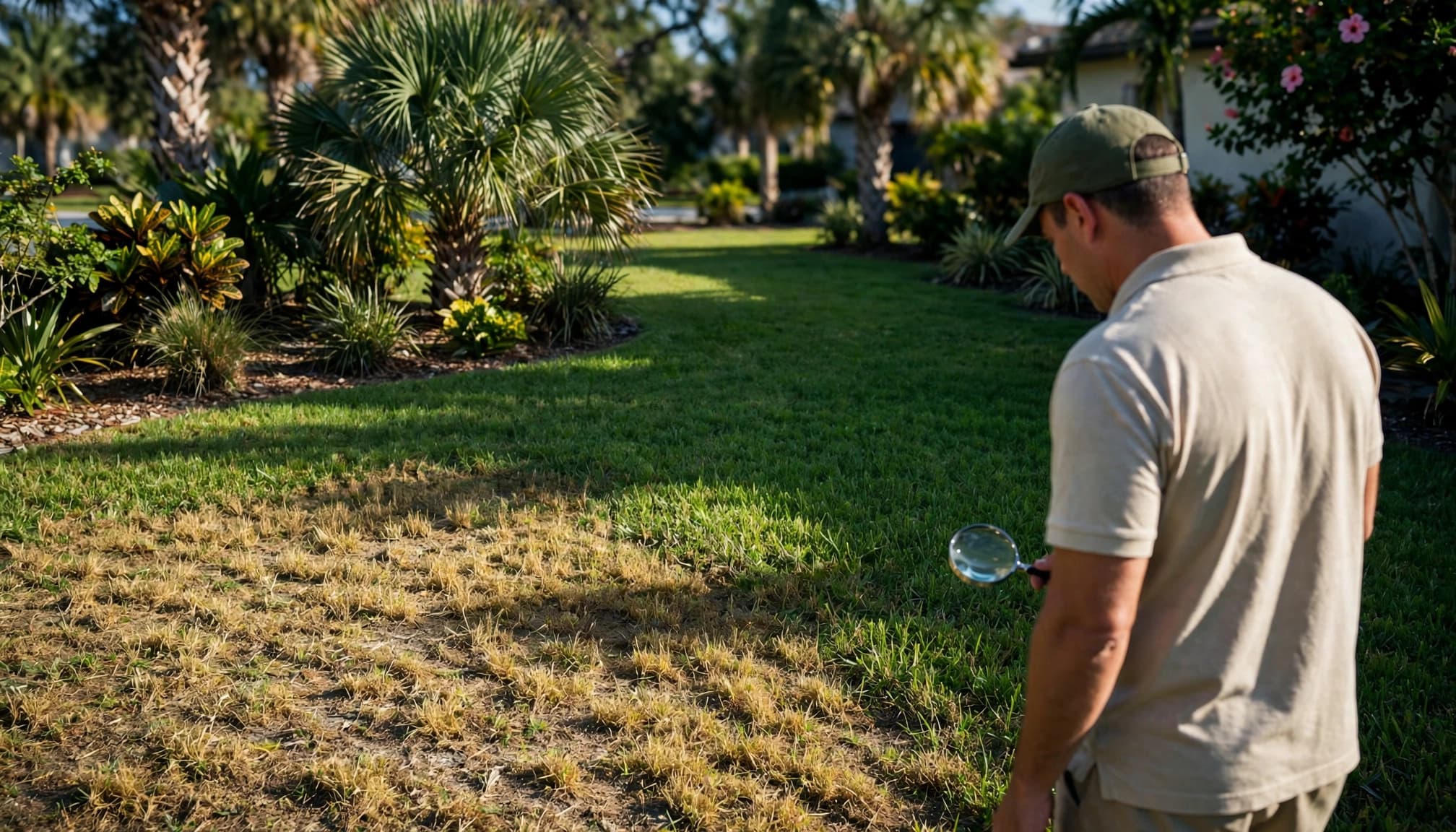
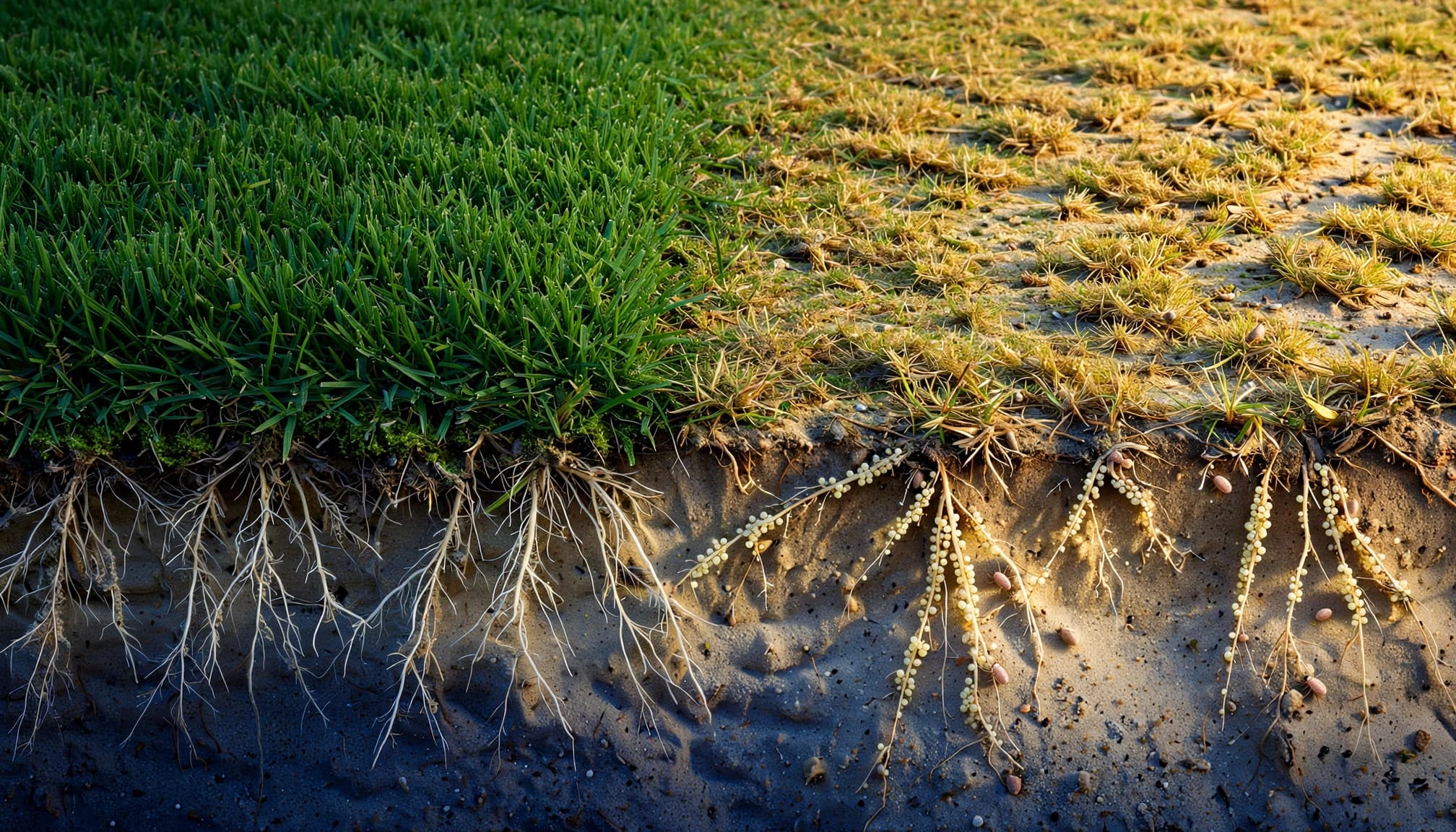
Damage from below-ground scale feeding often develops in irregular areas, not clean circles. Southwest Florida turfgrass may fade from green to yellow, then become thin and brown as root feeding continues.
Watch for Recurring Thin or Bare Patches
The strongest warning sign is a patch that returns in the same area after normal lawn care. Centipedegrass may become thin and uneven, with bare soil between weak runners.
Compare damaged turf with nearby healthy grass. Check whether the patch expands, irrigation reaches it evenly, and the grass improves after proper watering. Turf that stays yellow after irrigation is corrected may have below-ground pest damage. Heavy infestations can cause worsening thinning and recurring bare areas.
Inspect the Green-to-Brown Border
Begin at the edge where healthy turf meets damaged turf. This border often gives us the best chance to see whether roots are short, weak, or missing.
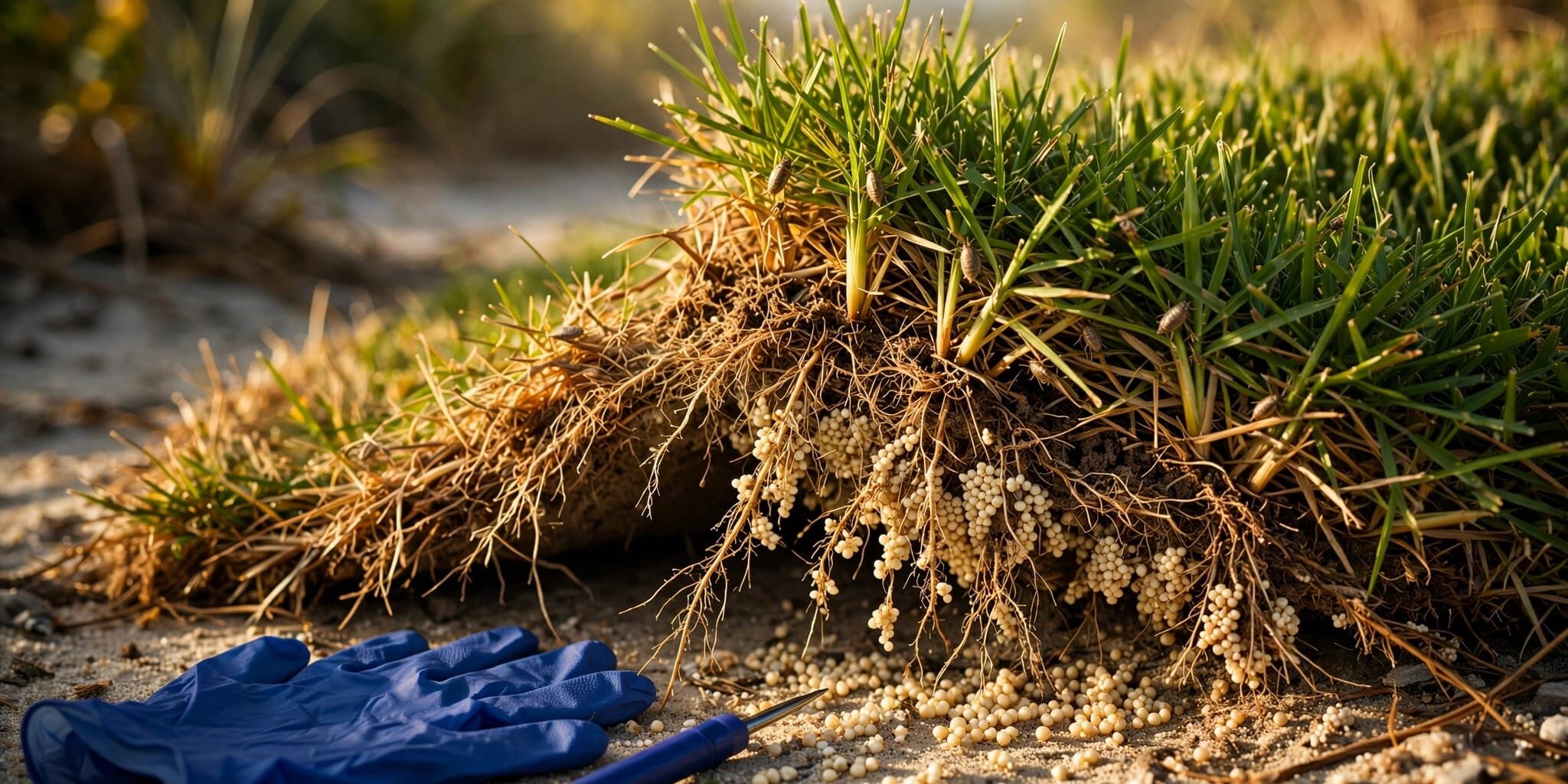
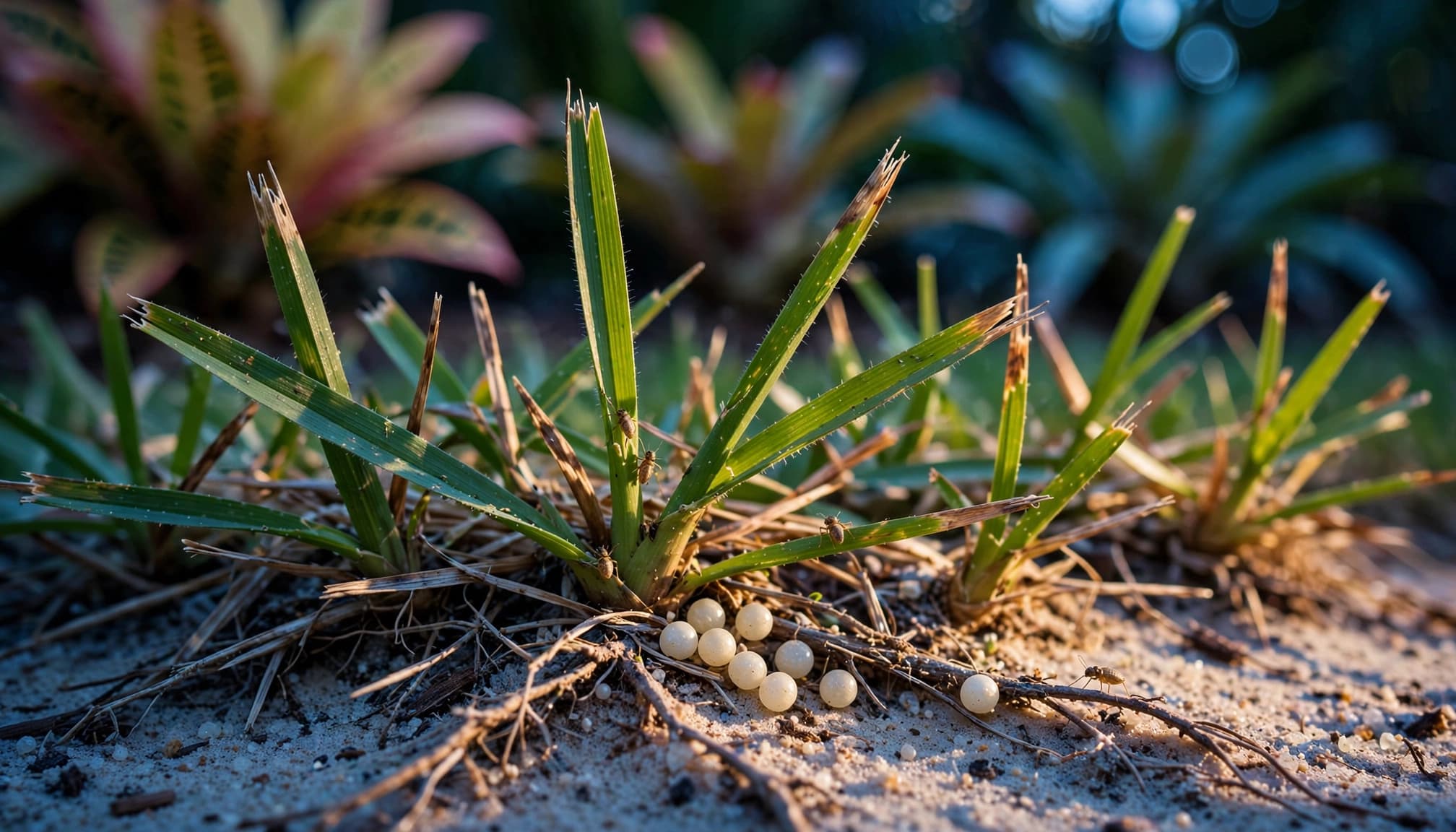
Pull back a small piece of turf and inspect the soil around the roots. Pearl-like cysts are yellowish to brown, round, and tiny, usually about 0.5 to 1.5 millimeters wide. They can look like small beads mixed into sandy soil.
A brown patch is a symptom, not a diagnosis. Irrigation problems, lawn disease, chinch bugs, grubs, and root-feeding pests can look alike at the surface.
For a broader comparison of common causes, review our guide on how to identify lawn pest damage.
How to Confirm Ground Pearls Around Turf Roots
This root-feeding pest can occur several inches below the surface. UF/IFAS reports that populations may be found as deep as 10 inches. That depth makes scale insects difficult to confirm by inspecting grass blades alone.
Lift Small Samples Instead of Digging the Whole Lawn
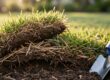
Use a hand trowel to remove a few small samples from the border of the damaged area. Keep the roots and surrounding soil together. Then compare them with a sample from healthy turf nearby.
Look for pearl-like cysts attached near the roots or loose in the soil. Don’t assume every round particle is an insect. Fertilizer granules, small stones, and slow-release products can look similar at first glance.
NC State Extension’s ground pearl identification guidance is a helpful reference when comparing your findings with confirmed turf symptoms.
Rule Out Other Root Problems
Loose sod can point to white grubs. Tunnels and raised soil may indicate mole crickets. Circular patches with leaf symptoms after humid weather may signal disease. A broken irrigation head can create drought stress in one section while another area stays too wet.
Southwest Florida lawns often have more than one stress at a time. Check irrigation coverage, thatch, mowing height, drainage, and root condition before treating an unconfirmed root-zone insect.
The Crawler Stage and Why Timing Is Difficult
Scale insects begin life in a mobile phase called crawlers. During this part of their life cycle, they move before settling and developing a waxy coating or cyst-like protection.
Crawlers Are Small and Easy to Miss
Above-ground crawlers may move on stems, stolons, or leaf tissue. They’re tiny, pale, and much harder to spot than established scale coverings.
Timing can also differ between exposed scale and mealybugs, whose crawlers may remain easier to observe. Insect growth regulators may be relevant for certain labeled, exposed pests, but they aren’t a proven treatment for the below-ground turf problem discussed here.
For ground pearls, the mobile young stage moves into the root zone and develops into the pearl-like cyst that homeowners may find in soil. By the time turf damage is obvious, the insects may already be protected below ground.
Southwest Florida Does Not Follow One Spray Calendar
Warm conditions can extend insect activity, but there’s no reliable month-by-month spray date for this turf pest in Southwest Florida. A calendar treatment without confirmation can miss the pest entirely.
We recommend regular checks rather than treating by date alone. Our Florida lawn pest treatment timing guide can help you build a better inspection routine around weather, turf growth, and confirmed local pest pressure.
Treatment Limits for Ground Pearls
The honest answer matters here. Current Florida Extension guidance does not identify an effective chemical treatment for ground pearls in turf. For this root-feeding problem, chemical control isn’t a proven answer.
Horticultural Oils and Contact Sprays Have Limits
Unlike many exposed scale insects, this root-zone insect feeds below turf roots. Horticultural oils, insecticidal soaps, and contact insecticides can help against certain exposed soft scales, armored scales, and mealybugs. They work by contacting pests directly, when the label allows use on trees and shrubs.
This root-zone insect feeds in soil around turf roots, where a dormant oil treatment for ornamentals or surface spray may not reach it. Mature scales have protective coverings, and insect growth regulators aren’t a proven answer here. Don’t treat chemical control for another pest as a solution.
Systemic Insecticides Are Not a Ground Pearl Cure
Systemic insecticides move into plant tissues, while contact sprays need to touch the insect. Systemic insecticides and contact sprays have roles for certain labeled pests, but neither is a proven answer for this below-ground turf pest.
Clemson’s ground pearl management factsheet also notes that no insecticides are specifically labeled for ground pearls. Don’t substitute insect growth regulators for confirmed, labeled control, even when a product’s active ingredients target another pest. A professional inspection can prevent unnecessary applications and protect your lawn, family, pets, beneficial organisms, and nearby water sources.
Strengthen Turf So It Can Tolerate Stress
Healthy turf does not make ground pearls disappear, but stronger turfgrass can better tolerate some scale insects feeding and fill thin areas when conditions improve.
Correct Irrigation Before Adding More Product
Sandy Southwest Florida soil drains quickly, but frequent light watering can leave roots shallow and turf stressed. Water based on rainfall, grass needs, and irrigation coverage, not habit.
Check for clogged sprinkler heads, dry pavement edges, low spots, and areas that stay wet after rain. Correcting these issues supports deeper roots and helps separate insect damage from a watering problem.
Avoid Excess Fertilizer and Heavy Thatch
Cultural control includes proper irrigation, mowing, fertility, thatch management, and drainage improvements. It can strengthen turf, but it won’t eradicate the pest.
Too much quick-release fertilizer can push weak growth and add to thatch buildup. Follow a fertilizer plan that fits your grass type and local restrictions. Mow at the proper height and avoid scalping stressed turf.
Don’t apply systemic insecticides or insect growth regulators without a labeled target and confirmed diagnosis.
Natural enemies, including parasitic wasps, may reduce some populations, but neither should be treated as a dependable solution for this root-zone problem. Biological control is not a dependable stand-alone option for this pest.
An integrated pest management plan for lawns focuses on inspection, turf health, accurate identification, and targeted action when it is appropriate.
When Professional Lawn Inspection Makes Sense
Call for an inspection when a patch keeps returning, turf stays thin after irrigation corrections, or you find suspicious ground pearls near the roots. A licensed lawn professional can inspect the turf canopy, thatch, crowns, roots, irrigation pattern, and surrounding conditions.
This process matters in Fort Myers, Naples, Bonita Springs, and Lehigh Acres, where conditions can vary across one property. A professional must distinguish scale insects from chinch bugs, grubs, sod webworms, disease, and irrigation stress before choosing treatment.
Targeted pest management should follow diagnosis, turf assessment, and site review, not calendar-based spraying. A licensed professional can verify whether systemic insecticides or other products are labeled for the confirmed pest and site. Label compliance also helps protect beneficial organisms and waterways.
Regular monitoring also helps protect nearby healthy turf. Our Southwest Florida lawn pest checklist outlines the warning signs worth checking each month.
Key Takeaways
- Ground pearls are root-feeding pests that can cause thinning, yellowing, and recurring bare patches in warm-season turf.
- Centipedegrass is especially susceptible, although several Florida turfgrass types can be affected.
- Accurate identification of scale insects requires checking the green-to-brown edge of damaged grass and inspecting roots and soil.
- Cysts are tiny, round, yellowish to brown structures found near the root zone.
- No proven chemical control is recommended for this below-ground pest, so reducing turf stress is the practical focus.
- Proper irrigation, balanced fertility, correct mowing, and regular inspection support stronger recovery.
Frequently Asked Questions
Do Scale Insects Produce Honeydew?
Some soft scales on ornamental plants produce honeydew, a sugary waste that can attract ants and lead to sooty mold on leaves. This root-feeding scale pest lives below the soil, so sticky grass blades and black mold aren’t typical signs.
Can Natural Enemies Control This Root-Feeding Pest?
Natural enemies may affect some exposed soil pests, but there is no dependable biological control program for this below-ground insect. Healthy turf practices and accurate diagnosis are more reliable than releasing beneficial organisms or relying on ants.
Should Damaged Turf Be Replaced?
Replacement may be considered when turf has severe, recurring damage and doesn’t recover with proper care. Before replacing grass, confirm the cause and discuss options that fit the property’s soil, sun exposure, irrigation, grass type, and maintenance plan.
Protecting a Healthier Florida Lawn
A thinning lawn deserves a closer look before it gets another treatment. This below-ground pest feeds beneath the surface, so accurate identification of scale insects is the first step toward protecting your turf.
Regular inspections, steady lawn care, and practical treatment decisions support responsible pest management. These steps give your yard the best chance to recover through Southwest Florida’s long growing season.