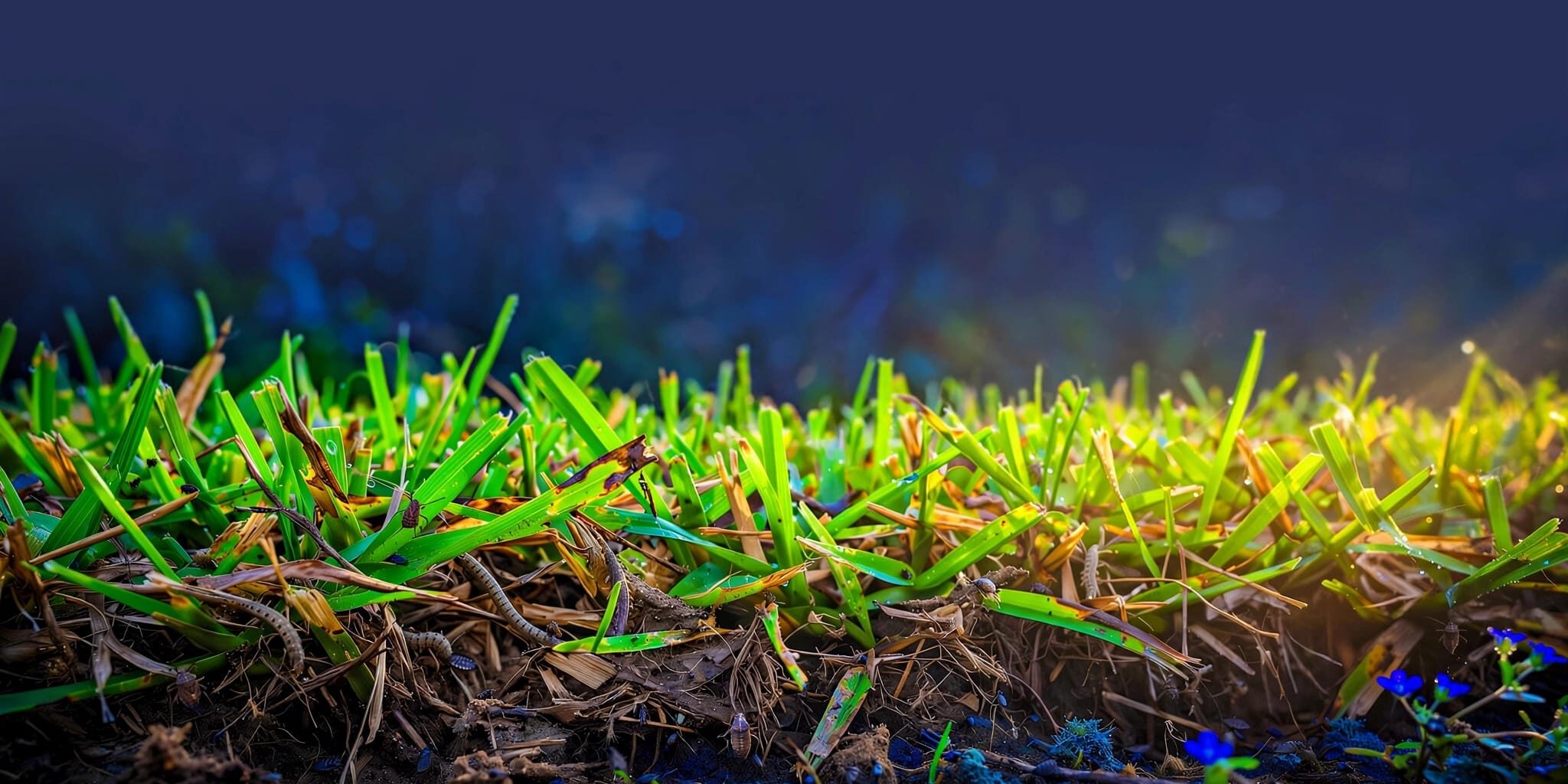
A lawn can look greener after a heavy lawn fertilizer application, but that quick color often comes with a cost. An over-fertilized lawn may grow lush above ground while stress and thatch build below. Too much fertilizer can weaken grass and make pest and lawn disease damage more visible.
In Southwest Florida, warm temperatures and regular moisture already put turf under pressure. These conditions affect Bermuda grass and St. Augustine grass differently, but excess nitrogen can push both toward fast, less stable growth. Lush growth may encourage some surface-feeding pests, but fertilizer alone doesn’t cause grubs or every pest problem.
Healthy turf grass needs balanced nutrition, not a constant push for darker green blades.
Key Takeaways
- Excess fertilizer can cause rapid, weak top growth, heavier thatch, root damage, and greater vulnerability to pests, disease, heat, and drought.
- Fertilizer does not automatically cause grubs or every pest problem, but stressed turf may show more severe damage from chinch bugs, sod webworms, armyworms, or root-feeding grubs.
- Fertilizer burn often appears as brown or yellow streaks, crispy leaf tips, salt crusts, or dead patches within days of an uneven or excessive application.
- After overfertilizing, remove visible granules, water slowly to flush excess salts without runoff, and stop fertilizing while the lawn recovers.
- Prevent future damage with a soil test, label-based application rates, proper spreader calibration, and turf care suited to the grass type and local conditions.
How Overfertilizing Turf Raises Pest Pressure
Fertilizer does not automatically create an insect infestation. However, too much fertilizer can increase pest pressure by making grass more vulnerable, not by directly attracting every pest.
Excess nitrogen causes rapid leaf growth. New growth may look thick and healthy at first, but it can be soft, succulent, and less balanced. It may also depend on frequent watering. Rapid growth produces more clippings and can contribute to heavier thatch.

Fast Top Growth Is Weaker Than It Looks
Grass needs energy for roots, stems, leaves, and recovery. Excessive nitrogen can favor leaf growth over grass roots, leaving fewer resources for recovery.
That matters when chinch bugs, sod webworms, armyworms, or grubs begin feeding. Chinch bugs, sod webworms, and armyworms feed above or near the soil surface. Chinch bug injury is especially noticeable in St. Augustine grass. Grubs feed below ground and respond to roots and soil conditions, not fertilizer itself. Bermuda grass may thin faster when heat, drought, or feeding injury affects stressed turf.
Penn State Extension warns that excessive fertilizer rates and careless application can cause serious turf damage. Their turfgrass fertilization guide also reinforces why fertilizer timing and rate choices matter for reducing plant stress.
Thatch Creates Shelter Near the Soil
Thatch is the tightly packed layer of stems, roots, and organic debris between the green grass blades and the soil. A thin layer is normal. A thick layer holds moisture, restricts water movement, and gives insects a protected place to hide.
Moisture-loving pests may use this environment for shelter, while persistent dampness and heavy thatch can contribute to fungal diseases. You may see more surface-feeding insect activity, fungal leaf spots, or irregular thinning where the lawn stays damp. These symptoms reflect shelter and moisture, not fertilizer directly creating an infestation.
A greener lawn is not always a healthier lawn. Fast growth without strong roots can make pest damage appear worse and spread faster.
Fertilizer Burn Starts Below the Grass Blades
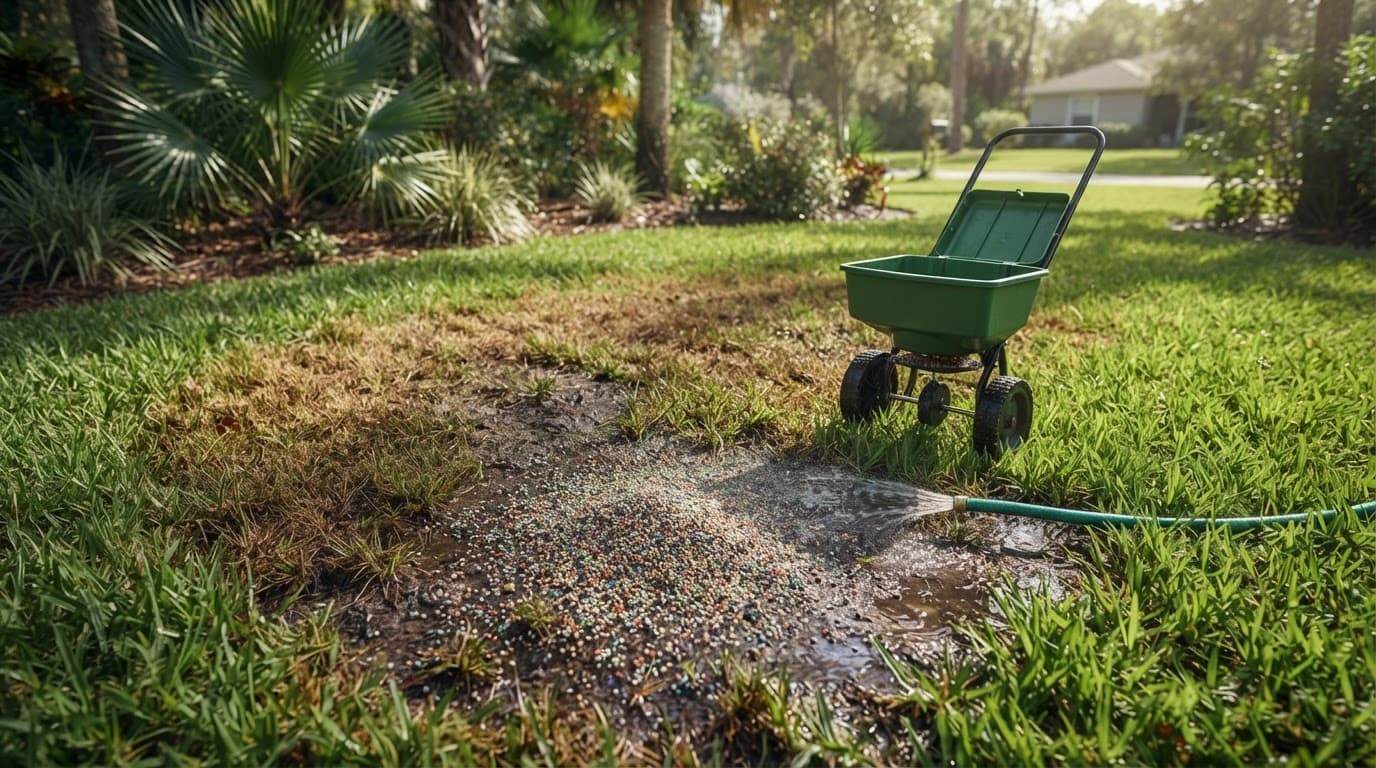
Fertilizer burn is one of the clearest signs that too much fertilizer injured a lawn. It occurs when lawn fertilizer is too concentrated or unevenly applied. Granular fertilizer or liquid fertilizer can cause it through spreader overlaps, bag spills, or use on dry grass without watering.
People may call it nitrogen burn or chemical burn. The injury comes from concentrated fertilizer salts and water imbalance, not nitrogen acting alone. Repeated or excessive applications can create salt buildup in the soil and interfere with normal water uptake.
Osmotic Stress Disrupts Root Water Uptake
Grass roots naturally absorb water from the soil. When fertilizer concentration is too high, the soil solution becomes salty enough to pull water away from them instead.
This process is called osmotic stress, meaning concentrated salts make it harder for roots to absorb water normally. The lawn can look drought-stressed even when water is present. Leaf tips turn yellow, tan, or brown because the plant cannot move water where it is needed.
In severe cases, the grass crown dies. Once the crown is dead, watering cannot bring that turf back.
Root Loss Makes Turf Easier to Damage
Root damage reduces a lawn’s drought resistance and recovery speed. It also makes turf more vulnerable when pests feed below the surface.
White grubs, for example, feed on roots. Their presence does not mean fertilizer caused the problem. Still, a burned or weakened root system has less capacity to tolerate additional injury.
A lawn can also show pest symptoms later than expected. Heavy fertilization may temporarily hide thinning with rapid top growth, then weakened roots can fail during hot weather.
Warning Signs of an Over-Fertilized Lawn
Most homeowners notice fertilizer burn after the lawn changes color. Pattern, timing, and location often reveal more than color alone.
Inspect turf after any lawn fertilizer application, especially with a broadcast spreader, a product change, or application before major rain.
Streaks, Patches, and Leaf Discoloration
A lawn receiving excess fertilizer may develop:
- Brown or yellow streaks that follow overlapping spreader passes or an incorrect application rate.
- Dark green, fast-growing areas beside thin or burned patches.
- Yellowing leaf tips that become crispy brown.
- White or pale crusts on the soil surface where fertilizer salts accumulated.
- Dense growth that feels spongy because thatch is building underneath.
- Dead patches around a spill, a stopped spreader, or a bag-opening area.
Timing matters. Fertilizer burn often appears within days of application. Insect injury may develop more gradually, although chinch bug damage can move quickly in stressed grass.
Not Every Brown Patch Is Fertilizer Burn
Brown turf can reflect drought, irrigation problems, disease, pet urine, mowing damage, or insects. Inspect persistent or expanding dead patches closely, then pull gently on damaged grass when you suspect grubs. Turf that lifts easily like loose carpet may show root feeding or root loss, but that doesn’t prove fertilizer caused grubs.
Check grass blades and the soil line, too, because chinch bugs are small and hard to spot. Their damage often begins in sunny, dry St. Augustine grass and expands outward. Bermuda grass may thin for several reasons, while sod webworms can leave chewed leaf tips and small silken tunnels in the thatch.
If you cannot identify the cause, avoid reapplying fertilizer. Applying too much fertilizer or more nitrogen can worsen the original problem.
What to Do After Applying Too Much Fertilizer
Quick action can reduce fertilizer burn, especially when product is still visible on the lawn. Keep children and pets away from the treated area until the lawn fertilizer has been cleaned up and watered in according to the label.
Do not try to neutralize fertilizer with household chemicals. Extra products can create a second problem for the lawn and nearby water.
Remove Visible Granules First
Use a broom, rake, or shop vacuum to collect granular fertilizer from sidewalks, driveways, patios, and dense piles in the lawn. Do not hose loose fertilizer into a storm drain.
Sweep material back onto the intended lawn area only if you can calculate and follow the correct application rate. If too much fertilizer was applied or there was a major spill, collect it for disposal according to the label and local rules instead.
Unused or spilled products should stay in their original container whenever possible. Check the product label and safety data sheet to see whether it requires hazardous waste handling.
The EPA’s guidance on household hazardous waste can help you locate safe community collection options. Ordinary fertilizer isn’t automatically regulated, so check local hazardous waste rules.
Never pour fertilizer or potentially regulated hazardous waste into drains, gutters, canals, or ponds.
Water Deeply Without Creating Runoff
Watering can move excess soluble salts from lawn fertilizer away from the root zone and reduce salt buildup. Apply water slowly enough that it soaks in rather than running across the lawn, sidewalk, or street.
Sandy soils common in many parts of Southwest Florida drain faster than dense soils. Check soil moisture between cycles, since fast drainage can aid flushing but also move nutrients toward groundwater or nearby waterways. Break irrigation into shorter cycles if water begins pooling.
Stop fertilizing while the lawn recovers. A moderately burned lawn may need four to six weeks before you can judge lawn recovery. New growth can gradually fill in if the crown remains alive. Dead patches will need overseeding where appropriate, plugs, or new sod.
Prevent Uneven Fertilizer Application and Burn
The best response to fertilizer-related damage is prevention. Start with a soil test and a measured lawn fertilizer program. This supports steady growth, stronger roots, and better tolerance to pests, drought, and mowing stress.
Before every application, read the product label and know the size of the lawn area you’re treating. Match timing to the season and turf grass needs. Bermuda grass and St. Augustine grass differ in growth rate, nitrogen demand, and response to seasonal conditions. Fertilizer rates are measured, not guessed.
Start With Soil and Turf Needs
A soil test shows what the lawn already has and lacks, helping determine nutrient selection and timing. Check the soil pH balance before correcting possible nutrient lockout. This is more reliable than choosing fertilizer by bag color, a neighbor’s advice, or wanting quick green-up.
Organic matter can improve soil structure, but it doesn’t replace all nutrient needs. Organic fertilizer isn’t automatically risk-free or appropriate without its nutrient analysis. Synthetic products can also be misapplied without checking lawn needs. The University of Maryland’s advice for maintaining an established lawn explains why turf nutrition should reflect soil conditions and grass needs.
Slow-release fertilizers can reduce the chance of a sudden surge in growth. They still require a label-based rate and proper irrigation.
Calibrate the Spreader Before Every Use
A broadcast spreader can overapply fertilizer when its setting is wrong, its flow gate sticks, or passes overlap. Calibration is essential because every product has a different particle size and recommended rate.
Measure your lawn area and use the product’s stated setting as a starting point. Test the spreader on a small measured section. Follow the label’s application rate, walk at a steady pace, and avoid stopping with the spreader gate open.
University guidance from Utah State recommends avoiding excessive soluble nitrogen because it can increase nutrient loss through leaching or runoff. Their turf IPM advisory supports measured rates and seasonal timing within an integrated pest management program. Fertilizer is only one part of that program, not a reason for repeated heavy applications.
Store products in their original containers and follow the label for storage. For leftover material, follow the label and contact your local hazardous waste program. Ask that hazardous waste program about safe disposal options.
Pest Problems Need More Than Fertilizer
When turf starts thinning, fertilizer is often the first thing homeowners reach for. That can be the wrong move when dead patches result from insects, disease, poor irrigation coverage, compacted soil, or thatch.
Professional lawn care should begin with a whole-lawn inspection, not another fertilizer application. An inspection reviews grass type, root system depth and condition, soil moisture, a soil test, and recent fertilizer history. It also checks insect activity, disease symptoms, irrigation faults, compaction, and thatch. This helps confirm chinch bugs, caterpillars, grubs, or disease before recommendations. Safe storage and disposal of leftover products should follow label directions and applicable hazardous waste requirements.
Balanced Care Supports Long-Term Lawn Health
Healthy turf is not the darkest lawn on the block. It is grass with active roots, consistent density, controlled thatch, appropriate watering, and nutrition that matches the season.
For Fort Myers, Naples, Bonita Springs, Lehigh Acres, and nearby communities, timing matters as much as fertilizer choice. Bermuda grass and St. Augustine grass have different growth patterns and common pest risks, so local conditions should guide evaluation. Warm, humid conditions can intensify damage when nutrition is applied at the wrong time.
When pests are confirmed, targeted action should follow corrected watering, mowing, fertility, and thatch management. These practices support integrated pest management (IPM) and may reduce repeat problems better than another fertilizer application alone.
Frequently Asked Questions
Can too much fertilizer cause lawn pests?
Too much fertilizer does not directly create every pest infestation, including grubs. However, rapid growth, heavy thatch, and weakened roots can make turf more vulnerable to pest damage and make symptoms more noticeable.
How can I tell if my lawn has fertilizer burn?
Fertilizer burn often appears within days as brown or yellow streaks, crispy leaf tips, pale salt crusts, or dead patches near spills and spreader overlaps. Brown turf can also result from drought, disease, irrigation problems, pet urine, or insects, so inspect the grass and soil before reapplying fertilizer.
What should I do after applying too much fertilizer?
Remove visible granules from hard surfaces and dense piles, then water the lawn slowly and deeply enough to move excess salts through the soil without causing runoff. Stop fertilizing while the lawn recovers, and follow the product label and local rules for disposing of spills or leftover material.
How can I prevent fertilizer burn and pest-related lawn damage?
Start with a soil test, measure the lawn area, follow the product label, and calibrate the spreader before each application. Match fertility, mowing, irrigation, and thatch management to the needs of Bermuda grass or St. Augustine grass, and confirm pests before using additional products.
A Healthier Lawn Starts With Balance
Too much fertilizer can damage grass roots, increase thatch, and leave grass vulnerable to pests, disease, heat, and drought. It isn’t the sole cause of problems in Bermuda grass or other warm-season species, so aim for steady growth.
If dead patches or unexplained symptoms recur, stop applying products; use a soil test to identify the cause before reapplying. Balanced nutrition supports a stronger root system and lawn recovery.