A lawn can look thirsty, pale, and thin even when you are watering it regularly. Turfgrass nematodes may be damaging the roots below the soil, especially when your yard has loose, sandy ground.
These microscopic pests are difficult to identify by appearance alone, and plant-parasitic nematodes often compromise overall turfgrass health before you realize they are present. Their symptoms frequently look like drought, fertilizer problems, chinch bug damage, or root disease. We recommend looking at the soil, roots, irrigation, and lawn history before choosing a treatment.
Key Takeaways
- Sandy soil gives plant-parasitic nematodes room to move and often holds less water around turfgrass roots.
- Thin, weak, off-color grass can indicate nematode injury, but visual symptoms aren’t enough for a reliable diagnosis.
- Soil samples should come from stressed turf and the edges of affected areas, not completely dead patches.
- Proper irrigation, balanced fertilization, better sunlight, and cultural control practices support overall turfgrass health while helping to manage nematode populations.
- Significant infestations may require a laboratory diagnosis and treatment from a licensed professional.
What Turfgrass Nematodes Do in Sandy Soil
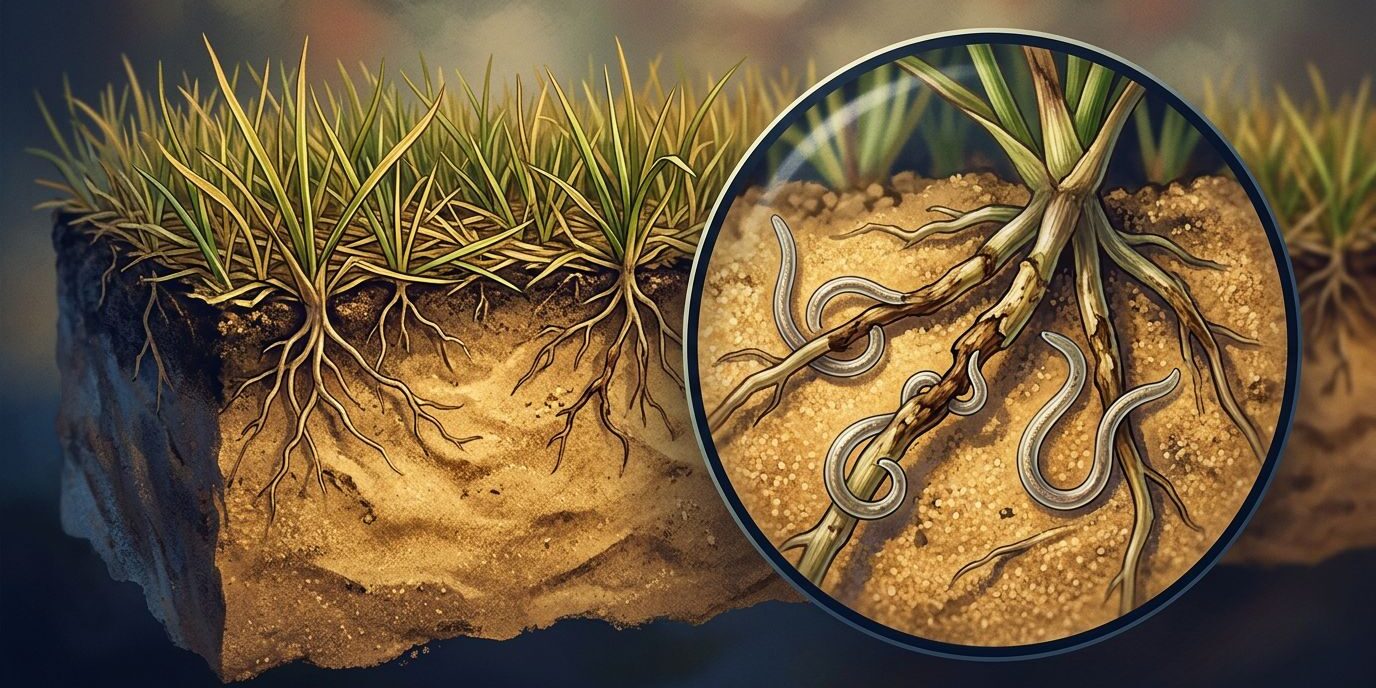
Nematodes are microscopic, roundworm-like organisms found in soil. Many species are harmless, and some are helpful. Plant-parasitic species, however, feed on or inside turfgrass roots.
Root-knot nematodes, sting nematodes, lance nematodes, spiral nematodes, and stubby-root nematodes are among the groups associated with turf damage. Some of these plant-parasitic nematodes act as migratory endoparasites, while others feed from the outside, but each species behaves differently, so identifying the exact problem matters before treatment begins.
Sandy soil creates favorable conditions for many turf pests. Its larger pore spaces allow turfgrass nematodes to move more freely between roots. Sandy ground also drains quickly, which can leave turfgrass under water stress between irrigation cycles. The combination can weaken roots and make ordinary heat more damaging.
The University of Arkansas lawn nematode bulletin explains that well-drained sandy soils with moisture near field capacity can support nematode activity. That doesn’t mean every sandy lawn has a nematode problem. It means the soil type can make the problem more likely when other stresses are present.
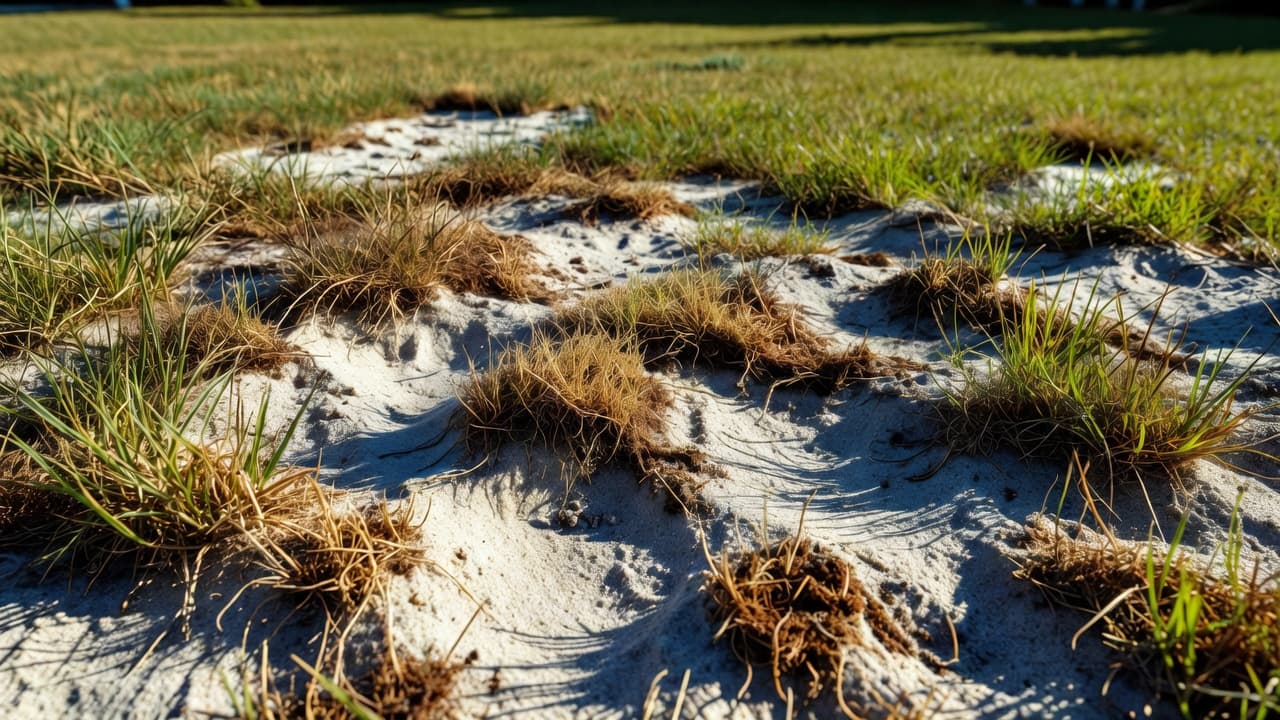
Similar sandy root zone challenges affect high-maintenance sports turf, including golf course greens featuring bermudagrass greens or cool-season creeping bentgrass. In residential settings, these sandy soil dynamics put warm-season turfgrasses under severe pressure.
Roots damaged by nematodes can’t absorb water and nutrients efficiently. The grass may stay thin even after rain, fertilizer, or irrigation. In Southwest Florida, that pattern can become more noticeable during hot weather because the lawn has less healthy root growth to support the blades.
How Nematode Damage Appears in a Home Lawn
Nematode injury usually begins below ground, but the lawn shows the results above ground. You may notice turf that grows slowly, loses its color, or develops irregular thin areas. These problems often escalate as aggressive plant-parasitic nematodes multiply, eventually pushing populations past critical damage thresholds.
Common symptoms include:
- Pale green or yellow turf
- Weak, shallow, or poorly developed roots
- Thin grass that doesn’t fill in
- Small patches of declining turf
- Increased wilting during hot afternoons
- Poor recovery after mowing or foot traffic
- Areas that respond poorly to fertilizer and water
The pattern can be confusing. A lawn with damaged root systems may look drought-stressed even when the irrigation system is operating. It may also resemble nutrient deficiency or fungal disease. Specific culprits like root-knot nematodes and sting nematodes often create distinct circular patterns, while lance nematodes tend to cause more generalized decline.
Look for turf that declines in scattered areas rather than across the entire property. Plant-parasitic nematodes often occur in clumps or hot spots, so one part of the yard may struggle while nearby grass looks healthy.
Root inspection can provide another clue. Carefully lift a small section of turf and look for short, weak, or discolored roots. Some root-knot nematodes cause visible swelling or galls, but many root changes are too subtle to confirm without laboratory testing.
A completely dead patch is usually a poor sampling location because nematodes may have moved away from roots that are no longer living.
We also check for other causes before blaming nematodes. Broken irrigation heads, soil compaction, excessive shade, poor mowing, chinch bugs, grubs, ground pearls, fungal pathogens, and other fungal diseases can create similar symptoms. Treating the wrong problem wastes money and can add more stress to the lawn.
How to Test for Turfgrass Nematodes
A soil and root sample is the most dependable way to investigate suspected pest damage. Homeowners can collect the sample through proper soil sampling, but a diagnostic laboratory or county Extension office should evaluate it.
Sampling location matters because pests aren’t spread evenly through the soil. For a damaged area, collect cores around the border where stressed grass meets healthier turf. Avoid the center of a completely dead patch.
For a general lawn sample, use a zigzag pattern across the affected area. Residential guidance commonly recommends collecting soil from about 10 to 20 locations. Take cores approximately 3 to 4 inches deep, using a clean soil probe, bulb planter, or narrow trowel.
Follow these steps:
- Remove surface debris and loose thatch before collecting each core.
- Take samples from stressed but living turf, including the margins of damaged areas.
- Combine the cores in a clean plastic container and mix them thoroughly.
- Place the mixed soil in a sealed plastic bag with your name and sampling location.
- Keep the sample cool and deliver it quickly to the selected laboratory.
Don’t leave the bag in a hot vehicle or direct sunlight. Heat can reduce the quality of the sample and affect the accuracy of the diagnosis.
If possible, collect a comparison sample from nearby healthy turf. A laboratory can compare the two areas and determine whether nematode populations correspond with the symptoms.
Testing results need careful interpretation. Once the laboratory receives your soil sampling materials, technicians use specialized soil extraction or mist extraction techniques to isolate plant-parasitic nematodes from the matrix.
These counts fluctuate based on seasonal soil temperature, meaning a specific reading must be evaluated against established damage thresholds to determine real risk. The presence of plant-parasitic nematodes does not always guarantee severe injury, as populations depend on grass type, root condition, soil moisture, and other environmental stresses.
The Pacific Northwest Handbook’s turf nematode guide also notes that sandy soils give nematodes more freedom of movement. A positive test is useful, but it should be considered alongside the lawn’s appearance and growing conditions.
Ways to Reduce Nematode Stress Naturally
There is no single lawn treatment that solves every nematode problem. Our first goal in sound turfgrass management is to use cultural control practices that help the grass produce stronger root development and handle stress more effectively.
Water deeply and infrequently instead of applying small amounts every day. Frequent shallow irrigation keeps root systems near the surface and can increase drought stress when sandy soil dries quickly. Your irrigation schedule should account for rainfall, soil type, grass variety, shade, and seasonal weather.
Avoid overwatering. Saturated soil can reduce root health and create additional disease problems. In Florida, many lawns need less irrigation during cooler or rainy periods than homeowners expect. Water should reach the root zone without creating runoff or standing water.
Fertilize according to soil-test results and the needs of your turfgrass. Excess fertilizer doesn’t repair damaged roots, and poorly timed applications can create weak growth. We also avoid fertilizing dormant or severely stressed grass until the underlying issue is understood.
Sunlight is another important factor. Too much shade can thin turf and reduce its ability to recover from root injury. Carefully trimming tree branches may improve light and air movement, although major tree work should be handled safely by a qualified professional.
Grass selection matters when renovating a lawn. St. Augustinegrass is common in Southwest Florida, but no grass performs well in every location. Warm-season turfgrasses like bahia and zoysia may offer better tolerance in some conditions, but the right choice depends on sunlight, irrigation, soil, mowing height, and local pest pressure.
Organic matter can improve the soil environment and support healthier turf. Compost or properly prepared organic amendments may improve water and nutrient availability while supporting biological control methods in the soil ecosystem. They aren’t a guaranteed cure, and excessive additions can create drainage or nutrient problems.
For a lawn renovation, soil solarization may reduce nematode populations before new grass is installed, protecting overall turfgrass quality over time. This process uses clear plastic to heat moist soil during a hot period. It is more practical for an empty planting area than an established residential lawn, and it requires correct timing and preparation.
When Professional Treatment Makes Sense
Professional help is appropriate when turf continues to decline after irrigation and maintenance problems have been corrected. It is also important when damage is widespread, recurring, or difficult to separate from disease and insects.
A qualified lawn professional can inspect the site, review irrigation, collect a representative sample, and coordinate laboratory testing to accurately assess nematode populations. This process is more useful than applying a product based only on brown spots.
When treating severe infestations through professional turfgrass management, the use of chemical nematicides requires careful evaluation of specific active ingredients and precise application timing. Product labels vary by state, turf type, application site, and pest, and some formulations require a licensed applicator. While high-value sites like golf course greens rely on strictly timed chemical protocols, home lawns demand a much more balanced approach. We don’t recommend using agricultural products on a home lawn unless the label specifically allows that use.
Treatment decisions should also consider children, pets, wells, drainage, and nearby gardens. Integrated pest management focuses on reducing stress, monitoring the problem, improving growing conditions, and using chemical nematicides only when it is justified.
In some cases, replacing a badly damaged area with a more tolerant turfgrass is more practical than repeated treatments. We compare the cost, expected recovery, irrigation needs, and long-term maintenance before recommending renovation.
Protecting a Sandy Florida Lawn Long Term
Nematodes are easier to manage when the lawn is monitored before symptoms become severe. Walk the yard regularly and watch for thin areas that remain weak after rainfall or routine fertilization.
Keep notes about irrigation dates, fertilizer applications, mowing height, weather, and recurring patches. This information helps connect symptoms with seasonal stress, soil temperature fluctuations, and makes a diagnostic visit more productive.
Healthy mowing also supports recovery and root development. Keep mower blades sharp and remove only the recommended portion of the grass blade at each cut. Mowing too short reduces leaf area and can expose already weak turf to more heat.
Effective cultural control and ongoing turfgrass management practices help maintain optimum turfgrass quality over time. These methods support strong growth across warm-season turfgrasses, much like the strategies used on bermudagrass greens or specialized creeping bentgrass and golf course greens.
Our approach in Collier and Lee County is to look at the whole lawn rather than one symptom. Sandy soil, irrigation, shade, grass selection, insects, fungal pathogens, and overall root health all affect the final result. That broader inspection helps homeowners avoid unnecessary products, select options with safe active ingredients, and focus on the conditions that support stronger turf.
Frequently Asked Questions
How can I tell if my lawn has a nematode problem instead of just lacking water?
Nematode damage often mimics drought stress, causing the grass to look thin, pale, and wilted even when it is being watered regularly. The most reliable way to differentiate between the two is to inspect the roots for weakness, stunting, or galls, and to submit a soil and root sample to a diagnostic laboratory for proper identification.
Where should I collect soil samples if I suspect nematodes in my yard?
You should collect soil and root cores from the margins of affected areas where stressed turf meets healthier grass, rather than from completely dead patches. Taking samples from about 10 to 20 locations in a zigzag pattern at a depth of 3 to 4 inches provides a representative sample for laboratory testing.
Why are turfgrass nematodes more damaging in sandy soils?
Sandy soils feature larger pore spaces that allow plant-parasitic nematodes to move more freely between grass roots. Additionally, sandy ground drains very quickly, which leaves turfgrass under constant water stress between irrigation cycles and makes it harder for damaged roots to recover.
Can I treat turfgrass nematodes with standard lawn fertilizers?
Standard fertilizers will not cure a nematode infestation and applying excess nutrients to damaged roots can actually add more stress to the lawn. Proper fertilization should only be done based on soil test results, while addressing cultural practices like deep watering and improving root health.
Conclusion
Turfgrass nematodes can damage a lawn’s roots while leaving symptoms that look like drought or poor fertilization. Sandy soil can increase the risk because these destructive turfgrass nematodes move easily and moisture drains quickly.
The best starting point is proper soil sampling from stressed, living turf near affected areas, followed by soil extraction in a lab to check nematode populations. Whether you are dealing with root-knot nematodes, sting nematodes, lance nematodes, spiral nematodes, or stubby-root nematodes, confirming the culprit is essential. Once the cause is confirmed, consistent irrigation, balanced nutrition, better sunlight, suitable grass selection, and chemical nematicides can help protect root systems. This approach also benefits golf course greens featuring sensitive turf like creeping bentgrass. A thin patch isn’t always a watering problem, so check the roots before choosing the next solution.