Ground pearls St. Augustinegrass problems often begin as small, pale patches that resemble dry soil, poor irrigation, or ordinary lawn stress. These underground pests feed on turfgrass roots in warm-season turfgrasses, and by the time the grass turns brown, the infestation may already be established below the surface.
The damage is easy to miss because ground pearls live hidden in the soil and attack grass roots. Homeowners usually notice the result, not the pest, making early detection difficult. Knowing what to look for can prevent unnecessary fertilizer, fungicide, or insecticide applications. We start with the warning signs that deserve a closer inspection.
Key Takeaways
- Ground pearls damage St. Augustinegrass roots below the soil surface, so homeowners may notice yellow, thinning, or circular dead patches before seeing the pest.
- Recurring chlorotic areas, weak grass roots, poor recovery after rainfall, and turf that pulls loose deserve a root-zone inspection rather than automatic fertilization.
- Pearl cysts are small, waxy, and easy to confuse with soil debris; compare damaged and healthy turf and consider other causes such as chinch bugs, disease, irrigation problems, and nutrient stress.
- Surface insecticides often provide limited control because ground pearls are protected underground and have a multi-year life cycle.
- Confirming the pest, correcting irrigation and mowing problems, reducing soil stress, and monitoring the lawn are more reliable than repeated treatments made without a diagnosis.
Ground Pearls St. Augustinegrass Damage Starts Below the Surface
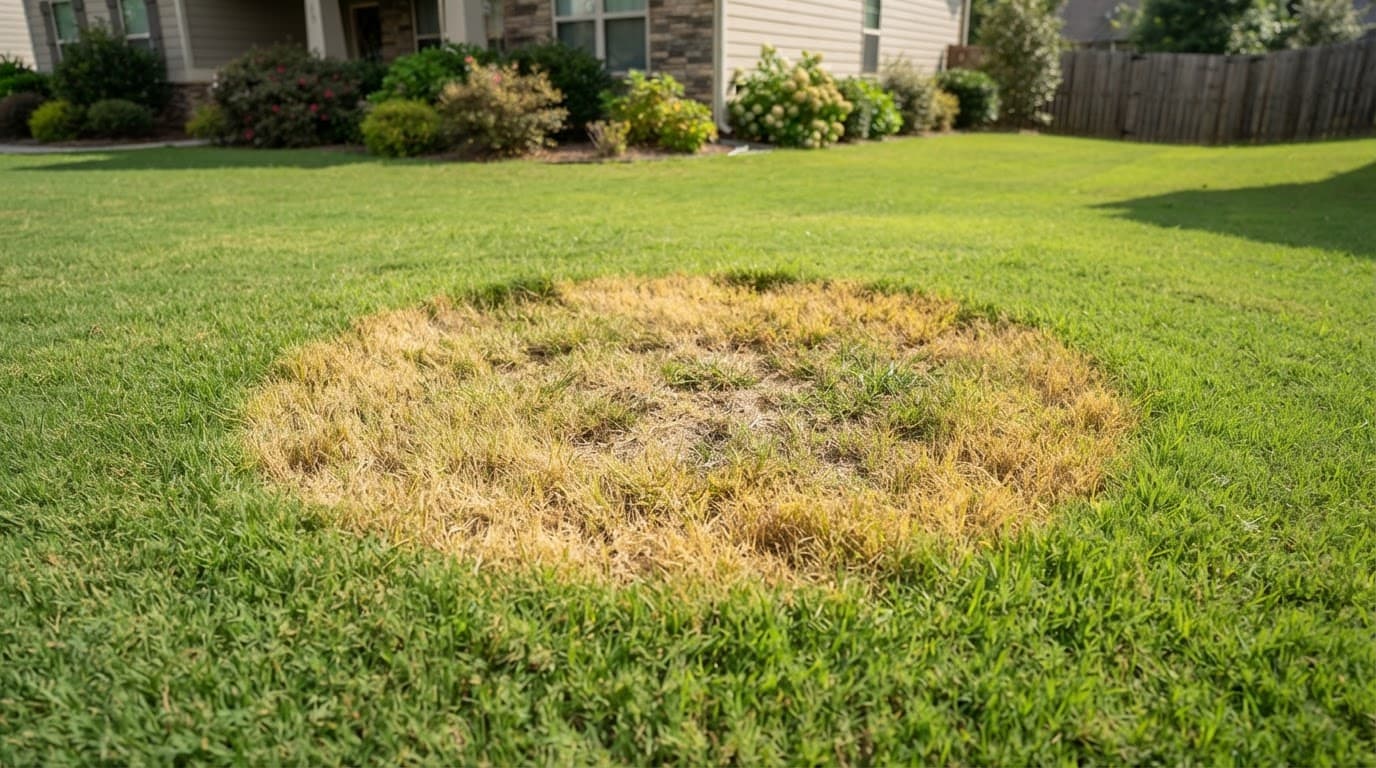
The first sign of ground pearls is often an irregular yellow or thinning area, also called a chlorotic patch. These areas may look scattered rather than perfectly round, although some infestations expand into circular dead patches that resemble fairy rings. The grass can lose color gradually, then turn brown during hot, dry weather.
Ground pearl turf damage becomes more visible when St. Augustinegrass is already under stress. Southwest Florida heat, sandy soil, compacted areas, and uneven irrigation can accelerate damage to the grass roots. A lawn may look acceptable after rainfall, then show yellow patches again when dry conditions return. In some cases, circular dead patches become more defined as the turf declines.
Homeowners often miss these early clues:
- The grass stays thin even after watering and mowing adjustments.
- New growth fills in slowly around an older damaged area.
- Patches appear where irrigation coverage looks normal.
- The lawn fails to green up evenly after winter.
- Grass blades pull loose because the grass roots are weak or damaged.
- No pest appears on the blades because ground pearls remain below the soil surface, feeding around internal root tissues.
- Yellow areas return in the same general locations each year.
The NC State Extension ground pearl guide describes irregular yellow patches that become more noticeable during dry spells. That pattern matters because drought stress usually improves after proper watering, while root-feeding damage can continue and create ongoing turf damage.
One missed sign is the absence of a visible pest on the grass blades. Ground pearls aren’t like chinch bugs, which may be found near the crown of the plant. The insects and their protective cysts are below ground, so a quick visual inspection of the lawn surface may show nothing unusual.
A patch that stays weak after rainfall deserves a root-zone inspection, not another automatic fertilizer application.
What Ground Pearls Look Like in the Soil
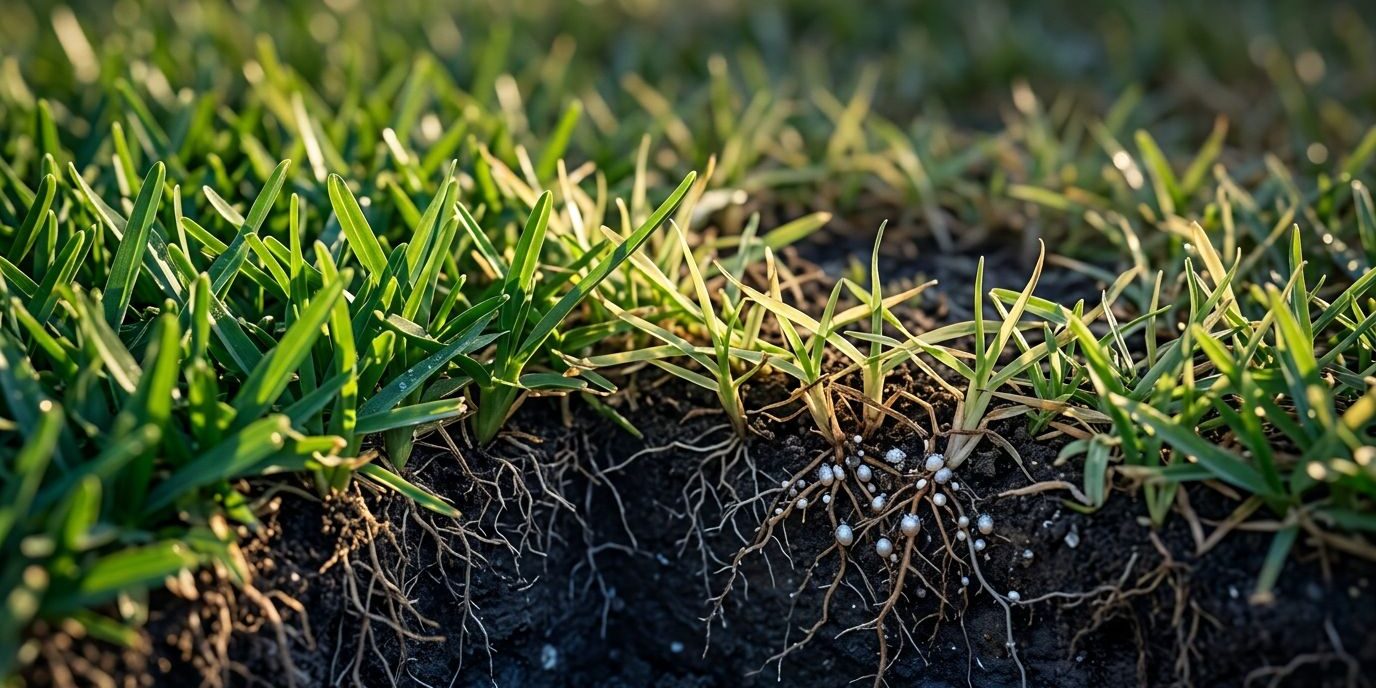
Ground pearls are subterranean scale insects that extract plant sap from the root systems of warm-season turfgrasses. Although they commonly affect St. Augustinegrass, they can also infest centipedegrass lawns, bermudagrass, and zoysiagrass. Their immature stages form small pearl cysts in the soil, giving this pest its common name. These waxy cysts are protected by a tough waxy covering and may be white, pinkish, or light-colored.
The most reliable inspection takes place at the edge of a damaged patch. Use a hand trowel or narrow shovel to lift a small section of turf, then look through the soil around the root systems instead of searching only on the grass blades. The pearl cysts can be easy to overlook because they are small and may blend with bits of sand or root material. During spring, mature adult females may briefly emerge near the surface to lay eggs in the root zone before returning below ground.
We recommend comparing the damaged area with healthy turf nearby. If the affected soil contains several unusual round cysts and the roots look weak, ground pearls become a stronger possibility. A single pale object isn’t enough to confirm an infestation, since soil can contain insect eggs, fertilizer granules, plant material, and other debris. The waxy cysts may also vary in color and size, especially as adult females develop and move through their life cycle.
A proper diagnosis also considers other common causes of St. Augustinegrass decline. Chinch bugs, fungal diseases, nutrient problems, poor drainage, mower damage, and broken sprinkler heads can create similar symptoms. These scale insects may be present even when the visible lawn damage points to another source of stress.
| What you notice | Possible clue |
|---|---|
| Irregular yellow patches that worsen during dry weather | Ground pearls or root stress |
| Orange or black insects near the grass crown | Possible chinch bugs |
| A uniform pale color across much of the lawn | Nutrient or irrigation problem |
| Fast-spreading brown areas after wet weather | Possible disease |
| Damage along a driveway, sidewalk, or construction area | Heat, compaction, or soil stress |
The comparison doesn’t replace a professional inspection. It helps explain why treating the wrong problem can waste time and add stress to an already weakened lawn. The Ground Pearls in Turf article from Golf Course Management also notes that symptoms can include thinned, chlorotic turf and poor recovery.
Why Ground Pearl Treatments Often Fail
Ground pearls are difficult to manage because their multi-year life cycle occurs largely underground. Thick waxy covering around the waxy cysts protects the pest from many surface treatments, making standard chemical control less effective and preventing products applied to grass blades from reaching the root zone.
This is why a homeowner may apply an insecticide, see little improvement, and assume the product was weak. Traditional insecticide applications, including systemic products such as neonicotinoids, may not reach these deep underground pests or the life cycle stage they are meant to control. Repeated applications can add cost without correcting the cause of the decline.
The University of Florida’s turfgrass guidance describes ground pearls as a difficult pest with limited control options. Research and extension guidance have not established a dependable treatment that eliminates every infestation in residential turf.
That doesn’t mean a damaged lawn has no options. It means treatment should start with confirmation, site evaluation, and realistic expectations. We don’t recommend spraying first and diagnosing later.
The following mistakes commonly delay improvement:
- Treating yellow patches as a fertilizer shortage without checking the roots.
- Watering every day, which can create weak growth and poor soil conditions.
- Replacing sod while leaving infested soil in place.
- Applying multiple insecticides without identifying the pest stage.
- Mowing too short, which reduces the lawn’s ability to tolerate heat and root damage.
- Relying on harsh broad-spectrum treatments that may disrupt soil microbial activity and beneficial natural enemies without removing the infestation.
Replacement sod may look healthy at first, but it can decline if the underlying soil still contains ground pearls. In some cases, removing affected turf and contaminated soil can reduce the problem. It isn’t a guaranteed solution, and the decision should account for the infestation’s size, soil condition, drainage, and the cost of rebuilding the area.
Practical Steps for a Healthier St. Augustinegrass Lawn
Healthy turf can tolerate some insect pressure better than thin, stressed turf. Good lawn care won’t guarantee that ground pearls disappear, but it can help St. Augustinegrass recover by strengthening its root systems and limiting additional stress.
Start by checking irrigation coverage. Place shallow containers in different parts of the lawn during a watering cycle to see whether each area receives similar coverage. A broken head, clogged nozzle, or poorly adjusted zone can stress grass roots and make one patch look like a ground pearls problem.
Water according to local requirements and actual lawn conditions instead of using a fixed daily schedule. Excess water doesn’t repair damaged roots, and frequent shallow watering can encourage weak root systems. Areas with compacted soil may also need improved drainage or careful aeration, depending on the turf’s condition and the time of year.
Mowing height matters. St. Augustinegrass should not be scalped, especially during hot weather or drought stress. Follow the recommended height for your cultivar, keep mower blades sharp, and avoid removing too much leaf tissue at one time. These cultural practices help protect turfgrass roots while the lawn recovers.
Fertilization should support steady growth rather than force a quick flush of foliage. A soil test can help identify pH and nutrient concerns before products are applied. Heavy nitrogen use may make the lawn look greener for a short period, but it won’t correct root-feeding damage.
We also recommend keeping a simple record of the affected areas. Mark where patches appear, note weather and irrigation conditions, and take photos before treatments. Recurring damage in the same locations gives a technician useful information during an inspection.
Whether you’re managing St. Augustinegrass, bermudagrass, zoysiagrass, or centipedegrass lawns, relieving environmental stress is essential for turf recovery. The right cultural practices can vary by grass type, but balanced irrigation, proper mowing, and healthy soil remain important.
For a ground pearls St. Augustinegrass infestation, professional service often focuses on integrated pest management:
- Confirming the pest through soil and root inspection.
- Separating insect damage from disease, irrigation, or nutrient issues.
- Evaluating turf density, mowing, soil, and drainage conditions.
- Reducing stress with practical cultural improvements.
- Reviewing whether repair, removal, or replacement makes sense for St. Augustinegrass or bermudagrass.
- Monitoring the lawn instead of relying on one application.
When Homeowners Should Request an Inspection
A professional inspection is a reasonable next step when yellow patches remain after irrigation problems are corrected, when the same areas decline each season, or when turf pulls up with little root resistance. An inspection can help determine whether turf damage below the soil surface is caused by ground pearls or another issue, especially when several possible causes appear at once.
We look at the whole site, not only the brown patch. Soil texture, thatch, root depth, sprinkler performance, mowing height, recent weather, and nearby plant conditions can all affect the diagnosis. Ground pearls may be present without being the only reason the turf is declining, so inspecting during the pest’s life cycle, including periods when adult females are active, can provide useful timing clues.
Avoid disturbing large areas of sod before the cause is known. Save a small soil sample from the edge of the damaged area, if possible, and keep photos that show how the patch changed over time. Those details can help distinguish a slow root problem from a fast-moving disease or surface insect, and they may show whether adult females or other stages are present.
Homeowners should also be cautious with broad pesticide applications. Effective pest management depends on accurate identification, application timing, and an understanding of the insect’s biology, rather than relying on chemical control alone. Neonicotinoids and other products may be ineffective or inappropriate in some situations, so professional recommendations can help protect people, pets, beneficial insects, and the surrounding property while avoiding treatments that are unlikely to work.
Frequently Asked Questions
How can I tell if my St. Augustinegrass has ground pearls?
Look for irregular yellow or thinning patches that worsen during dry weather, return in the same locations, or recover poorly after rainfall. Inspect the soil and roots at the edge of the damaged area for small, round, waxy pearl cysts.
Can ground pearls be seen on grass blades?
Usually not. Ground pearls and their protective cysts remain below the soil surface near the grass roots, so a visual inspection of the blades may show no pest activity.
Will insecticides eliminate ground pearls?
Insecticides often provide limited control because the pests are underground and protected by a thick waxy covering. Treatment should follow accurate identification, consideration of the pest’s life cycle, and professional guidance rather than repeated applications made without a diagnosis.
Should I replace sod affected by ground pearls?
Replacement sod may decline if infested soil remains in place, so resodding alone is not a guaranteed solution. The decision should consider the infestation’s size, soil condition, drainage, and whether affected turf and contaminated soil can be removed.
When should I request a professional inspection?
Request an inspection when yellow patches persist after irrigation problems are corrected, recur each season, or pull up with little root resistance. A professional can compare damaged and healthy turf and separate ground pearl damage from disease, chinch bugs, nutrient problems, and other causes.
Conclusion
Ground pearls St. Augustinegrass damage often hides in plain sight because ground pearls remain below the soil surface. Irregular yellowing, chlorotic patches, circular dead patches, weak grass roots, repeated thinning, and poor recovery during dry weather are signs homeowners shouldn’t dismiss as ordinary drought stress.
A correct diagnosis comes before treatment. Check irrigation, inspect the root zone, compare damaged and healthy turf, and track recurring symptoms. Look for pearl cysts and waxy cysts, while remembering that adult females can remain hidden near the roots and adult females may continue feeding before symptoms become obvious.
When ground pearls are confirmed, practical lawn care and professional monitoring provide a more dependable plan than repeated applications made without knowing what is feeding below the grass. Protecting grass roots across warm-season turfgrasses also means improving soil health and encouraging natural enemies that can support long-term turf health.